Mickey Earrings Gold: 14k vs 18k vs Vermeil Material Guide
Compare 10k, 14k, 18k, and vermeil for Mickey earrings gold. Discover which karat and alloy blend offers the best durability for intricate ear shapes.

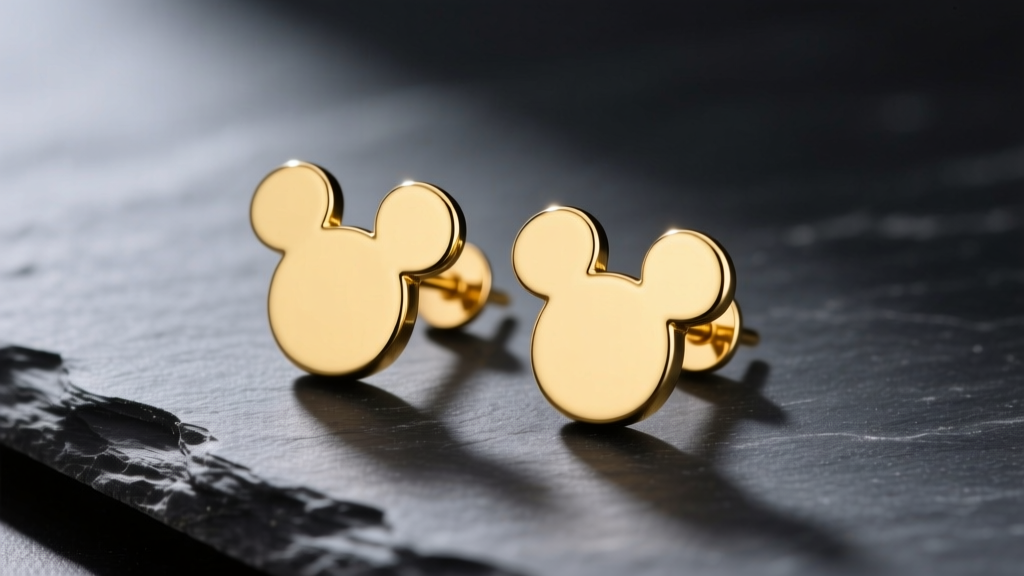
The iconic three-circle silhouette—featuring one large central dome flanked by two smaller spheres—remains one of the most recognizable and beloved motifs in novelty jewelry. However, when evaluating mickey earrings gold options, buyers often overlook the metallurgical realities of this specific shape. The structural integrity of the "ears," the alloy composition, and the gauge of the earring post all dictate whether your jewelry will last a lifetime or snap after a few months of daily wear.
As a senior jewelry metallurgist and style analyst, I break down the exact material properties, karat differences, and manufacturing methods you need to know before investing in gold Mickey-shaped earrings. Whether you are looking for lightweight studs, heavy hoops, or cartilage cuffs, understanding the metal beneath the magic is essential.
The Structural Challenge of the Mickey Silhouette
From an engineering perspective, the classic Mickey profile presents a unique vulnerability: the "neck" or junction where the two smaller ear circles meet the main head circle. In cast jewelry, this narrow connection point is a natural stress concentrator. If the gold alloy is too soft, or if the piece is hollow-cast to save on metal weight, this junction becomes prone to micro-fractures, bending, or outright snapping when snagged on clothing or hair.
To mitigate this, high-quality jewelers use solid casting techniques and reinforce the junction with a slightly thicker metal base, polishing it down to maintain the visual illusion of a seamless curve. The choice of gold karat directly impacts how well this junction holds up to the torque and tension of daily wear.
Solid Gold Karats Compared: 10k, 14k, and 18k
Pure 24k gold is far too malleable for intricate shapes like the Mickey silhouette; it would bend under the weight of its own ears. Therefore, gold is alloyed with metals like copper, silver, and zinc to increase its Vickers hardness (HV). Here is how the standard karats perform.
10k Gold: Maximum Durability, Minimum Luster
Comprising 41.7% pure gold and 58.3% alloy metals, 10k gold is the hardest and most durable option available in the US market. With a Vickers hardness often exceeding 200 HV, 10k gold is exceptionally resistant to scratching and bending. This makes it the superior choice for large, heavy Mickey hoops or dangle earrings where the leverage on the ear junction is highest. The trade-off is a paler yellow hue and a higher susceptibility to tarnish due to the high copper content. If you have a copper allergy or sensitive skin, 10k is not recommended.
14k Gold: The Sweet Spot for Daily Wear
At 58.3% pure gold, 14k gold offers the ideal balance of rich color, tarnish resistance, and structural integrity (approx. 160 HV). According to the Gemological Institute of America (GIA), 14k gold is the industry standard for fine jewelry because it maintains a warm, authentic gold luster while remaining hard enough to hold intricate shapes and gemstone settings securely. For everyday Mickey stud earrings, 14k yellow or rose gold is the most practical and cost-effective investment.
18k Gold: Rich Color but Prone to Bending
Containing 75% pure gold, 18k gold boasts a deeply saturated, buttery yellow color that is highly prized in luxury markets. However, its Vickers hardness drops to around 130 HV, making it significantly softer. While 18k gold is excellent for small, lightweight, and low-profile Mickey studs, it is a poor choice for large hoops or active-wear jewelry. The "ears" on an 18k gold silhouette are highly susceptible to bending if the earring is dropped or slept in.
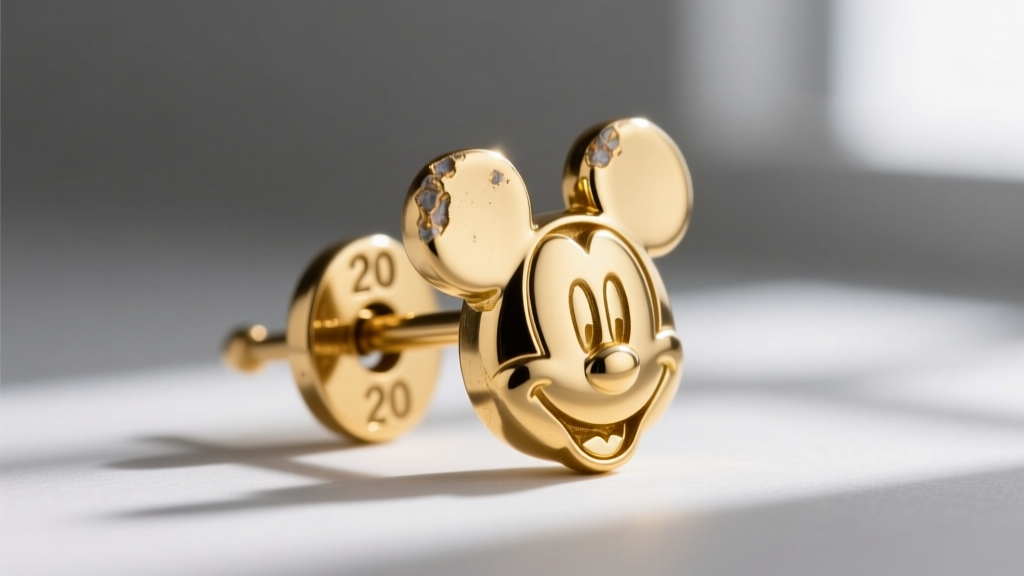
Gold Vermeil vs. Gold-Filled: Budget Alternatives
Not all mickey earrings gold selections are solid gold. For budget-conscious buyers, vermeil and gold-filled options are popular, but they behave very differently when shaped into the three-circle motif.
- Gold Vermeil: By FTC guidelines, vermeil must consist of a sterling silver base plated with at least 2.5 microns of gold (usually 14k or 18k). Because sterling silver is highly malleable, vermeil Mickey earrings are prone to bending at the ear junctions. Furthermore, aggressive polishing can wear through the gold layer at the high-friction edges of the ears, exposing the silver beneath.
- Gold-Filled: This material features a brass core mechanically bonded to a gold layer that makes up at least 5% of the total weight. Gold-filled metal is incredibly durable and tarnish-resistant, but it is almost exclusively manufactured in flat sheets or wire. Therefore, gold-filled Mickey earrings are typically flat, 2D stamped silhouettes rather than 3D cast domes. They lack the dimensional depth of solid cast gold but offer excellent longevity for flat stud designs.
Material Properties Comparison Table
| Material Type | Gold Content | Vickers Hardness (Approx) | Best Mickey Style | Avg. Price Range |
|---|---|---|---|---|
| 10k Solid Gold | 41.7% | 200 - 220 HV | Large Hoops, Dangles | $80 - $150 |
| 14k Solid Gold | 58.3% | 150 - 170 HV | 3D Cast Studs, Huggies | $150 - $350 |
| 18k Solid Gold | 75.0% | 125 - 140 HV | Small, Lightweight Studs | $300 - $600+ |
| Gold Vermeil | 2.5µm over Silver | 100 - 110 HV (Base) | Flat or Hollow Stamped | $40 - $90 |
| Gold-Filled | 5% by Weight | 160 - 180 HV (Base) | Flat 2D Silhouettes | $25 - $60 |
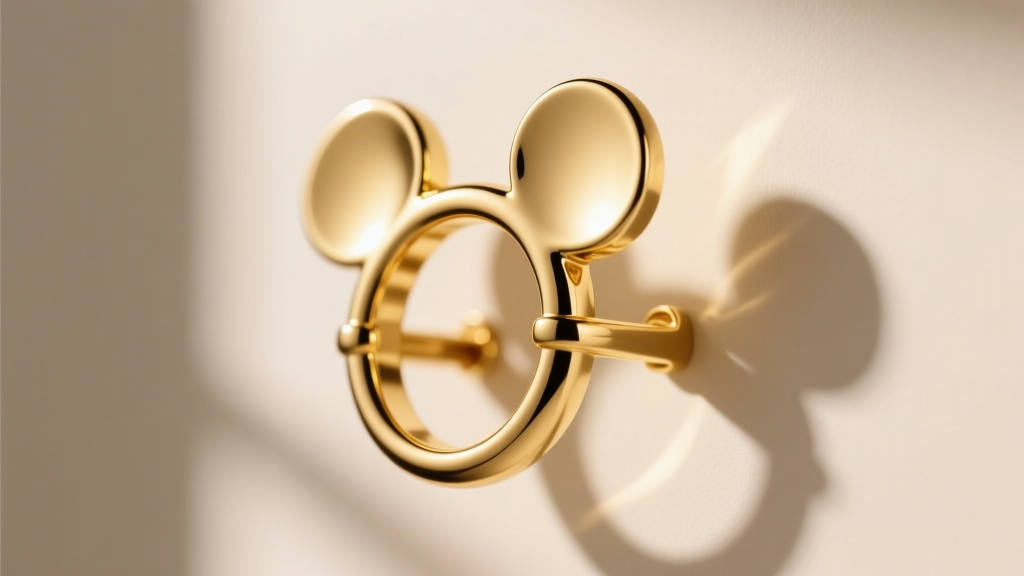
Post and Clutch Materials: Hidden Allergy Triggers
When purchasing solid gold Mickey earrings, the material of the earring post and the friction clutch (butterfly back) is just as critical as the face of the earring. A standard stud post is 20-gauge (0.81mm thick). However, because the Mickey silhouette is wider and slightly heavier than a simple round stud, a 20-gauge post can easily bend if the earring is bumped.
For optimal stability, look for 18-gauge (1.02mm) posts on medium-to-large Mickey studs. Furthermore, if you are buying white gold Mickey earrings, be aware that the post is often alloyed with nickel to achieve the white color, which is a primary contact dermatitis trigger. Always ensure the white gold is rhodium-plated, or opt for 14k yellow or rose gold, which are typically alloyed with nickel-free silver and copper blends.
Care and Maintenance for Intricate Gold Shapes
The crevices where the Mickey ears meet the head are notorious for trapping sebum, dead skin cells, and cosmetic residue. Over time, this buildup can dull the gold and, in the case of lower-karat alloys or vermeil, accelerate localized tarnishing.
Cleaning Protocol:
- Soak the earrings in a bowl of warm water mixed with a few drops of mild, phosphate-free dish soap for 10 minutes.
- Use an extra-soft baby toothbrush to gently agitate the junctions between the ears and the head. Never use hard-bristled brushes, as they will scratch 14k and 18k gold.
- Rinse thoroughly under distilled water to prevent hard water spots.
- Pat dry with a lint-free microfiber cloth.
Warning: If your Mickey earrings feature pave diamonds or micro-set gemstones in the ears, avoid ultrasonic cleaners. The high-frequency vibrations can easily loosen the delicate prongs holding the stones, leading to gem loss. Stick to manual, gentle cleaning methods to preserve both the metal and the stones.


