Purse Earrings Value Guide: How to Spot Quality on a Budget
Discover if designer and budget purse earrings are worth your money. We break down materials, weight limits, and enamel quality for smart buying.

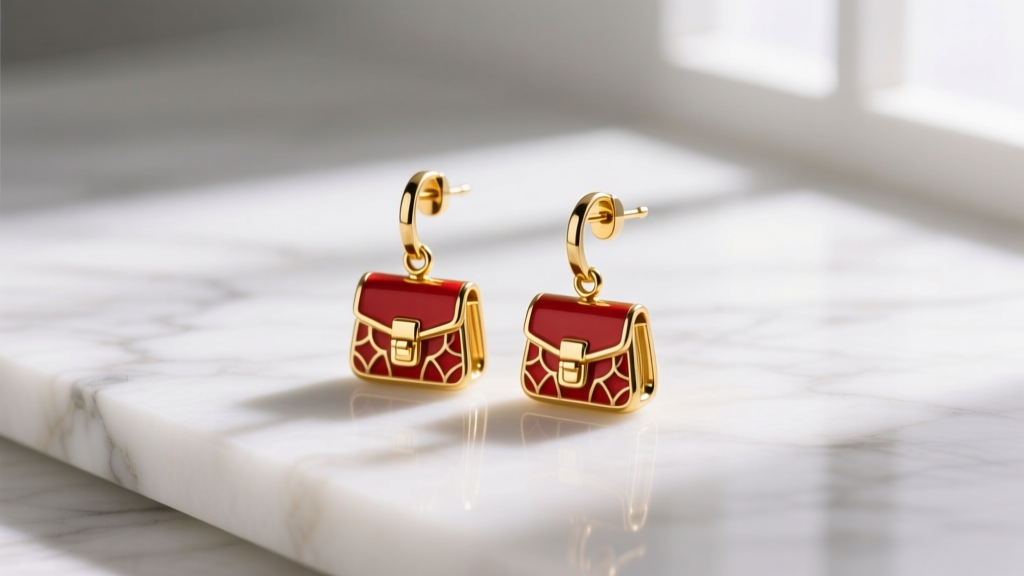
Miniature handbag charms have transcended keychains to become a dominant force in novelty jewelry, with purse earrings leading the charge. As we navigate the 2026 fashion landscape, these whimsical, three-dimensional dangles are everywhere, from fast-fashion storefronts to high-end designer runways. But as a savvy jewelry buyer, how do you separate a $150 investment piece from a $12 fast-fashion trap that will turn your earlobes green and break within a week? Evaluating the true value of purse earrings requires looking past the cute aesthetic and deeply analyzing metallurgy, weight distribution, and micro-manufacturing techniques. This comprehensive budget and value assessment will teach you exactly what you are paying for when you buy miniature handbag earrings.
The Novelty Trap: Why Base Metals Dictate Longevity
The most critical factor in determining the value of any novelty earring is the base metal hidden beneath the plating. Because purse earrings require complex, three-dimensional casting to achieve their miniature bag shapes, manufacturers often cut corners by using cheap alloys. The most common culprit in budget-friendly purse earrings (typically priced between $5 and $20) is Zamak, a zinc-based alloy mixed with aluminum, magnesium, and copper. While Zamak is cheap to cast and allows for high-detail molds, it is inherently heavy, brittle, and highly porous.
When a porous Zamak casting is plated with gold or silver, the plating sinks into the microscopic pores of the metal. Within a few weeks of exposure to skin oils and humidity, the plating oxidizes, flakes off, and exposes the base metal. Worse, cheap zinc alloys frequently contain unregulated traces of nickel, a known allergen that triggers severe contact dermatitis in sensitive individuals. According to the Mayo Clinic, nickel allergy is one of the most common causes of allergic contact dermatitis, resulting in itchy, blistered skin directly behind the earlobe.
The Value Upgrade: To get genuine value, look for purse earrings cast in solid brass or sterling silver. Brass is significantly lighter than Zamak, non-porous, and provides a flawless, smooth surface for gold vermeil plating (which requires a minimum of 2.5 microns of gold over a base metal). A $45 brass-based purse earring will outlast a $15 Zamak pair by several years, making it the superior budget investment.
The Gravity Problem: Weight Limits and Earlobe Health
The hidden cost of heavy dangle earrings is anatomical damage. Purse earrings are inherently bulky; creating a hollow, three-dimensional miniature bag requires a substantial metal framework. Many budget alloy purse earrings weigh between 22 and 30 grams per earring. While this might not sound like much, the human earlobe is not designed to sustain that level of localized, downward pressure.
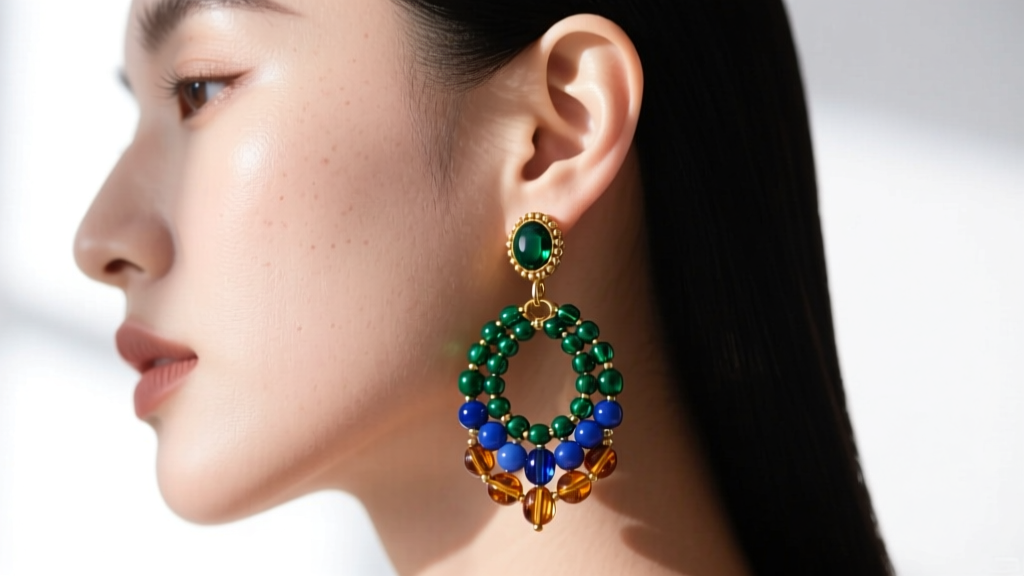
A standard, healthy earlobe fistula (the actual tunnel of skin that forms the piercing) can comfortably support between 7 and 10 grams of weight indefinitely. When you subject the earlobe to a 25-gram miniature handbag, the sustained leverage causes micro-tears in the collagen fibers of the skin. Over time, this leads to irreversible 'earlobe droop,' where the piercing hole stretches into an elongated slit. Fixing stretched earlobes requires surgical reconstruction or expensive dermal fillers, completely negating any money you saved by buying cheap, heavy earrings.
The Value Upgrade: When assessing purse earrings, weight is your enemy. Seek out designs that utilize hollow-cast brass, lightweight acrylic bodies with metal hardware, or woven beadwork. Furthermore, check the earring post gauge. Standard fashion earrings use a flimsy 20-gauge (0.8mm) post, which will physically bend under the leverage of a heavy purse charm. High-value purse earrings will feature a thicker 18-gauge (1.0mm) or 16-gauge (1.2mm) post to maintain structural integrity and distribute weight more evenly.
Price Tier Breakdown: What You Actually Get for Your Money
To help you navigate the market, we have broken down the 2026 purse earring landscape into three distinct value tiers. Use this table to benchmark the pieces you are considering purchasing.
| Price Tier | Base Metal | Enamel / Finish | Hardware & Posts | Value Verdict |
|---|---|---|---|---|
| Budget ($8 - $25) | Zamak / Zinc Alloy | Cold Epoxy Resin | Glued micro-parts, 20g butterfly posts | Poor. High failure rate, heavy, allergy risks. |
| Mid-Tier ($45 - $95) | Solid Brass / Sterling | Vitreous or High-Grade Resin | Functional micro-hinges, 18g posts, silicone stoppers | Excellent. Best balance of durability, weight, and cost. |
| Luxury ($150 - $500+) | 14k/18k Solid Gold | Guilloché / Plique-à-jour | Precision mechanics, screw-backs | Heirloom quality, but diminishing returns on novelty. |
Enamel & Micro-Hardware: Spotting Manufacturing Defects
The charm of a purse earring lies in its tiny details: the miniature clasp, the chain strap, and the vibrant 'leather' coloring. However, these details are exactly where budget manufacturers fail. The coloring on budget purse earrings is almost always 'cold enamel,' which is essentially a pigmented epoxy resin painted into the metal recesses. Cold enamel is soft, prone to scratching, and will inevitably yellow when exposed to UV light and skin acids over time.
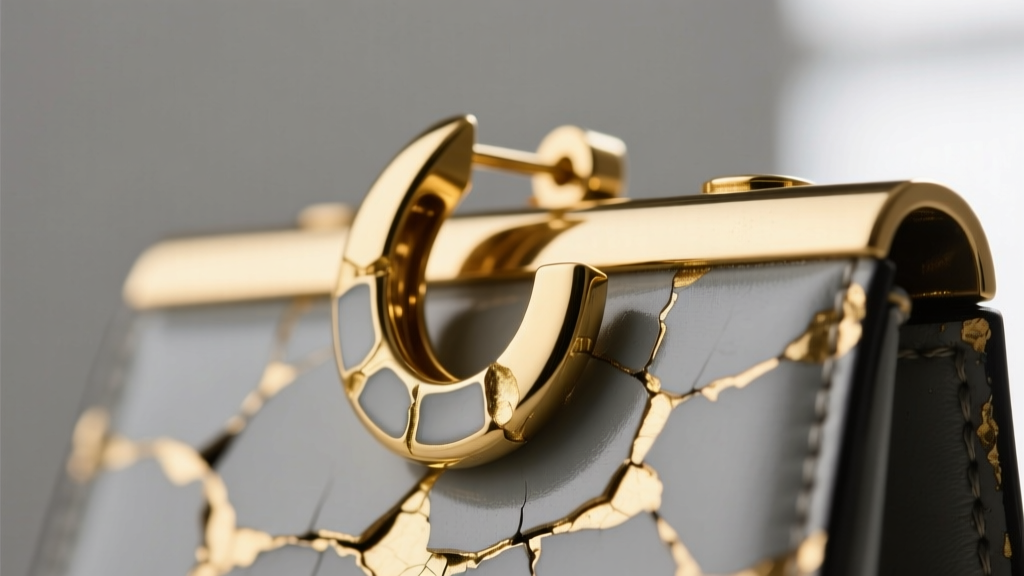
In contrast, mid-tier and luxury pieces utilize vitreous enamel, a powdered glass that is kiln-fired at extreme temperatures to fuse permanently with the base metal. Vitreous enamel is scratch-resistant, colorfast, and possesses a deep, glass-like luster that epoxy simply cannot mimic. The Gemological Institute of America (GIA) notes that properly fired vitreous enamel can survive for centuries without degrading, making it the only acceptable finish for jewelry meant to be worn repeatedly.
Next, inspect the micro-hardware. On a cheap purse earring, the tiny metal 'clasp' on the front of the miniature bag is usually a separate piece of metal glued on with industrial adhesive. The moment the earring is dropped or snagged on a sweater, that glued clasp will snap off. High-value purse earrings feature micro-hinges, deeply set soldered hardware, or at the very least, mechanical prong settings for any tiny rhinestones used as 'locks' on the bag.
The Verdict: A Buyer’s Checklist for Purse Earrings
Purse earrings are a delightful way to express personal style, but they require a more rigorous vetting process than standard studs or hoops. Before you add a pair to your cart, run them through this practical value-assessment checklist:
- The Weight Test: If buying in person, hold the earring. If it feels like a heavy coin, put it back. If buying online, demand the exact gram weight from the seller. Avoid anything over 12 grams per earring.
- The Post Check: Ensure the post is at least 18-gauge and preferably features a screw-back or a wide silicone stopper to prevent the heavy charm from pulling the backing off and getting lost.
- The Enamel Scratch: Gently run your fingernail over the colored sections. If the enamel feels raised above the metal borders or shows immediate micro-scratches, it is cheap cold epoxy.
- The Hardware Tug: Lightly tug on the miniature purse strap and clasp. If there is any visible glue residue or if the parts wiggle independently of the main casting, the piece will not survive daily wear.
- The Material Inquiry: Always check the product description for 'solid brass,' 'sterling silver,' or 'gold vermeil.' If it simply says 'gold-plated alloy' or 'mixed metals,' assume it contains nickel and will tarnish rapidly.
By prioritizing structural integrity, safe metallurgy, and fired enamel over sheer novelty, you can build a collection of purse earrings that remain vibrant, comfortable, and intact for years to come. True value in novelty jewelry isn't about finding the cheapest option; it's about finding the piece that respects both your budget and your anatomy.


