The Ultimate Care and Cleaning Guide for Your Moon Earring
Discover expert tips to clean, store, and maintain your moon earring collection. Learn safe methods for silver, gold, moonstone, and enamel.

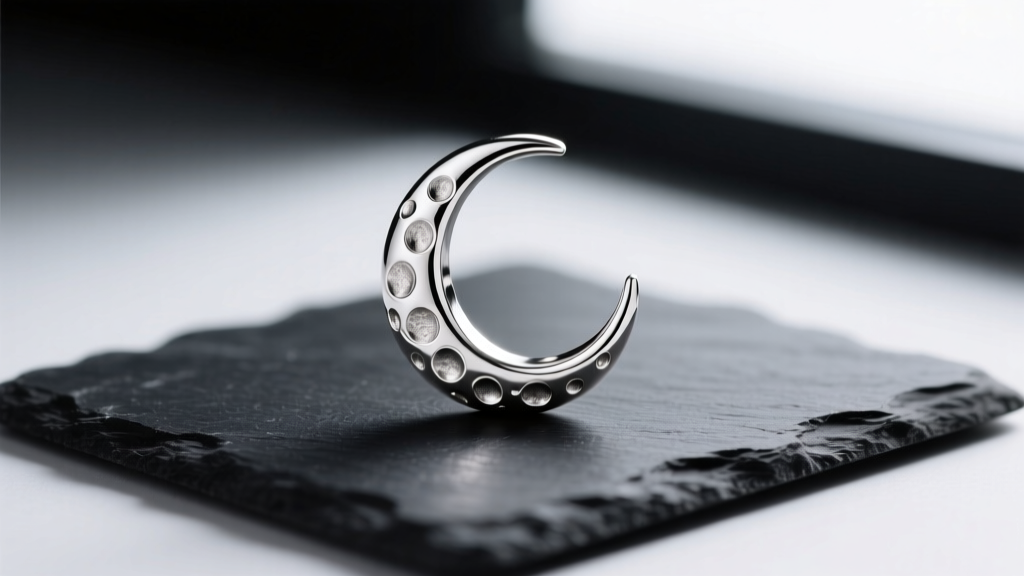
Celestial jewelry has maintained its position at the forefront of accessory trends, but owning a delicate moon earring requires far more nuanced maintenance than standard geometric studs or simple hoops. Whether your collection features intricate crescent silhouettes, textured full-moon crater designs, or delicate gemstone inlays like moonstone and opal, the structural complexity of these pieces makes them uniquely vulnerable to damage, tarnish, and stone loss. In this comprehensive 2026 guide, we break down the metallurgical and gemological science of caring for your celestial favorites, ensuring they retain their brilliance and structural integrity for decades.
Material-Specific Cleaning Protocols
The first rule of jewelry maintenance is identifying your base metal and any surface treatments. A solid 14k gold moon earring will react entirely differently to cleaning agents than a sterling silver piece with an oxidized finish or gold vermeil.
Sterling Silver (925) and Oxidized Finishes: Silver naturally reacts with hydrogen sulfide in the air to form silver sulfide, which presents as a dark tarnish. Many artisan moon earrings utilize intentional oxidation—darkening the recessed 'craters' of the moon to create contrast. Never use liquid silver dips or harsh chemical tarnish removers on these pieces. These solutions will strip the intentional oxidation, leaving your moon earring looking flat and overly bright. Instead, use a treated jeweler's polishing cloth (impregnated with micro-abrasives) and gently buff only the raised, high-polish edges of the crescent.
Gold Vermeil and Plated Pieces: If your moon earring is gold vermeil (a thick layer of gold over sterling silver) or standard gold-plated brass, abrasive polishing cloths will wear through the gold layer, exposing the base metal beneath. For these, a gentle wash is the only safe route.
The Distilled Water Wash Method
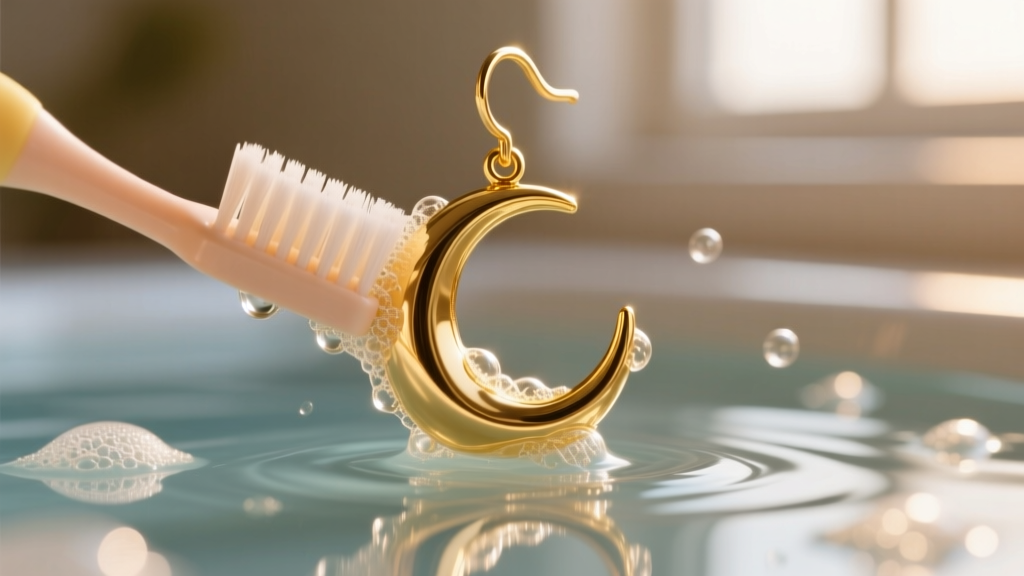
For routine cleaning of gold and vermeil moon earrings, skip the tap water. Municipal tap water often contains chlorine and heavy minerals that can leave microscopic water spots or degrade softer alloys over time. Follow this precise protocol:
- Step 1: Fill a small glass bowl with lukewarm distilled water and add two drops of pH-neutral dish soap (avoid soaps with added moisturizers or citrus degreasers).
- Step 2: Submerge the earrings for exactly 3 to 5 minutes to loosen sebum and cosmetic residue.
- Step 3: Use an extra-soft baby toothbrush to gently sweep the bristles along the curves and crevices. Apply zero downward pressure; let the bristles do the work.
- Step 4: Rinse briefly in a separate bowl of clean distilled water and pat dry with a lint-free microfiber cloth. Allow them to air-dry completely before storage to prevent moisture trapping behind the earring back.
Navigating Crevices, Craters, and Enamel Work
One of the most common failure modes for celestial jewelry occurs during cleaning. Many moon earring designs feature textured surfaces meant to mimic lunar craters, or they incorporate painted enamel to depict the phases of the moon. These intricate details act as magnets for lotion buildup, dead skin cells, and environmental dust.
The absolute worst enemy of enamel and textured metal is the ultrasonic jewelry cleaner. While these devices are excellent for cleaning plain diamond solitaires, the 40kHz cavitation bubbles they generate create microscopic shockwaves. If you place an enameled moon earring into an ultrasonic bath, these shockwaves will cause the enamel to fracture, chip, or completely detach from the metal backing. Similarly, ultrasonic vibrations can easily shake loose the delicate micro-prongs holding tiny accent diamonds or 'star' sapphires often found surrounding a central moon motif.
To clean deep crater textures safely, use a wooden toothpick or a soft cotton swab dipped in isopropyl alcohol (90% or higher). Gently trace the recessed lines to lift out compacted debris without scratching the surrounding metal or risking stone loss.
Protecting Delicate Gemstone Inlays
Moon earrings frequently feature cabochon or faceted moonstone, opal, or labradorite to enhance the celestial theme. According to the Gemological Institute of America (GIA), moonstone ranks between 6 and 6.5 on the Mohs scale of hardness. This makes it highly susceptible to scratching from everyday dust (which contains quartz particles that rank at a 7) and vulnerable to thermal shock.
Opals, often used in high-end moon earrings, are even softer (5.5 to 6.5) and contain up to 20% water within their silica structure. Exposing opal inlays to harsh chemicals, prolonged heat, or extreme dryness can cause 'crazing'—a network of fine cracks that ruins the stone's internal fire.
Cleaning Agents vs. Moon Earring Materials
| Material / Inlay | Safe Cleaning Agents | Agents to Strictly Avoid |
|---|---|---|
| Sterling Silver (Plain) | Mild soap, distilled water, polishing cloth | Bleach, ammonia, toothpaste |
| Oxidized Silver | Dry microfiber, soft wooden pick | Liquid silver dips, ultrasonic baths |
| Moonstone / Opal | Damp microfiber cloth only | Ultrasonic cleaners, steamers, acids |
| Enamel Details | Dry brushing, gentle soap wash | Alcohol, acetone, ultrasonic cavitation |
| 14k/18k Solid Gold | Mild soap, distilled water, soft brush | Chlorine (pools/hot tubs) |
Preventing Post Bending and Prong Failure
Because moon earrings—especially crescents and asymmetrical celestial drops—often have elongated or top-heavy silhouettes, the structural integrity of the earring post and clasp is paramount. Many lightweight moon studs are manufactured with 22-gauge (0.6mm) posts to keep the earring comfortable for the earlobe. However, 22-gauge wire is highly malleable and will bend easily if snagged on a towel or sweater.
If your post bends, do not repeatedly bend it back into place. Metal fatigue will cause the wire to snap. Instead, use a pair of nylon-jaw jewelry pliers to gently straighten it in a single, smooth motion. For heavier, larger moon hoops or dangles, always look for pieces with thicker 20-gauge (0.8mm) or 18-gauge (1.0mm) posts, and ensure the earring backs (clutches) fit snugly to prevent the piece from slipping and tearing the earlobe.
Additionally, perform a monthly 'shake test.' Hold the moon earring close to your ear and gently tap it. If you hear a faint rattling sound, a micro-prong holding a pave diamond or gemstone inlay has worn down and the stone is loose. Stop wearing it immediately and take it to a bench jeweler for prong re-tipping.
Proper Storage to Prevent Tarnish and Snagging
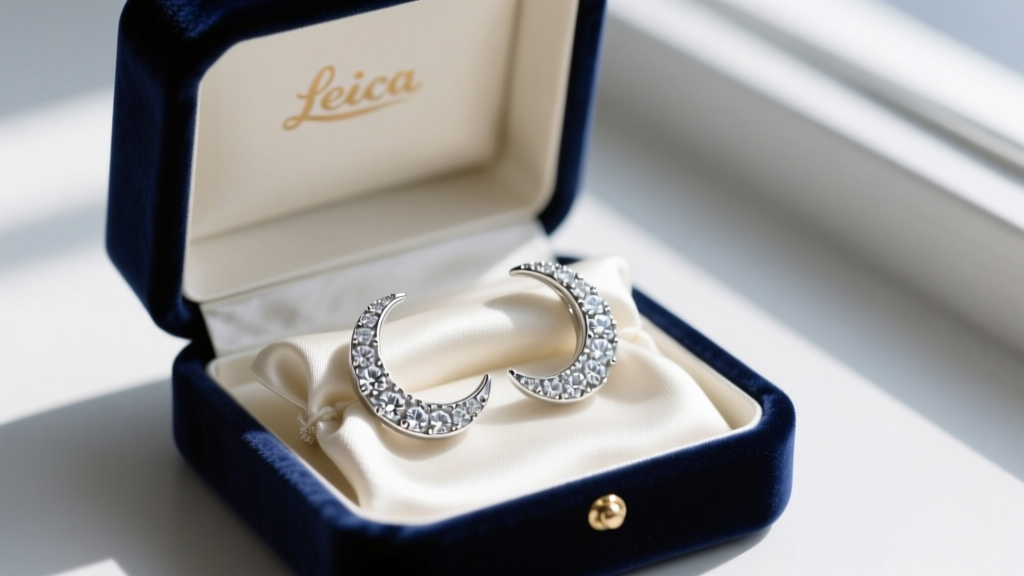
How you store your moon earring is just as critical as how you clean it. The pointed tips of crescent moons are notorious for snagging on the chains of necklaces or the mesh of other jewelry if tossed into a communal box. This not only scratches the gold or silver but can also bend the delicate points of the moon.
Always store your moon earrings individually. Use small, sealable anti-tarnish ziplock bags (often treated with a tarnish-inhibiting polymer) or individual silk pouches. If you use a jewelry box, ensure the piece is placed in a dedicated compartment where the crescent curve cannot catch on adjacent items. For silver pieces, drop a small piece of 3M anti-tarnish paper or a silica gel packet into the storage bag to absorb ambient moisture and sulfur compounds, drastically slowing the oxidation process.
Your Bi-Annual Maintenance Checklist
To keep your celestial collection in pristine condition, integrate these specific steps into your bi-annual jewelry maintenance routine:
- Inspect the Clasps: Check butterfly backs for worn rubber or metal grips. If they slide off easily, replace them with secure silicone or locking metal clutches to prevent losing your favorite piece.
- Check Prongs: Use a 10x jeweler's loupe to inspect any gemstone inlays. Ensure the metal prongs are sitting flush against the stone's girdle and are not lifted or worn flat.
- Deep Clean: Perform the distilled water wash method described above, ensuring all cosmetic buildup is cleared from the earring posts, which can harbor bacteria and cause earlobe irritation.
- Rotate Your Collection: Constant friction against the same spot on the earlobe can cause localized irritation. Rotate your moon earrings with lighter, simpler studs to give your piercings a rest while maintaining your celestial aesthetic.
By treating your moon earring with the specialized care its unique geometry and materials demand, you ensure that its celestial shine remains as captivating as the night sky itself.


