The Most Secure Earring Backs for Heavy & Fine Jewelry
Discover the most secure earring backs for 2026's heavy sculptural trends and fine jewelry, comparing La Pousette, screw backs, and hybrid clutches.

The 2026 Shift: Why Standard Earring Backs Are Failing
As we navigate the jewelry trends of 2026, the runway and street-style consensus is clear: earrings are getting heavier, more sculptural, and increasingly asymmetrical. Designers are favoring mixed-metal drops, oversized geometric hoops, and gemstone-encrusted ear cuffs that can easily weigh between 15 and 25 grams per ear. While these statement pieces are visually striking, they expose a critical vulnerability in traditional jewelry design: the earring back. The standard friction butterfly back, a staple for decades, was engineered for lightweight 3-gram studs. When subjected to the dynamic load of a 20-gram sculptural drop—amplified by walking, nodding, or wind—standard friction backs routinely fail, leading to the dreaded 'earlobe droop' or, worse, the permanent loss of a precious heirloom. Understanding the mechanics behind the most secure earring backs is no longer just a niche concern for fine jewelers; it is an essential aspect of modern jewelry styling and asset protection.
Engineering the Hold: Gauge, Tension, and Thread Pitch
Security in earring findings is dictated by three physical properties: post gauge (thickness), clutch tension, and mechanical locking. Most commercial fine jewelry utilizes a 20-gauge (0.81mm) or 18-gauge (1.02mm) post. While sufficient for diamonds and light gold bands, a 20-gauge post will physically bend under the torque of a heavy drop earring, causing the friction back to slide off. For heavy 2026 statement pieces, upgrading to a 16-gauge (1.29mm) or 14-gauge (1.63mm) post is mandatory to maintain structural rigidity. Furthermore, the internal borehole of the earring back must be precision-milled to match the post gauge within a 0.02mm tolerance. If the tolerance is too wide, the earring slips; if it is too tight, the metal galls, and the back becomes permanently stuck or damages the post's threading.
Ranking the Most Secure Earring Backs
Not all earring backs are created equal. Below is a comprehensive breakdown of the most secure earring backs available on the market today, ranked by their mechanical holding power and suitability for different jewelry categories.
| Backing Mechanism | Security Rating | Best Use Case | Average Price Range (18k Gold) |
|---|---|---|---|
| La Pousette (Push-Pull Lock) | 10/10 | High-value diamond studs, heavy drops | $85 - $150+ per pair |
| Precision Screw Back | 9/10 | Cartilage piercings, sleeper studs | $40 - $90 per pair |
| Silicone-Metal Hybrid Clutch | 7/10 | Everyday mid-weight hoops, huggies | $15 - $35 per pair |
| Standard Friction (Butterfly) | 4/10 | Lightweight studs under 4 grams | $10 - $25 per pair |
| Silicone Disc / O-Ring | 3/10 | Temporary support, active wear | $2 - $8 per pack |
1. The La Pousette (Push-Pull Locking) Mechanism
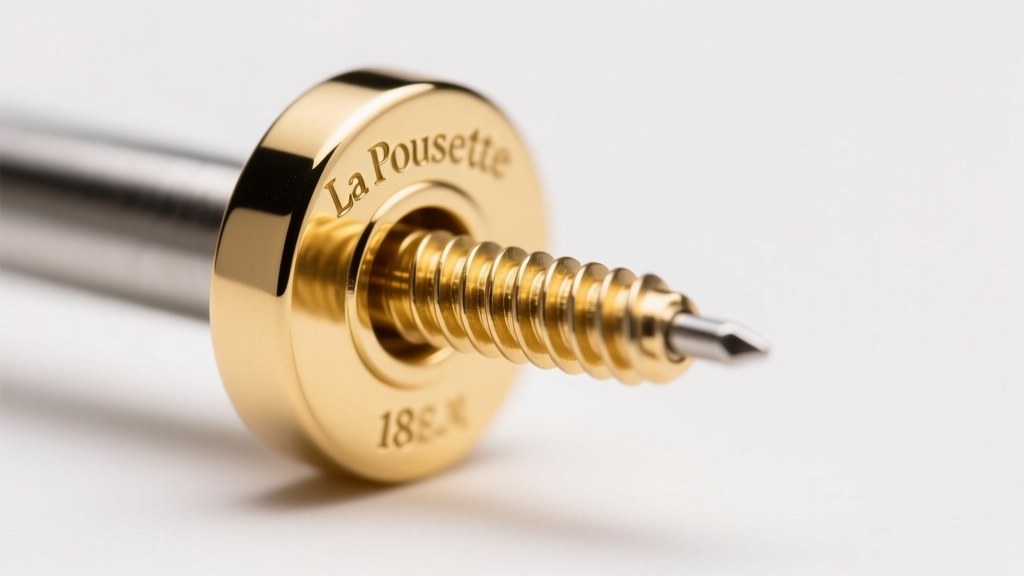
Widely considered the gold standard in fine jewelry, the La Pousette back utilizes a sophisticated internal dual-spring mechanism. Unlike friction backs that rely on the outward pressure of metal tabs, the La Pousette features a locking sleeve. When pushed onto a notched post, the internal springs snap into a precision-cut groove, creating a literal mechanical lock. To remove it, the wearer must pull the outer sleeve back to disengage the springs. This design completely eliminates accidental loss due to hair snagging or clothing friction. According to manufacturing specifications from Stuller, a properly calibrated La Pousette can withstand over 40 pounds of pull-force before releasing, making it the undisputed champion for securing five-figure diamond studs and heavy artisan drops.
2. Precision Screw Backs
Screw backs rely on threaded posts and internally tapped clutches. The security here is absolute, provided the threading remains intact. High-end screw backs feature a thread pitch of 0.8mm to 1.0mm, requiring multiple rotations to secure. The primary failure mode for screw backs is cross-threading, which occurs when the user forces the clutch on at an angle, stripping the soft gold threads. To mitigate this, modern 2026 designs often incorporate a self-aligning titanium or stainless steel core within the gold clutch. Screw backs are exceptionally popular for cartilage piercings and sleepers, where friction backs are easily dislodged by pillows.
3. Silicone and Metal Hybrid Clutches
For those who find mechanical locks cumbersome, hybrid clutches offer a modern compromise. These feature a rigid 14k or 18k gold outer shell for durability, lined with a medical-grade silicone core. The silicone provides immense friction against the post without requiring the tight tolerances of metal-on-metal friction backs. However, they are not immortal. Human sebum, sweat, and cosmetic products cause silicone to degrade, swell, and lose elasticity over 12 to 18 months. They must be replaced periodically to maintain their security rating.
Metallurgy Matters: Allergies and Metal Fatigue
The security of an earring back is inextricably linked to its metallurgy. Pure 24k gold is too soft for earring findings; it lacks the tensile strength required to maintain tension or hold a thread. Therefore, alloying is necessary. According to the Gemological Institute of America (GIA), 18k gold (75% pure gold) offers an excellent balance of richness and durability, while 14k gold (58.5% pure gold) provides superior spring tension for friction backs. However, the alloying metals introduce biological risks. Nickel is frequently used to whiten gold and increase hardness, but it is a notorious sensitizer. The American Academy of Dermatology notes that nickel allergy is the leading cause of contact dermatitis from jewelry. For sensitive ears, the most secure and biocompatible option is ASTM F136 implant-grade titanium. Titanium findings offer incredible strength-to-weight ratios, allowing for thicker, more secure 16-gauge posts without adding excessive weight to the lobe, all while remaining 100% nickel-free and hypoallergenic.
Styling Heavy Statement Pieces Without the Droop
Even with the most secure earring backs, a 25-gram sculptural earring will cause the earlobe to tilt forward, creating an unflattering silhouette and placing undue stress on the piercing fistula. In 2026, stylists are increasingly relying on invisible support systems to counteract this physics problem.
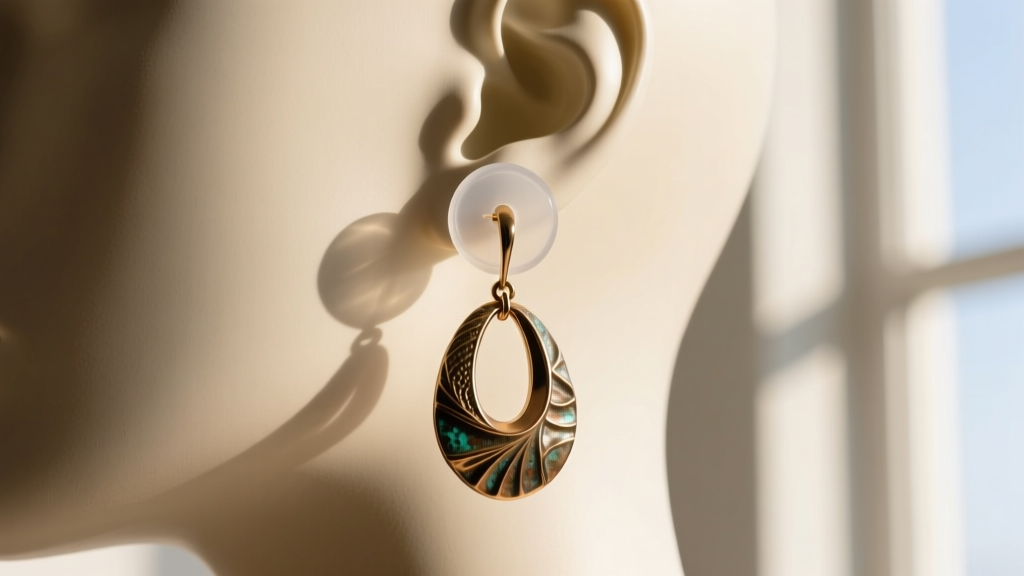
- Silicone Support Discs: Placed between the earlobe and the earring back, these wide, flat discs (usually 8mm to 12mm in diameter) distribute the weight of the earring across a broader surface area of the earlobe. This prevents the 'cheese-cutter' effect and keeps heavy drops facing forward.
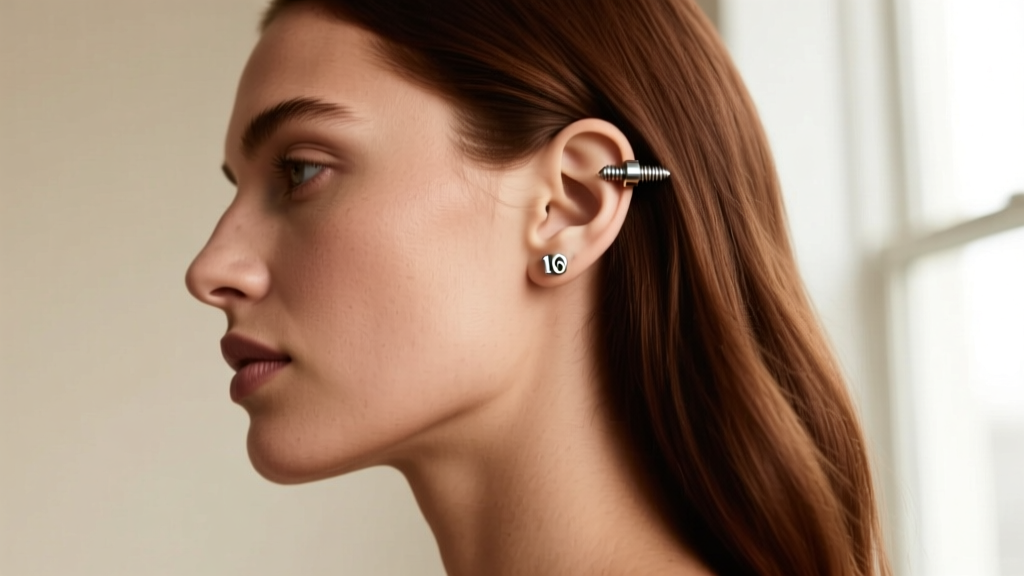
- Ear Jackets and Cuffs: For extreme weight, stylers are pairing heavy lobe drops with upper-ear cuffs that clip onto the helix or cartilage. The cartilage bears a portion of the structural load, relieving the lobe piercing entirely.
- Hollow-Core Construction: When commissioning or purchasing heavy statement pieces, look for hollow-core or electroformed metals. These techniques provide the voluminous, oversized aesthetic demanded by current trends while keeping the actual gram weight low enough for standard locking backs to handle safely.
Pro Tip: Never use standard friction backs on hollow-core or oversized hoop earrings. The dynamic swinging motion creates a pendulum effect that generates enough centrifugal force to slide a friction back off the post in seconds. Always opt for screw-backs or hinged snap-closures for hoops exceeding 30mm in diameter.
Final Verdict: Matching the Back to the Earring
Identifying the most secure earring backs requires matching the mechanism to the specific weight, value, and wear-environment of the jewelry. For irreplaceable fine jewelry and heavy diamond studs, the La Pousette locking mechanism is an indispensable investment that pays for itself the first time it prevents a catastrophic loss. For everyday cartilage wear and sleepers, precision screw backs offer unparalleled peace of mind. Meanwhile, silicone-metal hybrids serve as an excellent, accessible middle ground for mid-weight fashion and trend-driven pieces. As earring designs continue to push the boundaries of scale and sculpture in 2026, upgrading your findings is not just a matter of security—it is a fundamental requirement for wearing heavy jewelry with confidence and comfort.


