Nefertiti Earrings: Troubleshooting Fit & Piercing Issues
Struggling with slipping Nefertiti ear cuffs or heavy statement drops? Discover expert troubleshooting for fit, tension, and material allergies.

The Structural Reality of Nefertiti Earrings in 2026
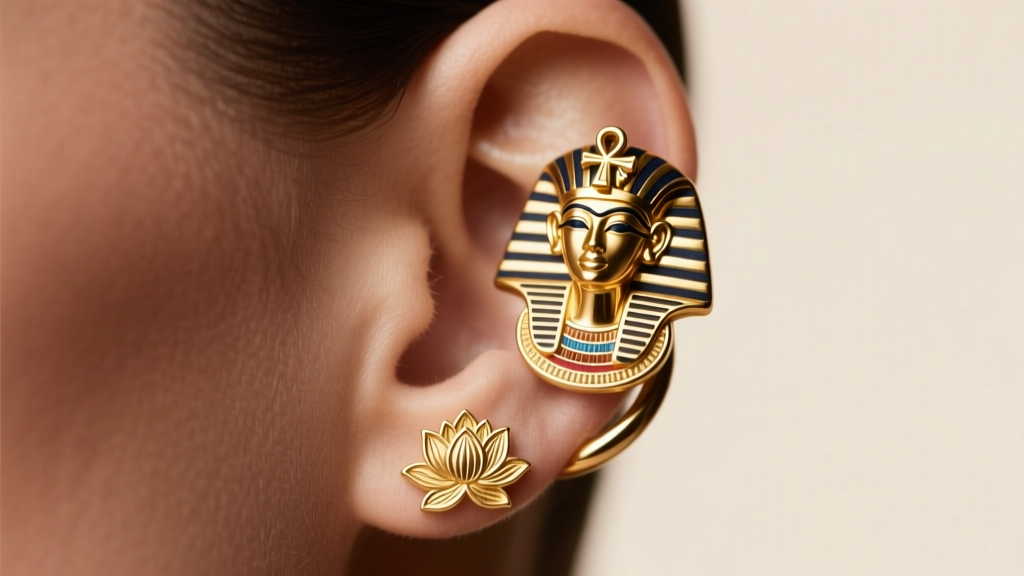
Nefertiti earrings have dominated the maximalist jewelry scene this year, drawing inspiration from ancient Egyptian royalty to create striking, architectural silhouettes. Whether you are wearing a solid metal helix-to-lobe wrap or a heavy, gemstone-encrusted statement drop, these pieces are designed to command attention. However, their dramatic structures often lead to a host of wearable engineering problems. From cuffs that slip off the cartilage to heavy dangles that threaten to tear the earlobe, owning these pieces requires a deep understanding of ear anatomy, metal tension, and weight distribution.
As a senior jewelry stylist, I frequently troubleshoot these exact issues for clients who invest in high-end Egyptian revival pieces. This guide bypasses generic styling advice and dives straight into the mechanical and metallurgical solutions required to make your Nefertiti earrings comfortable, secure, and biocompatible.
Troubleshooting the Slipping Helix Cuff
The most iconic Nefertiti ear cuff features a rigid or semi-rigid wire that hooks over the upper helix and connects via a chain or solid metal band down to the lobe. The number one complaint? The cuff constantly slides forward and falls off.
Why It Happens: Ear Topography vs. Tension
Most mass-produced cuffs are molded to fit a standard, prominent helix ridge. If your ear has a flat helix, a folded rim (Darwin's ear), or a shallow scapha, the cuff lacks the necessary anatomical anchor. Furthermore, the natural oils on your skin reduce the friction coefficient of polished metals, causing the piece to migrate forward with every jaw movement.
Expert Solutions for a Secure Fit
- Silicone Friction Dots: Apply a microscopic drop of skin-safe silicone adhesive (like those used for wig grips) to the inside curve of the helix hook. This creates a high-friction barrier without damaging the metal.
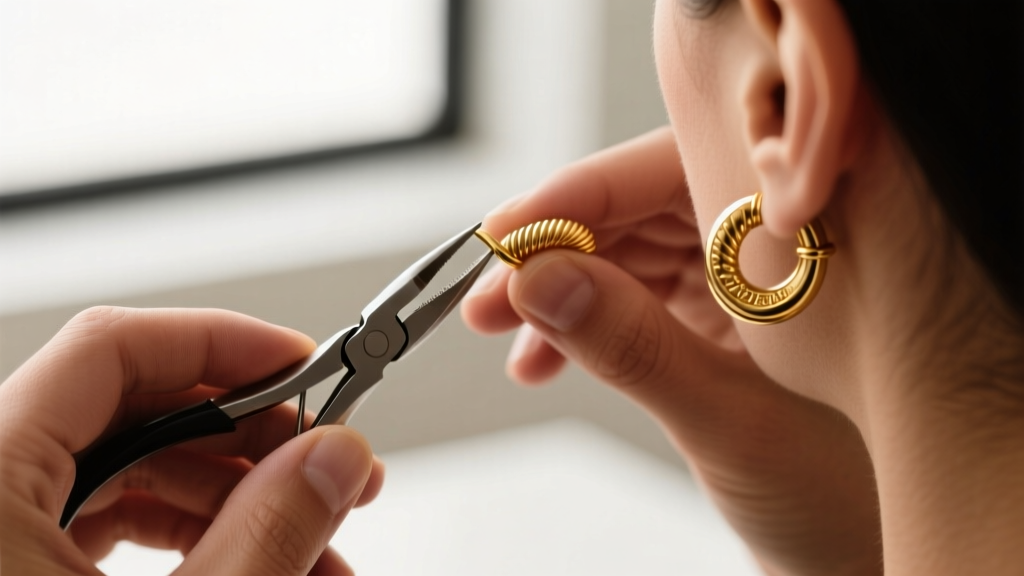
- Nylon-Jaw Tension Adjustment: Never use standard steel pliers to bend your cuff, as this will mar the finish and cause work hardening. Instead, use nylon-jaw pliers to gently squeeze the helix hook inward, increasing the clamping force by 2-3 millimeters.
- The Ear-Putty Hack: For temporary events, mold a tiny piece of clear orthodontic wax or ear putty around the helix hook to create a custom, friction-locked mold of your specific cartilage ridge.
Solving the Heavy Dangle Dilemma
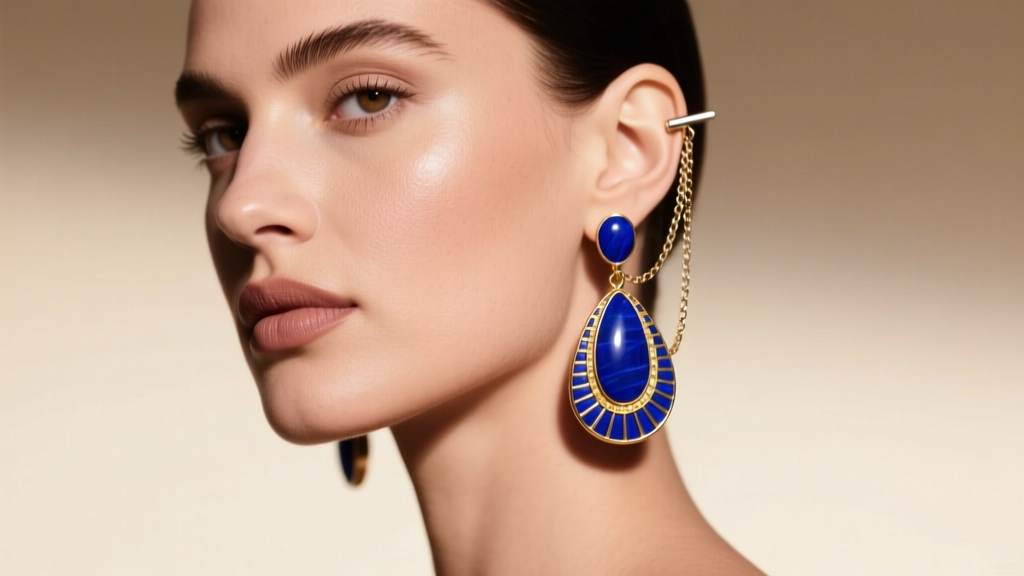
Nefertiti drop earrings often feature substantial materials like carved lapis lazuli, onyx, or solid brass scarab motifs. While visually stunning, a 15-gram earring suspended from a standard 20-gauge (0.8mm) ear wire acts as a lever, slowly pulling the piercing downward. Over time, this causes lobe migration, thinning, and eventually, a torn earlobe.
Upgrading the Suspension System
To safely wear heavy statement drops, you must alter how the weight is distributed across the ear. Relying solely on the lobe piercing is a structural failure waiting to happen.
- Switch to 16-Gauge or 18-Gauge Posts: If your lobe piercing allows, upgrade your earring posts or hooks to a thicker 16g (1.2mm) or 18g (1.0mm) wire. This increases the surface area bearing the weight, reducing the 'cheese-cutter' effect on your flesh.
- Utilize Ear Jackets and Support Chains: The most effective 2026 solution is the ear jacket. This involves a delicate 20-gauge titanium chain that connects the heavy lobe piece to a secondary, higher cartilage piercing (like the mid-helix or flat). This transfers up to 60% of the earring's weight off the lobe and onto the rigid cartilage.
- Lobe Support Patches: For those without secondary piercings, invisible adhesive lobe support patches (made from medical-grade polyurethane) can be applied behind the earlobe to reinforce the tissue and prevent sagging.
The Allergy Trap: Decoding Base Metals
Many affordable Nefertiti replicas are cast in brass or copper alloys to achieve an authentic, antique gold tone. However, these base metals are notorious for causing severe contact dermatitis and turning the skin green due to oxidation and sweat reactions. According to the Association of Professional Piercers (APP), prolonged skin contact with unalloyed copper or nickel-containing brass should be strictly avoided, especially on the highly sensitive cartilage of the helix.
| Material Grade | Tensile Strength | Allergy Risk | Best Application |
|---|---|---|---|
| Brass (Costume) | Low | High (Oxidation) | Occasional wear over clothing |
| 316L Surgical Steel | Medium | Moderate (Nickel) | Budget daily wear (lobes only) |
| ASTM F-136 Titanium | High | None (Biocompatible) | Sensitive skin & tight cuffs |
| 14k/18k Solid Gold | Medium-High | Low (if nickel-free) | Heirloom statement drops |
If you already own a brass piece you love, you can mitigate reactions by having a local jeweler apply a thick layer of rhodium plating to the contact points, or by coating the helix hook in a flexible, clear polyurethane nail polish. Note that the Gemological Institute of America (GIA) notes that even solid gold alloys can cause reactions if they contain high percentages of nickel or copper, so always request nickel-free white gold or stick to yellow gold alloys.
Combating Metal Fatigue in Wrap Earrings
A critical failure mode for solid metal Nefertiti wraps is snapping at the stress point where the helix hook meets the connecting chain or band. This is caused by work hardening. Every time you bend the metal outward to slip it over your ear, you alter its crystalline structure, making it more brittle. After 20 or 30 bends, a 14k gold or brass cuff will simply snap.
Pro-Tip from the Bench: Never open a solid metal ear cuff by pulling the ends apart like a jump ring. Instead, slide the cuff onto the thinnest part of your ear (the outer helix rim) and gently rotate it downward into the concha or lobe area. If the piece lacks a tension-spring hinge, treat it as a rigid object, not a flexible one.
Final Thoughts on Maintenance and Storage
To preserve the structural integrity and finish of your Nefertiti earrings, storage is just as critical as wear. Never toss these architectural pieces into a communal jewelry box where heavy pendants can crush the delicate helix hooks or tangle the support chains. Store each piece individually in a soft, anti-tarnish flannel pouch. For pieces featuring porous stones like turquoise or lapis lazuli, keep them away from high humidity and ultrasonic cleaners, which can fracture the stones or dissolve the adhesives used in Egyptian-style inlay work. By respecting the mechanics and materials of these regal pieces, you ensure they remain a staple of your collection for years to come.


