Material Guide: Choosing the Best 90's Bamboo Earrings
Discover the best materials for 90's bamboo earrings. We compare wood, acrylic, and hollow metals for weight, durability, and lobe health.

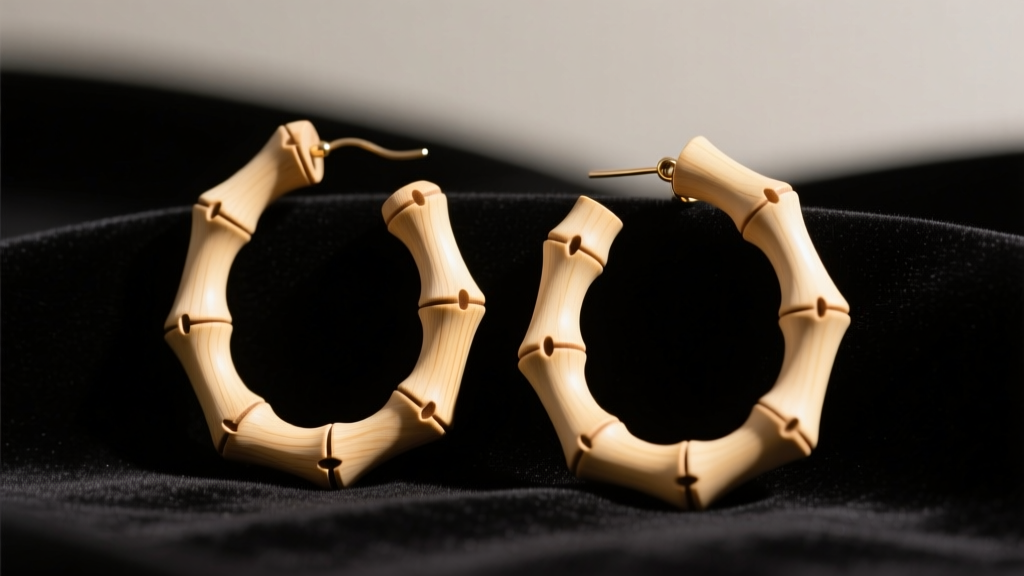
The Legacy and Physics of the Bamboo Silhouette
The 90's bamboo earrings silhouette—characterized by tubular, segmented hoops ranging from 2 to 4 inches in diameter—remains a cornerstone of streetwear and hip-hop fashion. Popularized by icons like Salt-N-Pepa and Lil' Kim, these statement pieces mimic the natural nodes of bamboo stalks. However, as we navigate the 2026 resurgence of vintage Y2K and 90s aesthetics, modern wearers must look past the nostalgic appeal and critically evaluate the material science behind these oversized hoops.
Because of their substantial surface area and diameter, the primary enemy of the bamboo earring is material density. A 3-inch hoop made of solid brass will weigh upwards of 45 grams per earring, which is more than enough to cause earlobe migration, tissue thinning, and eventual tearing. Therefore, selecting the right material is not just an aesthetic choice; it is a biomechanical necessity for preserving your earlobe health. This guide breaks down the three dominant material categories used in authentic and reproduction 90's bamboo earrings: natural woods, synthetic resins, and hollow-form metals.
Material Breakdown: Wood, Acrylic, and Metals
1. Natural Bamboo and Carved Hardwoods
Authentic vintage pieces from the late 1980s and early 1990s were frequently carved from actual bamboo (which is technically a highly tensile grass, not a hardwood) or lightweight balsa and basswood. Natural bamboo offers an unparalleled strength-to-weight ratio. A 3-inch natural bamboo hoop typically weighs less than 4 grams, making it virtually imperceptible on the earlobe.
However, organic materials are highly susceptible to environmental degradation. Untreated bamboo is porous and will absorb sebum, sweat, and humidity, leading to warping, splintering, and bacterial growth. When sourcing wooden 90's bamboo earrings, you must verify the sealing method. Look for pieces treated with food-grade tung oil or carnauba wax. Avoid polyurethane-coated vintage pieces, as the plasticized finish tends to yellow and crack over decades of wear, exposing raw, splinter-prone wood to the skin.
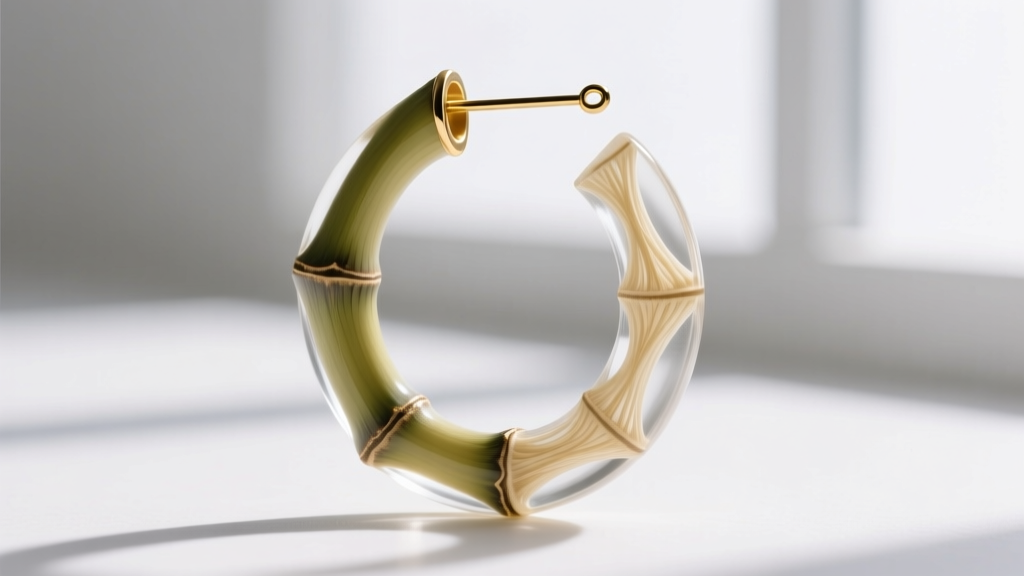
2. Injection-Molded Acrylic and Cast Resins
As the demand for bamboo earrings exploded in the mid-90s, manufacturers shifted to injection-molded acrylics and cast polyurethane resins. These synthetics allowed for perfectly uniform "bamboo" nodes and the integration of vibrant, opaque colorways that natural wood could not achieve.
Acrylic is inherently hypoallergenic and impervious to moisture, solving the warping issues of natural wood. A standard 3-inch acrylic hoop weighs between 8 and 12 grams. While heavier than wood, this weight is still well within the safe threshold for standard earlobe piercings. The primary failure mode for acrylic bamboo earrings is torque snapping. If the hoop is caught on clothing, the rigid nature of cast acrylic means it will snap cleanly at the thinnest point (usually just below the post joint) rather than bending.
3. Hollow-Form Electroplated Metals
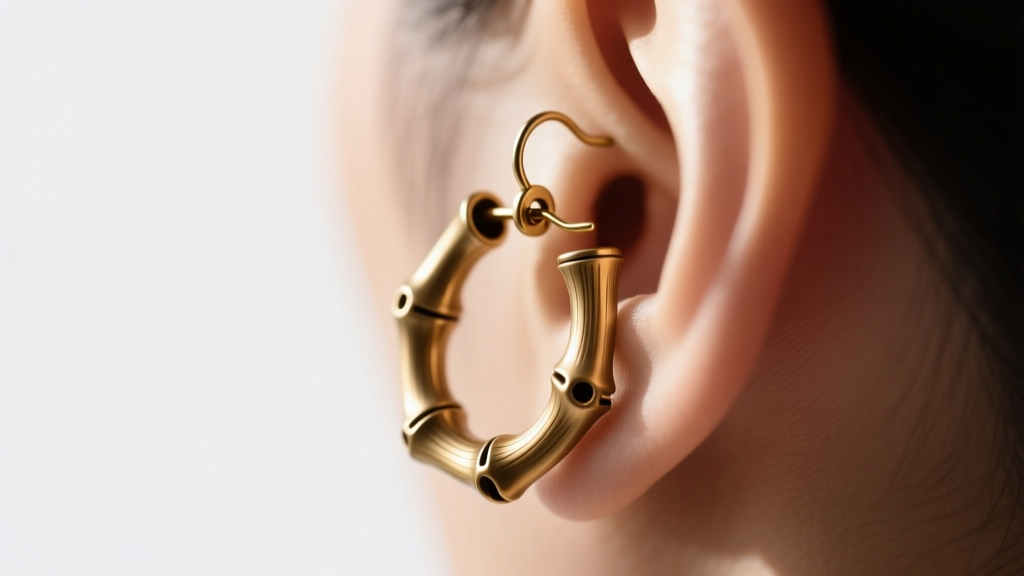
The "door-knocker" and metallic bamboo styles rely on the illusion of mass. High-quality metal bamboo earrings are not cast solid; they are created using electroforming or stamped hollow-form techniques. In electroforming, a wax or resin mold of the bamboo shape is coated in a conductive paint and submerged in an electrolytic bath, building up a microscopic shell of copper or brass. The mold is then melted out, leaving a hollow, incredibly lightweight metal shell.
When purchasing metallic 90's bamboo earrings, the base metal and the plating thickness are critical. Cheap modern reproductions often use zinc-alloy bases with "flash plating" (less than 0.17 microns of gold), which will wear off in weeks and expose nickel-heavy base metals. According to the American Academy of Dermatology, nickel exposure from heavy, friction-prone earrings is a leading cause of allergic contact dermatitis. Always seek out pieces with a surgical steel or titanium base, or brass pieces plated with a minimum of 2.5 microns of gold (Vermeil standard) to ensure longevity and skin safety.
Comparative Data: Weight, Density, and Lobe Stress
Understanding the exact physical properties of these materials helps in making an informed purchase. The table below outlines the average specifications for a standard 3-inch (76mm) diameter bamboo hoop.
| Material | Avg. Weight (per 3" hoop) | Density Profile | Lobe Stress Risk | Primary Failure Mode |
|---|---|---|---|---|
| Natural Bamboo | 2.5g - 4.0g | Ultra-Low | Minimal | Moisture warping, splintering |
| Cast Acrylic | 8.0g - 12.0g | Low-Medium | Low | Brittle snapping under torque |
| Hollow Brass (Vermeil) | 14.0g - 18.0g | Medium | Moderate | Plating wear, base metal denting |
| Solid Brass (Vintage) | 35.0g - 45.0g | Very High | Severe (Tissue Necrosis) | Earlobe tearing, post detachment |
Hardware, Gauge, and the "Cheese-Cutter" Effect
The most overlooked aspect of 90's bamboo earrings is the hardware that connects the hoop to the body. The intersection of the post and the earlobe bears the entire kinetic load of the swinging hoop. If a 15-gram hollow metal bamboo earring is hung on a flimsy 22-gauge (0.64mm) fish-hook wire, the downward force combined with the swinging momentum creates a localized pressure point.
In body modification circles, this is known as the cheese-cutter effect. The thin wire acts like a blade, slowly slicing through the earlobe tissue over time, leading to irreversible migration and eventual splitting. To prevent this, you must match the earring's weight to the appropriate wire gauge:
- Under 5 grams (Wood/Acrylic): 20-gauge (0.81mm) or 18-gauge (1.02mm) standard wire is perfectly safe.
- 5 to 15 grams (Hollow Metals): Require a minimum of 16-gauge (1.29mm) wire, ideally with a reinforced saddle-back or omega clip to distribute the weight across a wider surface area of the earlobe.
- Over 20 grams (Solid Metals/Embellished): Must utilize 14-gauge (1.63mm) French wires or specialized lever-backs with broad contact pads. Avoid wearing these for more than 4-6 hours at a time.
Care, Maintenance, and Troubleshooting
Preserving the structural integrity and aesthetic finish of your bamboo earrings requires material-specific care routines. Neglecting these steps will rapidly degrade both vintage and modern pieces.
Wood and Bamboo Maintenance
Never submerge natural bamboo earrings in water or use alcohol-based cleaners, which will strip the natural oils and cause the grass fibers to dry out and crack. Instead, wipe them down with a dry microfiber cloth after wear to remove skin oils. Once every six months, apply a micro-thin layer of jojoba oil or specialized wood-wax conditioner to maintain the moisture barrier and keep the bamboo nodes supple.
Acrylic and Resin Care
Acrylic is prone to micro-scratches that can dull the finish and trap dirt in the carved bamboo grooves. Clean acrylic hoops using a mild, fragrance-free dish soap and lukewarm water. Dry them immediately with a soft cotton cloth. Keep acrylics out of direct, prolonged UV sunlight when not in use, as older 90s acrylic formulas are highly susceptible to photodegradation, which turns clear or white resins into a brittle, yellowed state.
Protecting Metal Plating
For hollow-form gold or silver bamboo earrings, the primary threat is chemical abrasion from cosmetics and perfumes. The Gemological Institute of America (GIA) notes that the chemical compounds in hairsprays and lotions can rapidly break down the microscopic layers of gold flash-plating. Always put your metal earrings on after applying makeup, perfume, and hairspray. Store them in an anti-tarnish cloth pouch to prevent the base brass from oxidizing and pushing green copper salts through the plating pores.
Sourcing Authentic and Safe Options
When hunting for authentic 90's bamboo earrings in the vintage market, prioritize sellers who provide macro-photography of the post joints and the interior of the hoops. Look for the tell-tale signs of hand-carving in wooden pieces (slight asymmetries in the bamboo nodes) or the seam lines in vintage stamped metals. Avoid ultra-cheap, mass-produced drop-shipped replicas, as they almost universally rely on nickel-laden base metals and dangerously thin 24-gauge wires that compromise your earlobe health. By prioritizing material density, appropriate gauge sizing, and safe plating standards, you can rock this iconic 90s silhouette with both style and structural safety.


