90's Earrings Revival: A Technical Guide to Retro Metals & Gauges
An expert technical analysis of 90's earrings, covering 316L steel metallurgy, gauge sizing failures, and modern restoration methods.

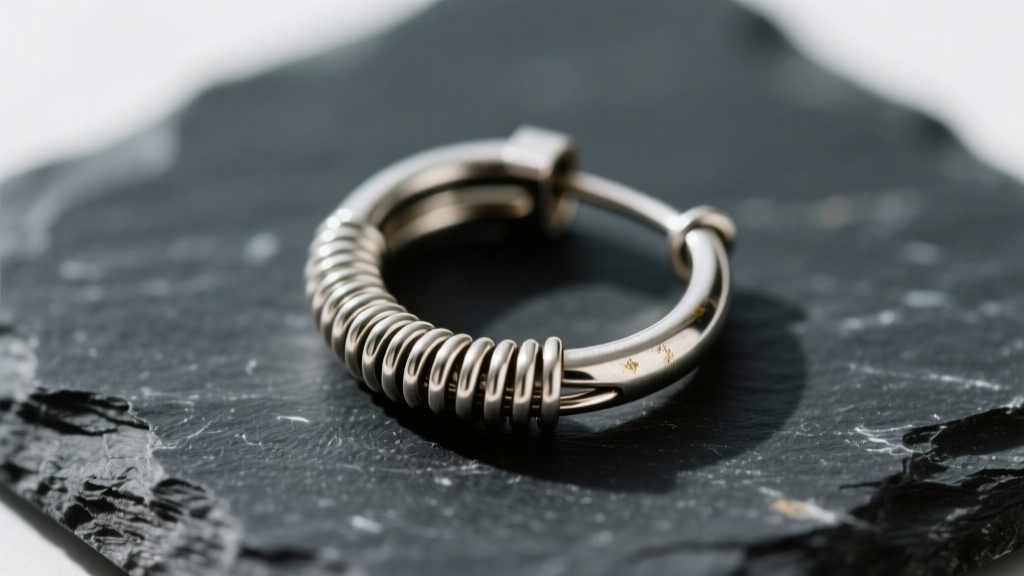
The resurgence of Y2K and grunge fashion has brought 90's earrings back into the mainstream spotlight. From mall-kiosk cartilage cuffs to heavy, wire-wrapped dangles and tension-based sleeper hoops, the aesthetic of the decade is undeniable. However, from a metallurgical and biomechanical standpoint, the original jewelry produced between 1990 and 1999 was often a technical nightmare. As a domain expert in jewelry materials and piercing mechanics, I frequently see patients and collectors struggling with the structural and chemical failures of authentic vintage pieces.
This deep dive bypasses the nostalgia to examine the actual engineering, material grades, and gauge specifications of 90's earrings. We will explore why original 316L stainless steel caused rampant contact dermatitis, how improper wire gauges led to permanent tissue damage, and how you can safely restore or replicate these iconic designs using modern 2026 biomaterial standards.
The Metallurgical Reality of 90's 'Surgical Steel'
In the 1990s, the term 'surgical steel' was largely an unregulated marketing buzzword rather than a strict metallurgical classification. The vast majority of mass-market 90's earrings were stamped from 316L or 316LVM stainless steel. While 316L is an excellent industrial alloy containing 16-18% chromium, 10-14% nickel, and 2-3% molybdenum, its application in body jewelry was deeply flawed.
The primary failure mode of 316L in 90's earrings is nickel leaching. When exposed to the slightly acidic pH of human sweat and sebum, the chromium oxide passivation layer on cheaper 90s manufacturing runs would degrade. According to the American Academy of Dermatology, nickel allergy is one of the most common causes of allergic contact dermatitis. The EU Nickel Directive, which eventually limited nickel release to 0.5 µg/cm²/week for prolonged skin contact, was introduced in 1994 but took years to enforce, meaning most American 90's earrings wildly exceeded this threshold.
Expert Insight: If you are testing authentic 90's earrings with a dimethylglyoxime (DMG) nickel test kit, expect a positive result on over 70% of non-precious metal pieces from that era, particularly on the earring posts and clutch backs where friction accelerates ion release.
Gauge Sizing and the 'Cheese Cutter' Biomechanics
One of the most damaging legacies of 90's earrings is the widespread use of ultra-thin wire gauges for cartilage and lobe piercings. During the 90s body modification boom, standard lobe earrings were frequently manufactured at 22-gauge (0.64mm) or 20-gauge (0.81mm), while early cartilage and helix hoops were pushed at 18-gauge (1.02mm).
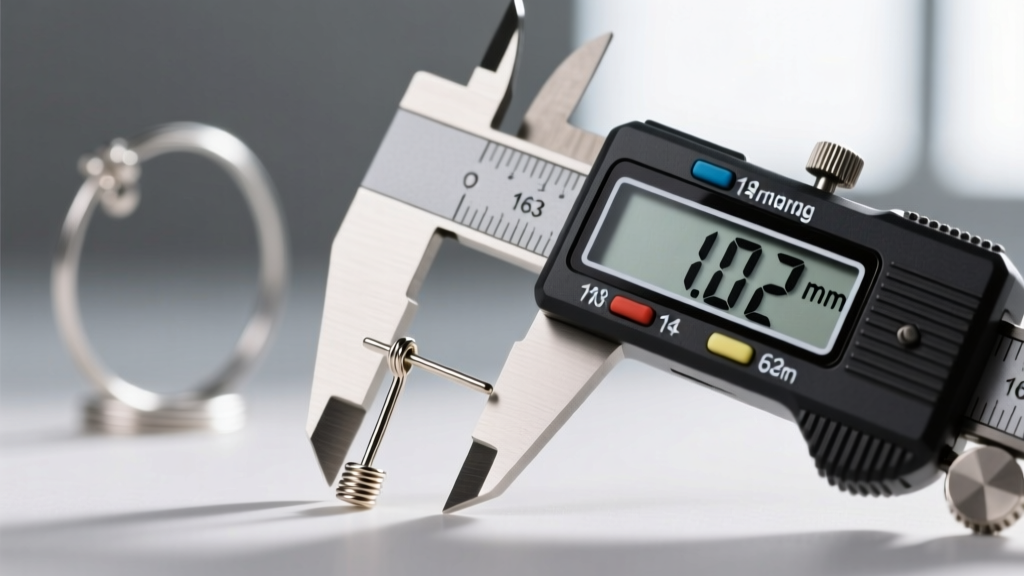
From a biomechanical perspective, wearing an 18-gauge or 20-gauge hoop in a cartilage piercing creates a severe focal point of pressure. The tensile strength of 316L wire at 0.81mm is insufficient to resist the lateral forces applied when sleeping on a pillow or catching the jewelry on clothing. This results in the 'cheese cutter effect,' where the thin wire slowly migrates through the tissue, causing micro-tears, hypertrophic scarring, and permanent fistula elongation.
Modern Gauge Corrections for Retro Styles
- Standard Lobe Studs: Upgrade from 90s 20G to a modern 18G (1.02mm) or 16G (1.29mm) post to distribute weight evenly and prevent migration.
- Cartilage Hoops: Never use original 90s 18G wire. Modern ASTM F136 titanium hoops should be a minimum of 16G (1.29mm) or 14G (1.63mm) to maintain structural integrity in the rigid helix tissue.
- Industrial Bars: 90s industrial barbells were notoriously prone to bending at 14G. Modern equivalents require 12G (2.05mm) or 10G (2.59mm) internally threaded titanium to prevent bowing.
Structural Analysis: Sleeper Hoops and Tension Clip-Ons
The 90s popularized the 'sleeper hoop'—a continuous wire hoop where one end features a hollow tube and the other a slightly thicker, rounded pin that snaps into place via metal tension. While iconic, the engineering tolerances of 90s mass production were notoriously inconsistent.
The failure point in vintage sleeper hoops occurs at the junction of the pin and the tube. Over time, the repeated insertion and removal cause work hardening in the 316L wire. Because 90s manufacturers rarely annealed the wire properly after bending the pin, the metal becomes brittle. Applying lateral force to open the hoop often results in a clean snap at the pin base, rendering the earring useless and leaving a sharp, jagged edge that can lacerate the earlobe.
Similarly, 90's tension clip-on earrings (often worn by those avoiding the needle-phobia of the era) relied on a simple stamped steel spring mechanism. These lacked the modern silicone comfort pads and adjustable tension screws found in contemporary clip-ons, resulting in localized ischemia (restricted blood flow) to the earlobe after just a few hours of wear.
Material Comparison: 1995 vs. Modern Standards
To understand how far jewelry engineering has come, we must compare the exact specifications of a typical 1995 mall-kiosk earring against a 2026 professional-grade equivalent.
| Specification | Typical 1995 Earring | 2026 Professional Standard |
|---|---|---|
| Primary Alloy | 316L Stainless Steel (High Nickel) | ASTM F136 Ti-6Al-4V ELI Titanium |
| Nickel Release Rate | > 1.5 µg/cm²/week | 0.0 µg/cm²/week (Nickel-Free) |
| Standard Lobe Gauge | 20G (0.81mm) | 16G (1.29mm) or 14G (1.63mm) |
| Threading Type | Externally Threaded (Tissue Tearing) | Internally Threaded or Threadless |
| Surface Finish | Mechanical Polish (Micro-scratches) | Mirror Polish + Anodized Oxide Layer |
Sourcing and Restoring Authentic 90's Earrings Safely
For collectors and vintage enthusiasts, completely avoiding 90's earrings is unnecessary. The aesthetic value of original grunge-era dangles, gothic crosses, and acrylic barbell charms is irreplaceable. However, wearing them requires a strict restoration protocol to mitigate the metallurgical and biomechanical risks outlined above.
The Re-Wiring Protocol
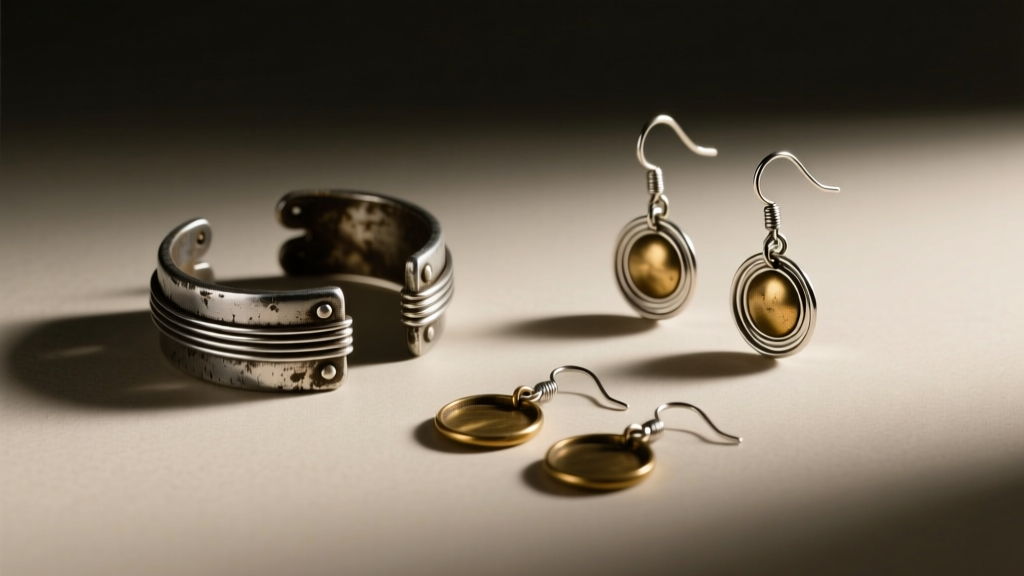
The most effective way to restore 90's dangle and drop earrings is to completely remove the original steel ear wires. Using flush cutters, snip the wire just above the jump ring. Replace the ear wire with a modern, 18-gauge or 16-gauge Niobium or ASTM F136 Titanium fishhook. Niobium is particularly useful for vintage restoration because it is highly malleable, hypoallergenic, and can be anodized using a simple DC power supply to match the exact color of the original 90s oxidized steel or blackened silver finishes.
Addressing Porosity in Cast Metals
Many 90's earrings, particularly those featuring intricate pewter or white metal casts, suffer from surface porosity. These microscopic pits harbor bacteria and cannot be sterilized in an ultrasonic cleaner or autoclave. To seal these vintage pieces, apply a micro-thin layer of medical-grade parylene coating or a jewelry-specific nano-ceramic sealant. This creates a biocompatible barrier between the porous 90s alloy and the skin, allowing you to wear the piece safely without triggering heavy metal sensitivities.
Conclusion
The appeal of 90's earrings lies in their raw, unpolished aesthetic and cultural significance. However, as the National Center for Biotechnology Information notes in its extensive research on metal sensitization, prolonged exposure to sub-standard alloys can lead to lifelong systemic allergies. By understanding the metallurgical shortcomings of 316L steel, recognizing the biomechanical dangers of ultra-thin 20-gauge wires, and applying modern restoration techniques, we can preserve the iconic style of the decade without compromising tissue health or structural integrity.


