A Beginner's Guide to Choosing the Right Earring Jewelry Holder
Learn how to choose the perfect earring jewelry holder to prevent tangles and tarnish. Compare materials, sizes, and styles for your collection.

The Hidden Cost of Improper Earring Storage
For most jewelry beginners, the journey starts with a communal ceramic dish on the nightstand or a tangled knot at the bottom of a velvet pouch. While this might seem harmless, improper storage is the silent killer of fine jewelry. When you invest in quality pieces, finding the right earring jewelry holder is not just about aesthetics; it is a critical maintenance step. Tangled fishhook wires can bend and snap, high-polish gold can accumulate micro-scratches from friction, and sterling silver can oxidize rapidly when exposed to ambient humidity and sulfur.
This beginner-friendly explainer will walk you through the exact specifications, material grades, and structural designs you need to look for when purchasing an earring jewelry holder. Whether you are storing delicate 20-gauge diamond studs or heavy 14-gauge cartilage hoops, understanding the mechanics of jewelry storage will protect your investment and streamline your daily routine.
Matching Holder Materials to Your Metals
Not all storage materials are created equal. The chemical interaction between your earrings and the surface they rest on dictates how quickly your metals will tarnish. According to the Gemological Institute of America (GIA), environmental factors and contact with certain organic compounds can accelerate the degradation of precious metals.
The Material Matrix
Below is a comparison chart to help you match the holder material to your specific earring collection:
| Material Type | Best Used For | Tarnish Protection | Price Range |
|---|---|---|---|
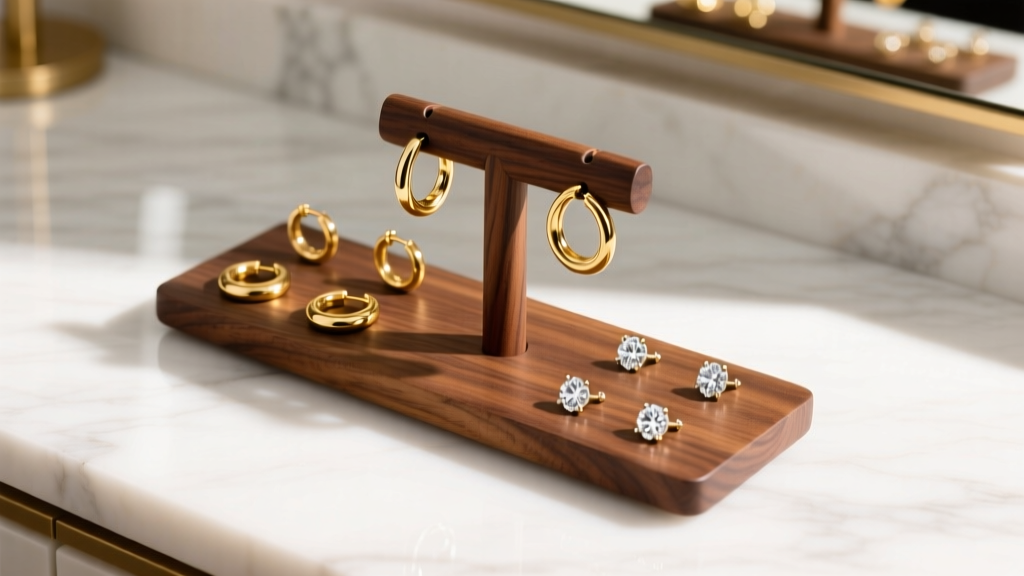
| Sealed Walnut / Maple | Gold, Platinum, Titanium | Low (Safe if polyurethane sealed) | $30 - $80 |
| Raw Cedar / Pine | None (Avoid for Jewelry) | Negative (Sap and acids cause tarnish) | $15 - $40 |
| Cast Acrylic | All Metals, Gemstones | Neutral (Inert, but attracts dust) | $20 - $60 |
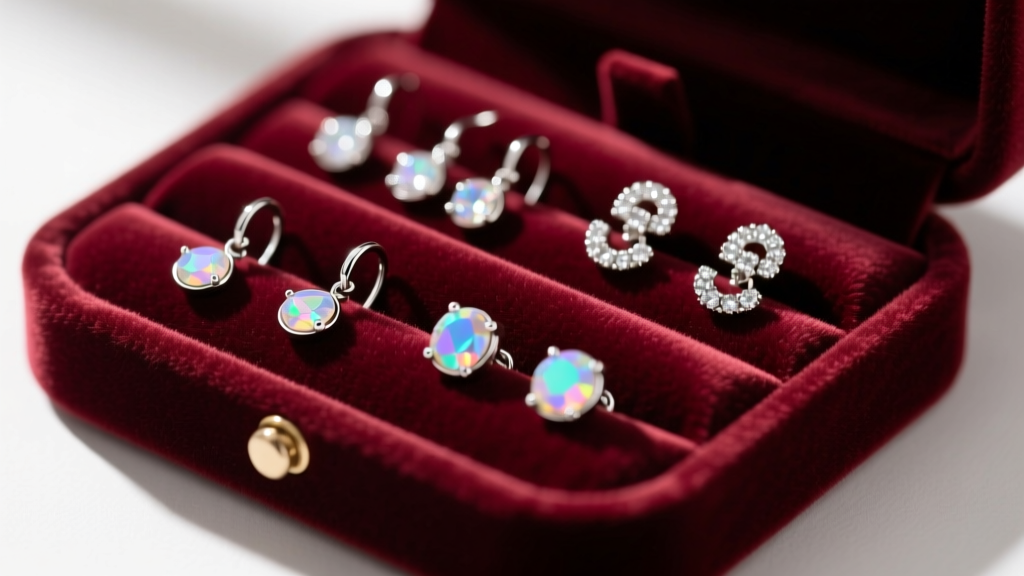
| Pacific Silvercloth Velvet | Sterling Silver, Oxidized Metals | High (Embedded silver particles trap H2S) | $45 - $120 |
Pro-Tip: Always look for cast acrylic rather than extruded acrylic. Cast acrylic is optically clearer, highly scratch-resistant, and will not yellow over time when exposed to UV light from a nearby window.
Gauge Sizing: The Overlooked Metric
One of the most common frustrations beginners face is buying a beautiful wooden earring jewelry holder, only to realize their favorite cartilage hoops will not fit into the pre-drilled holes. This is a gauge issue.
Standard earlobe piercings are typically done at 20-gauge (0.81mm) or 18-gauge (1.02mm). Most commercial holders feature laser-drilled holes sized at 1.2mm, which comfortably accommodates these standard posts. However, if you wear cartilage jewelry, seamless clickers, or heavy statement hoops, your wire thickness is likely 16-gauge (1.29mm) or 14-gauge (1.63mm). Forcing a 14-gauge wire into a 1.2mm hole will strip the wood, scratch your jewelry's rhodium plating, and ultimately warp the post.
When shopping, check the product specifications for hole diameter. As noted by Rio Grande Jewelry Supply, understanding exact millimeter conversions for wire gauges is essential for proper bench work and storage. Look for holders that explicitly advertise "16G compatible" or feature open-slot designs rather than closed circular holes.
Organizational Frameworks by Earring Style
A versatile earring jewelry holder must account for the physical geometry of your collection. A one-size-fits-all approach usually results in a messy, tangled compromise.
1. Studs and Huggies: The Grid System
Studs and small huggie hoops require high-density, low-profile storage. The best solution is a grid-style holder with a silicone or velvet push-back mat. Silicone mats are particularly effective because they grip the earring post, preventing the piece from sliding out when the drawer is pulled open. Look for grids with at least 50 individual compartments to keep pairs strictly separated.
2. Dangles and Drop Earrings: Vertical Clearance
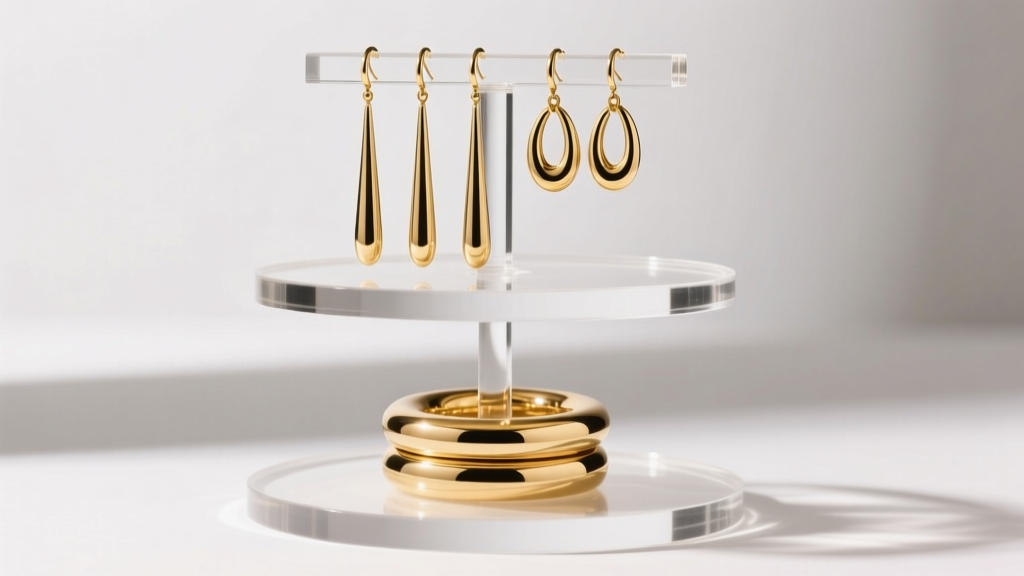
Dangle earrings are notorious for tangling. If stored flat, the chains weave together into nearly impossible knots. You need an earring jewelry holder with tiered hanging branches or deep acrylic drawers that offer a minimum of 3.5 inches of vertical clearance. This allows the heaviest gemstone drops to hang freely without the bottom of the earring resting on the drawer floor, which can bend the connecting jump rings.
3. Fishhooks and French Wires: The Slit Method
Earrings with fishhook wires easily slip out of standard round holes. Seek out holders that feature horizontal slits or velvet rolls. The slit creates tension against the curve of the wire, locking the earring securely in place while keeping the delicate tip from scratching adjacent pieces.
"The longevity of a fine jewelry piece is determined 50% by how it is worn, and 50% by how it is stored. Never let diamond studs rest directly against gold hoops; the diamond will act like sandpaper and scratch the soft metal." — Master Bench Jeweler
Earring Back Compatibility
Your holder must also accommodate the backs of your earrings, not just the posts. Different backing mechanisms require different spatial allowances:
- Friction (Butterfly) Backs: Require standard depth. Ensure the holder's velvet pad is at least 5mm thick so the sharp post tips do not pierce through to the hard base beneath.
- La Pousette (Locking) Backs: These are bulkier and feature a mechanical locking sleeve. They require wider spacing between grid holes to prevent the locking mechanisms from jamming against each other.
- Screw Backs: Often found on high-value diamond studs. They require a dedicated slot where the earring can be stored fully assembled, so you do not lose the threaded backing.
Maintenance and Care for Your Holder
Investing in a premium earring jewelry holder is only the first step; maintaining it ensures it continues to protect your collection.
- Cleaning Acrylic: Never use Windex or ammonia-based glass cleaners on acrylic holders. Ammonia will cause the plastic to cloud and develop micro-fractures. Instead, use a specialized plastic polish like Novus No. 2 and a clean microfiber cloth.
- Refreshing Anti-Tarnish Cloth: If your holder uses Pacific Silvercloth or treated flannel, remember that the embedded tarnish-absorbing compounds eventually saturate. Depending on your local humidity, the cloth will need to be replaced or professionally retreated every 18 to 24 months. Never wash anti-tarnish cloth, as this strips the active silver particles.
- Wood Conditioning: For sealed wood holders, apply a light coat of museum-grade microcrystalline wax (like Renaissance Wax) once a year to maintain the moisture barrier and prevent the wood from warping in humid bathrooms.
Final Thoughts on Building Your System
Transitioning from a cluttered dish to a dedicated earring jewelry holder is a hallmark of a maturing jewelry collector. By paying close attention to material chemistry, exact gauge sizing, and the specific geometric needs of your dangles and studs, you will drastically reduce tarnish, eliminate tangles, and ensure that your favorite pieces are always ready to wear. Start by auditing your current collection, measure your thickest gauge wires, and select a holder that meets those precise technical requirements.


