Tag Earrings Design: Material Grades, Weight, and Ergonomics
An expert technical guide to tag earrings, covering metal gauges, weight distribution, ASTM material grades, and laser engraving durability.

The Anatomy of Tag Earrings: Beyond the Aesthetic
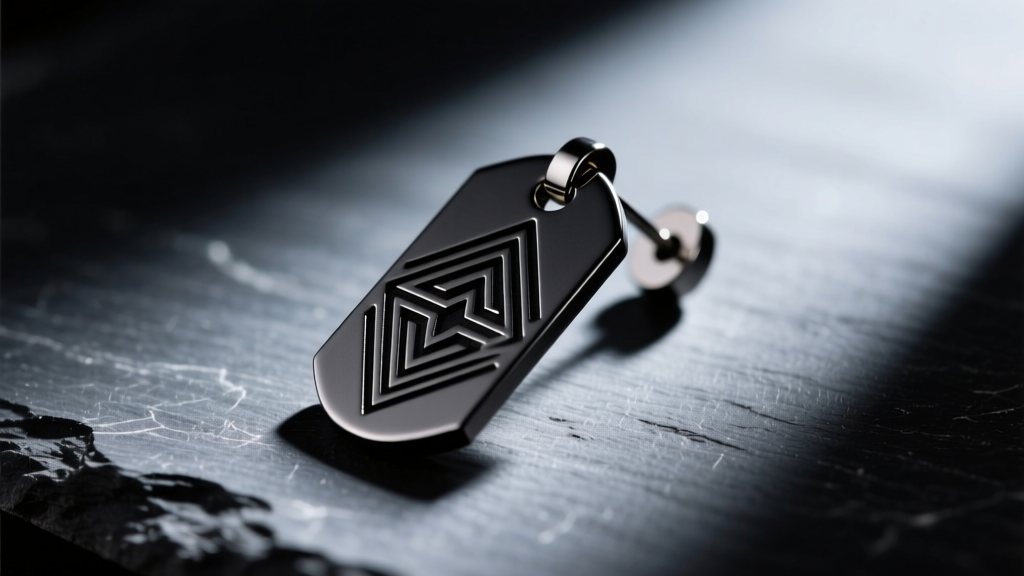
Tag earrings are often dismissed as simple, utilitarian accessories, but from an engineering and ergonomic perspective, they represent a complex intersection of planar geometry, material science, and biomechanics. Unlike spherical studs or symmetrical hoops, the flat, shield-like structure of tag earrings creates a unique center of gravity. When suspended from the earlobe, this geometry introduces specific torque and tensile forces that must be carefully managed to prevent long-term tissue damage. As of 2026, the most advanced tag earring designs prioritize a high surface-area-to-mass ratio, allowing for expansive engraving canvases without exceeding the earlobe's safe weight-bearing threshold.
The standard anatomy of a tag earring consists of three critical components: the planar plate (the tag itself), the bail or connecting loop, and the finding (the ear wire or post). The failure of any single component compromises the entire piece. Understanding the technical specifications of these elements is crucial for both jewelers and consumers seeking durable, hypoallergenic, and ergonomically sound jewelry.
Material Science: Selecting the Right Alloy
The choice of metal dictates not only the biocompatibility of the earring but also its structural rigidity and resistance to environmental degradation. Because tag earrings feature large, flat surfaces, they are highly susceptible to bending and scratching if the wrong alloy or temper is used.
ASTM F136 Titanium vs. 316L Stainless Steel
For individuals with nickel sensitivities or those seeking ultra-lightweight options, implant-grade titanium is the undisputed standard. Specifically, ASTM F136 (Ti-6Al-4V ELI) is the benchmark for body jewelry. Titanium boasts a density of approximately 4.43 g/cm³, making it nearly 45% lighter than surgical steel. A standard 15mm x 10mm tag earring crafted from 1.2mm thick ASTM F136 titanium weighs roughly 1.8 grams, well within the safe limit for daily wear. Conversely, 316L stainless steel (density ~8.0 g/cm³) offers superior scratch resistance and a higher tensile strength, but a tag of the same dimensions will weigh nearly 3.5 grams. While 316L is highly durable and cost-effective (typically ranging from $20 to $50 per pair), its heavier mass necessitates a reduction in plate thickness to maintain ergonomic comfort.
Precious Metals: 14k vs. 18k Gold Alloys
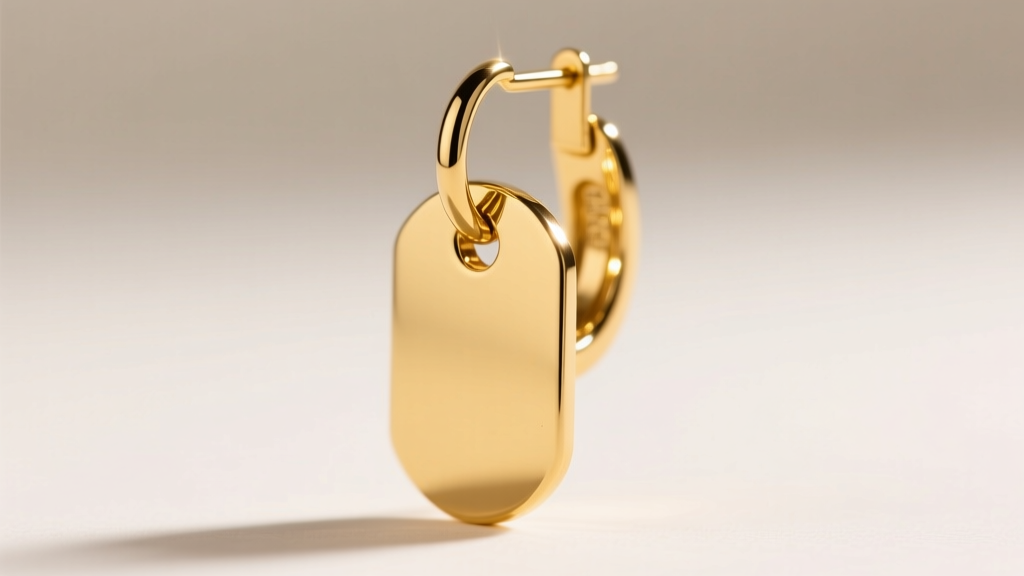
When designing tag earrings in precious metals, the karat weight fundamentally alters the physical properties of the piece. Pure 24k gold is far too soft for flat plates, as it will warp under minimal torsional stress. Therefore, alloying is mandatory. 18k gold (75% gold) offers a rich color but possesses a Vickers hardness (HV) of roughly 125, making it prone to deep scratching on large, flat tag surfaces. 14k gold (58.5% gold), with an HV of approximately 160-180 depending on the copper and silver ratios, provides the necessary rigidity to maintain a flat profile over years of wear. For high-end tag earrings ($150 to $450+), 14k gold is the technically superior choice for structural longevity.
The Physics of Earlobe Stress: Weight and Thickness Parameters
The human earlobe (lobule) is composed of fibro-fatty tissue lacking cartilage, making it highly susceptible to mechanical stretching—a condition clinically known as lobule ptosis. The primary culprit is chronic traction caused by excessive earring weight. The maximum recommended weight for a single daily-wear earring is 3.0 to 4.0 grams. Anything heavier accelerates tissue elongation and can lead to piercing migration or tearing.
To mitigate this, manufacturers must carefully calibrate the gauge (thickness) of the tag plate. While a 1.5mm thickness might feel substantial and premium, it drastically increases the mass. The optimal thickness for tag earrings lies between 0.8mm and 1.2mm. Below 0.8mm, the plate becomes prone to permanent warping; above 1.2mm, the weight becomes a liability.
| Material | Thickness (mm) | Avg Weight (g) | Lobe Stress Risk | Ideal Use Case |
|---|---|---|---|---|
| ASTM F136 Titanium | 1.2 | 1.8g | Low | Daily wear, active lifestyles |
| 316L Surgical Steel | 1.0 | 2.4g | Moderate | Occasional wear, budget-friendly |
| 14k Yellow Gold | 1.2 | 3.2g | High | Special events, short-term wear |
| Niobium | 1.0 | 2.1g | Low | Hypoallergenic, anodized colors |
Engraving Techniques: Laser vs. Rotary Impact on Structural Integrity
The defining feature of most tag earrings is the surface engraving. The method used to etch the metal profoundly impacts the structural integrity and corrosion resistance of the plate.
- MOPA Fiber Laser Engraving: The industry standard for 2026. Fiber lasers (typically 1064nm wavelength) alter the surface oxidation state of the metal or create micro-cavities without removing significant material mass. This preserves the structural continuity of the tag, ensuring no stress concentrators are introduced.
- Rotary CNC Engraving: Utilizes a physical diamond or carbide bit to carve into the metal. This subtractive manufacturing process removes material, creating microscopic V-grooves. In thin tags (under 1.0mm), these grooves can act as stress concentrators, making the earring more susceptible to snapping if bent.
- Chemical Etching: Uses acidic compounds to bite into the metal through a resist mask. While effective for deep, high-contrast designs, improper neutralization can leave residual acids that cause localized galvanic corrosion over time, particularly in lower-grade steels.
Attachment Hardware: Soldered vs. Stamped Jump Rings
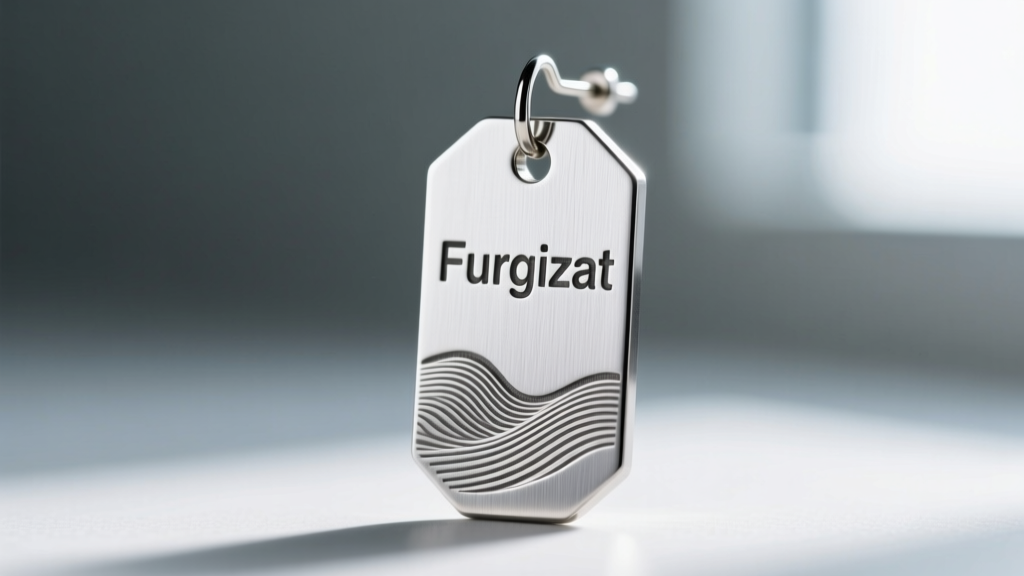
The connection point between the tag and the ear wire is the most common failure point in tag earring design. Because the tag acts as a pendulum, it generates dynamic shear forces on the connecting jump ring every time the wearer moves their head.
"A standard open jump ring is entirely unsuitable for heavy tag earrings. The pendulum effect will eventually cause the ring to unspool under tensile stress, leading to the loss of the earring. Laser-welded or hard-soldered closed rings are mandatory for any tag exceeding 2.0 grams." — Master Jeweler Bench Notes, Rio Grande Technical Guides.
Furthermore, the ear wire itself must be appropriately gauged. A 22-gauge (0.64mm) wire is too thin and will deform under the weight of a steel or gold tag. A 20-gauge (0.81mm) or 18-gauge (1.02mm) ear wire provides the necessary yield strength to support the tag without permanently bending outward at the lobe.
Maintenance and Failure Modes
Even expertly engineered tag earrings require specific maintenance protocols to avoid common failure modes. The flat surfaces of tag earrings act as magnets for sebum, cosmetic residues, and environmental pollutants. If debris accumulates in the bail loop, it creates a grinding paste that will eventually wear through the ear wire due to friction.
To prevent this, users should clean the connection points weekly using an ultrasonic cleaner or a soft brush with a mild, non-abrasive surfactant. Additionally, consumers should regularly inspect the bail loop for signs of metal fatigue. If the loop shows any thinning or asymmetrical wear, the earring must be retired or professionally reinforced to prevent catastrophic failure and loss of the piece. By respecting the material limits and ergonomic parameters outlined above, tag earrings can serve as durable, comfortable, and highly personalized staples in any jewelry collection.


