What Size Are Normal Earrings? The Ultimate Gifting Guide
Wondering what size are normal earrings? Discover exact millimeter and gauge standards to choose the perfect earring gift for any occasion.

Decoding the Question: What Size Are Normal Earrings?
Gifting earrings is a classic, deeply personal gesture, but it is also a logistical minefield. Unlike rings, which require precise circumference measurements, or necklaces, which drape forgivingly, earrings demand an understanding of both anatomy and aesthetics. When shoppers ask, what size are normal earrings, they are usually referring to standard lobe jewelry. However, "normal" is a highly subjective term in the jewelry industry. A "normal" stud for a newly pierced ear is vastly different from a "normal" hoop for a curated ear stack.
To gift earrings successfully in 2026, you must abandon vague terms like "small" or "medium" and start thinking in exact millimeters (mm) and gauge (G). A standard, everyday stud typically ranges from 3mm to 6mm in diameter. A standard, wearable hoop ranges from 15mm to 20mm. But the true secret to a flawless earring gift lies not just in the visual footprint of the jewelry, but in the thickness of the post or wire that passes through the ear. Gifting a beautifully designed 16-gauge earring to someone with standard 20-gauge lobe piercings will result in micro-tearing, discomfort, and an unwearable gift. Let us break down the exact metrics you need to know before you check out.
The Millimeter Matrix: Standard Earring Sizes by Style
Before selecting a gift, consult this matrix to understand the baseline dimensions for the most popular earring categories. These ranges represent the "normal" sizes that suit the majority of adult earlobes without causing dragging or discomfort.
| Earring Style | "Normal" Size Range | Standard Gauge | Best Gifting Occasion |
|---|---|---|---|
| Studs | 3mm - 6mm | 20G - 18G | Graduation, First Piercings, Everyday |
| Huggies | 10mm - 15mm | 18G - 16G | Office-Safe, "Just Because", Anniversaries |
| Standard Hoops | 20mm - 30mm | 18G - 16G | Statement Gifts, Evening Wear, Birthdays |
| Drop / Dangle | 15mm - 40mm (length) | 20G - 18G | Bridal, Formal Events, Milestones |
Why Gauge Matters Just as Much as Diameter
The most common failure mode in earring gifting is ignoring the gauge. Gauge refers to the thickness of the metal that penetrates the skin. According to the Association of Professional Piercers (APP), the standard lobe piercing performed with a needle is typically 18G (1.02mm) or 16G (1.29mm), while piercings done with standard mall-kiosk guns are often 20G (0.81mm).
If you are gifting stud earrings with a friction post (the standard push-back), you must select 20G or 18G. If you attempt to gift a heavy 16G post to a delicate 20G piercing, the recipient will struggle to force the metal through the fistula, causing pain and potential tissue damage. Conversely, if you buy 18G or 16G huggies or hoops, they will fit perfectly into most standard healed lobes, as the ear can comfortably accommodate slightly thicker wire for structural integrity. Always default to 18G (1.0mm) for hoops and 20G (0.8mm) for studs if you cannot secretly verify the recipient's exact piercing size.

Occasion-Matching: Which "Normal" Size to Gift When
Now that you understand the baseline dimensions, the next step is matching the size and style to the specific occasion. The context of the gift dictates the acceptable visual weight of the earring.
Graduation & Milestone Birthdays: The 4mm - 6mm Stud
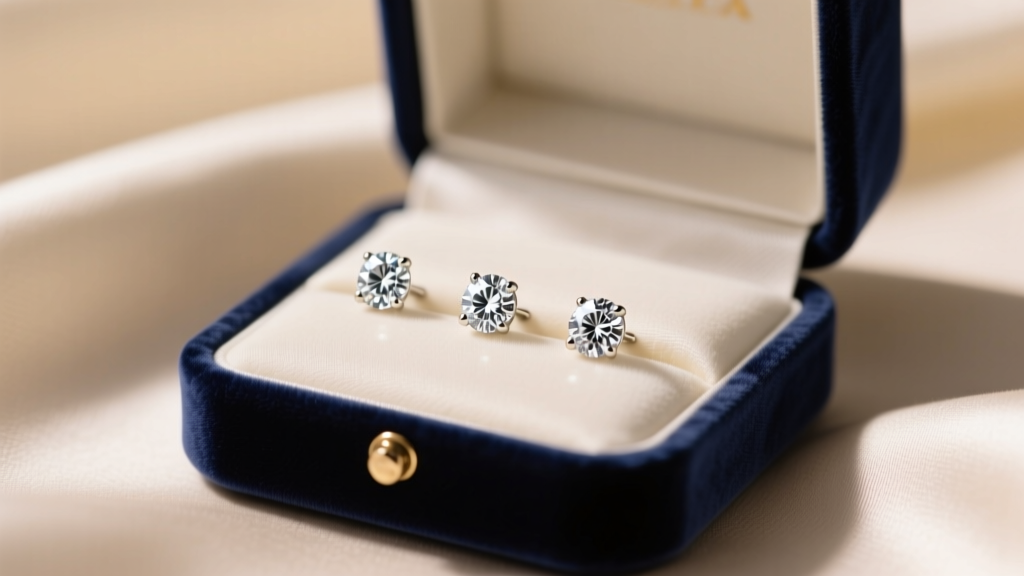
For a high school or college graduation, or a Sweet 16, you are gifting a legacy piece. The "normal" size here is a 4mm to 6mm round brilliant stud. A 4mm diamond or moissanite stud offers a subtle, elegant sparkle that doesn't overwhelm a younger face shape, while a 6mm stone provides a more luxurious, noticeable presence. Opt for a 4-prong or martini setting in 14k or 18k solid gold. Ensure the backing is a secure screw-back or a heavy-duty friction back to prevent the loss of a high-value gift.
Bridal & Anniversary: The 8mm - 12mm Drop or 20mm Hoop
Bridal jewelry requires movement and light reflection. A standard stud is too understated for a wedding gown. Instead, the "normal" size shifts to a drop earring measuring 20mm to 40mm in total length, or a classic 20mm to 25mm hoop. If gifting drops, look for designs that feature a stud top with a detachable or articulated drop element, allowing the recipient to wear the studs alone for everyday use. For anniversaries, a 20mm diamond-encrusted hoop provides a glamorous upgrade from standard daytime jewelry without crossing into unwearable, avant-garde territory.
"Just Because" & Office-Safe: The 12mm - 15mm Huggie
Huggies are the undisputed champions of modern, versatile gifting. They hug the earlobe closely, making them impervious to catching on hair, clothing, or headsets. The "normal" size for a huggie is 12mm to 15mm in outer diameter. When gifting huggies, pay strict attention to the hinge mechanism. A high-quality huggie will feature a seamless click-hinge with a secure latch closure. Avoid huggies that rely on simple tension, as they are easily lost. A 12mm 14k gold huggie with a subtle pavé diamond front is the ultimate foolproof gift for a partner, sister, or colleague.
Material Grades: Don't Ruin the Gift with Cheap Alloys
Sizing is only half the battle; metallurgy is the other. The Gemological Institute of America (GIA) and dermatological experts consistently warn against vague metal descriptions. If a product is simply labeled "surgical steel" or "hypoallergenic metal," do not buy it as a gift. These are unregulated marketing terms that often mask alloys containing high levels of nickel, the most common contact allergen.
- ASTM F-136 Implant-Grade Titanium: The absolute gold standard for sensitive ears and new piercings. It is completely nickel-free, lightweight, and highly polished. Perfect for stud gifts.
- 14k or 18k Solid Gold: Ensure it is nickel-free (often alloyed with silver, copper, or zinc). Yellow and rose gold are generally safer for sensitive skin than white gold, which is sometimes plated with rhodium over a nickel-containing base.
- Platinum: A premium, heavy, and naturally hypoallergenic metal. Ideal for high-carat diamond stud settings where the metal's strength is required to secure the stone.
Never gift gold-plated or vermeil earrings for primary lobe piercings if you are unsure of the recipient's metal sensitivities. The plating will eventually wear down, exposing the base metal (often brass or copper) to the fistula, leading to irritation and green discoloration.
The Gifter’s Troubleshooting Checklist
Buying earrings as a surprise requires a bit of stealth. If you cannot ask the recipient directly, use this checklist to ensure your gift is a success rather than a return.
The Stealth Sizing Protocol:
1. Borrow an earring they wear daily and measure the post thickness with digital calipers (or compare it to a standard sewing needle, which is roughly 20G).
2. Note their current style: Do they only wear studs? If so, a 30mm hoop gift might sit in a drawer. Match their current aesthetic but elevate the material.
3. Check their lifestyle: If they work in healthcare, have young children, or play contact sports, avoid dangles and large hoops entirely. Stick to 4mm studs or 10mm huggies.
Ultimately, understanding what size are normal earrings is about respecting the recipient's anatomy and lifestyle. By focusing on precise millimeter dimensions, verifying the gauge, and selecting biocompatible materials, you elevate your gift from a simple accessory to a thoughtfully engineered piece of wearable art that they will cherish for decades.


