The Anatomy of Oak Leaf Earrings: Casting, Metals, and Gauge Guide
Explore the technical anatomy of oak leaf earrings. Discover casting methods, optimal metal alloys, gauge sizing for cartilage, and botanical accuracy.

The Botanical Blueprint: Translating Quercus to Metal
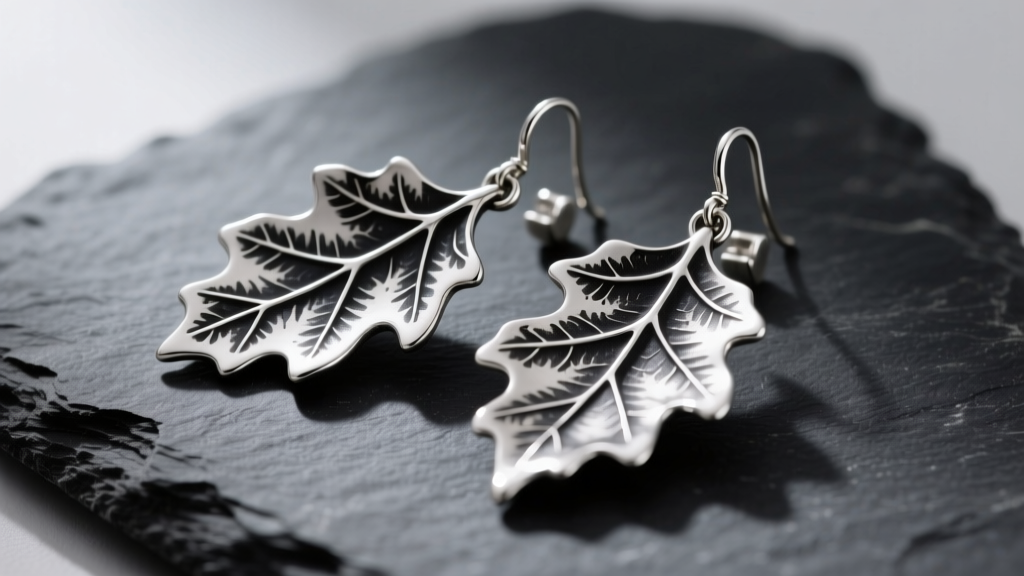
Nature-inspired jewelry often sacrifices structural integrity for aesthetics, but mastering the creation of oak leaf earrings requires a rigorous understanding of both botany and metallurgy. The Quercus genus presents unique challenges for jewelers due to its deep sinuses, asymmetrical lobes, and complex reticulate venation. When designing oak leaf earrings, the first technical decision is the specific species being replicated. English Oak (Quercus robur) features rounded, lobed margins that are relatively forgiving during the casting process. In contrast, White Oak (Quercus alba) possesses deeply incised sinuses and sharper lobe tips, which are highly prone to warping or breaking if the metal cross-section is too thin.
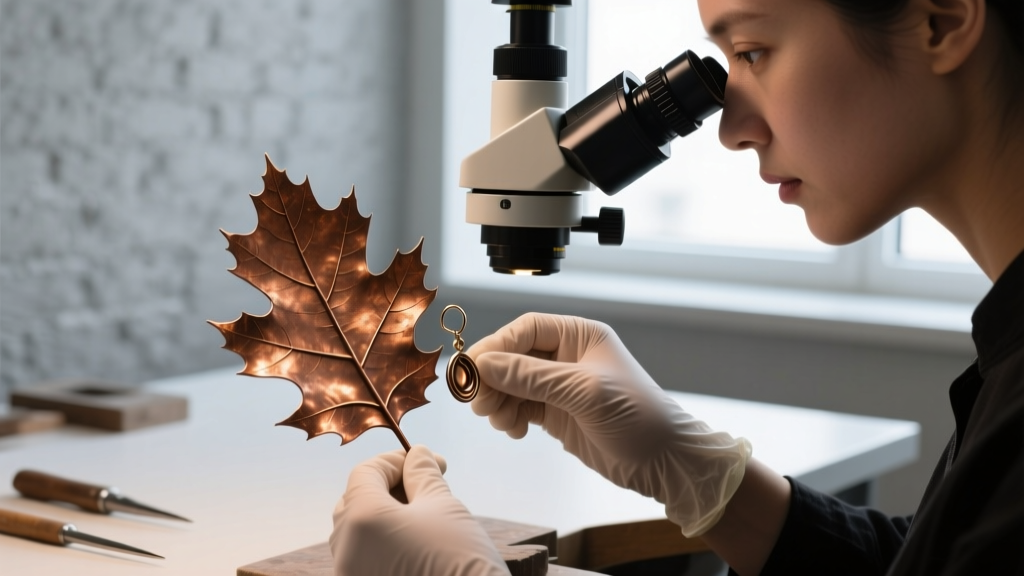
To capture the microscopic tertiary veins of a real oak leaf, master jewelers have largely moved away from traditional hand-carved wax models. Instead, the industry standard for high-end botanical jewelry now involves high-resolution 3D scanning of preserved leaves, followed by SLA (Stereolithography) resin printing. This ensures the organic, chaotic asymmetry of the leaf is perfectly preserved, avoiding the "stiff" look of CAD-modeled symmetry. According to the Ganoksin jewelry network, capturing organic textures requires resin layers no thicker than 25 microns to prevent the loss of fine surface details like the leaf's microscopic stomata and cellular ridges.
Lost-Wax Casting and Sprue Placement Protocols
Once the master model is created, the lost-wax casting process begins. The primary failure point in casting oak leaf earrings is improper sprue placement. The sprue is the channel through which molten metal flows into the mold cavity. If a jeweler attaches the main sprue to the delicate tip of an oak leaf lobe, the metal will cool too quickly, resulting in a "cold shut" or severe shrinkage porosity.
Expert casters attach the main sprue to the petiole (the leaf stem), which is naturally the thickest part of the anatomy. For larger dangle earrings, micro-sprues (0.5mm diameter) are strategically placed on the thickest lobes to ensure a continuous, turbulent-free flow of molten metal. This guarantees that the intricate vein network is fully filled before the alloy begins to solidify. After casting, the sprues are cut flush and filed, leaving the botanical illusion intact.
Metallurgical Deep Dive: Alloys and Patina Potential
The choice of metal dramatically alters the visual depth and physical durability of oak leaf earrings. Because oak leaves rely on shadow and light to highlight their veined texture, alloys that respond well to chemical oxidation are preferred. The application of liver of sulfur (potassium polysulfide) darkens the recessed veins, while the raised surfaces are polished to a high shine, creating a striking three-dimensional contrast.
Below is a technical comparison of the most common alloys used for botanical earrings, referencing data from Rio Grande's metallurgical resources:
| Metal Alloy | Vickers Hardness (HV) | Patina Reactivity | Hypoallergenic Profile | Avg. Price Range (Pair) |
|---|---|---|---|---|
| 925 Sterling Silver | 65 - 75 | High (Deep black/grey) | Moderate (Contains 7.5% Copper) | $85 - $250 |
| Jeweler's Bronze (90/10) | 100 - 115 | Very High (Rich brown/green) | Low (High Copper content) | $40 - $120 |
| Grade 5 Titanium (Ti-6Al-4V) | 330 - 350 | Low (Requires anodizing) | Excellent (Biocompatible) | $150 - $400 |
| 14k Yellow Gold | 130 - 150 | None (Relies on physical depth) | High | $450 - $1,200+ |
Expert Insight: While 14k gold does not oxidize with liver of sulfur, jewelers achieve the necessary vein contrast by using a technique called "sandblasting" or "matte finishing" in the recessed areas, leaving only the raised veins polished. This creates light diffusion that mimics the effect of a dark patina without relying on chemical surface treatments.
Structural Integrity and Gauge Sizing for Ear Placements
The physical dimensions of the ear wire or post are just as critical as the leaf itself. A solid sterling silver oak leaf earring measuring 40mm in length can easily weigh between 3.5 and 5 grams. If this weight is suspended from a standard 20-gauge (0.81mm) ear wire, the continuous downward force will cause the wire to deform, leading to the dreaded "cheese-cutter" effect where the wire slowly slices through the earlobe tissue.
Lobe vs. Cartilage Applications
- Standard Earlobe (Dangle): For leaves weighing over 3 grams, an 18-gauge (1.02mm) or 16-gauge (1.29mm) ear wire is mandatory. Alternatively, a leverback finding with a thicker 18-gauge wire distributes the weight more evenly across the lobe's puncture channel.
- Cartilage (Helix/Conch Studs): When adapting the oak leaf motif into a cartilage stud, the post must be no thinner than 18-gauge, with 16-gauge being the optimal standard for initial healing and long-term stability. The backing must be a secure screw-back or a flat-back labret post to prevent the heavy leaf from drooping forward and irritating the cartilage piercing channel.
Failure Modes and Maintenance Protocols
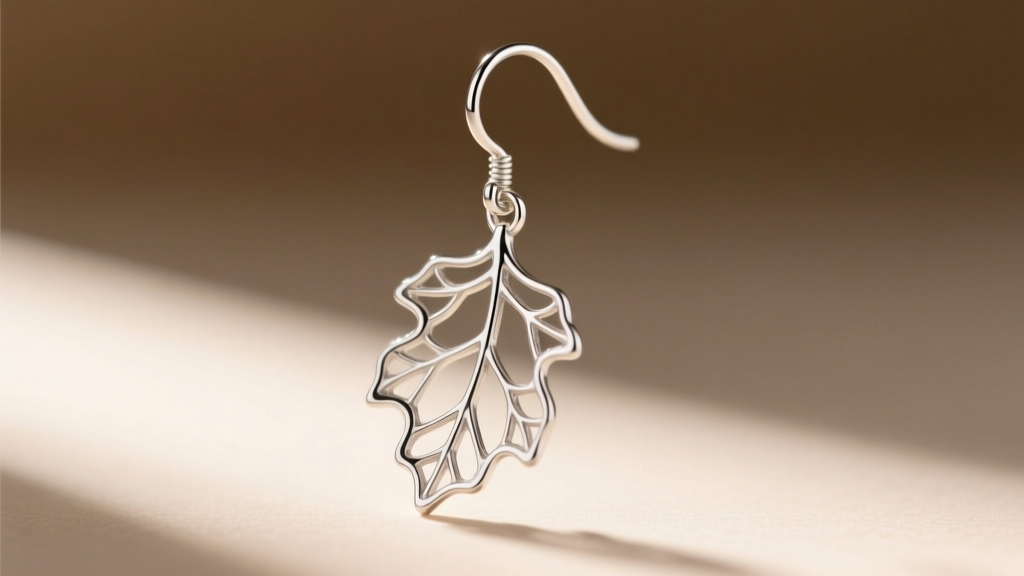
Even expertly crafted oak leaf earrings are subject to specific failure modes due to their organic geometry. The deep sinuses (the gaps between the lobes) act as natural catch-points for hair, knitwear, and scarves. A sudden snag can apply immense lateral torque to the jump ring connecting the leaf to the ear wire, causing metal fatigue and eventual snapping.
To mitigate this, high-end artisans use "soldered jump rings" rather than split rings, ensuring the connection point cannot be pried open by tension. Furthermore, owners of oxidized silver or bronze oak leaf earrings must avoid ultrasonic cleaners. The high-frequency cavitation of ultrasonic baths will strip the liver of sulfur patina right out of the delicate tertiary veins, leaving the earring looking flat and uniformly grey. Instead, maintenance should involve gentle washing with a pH-neutral dish soap and a soft-bristled baby toothbrush to remove skin oils from the crevices without disturbing the chemical oxidation.
Sourcing and Artisan Verification
When investing in premium botanical jewelry, verifying the manufacturing method is essential. Mass-produced oak leaf earrings are often stamped from thin sheet metal, resulting in a flat, two-dimensional appearance with sharp, unnatural edges. Genuine artisan pieces will exhibit a slight, organic curvature (mimicking a leaf drying in the sun) and a distinct difference in thickness between the central midrib and the leaf margins. By understanding the metallurgical and structural anatomy of these pieces, collectors and wearers can appreciate the profound technical mastery required to turn a simple forest leaf into a lasting piece of wearable metal art.


