2026 Gift Guide: Stud Earrings for Pierced Ears by Occasion
Discover the ultimate 2026 gift guide for stud earrings for pierced ears. Match metals, gemstones, and gauges to every occasion and recipient.

The Gifting ROI: Why Studs Reign Supreme
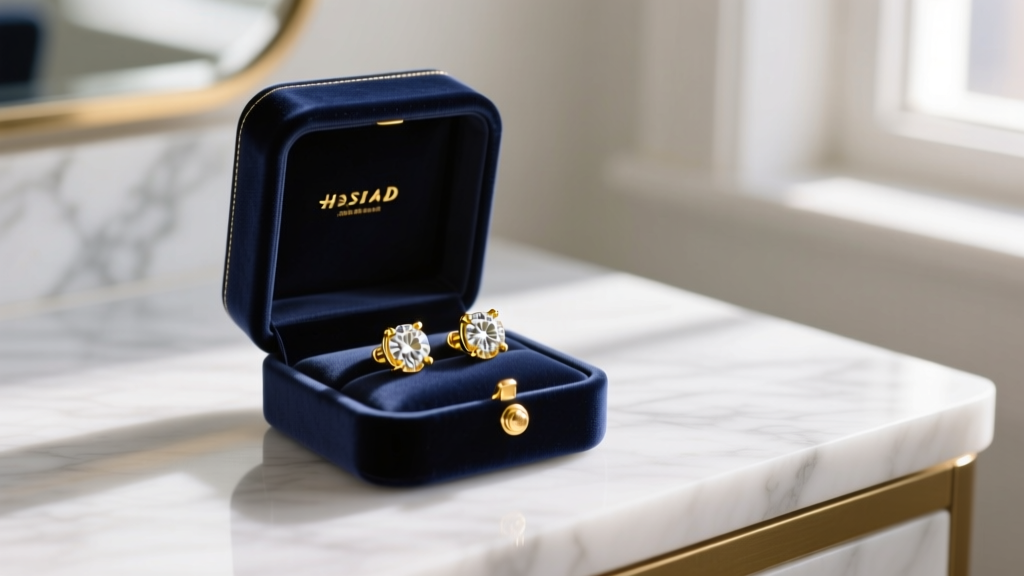
When navigating the high-stakes world of jewelry gifting, selecting the right piece can feel like walking a metallurgical tightrope. Rings require precise sizing, and necklaces demand an understanding of the recipient's neckline preferences. However, stud earrings for pierced ears offer the highest return on investment for givers. They are universally flattering, inherently versatile, and carry a significantly lower failure rate than dangles or hoops. In 2026, the trend has shifted heavily toward 'quiet luxury' and hyper-personalization, meaning the modern gift-giver must look beyond generic mall-kiosk offerings and understand the nuances of gauge sizes, alloy compositions, and backing mechanics.
This guide deconstructs the anatomy of the perfect stud earring, providing a data-driven framework to match specific materials and gemstones to life's most pivotal occasions.
Occasion-Matching Matrix: From Boardroom to Bridal
Not all milestones require the same carat weight or metal purity. A 16th birthday calls for durable, hypoallergenic staples, while an anniversary demands heirloom-quality craftsmanship. Use the matrix below to align your budget with the recipient's milestone.
| Occasion | Ideal Material | Stone / Design Profile | Post Gauge | Estimated Budget |
|---|---|---|---|---|
| 16th Birthday / Sweet 16 | ASTM F136 Titanium or 14k Solid Gold | Bezel-set Birthstone or 3mm Moissanite | 20G (0.81mm) | $120 - $280 |
| College Graduation | 18k Yellow or White Gold | 0.25ct TW Diamond (G-H Color, SI1 Clarity) | 18G (1.02mm) | $450 - $850 |
| Corporate Milestone | Platinum 950 | 6mm AAA Akoya Pearl with Diamond Micro-Pavé Halo | 18G (1.02mm) | $300 - $600 |
| 5th / 10th Anniversary | 18k White Gold or Platinum | 0.50ct TW Lab-Grown Diamond (Martini Setting) | 18G (1.02mm) | $600 - $1,200 |
Metallurgical Realities: Avoiding the Allergy Trap
The most common reason a well-intentioned jewelry gift ends up in a drawer is contact dermatitis. According to the American Academy of Dermatology, nickel allergy is the most frequent cause of allergic contact dermatitis, affecting roughly 18% of adults. When gifting, you must scrutinize the alloy composition.
The Hypoallergenic Hierarchy
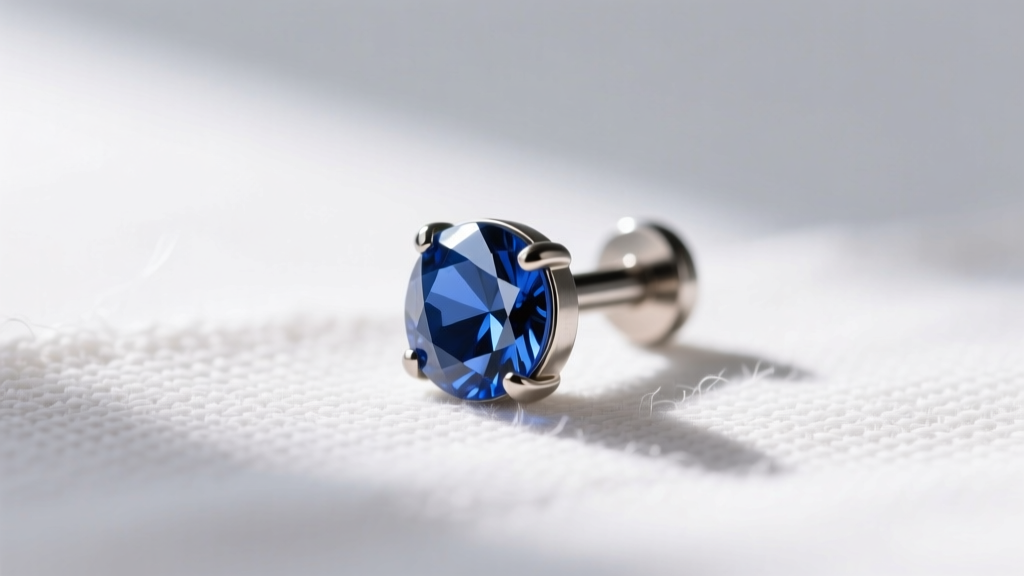
- ASTM F136 Implant-Grade Titanium: The undisputed champion for sensitive ears. It contains zero nickel and is the exact alloy used in medical implants. Ideal for first-time piercings or recipients with known metal sensitivities.
- 14k and 18k Solid Gold: Excellent choices, provided they are alloyed with silver, copper, or zinc rather than nickel. (Note: White gold is often alloyed with nickel to achieve its color; always verify it is rhodium-plated and nickel-free, or opt for palladium-white gold).
- Platinum 950: Naturally white, incredibly dense, and inherently hypoallergenic. The premium choice for high-value diamond studs.
- Gold-Plated Brass / Sterling Silver: Avoid gifting these for everyday wear. Sterling silver (925) often contains copper that can oxidize and irritate fresh or sensitive lobes, while plated brass will eventually wear through to reveal base metals.
Post Gauge, Length, and Backing Mechanics
The structural integrity of the earring post is where mass-market jewelers cut corners. Understanding gauge and backing types elevates your gift from 'thoughtful' to 'expertly curated'.
The 'Cheese-Cutter' Effect: Why Gauge Matters
Wire thickness is measured in gauges; the higher the number, the thinner the wire. Standard lobe piercings are typically done at 20G (0.81mm) or 18G (1.02mm). If you gift a heavy stone (like a 0.50ct diamond or a large pearl) on a thin 22G (0.64mm) wire, the weight distribution will cause the wire to slowly slice through the earlobe over time—a phenomenon piercers call the 'cheese-cutter effect.' Rule of thumb: Never gift studs heavier than 1.5 grams on a 22G post. Always opt for 18G for substantial gemstones.
Backing Security Systems
The backing is the unsung hero of the stud earring. Losing a diamond because of a cheap friction back is a gifting tragedy.
- Friction (Butterfly) Backs: Standard but flawed. The metal loops lose tension over time, leading to dropped earrings.
- Screw Backs: Secure, but the threads can strip if cross-threaded, and they are tedious to put on.
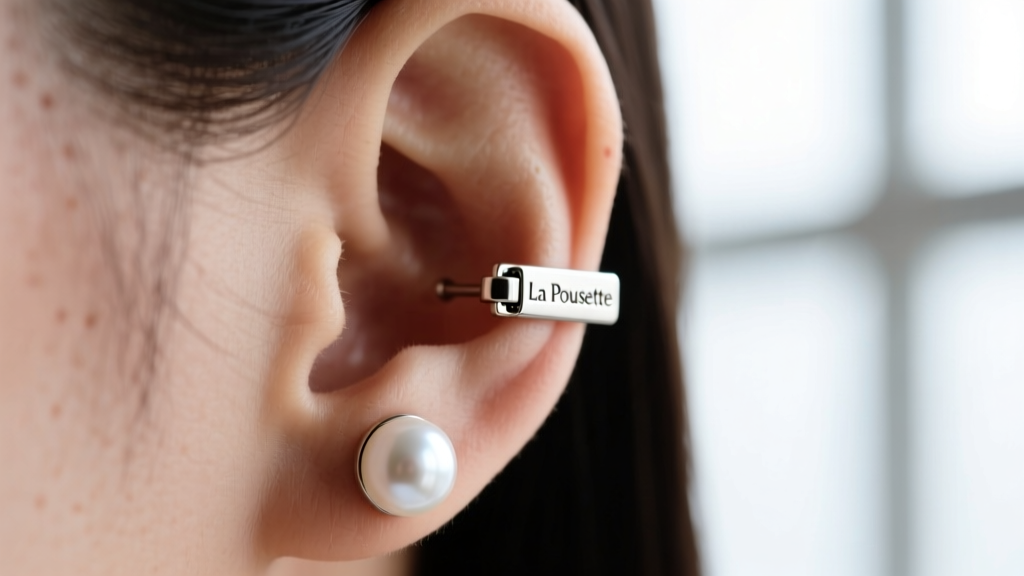
- La Pousette Backs: The luxury standard. These feature a mechanical locking mechanism with a secondary safety clasp. Highly recommended for high-carat diamond gifts.
- Threadless (Push-Pin) Flat Backs: The modern piercer's favorite. The pin bends slightly before insertion, creating outward tension against the hollow post. They never fall off and sit perfectly flush against the earlobe, making them ideal for sleepers.
Gemological Sweet Spots: Maximizing Visual Impact
When purchasing diamond stud earrings for pierced ears, buyers often overpay for grades that are invisible to the naked eye in a mounted setting. The Gemological Institute of America (GIA) provides rigorous grading scales, but smart gifting requires knowing where to compromise.
Expert Buying Matrix: For studs under 0.50 carats total weight, prioritize Cut over Color and Clarity. An Excellent or Ideal cut will mask lower color grades. Aim for G-H color (near colorless) and SI1 clarity (slightly included). Inclusions in SI1 diamonds are typically invisible without 10x magnification, especially when set in a 3-prong or 4-prong martini mounting that covers the pavilion. This strategy saves up to 30% compared to VVS/EF grades without sacrificing visual brilliance.
Troubleshooting Common Gifting Failures
Even with the right metal and stone, anatomical mismatches can ruin the wearing experience. Keep these troubleshooting insights in mind before checking out:
- The Thick Lobe Dilemma: Standard earring posts are 6mm to 8mm long. If the recipient has thicker earlobes, a standard post will dig into their neck or fail to secure the backing. Look for jewelers who offer 'long post' options (10mm to 12mm) or opt for threadless flat-back labrets which come in customizable wearable lengths.
- The Drooping Diamond: Heavy stones in flimsy 3-prong settings often tilt forward on the earlobe. To ensure the stone sits perfectly perpendicular to the viewer, choose a 4-prong basket setting or a bezel setting, which distributes the weight more evenly along the post's axis.
- Pearl Pegging Failures: Pearl studs are glued to a metal peg. If the jeweler uses low-grade epoxy, the pearl will eventually pop off. Ensure the retailer uses high-tensile jeweler's epoxy and that the peg features a micro-knurled texture for maximum adhesive grip.
Final Thoughts for the 2026 Buyer
Gifting stud earrings for pierced ears is an exercise in applied metallurgy, gemology, and anatomical empathy. By moving away from generic department store displays and focusing on specific alloy grades, appropriate wire gauges, and secure backing mechanisms, you ensure your gift isn't just beautiful on the day it's opened, but remains a comfortable, secure staple in the recipient's daily rotation for decades to come.


