Expert Cleaning and Care for Pearl Earring Jackets
Learn expert cleaning, storage, and maintenance tips for pearl earring jackets. Protect your nacre and metal settings with this detailed care guide.

Understanding the Unique Anatomy of Pearl Earring Jackets
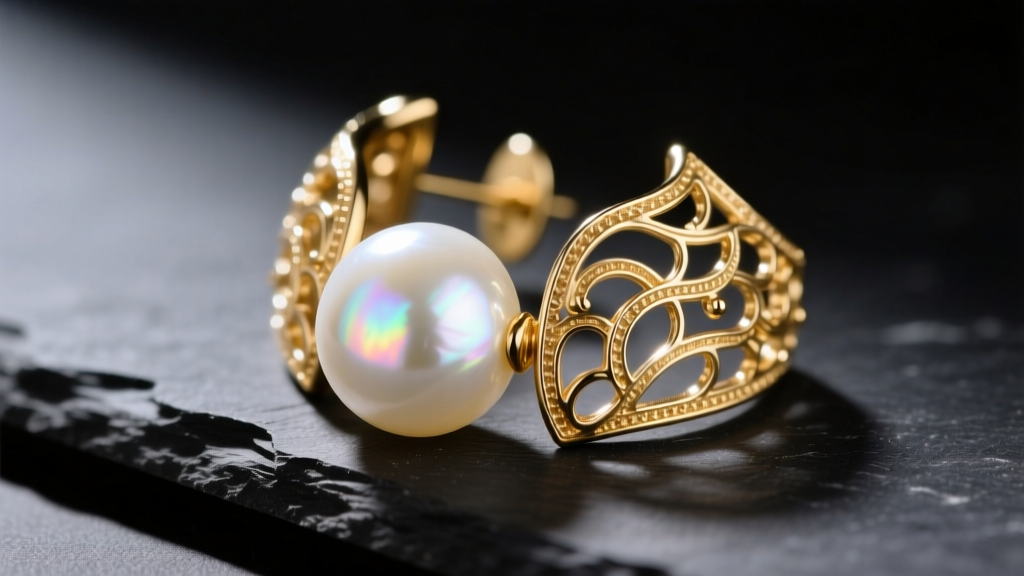
Pearl earring jackets are a sophisticated way to transform a simple stud into a statement piece. By sliding onto the earring post behind or around the earlobe, these accessories create a layered, curated look. However, their unique structural design introduces specific maintenance challenges that standard stud earrings do not face. To properly care for them, you must understand the materials involved and how they interact with your body chemistry.
Most high-quality jackets feature freshwater, Akoya, or Tahitian pearls set into precious metal frameworks (typically 14k or 18k gold, or sterling silver). Pearls are organic gemstones with a Mohs hardness of just 2.5 to 4.5, making them exceptionally vulnerable to scratching and chemical etching. Furthermore, the intricate filigree, pavé diamond accents, and metal loops that characterize earring jackets act as magnets for sebum, dead skin cells, hairspray, and cosmetic residue. Because the jacket sits flush against the back of the earlobe—a high-sweat zone—acidic skin oils can rapidly degrade the metal and dull the pearl’s delicate orient (the play of color across the nacre).
The Step-by-Step Cleaning Protocol
Cleaning pearl earring jackets requires a gentle, methodical approach. The most critical rule to remember is that many pearls on jackets are half-drilled and peg-set. This means the pearl is attached to a metal cup using jeweler's epoxy. Submerging the jewelry in water or using harsh solvents will dissolve this adhesive, causing the pearl to detach and potentially be lost down the drain.
Gathering Your Materials
Before you begin, assemble a safe, non-abrasive cleaning station. You will need:
- Distilled water (tap water contains chlorine and minerals that can spot the nacre)
- A pH-neutral, dye-free liquid soap (such as unscented baby shampoo or pure Castile soap)
- Two untreated, ultra-soft microfiber cloths
- An extra-soft baby toothbrush (bristles must be flexible enough to bend under light pressure)
- Cotton swabs
The Washing Technique
Never soak your pearl earring jackets. Instead, mix a few drops of the pH-neutral soap into a small bowl of distilled water. Dip the baby toothbrush into the solution, then gently tap the bristles against a towel to remove excess moisture. You want the brush to be damp, not dripping.
Carefully brush the metal framework of the jacket, focusing on the crevices where the metal loops connect and where any pavé stones are set. Avoid brushing directly against the pearl. To clean the pearl itself, dampen a microfiber cloth with the soapy solution and gently wipe the surface of the nacre. Follow up immediately with a second, dry microfiber cloth to buff the pearl and remove any lingering moisture. According to the Gemological Institute of America (GIA), wiping pearls with a soft cloth after every wear is the single most effective way to preserve their luster and prevent acid etching from skin oils.
Chemicals and Tools to Avoid at All Costs
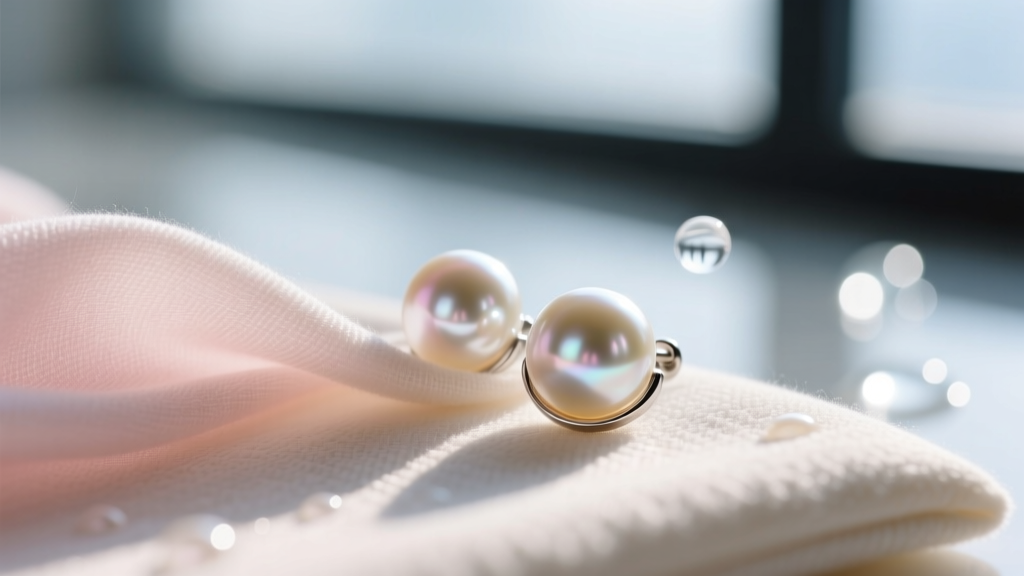
The nacre of a pearl is composed of microscopic aragonite crystals held together by an organic protein called conchiolin. This structure is highly reactive to common household chemicals and jewelry cleaning tools. Using the wrong product can strip the nacre, leaving the pearl dull, chalky, and permanently damaged.
| Cleaning Agent / Tool | Effect on Pearl Earring Jackets | Verdict |
|---|---|---|
| Ultrasonic Cleaners | High-frequency vibrations will shatter the nacre and shake half-drilled pearls right out of their epoxy settings. | NEVER USE |
| Ammonia / Windex | Strips the organic conchiolin, causing irreversible clouding and surface pitting on the pearl. | NEVER USE |
| Baking Soda Paste | Acts as an abrasive sandpaper, scratching the soft 2.5 Mohs surface of the pearl and dulling metal finishes. | NEVER USE |
| Steam Cleaners | Extreme heat will melt the jeweler's epoxy used in peg settings and can cause the nacre to crack from thermal shock. | NEVER USE |
| pH-Neutral Baby Shampoo | Gently lifts sebum and cosmetics without attacking the aragonite crystals or the epoxy bond. | HIGHLY RECOMMENDED |
Maintaining the Hardware: Posts, Loops, and Clutches
The mechanical failure points of pearl earring jackets are just as important as the gemstones themselves. An earring jacket adds significant thickness to the earring assembly. The post must pass through the front stud, the earlobe, and the jacket's metal loop or cage before the clutch can secure it. This often leaves very little post length for a standard butterfly clutch to grip, leading to lost jackets.
To solve this, most wearers use jumbo silicone disc clutches or flat-back friction clutches. While silicone provides an excellent, secure grip, it is highly porous and absorbs skin oils, hair products, and bacteria, which can lead to earlobe irritation and unpleasant odors.
How to Clean Silicone and Metal Clutches
Remove the silicone clutches from the earring posts once a month. Use a wooden toothpick to gently scrape out the compacted sebum from the center hole of the silicone disc. Then, soak only the silicone clutches in a small cup of 70% isopropyl alcohol for 10 minutes to disinfect and dissolve the oils. Let them air dry completely before reattaching them to your pearl jackets. Never let the isopropyl alcohol touch the pearls, as it will degrade the epoxy adhesive over time.
If your jacket features sterling silver metalwork, it will naturally tarnish when exposed to sulfur in the air and skin acids. Use a treated silver polishing cloth to gently buff the metal loops, but fold the cloth carefully to ensure the chemical polishing agents do not transfer onto the adjacent pearls. For 14k or 18k white gold jackets, the rhodium plating may wear off the friction points over time; this requires a professional jeweler to re-plate the piece.
Proper Storage to Preserve Nacre Luster
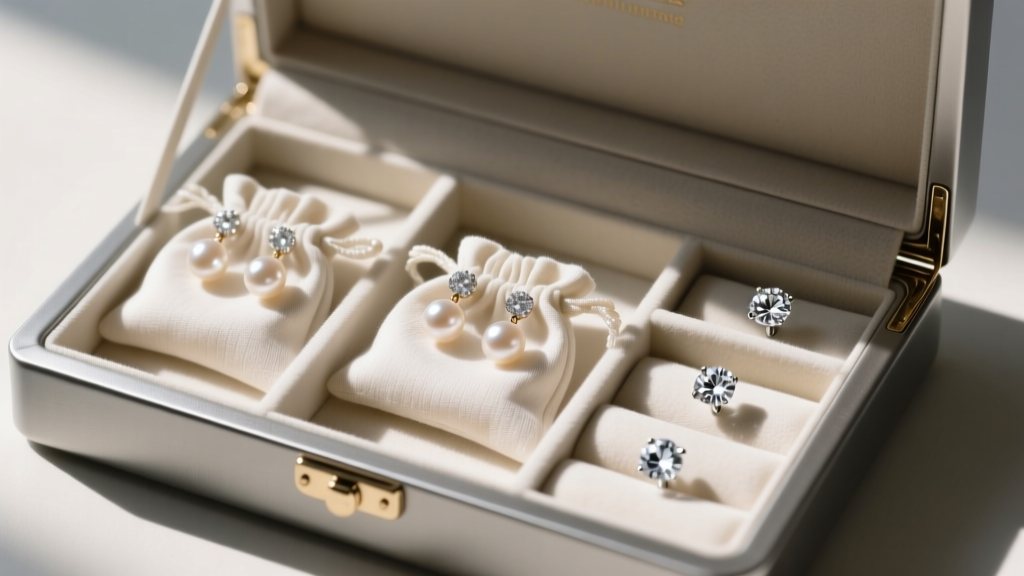
How you store your pearl earring jackets when they are not being worn dictates their longevity. A common and disastrous mistake is storing pearls in airtight plastic bags or safety deposit boxes for extended periods. Pearls are organic and require a slight amount of ambient humidity. Dehydration causes the nacre to crack, craze, and peel away from the bead nucleus.
Furthermore, you must adhere to strict separation protocols. Because pearls rank at a mere 2.5 to 4.5 on the Mohs hardness scale, storing them in a communal jewelry box where they can rub against diamond studs (Mohs 10), sapphire rings (Mohs 9), or even gold settings (Mohs 2.5-3) will result in severe scratching. The metal prongs of adjacent jewelry can easily gouge the surface of your pearl jackets.
The Jewelers of America recommends storing pearls in a soft, breathable cotton or silk pouch. Keep your pearl earring jackets in their own dedicated compartment or pouch, completely isolated from harder gemstones and metals. If you live in an exceptionally dry climate, occasionally wiping the pearls with a barely damp cloth before storage can help maintain their internal moisture balance.
The "Last On, First Off" Rule
To minimize the need for deep cleaning and protect the structural integrity of your pearl earring jackets, adopt the golden rule of jewelry wear: Last On, First Off.
Pearls should be the very last thing you put on when getting ready. Hairspray, perfumes, dry shampoos, and setting sprays contain alcohol and volatile organic compounds (VOCs) that will instantly dull the pearl's luster and eat away at the epoxy holding the pearl to the metal jacket. Apply all your cosmetics, hair products, and perfumes, and wait at least 10 minutes for them to dry and settle before attaching your earring jackets.
Conversely, they must be the first thing you take off when you return home. Wiping them down with a dry microfiber cloth immediately upon removal prevents the day's accumulation of acidic sweat and environmental pollutants from settling into the metal crevices and etching the nacre overnight.
When to Seek Professional Jeweler Maintenance
While at-home care is sufficient for routine maintenance, certain issues require a professional bench jeweler. If you notice the pearl on your jacket wiggling or spinning on its metal peg, the epoxy bond has failed. Stop wearing the jacket immediately to prevent the pearl from falling out and being lost. A jeweler can safely remove the old adhesive with specialized solvents that won't harm the nacre, and re-seat the pearl using high-strength, jewelry-grade epoxy.
Additionally, if the metal loops that slide over the earring post become bent or warped from the pressure of thick earlobes or tight clutches, do not attempt to bend them back into shape with pliers. Repeated bending will cause metal fatigue and snap the gold or silver loop. A jeweler can easily solder and reinforce these structural connection points, ensuring your pearl earring jackets remain a staple of your wardrobe for decades to come.