The Complete 3mm Earrings Buying Guide: Sizing & Fit
Discover how to choose the perfect 3mm earrings. Our expert buying guide covers metal grades, post gauges, backing types, and styling tips for everyday wear.

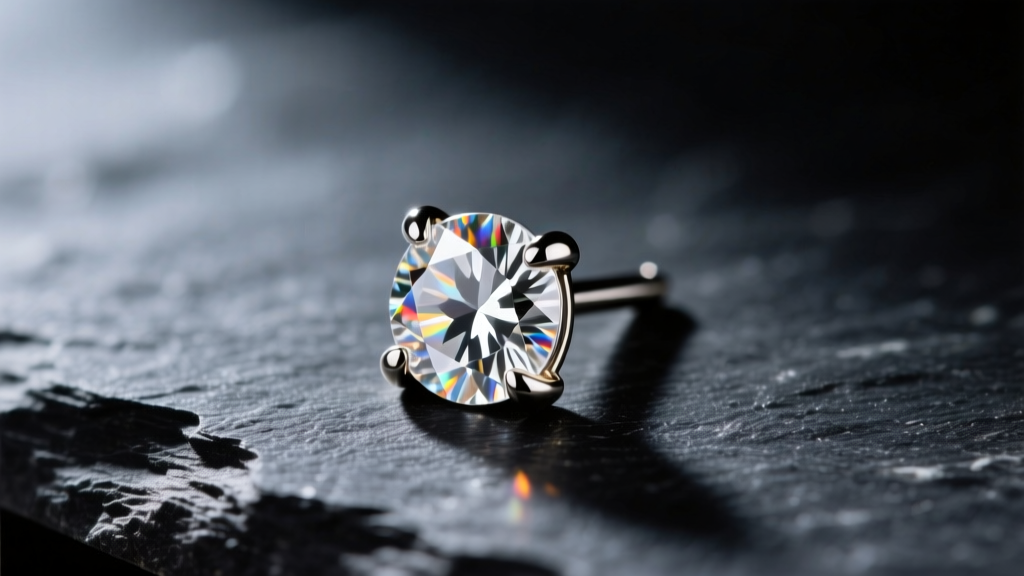
When it comes to minimalist jewelry, the 3mm scale is the undisputed champion of understated elegance. Measuring exactly 0.118 inches in diameter, 3mm earrings offer a subtle sparkle or metallic gleam that is perfect for second-hole piercings, delicate cartilage placements, or anyone seeking a "barely there" aesthetic for their primary lobe piercings. However, because the footprint is so small, the margin for error in craftsmanship, metal quality, and backing mechanics is virtually zero. A poorly made 3mm stud will irritate the skin, lose its stone, or snap at the post. This comprehensive buying guide breaks down the exact specifications, material grades, and structural details you need to evaluate before purchasing 3mm earrings in 2026.
The True Scale: Understanding 3mm in Jewelry
In jewelry terminology, a "3mm earring" typically refers to the diameter of the gemstone or the metal sphere at the front of the stud. However, the total visual footprint depends heavily on the setting style. A 3mm round brilliant diamond in a delicate four-prong setting will measure roughly 3.2mm across. Conversely, a 3mm stone in a bezel setting (where a rim of metal encircles the gem) will measure closer to 3.8mm or 4mm overall. If you are buying 3mm metal balls or pearls, the measurement is exact. Understanding this distinction is crucial when curating a stacked ear look, as a 3mm bezel stud will visually compete with adjacent jewelry, while a 3mm prong setting will leave negative space between piercings.
Material Grades: What to Look For
Because 3mm earrings are frequently worn in fresh piercings, cartilage, or slept in, the metal grade is the most critical factor in your purchase. The skin on the earlobe and the thin tissue of the helix are highly reactive to base metals.
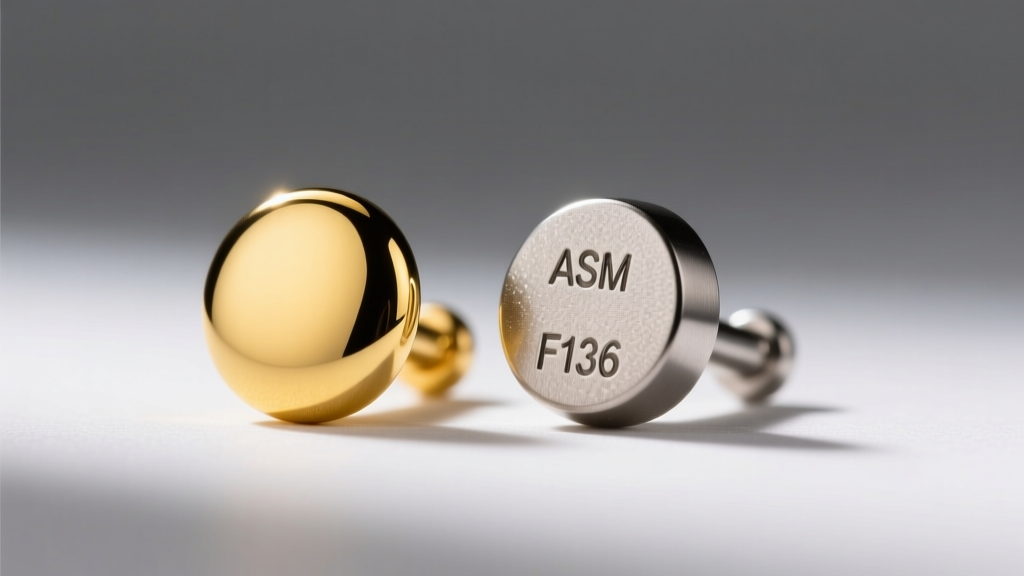
Implant-Grade Titanium (ASTM F136)
For hypersensitive ears or fresh piercings, ASTM F136 implant-grade titanium is the gold standard. It is entirely nickel-free, lightweight, and highly polished to a mirror finish that prevents bacterial adhesion. Many reputable piercing studios exclusively use titanium for 3mm initial studs.
Solid Gold (14k and 18k)
For long-term wear and heirloom value, solid gold is preferred. However, you must verify the alloy. According to the Gemological Institute of America (GIA), white gold is often alloyed with nickel to achieve its color, which triggers contact dermatitis in up to 15% of the population. Always seek out 14k or 18k white gold that is explicitly alloyed with palladium (nickel-free), or opt for yellow and rose gold, which rarely contain nickel.
Metals to Avoid
Never purchase 3mm earrings made of sterling silver for everyday or cartilage wear. Sterling silver contains copper and sulfur, which can cause argyria (a permanent bluish-gray staining of the skin) if worn in an unhealed cartilage piercing. Similarly, avoid "gold-plated" or "gold vermeil" over brass or copper bases; the plating on a 3mm surface area is incredibly thin and will wear away within months of friction from hair and clothing.
Post Gauge, Threading, and Backing Mechanics
The structural integrity of a 3mm earring relies heavily on the post (the wire that goes through the ear). Because the front of the earring is so light, manufacturers often use thinner posts to save on precious metal costs, which leads to bending and breakage.
Choosing the Right Gauge
- 20-Gauge (0.81mm): The standard for primary lobe piercings. It is thin and comfortable but prone to bending if you sleep on 3mm diamond studs with high pressure.
- 18-Gauge (1.02mm): Ideal for second or third lobe holes and some thicker cartilage piercings. It offers a great balance of durability and comfort.
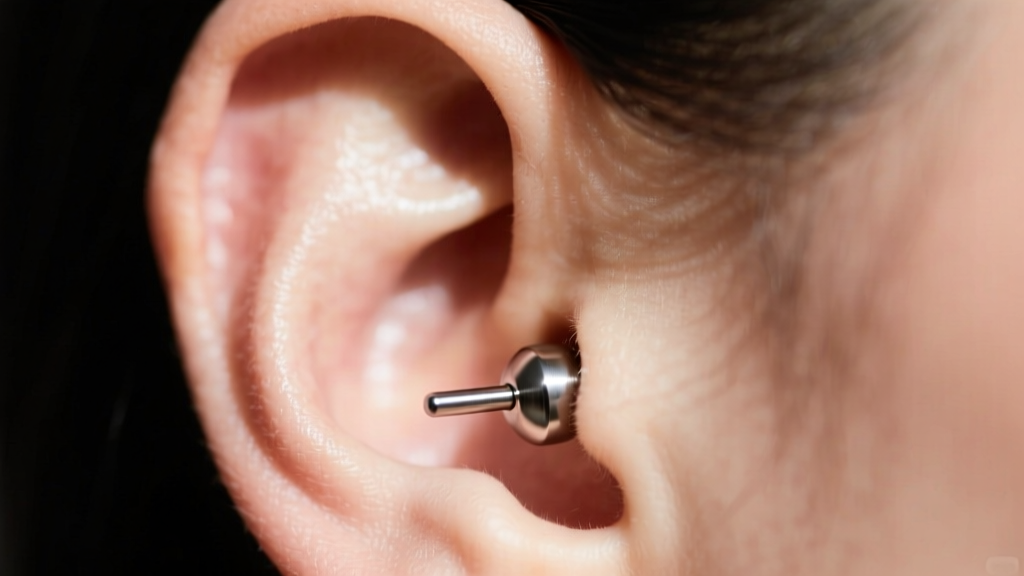
- 16-Gauge (1.29mm): The standard for flat-back labret studs worn in the helix, conch, or tragus. If you are buying a 3mm stud for a cartilage piercing, ensure it is a 16g flat-back, not a standard 20g butterfly post.
Threading and Backings
The Association of Professional Piercers (APP) strongly advises against externally threaded jewelry, where the screw-like ridges are on the post itself. Pushing external threads through a piercing channel causes micro-tears. Always look for internally threaded 3mm earrings (where the post is smooth and the backing has the screw) or threadless (press-fit) designs, which use tension to stay securely in place without any ridges.
| Backing Type | Best For | Pros | Cons |
|---|---|---|---|
| Butterfly Friction | Standard Lobes | Easy to put on, widely available. | Harbors bacteria, loses tension over time, pokes the neck during sleep. |
| Screw Backing | Active Wear / Kids | Highly secure, won't fall off in hair. | Threads can strip if cross-threaded, tedious to put on. |
| La Poussière (Silicone) | Sensitive Lobes | Soft, flexible, hypoallergenic. | Degrades with alcohol cleaning, can trap moisture. |
| Flat-Back (Labret) | Cartilage / Helix | Flush against the ear, zero poking, extremely secure. | Requires specific gauge (usually 16g or 18g), harder to insert blindly. |
Pricing and Value Indicators
The price of 3mm earrings varies wildly based on the center stone and the metal weight. Because a 3mm round brilliant diamond weighs approximately 0.10 to 0.12 carats, you are paying primarily for the cut quality and the precision of the micro-setting.
- Diamond (14k/18k Gold): $150 to $600 per pair. Look for VS clarity and G-H color. Since the stone is only 3mm, inclusions (SI clarity) are rarely visible to the naked eye, making SI1 a smart budget choice if the cut is excellent. Moissanite (14k Gold): $60 to $120 per pair. Moissanite offers higher refractive index (more sparkle) than diamond, which is highly advantageous at the tiny 3mm scale where diamonds can sometimes look flat or glassy.
- Cubic Zirconia (Titanium): $15 to $35 per pair. High-quality AAA CZ set in solid titanium is the best value for everyday "beater" earrings that you can wear in the shower and gym without worry.
Common Failure Modes and Maintenance
Even high-end 3mm earrings have specific failure modes due to their miniature scale. The most common issue is prong failure. A 3mm stone held by four microscopic prongs is highly susceptible to catching on knit sweaters, hairbrushes, and towel loops. If a prong lifts, the stone will fall out and be nearly impossible to find on a carpeted floor. To mitigate this, consider a bezel setting for active lifestyles, or have a jeweler check the prongs with a loupe every six months.
Another failure mode is post fatigue. If you frequently bend the 20-gauge post of a 3mm gold stud to adjust the backing, the metal will work-harden and eventually snap at the solder joint where the post meets the setting. Always push and pull the backing straight along the axis of the post.
For maintenance, avoid ultrasonic cleaners if your 3mm earrings feature fracture-filled diamonds, emeralds, or opals. Instead, soak them in a small glass of warm water with a drop of mild dish soap for ten minutes, then gently brush the underside of the setting with a baby-soft toothbrush to remove sebum and lotion buildup that dulls the stone's light return.


