YSL Earring Materials: Brass vs Gold Vermeil Guide
Discover the metallurgy behind every YSL earring. We compare brass bases, gold plating thickness, and vermeil to help you protect your designer investment.

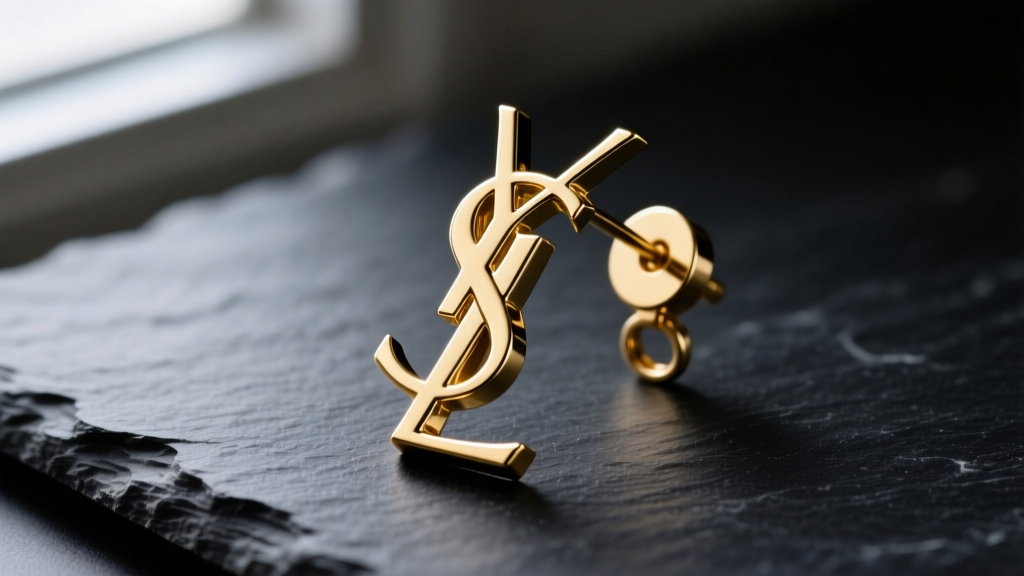
The Metallurgy of Saint Laurent: What is a YSL Earring Really Made Of?
When investing in luxury fashion jewelry, understanding the underlying metallurgy is just as important as appreciating the aesthetic design. A standard YSL earring—whether it belongs to the iconic Cassandra, Kate, or Logo collections—is a masterclass in high-end fashion jewelry manufacturing. However, a common misconception among buyers is confusing these pieces with fine jewelry or gold vermeil. To properly care for your designer pieces and manage expectations regarding longevity and skin sensitivity, we must deconstruct the exact material properties, plating techniques, and base alloys used by the House of Saint Laurent.
Unlike fine jewelry, which is cast from solid precious metals like 14k or 18k gold, the vast majority of YSL earrings fall under the category of bijoux de fantaisie (fashion jewelry). This means they rely on a base metal core that is subsequently finished with a precious metal coating. This manufacturing choice is deliberate: it allows for the bold, oversized, and structurally complex designs that Yves Saint Laurent and his successors, including Loulou de la Falaise, are famous for, without the prohibitive weight and cost of solid gold.
Base Metal Breakdown: The Brass Foundation
The foundational material for almost all YSL metal earrings is brass (known in French as laiton). Brass is an alloy primarily composed of copper and zinc. In luxury fashion jewelry, manufacturers typically use a specific jewelry-grade brass alloy, often containing roughly 60-70% copper and 30-40% zinc, with trace elements added to improve machinability and ensure a mirror-like polish.
According to the Gemological Institute of America (GIA) Gem Encyclopedia, brass is favored in fashion jewelry because it possesses excellent acoustic properties, a substantial 'heft' that mimics the feel of precious metals, and a highly receptive surface for electroplating. However, the copper content in brass is highly reactive. When exposed to oxygen, moisture, and the natural acids in human skin, unsealed brass will oxidize, resulting in the familiar green or black patina. Therefore, the integrity of the protective plating layer is the single most critical factor in the lifespan of your YSL earrings.
Plating Properties: Gold-Tone vs. Silver-Tone Finishes
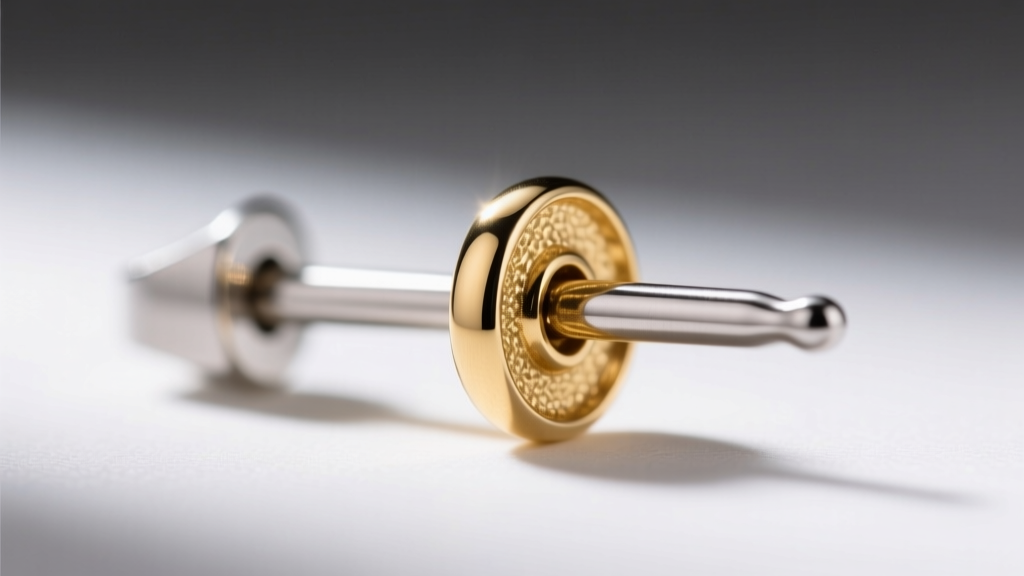
Once the brass base is cast, tumbled, and polished to a flawless finish, it undergoes electroplating. YSL utilizes high-quality plating baths to achieve their signature 'gold-tone' and 'silver-tone' finishes. It is vital to understand that 'gold-tone' in luxury fashion jewelry is not merely a paint; it is a microscopically thin layer of real gold (often 18k or 24k) bonded to the brass via an electrical current.
The thickness of this plating is measured in microns (µm). While cheap fast-fashion jewelry might use a 'flash plating' of less than 0.1 microns, luxury houses like Saint Laurent typically apply a thicker layer, generally ranging between 0.5 and 1.5 microns. Furthermore, high-end manufacturers often employ a 'strike layer'—a microscopic barrier coating of palladium or rhodium applied between the brass and the final gold layer. This barrier prevents the copper atoms in the brass from migrating to the surface and tarnishing the gold, a process known as metal diffusion.
For silver-tone YSL earrings, the final layer is usually rhodium or a palladium alloy. Rhodium is a platinum-group metal that is highly reflective, extremely hard, and completely impervious to tarnish, giving the earrings a bright, white-metal appearance that resists scratching far better than pure silver.
Material Comparison Matrix: YSL Brass vs. Vermeil vs. Solid Gold
To contextualize where a YSL earring sits in the broader jewelry market, it is helpful to compare its material properties against Gold Vermeil and Solid 14k Gold. This matrix highlights why care routines must differ drastically between these categories.
| Material Property | Standard YSL Earring (Brass Base) | Gold Vermeil | Solid 14k Gold |
|---|---|---|---|
| Core Metal | Brass (Copper/Zinc Alloy) | Sterling Silver (92.5% Silver) | Gold Alloy (58.5% Pure Gold) |
| Plating Thickness | 0.5 - 1.5 microns | Minimum 2.5 microns (US Standard) | N/A (Solid throughout) |
| Tarnish Risk | High (if plating is breached) | Moderate (silver core can tarnish) | Very Low |
| Structural Weight | Heavy, substantial drape | Medium | Heavy, dense |
| Typical Price Range | $350 - $750 USD | $150 - $400 USD | $800 - $3,000+ USD |
As the table illustrates, you are paying for the design heritage, the structural complexity, and the brand prestige with YSL, rather than the intrinsic melt value of the metal. This is standard across all major Parisian fashion houses, including Chanel and Dior.
Dermatological Factors: Nickel, Copper, and Skin Reactions
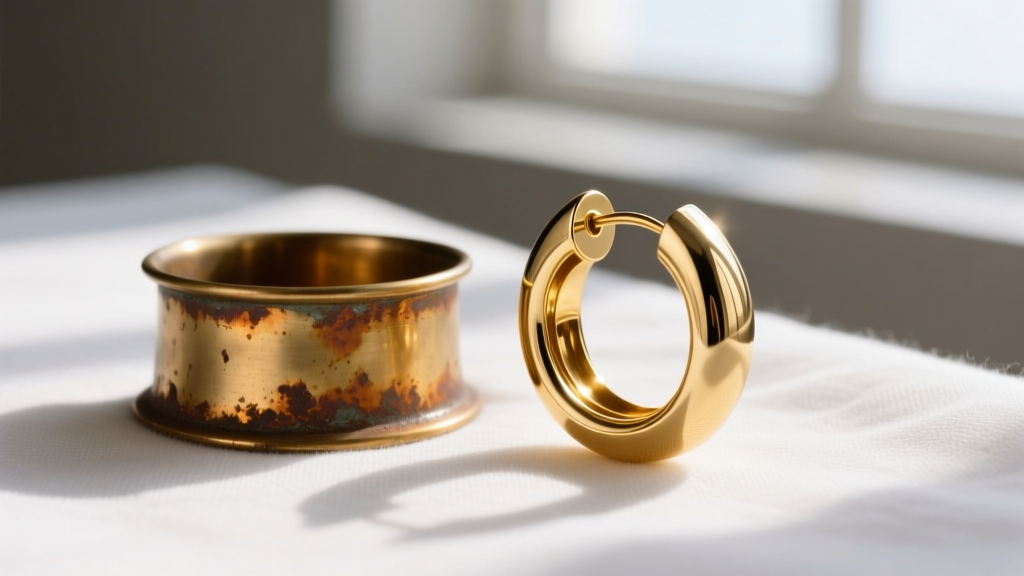
A frequent concern among buyers of designer fashion jewelry is skin sensitization. The 'green ear' phenomenon is not an allergic reaction, but rather a chemical reaction between the copper in the brass base and the salts and acids in your sweat, creating copper chloride. However, true allergic contact dermatitis is usually triggered by nickel.
Saint Laurent strictly adheres to the European Union's REACH regulations regarding jewelry safety. According to the European Chemicals Agency (ECHA), jewelry intended for prolonged skin contact must not release nickel at a rate greater than 0.5 µg/cm²/week. To achieve this compliance, YSL utilizes nickel-free plating baths and barrier layers. Furthermore, the actual post of a YSL earring—the specific wire that penetrates the earlobe—is frequently crafted from surgical-grade stainless steel or titanium, even if the decorative face is gold-plated brass. This bi-material approach ensures that the most sensitive part of the piercing remains hypoallergenic, while the visible decorative element maintains the brand's specific aesthetic finish.
Preventative Care Framework for Plated Brass
Because the gold or rhodium layer on a YSL earring is measured in microns, mechanical abrasion is the enemy. Once the plating wears through to the brass, the piece requires professional re-plating. To maximize the lifespan of your earrings, adopt the following strict care protocol:
- Avoid Ultrasonic Cleaners: Never place YSL earrings in an ultrasonic jewelry bath. The high-frequency cavitation bubbles will strip the micron-thin plating from the brass base in minutes.
- The 'Last On, First Off' Rule: Apply all perfumes, hairsprays, and lotions before putting on your earrings. The alcohol and volatile organic compounds (VOCs) in cosmetics can degrade the protective lacquer and accelerate plating wear.
- Friction Management: When removing butterfly backs, pull them straight off the post. Twisting or wiggling the back creates microscopic scratches on the steel post and the brass base near the clutch.
- Storage Environment: Store the earrings in their original flannel pouches or an airtight anti-tarnish bag. Sulfur in the ambient air is the primary catalyst for metal oxidation; removing oxygen and sulfur exposure drastically slows degradation.
Verdict: Investing in Designer Fashion Metals
Understanding the material reality of a YSL earring transforms how you wear and care for it. These pieces are not heirloom-grade solid gold investments meant to be worn in the shower or the ocean; they are meticulously engineered fashion accessories designed to deliver high-impact luxury aesthetics. By respecting the properties of the brass base, protecting the delicate micron plating, and understanding the dermatological safety measures built into the earring posts, you can ensure your Saint Laurent earrings remain pristine, vibrant, and structurally sound for years of high-fashion wear.


