Black Earrings Male Styles: Troubleshooting Fit, Fade, and Allergies
Solve common issues with black earrings male styles. Expert fixes for fading plating, skin irritation, gauge sizing, and secure backings for men.


The Core Problems with Black Men's Earrings
The search for premium black earrings male consumers can trust is often riddled with disappointment. While the aesthetic of matte or glossy black jewelry is a staple in modern men's fashion, the reality of daily wear frequently involves fading finishes, skin irritation, and uncomfortable fits. If your recent search history includes 'black earrings male', you are likely frustrated by pieces that turn gray after a few weeks or leave your earlobes inflamed. As of 2026, the jewelry market has evolved significantly, yet mass-produced black earrings still rely on outdated plating techniques that fail to withstand the friction, oils, and acidity of male skin chemistry.
Troubleshooting these issues requires moving away from generic fashion jewelry and understanding the metallurgy, coating technologies, and anatomical sizing specific to men's piercings. Below, we break down the three most common failure modes of black men's earrings and provide actionable, expert-level solutions to fix them.
Issue 1: The 'Fading to Gray' Plating Failure
The most frequent complaint regarding black jewelry is the inevitable wear on the high-friction post. Most affordable black earrings utilize black rhodium or standard electroplating. Black rhodium is an alloy of rhodium and darkening agents that provides a deep, gunmetal-black finish. However, it is inherently soft. On a man's earring post, which experiences constant micro-friction from inserting and removing the jewelry, black rhodium will typically wear away to reveal the yellowish or silvery base metal within 3 to 6 months.
The Fix: You must upgrade to DLC (Diamond-Like Carbon) or PVD (Physical Vapor Deposition) coatings. DLC is a nanocomposite coating that reaches a hardness of up to 70 GPa (gigapascals), making it virtually scratch-proof and immune to the friction of daily insertion. When shopping, look for brands that explicitly state 'DLC-coated implant-grade titanium' rather than vague terms like 'black plated'.
Issue 2: Contact Dermatitis and 'Green Ear'
When the black plating wears off, the underlying base metal is exposed. Many budget-friendly black earrings are crafted from surgical steel (which contains 8-12% nickel) or brass. Once the barrier is compromised, nickel and copper leach into the skin, triggering Allergic Contact Dermatitis (ACD) or oxidizing to create a green/black residue on the earlobe. According to the American Academy of Dermatology, nickel allergy is one of the most common causes of contact dermatitis, and once developed, it is a lifelong sensitivity.
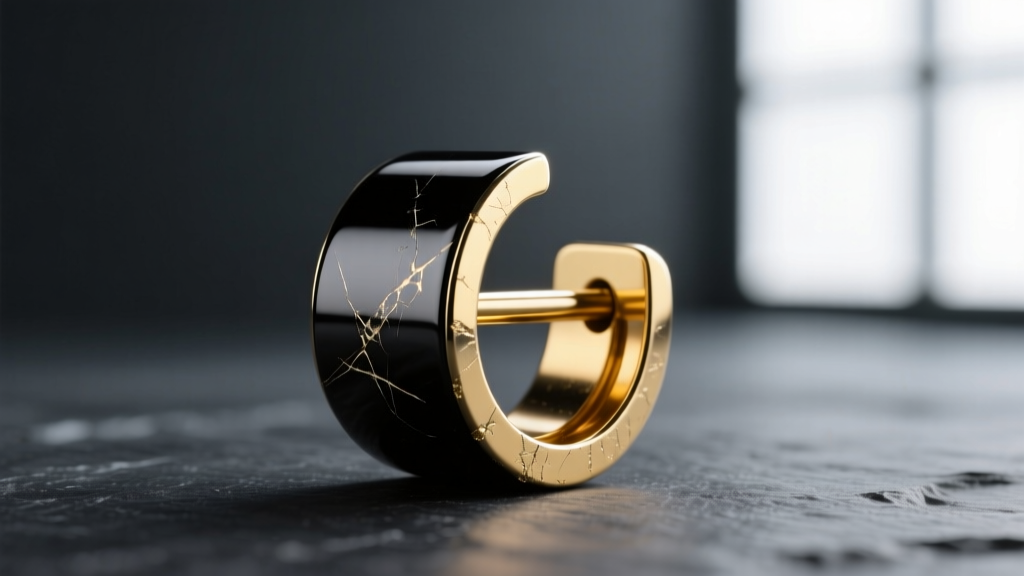
The Fix: The base metal must be hypoallergenic before the black coating is applied. The gold standard for sensitive ears is ASTM F136 Implant-Grade Titanium coated in black DLC. For a completely coating-free alternative, look for Solid Black Zirconia (a high-tech ceramic) or Anodized Niobium. Black Zirconia is completely inert, meaning it will never cause an allergic reaction and will never fade, as the black color is inherent to the material itself, not a surface coating.
Material Matrix: What Actually Lasts?
To stop wasting money on disposable jewelry, use this troubleshooting matrix to evaluate the black earrings you are considering. The price ranges reflect 2026 market averages for a single, high-quality men's stud or hoop.
| Material / Coating | Base Metal | Hardness & Durability | Hypoallergenic? | Avg. Price (Per Piece) |
|---|---|---|---|---|
| Black Rhodium Plated | Brass or Sterling Silver | Low (Fades in 3-6 months) | No (Nickel/Copper risk) | $15 - $30 |
| PVD Black Coated | 316L Surgical Steel | Medium (Lasts 1-2 years) | Mostly (Steel has trace nickel) | $25 - $45 |
| DLC Coated | ASTM F136 Titanium | Extreme (70 GPa, Lifetime) | Yes (100% Biocompatible) | $50 - $85 |
| Solid Black Zirconia | Zirconium Dioxide Ceramic | Extreme (Scratch-proof, No fade) | Yes (Completely Inert) | $40 - $70 |
| Black Anodized | Niobium | Medium (Can scratch if dropped) | Yes (Nickel-free element) | $20 - $40 |
According to the Association of Professional Piercers (APP), implant-grade titanium (ASTM F136) and niobium are the only recommended base metals for long-term wear in sensitive or healing piercings. When seeking black jewelry, ensuring the base metal meets these standards is just as critical as the color coating itself.
Troubleshooting Fit: Gauge, Length, and Backings
Even if the material is flawless, a poorly fitted earring will cause mechanical irritation, lobe stretching, and hygiene issues. Men's ear anatomy and piercing placements often require different specifications than standard women's fashion earrings.
Lobe vs. Cartilage Sizing
Most mass-market earrings are manufactured at 20-gauge (0.81mm) or 22-gauge (0.64mm). However, professional piercers typically pierce male lobes at 18-gauge (1.0mm) or 16-gauge (1.2mm) to provide stability and prevent the 'cheese-cutter effect,' where a thin wire slowly slices through the lobe tissue over time. For cartilage piercings like the helix or tragus, 16-gauge is the universal standard. Forcing a 20G earring into a 16G piercing can cause the thread to tear the fistula (the piercing channel), leading to scar tissue buildup and irritation bumps.
The Fix: Always verify your piercing gauge using a digital caliper or by consulting your piercer. Purchase internally threaded or threadless (push-pin) jewelry in the correct gauge. Brands like Neometal and Industrial Strength offer precision-machined 16G and 18G black titanium ends that fit seamlessly into standard posts.
The Post Length Dilemma and Backing Upgrades
Standard 'butterfly' or 'push' backings are the enemy of ear health. The crevices in a butterfly back trap sebum, dead skin cells, and hair products, leading to the notorious 'ear cheese' odor and localized infections. Furthermore, standard friction posts are often 10mm or 11mm long, which protrudes far behind a man's earlobe, snagging on clothing, headphones, and pillows.

The Fix: Transition to Flat-Back Labrets. These feature a flat disc that rests flush against the back of the ear, eliminating snagging and trapping zero debris. To get the right fit, you must match the post length to your tissue thickness:
- Standard Male Lobe: 7mm to 8mm post length.
- Thin Lobe / Helix Cartilage: 6mm post length.
- Thick Lobe / Tragus: 8mm to 9mm post length.
An 8mm internally threaded flat-back labret in black DLC titanium provides a secure, flush, and hygienic fit that butterfly backs simply cannot achieve.
Daily Maintenance to Prevent Oxidation and Snagging
While materials like Black Zirconia and DLC-coated titanium are incredibly resilient, the environment of the ear canal produces acidic oils that can dull the finish of any jewelry over time. To maintain the deep, light-absorbing black aesthetic, implement a simple bi-weekly maintenance routine.
First, remove the earrings and wash them with a mild, fragrance-free liquid soap and warm water. Avoid harsh chemicals, rubbing alcohol, or ultrasonic cleaners, as these can degrade the anodized layers on niobium or strip lower-quality PVD coatings. Use a soft-bristled toothbrush to gently clean the threading and the flat back of the labret where sebum accumulates. Dry the jewelry completely with a microfiber cloth before reinsertion to prevent moisture from becoming trapped in the piercing channel.
Final Verdict: Upgrading Your Black Jewelry
Troubleshooting black earrings male styles ultimately comes down to rejecting fast fashion jewelry in favor of precision body jewelry. By prioritizing ASTM F136 titanium with DLC coatings or solid black zirconia, you eliminate the frustration of fading gray posts and allergic flare-ups. Coupling these premium materials with anatomically correct 16-gauge flat-back labrets ensures that your earrings remain comfortable, hygienic, and permanently black. Invest in the right materials once, and you will never have to troubleshoot a faded, irritating earring again.


