Paraiba Tourmaline Earrings: Material Properties & Buying Guide
Discover the gemological properties, origin differences, and durability facts of paraiba tourmaline earrings to make an informed luxury purchase.

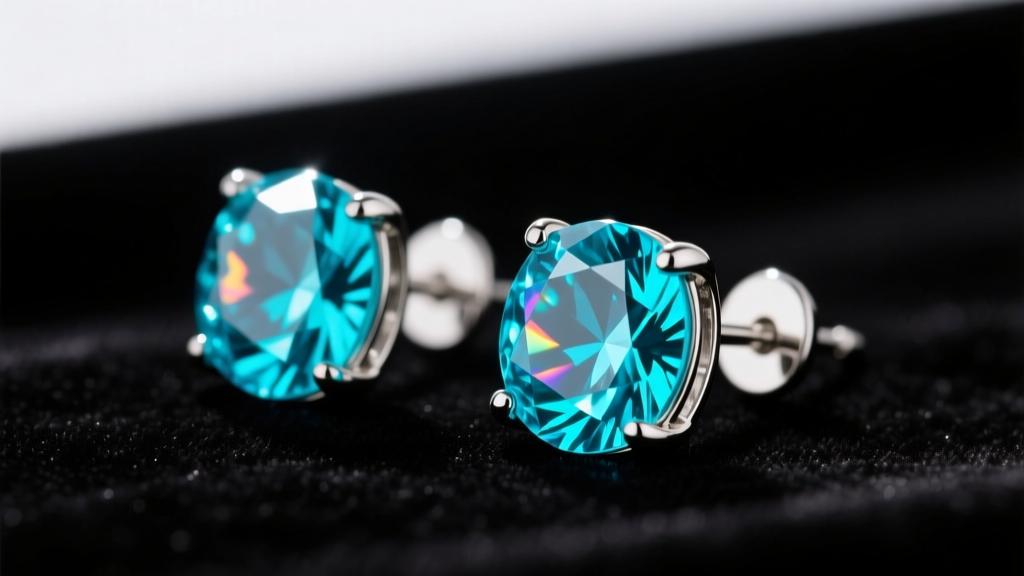
In the upper echelons of colored gemstone jewelry, few materials command the immediate visual shock and awe of cuprian elbaite. When cut and set into paraiba tourmaline earrings, the resulting jewelry offers an electric, neon luminescence that seems to glow from within. However, purchasing these rare gems requires more than an appreciation for their striking color; it demands a rigorous understanding of their gemological DNA, structural durability, and the complex market dynamics separating Brazilian originals from African counterparts. As we navigate the luxury jewelry market in 2026, understanding the material science behind these stones is critical for collectors and everyday wearers alike.
The Gemological DNA: Why Copper Matters
Standard tourmaline is a complex borosilicate mineral that comes in nearly every color of the rainbow. What separates a true Paraiba tourmaline from a standard blue or green indicolite is its unique chemical trace composition. The defining characteristic of this material is the presence of copper (Cu), and occasionally manganese (Mn), within the crystal lattice. It is the copper that generates the legendary 'neon' or 'Windex' blue-to-green saturation, a phenomenon caused by the way the copper ions absorb and reflect specific wavelengths of light.
From a physical standpoint, tourmaline belongs to the trigonal crystal system and exhibits a Mohs hardness of 7.0 to 7.5. While this makes it reasonably suitable for jewelry, it lacks the sheer scratch resistance of sapphire (Mohs 9) or diamond (Mohs 10). Furthermore, tourmaline is highly pyroelectric and piezoelectric, meaning it can develop an electrical charge when subjected to temperature changes or mechanical pressure. While this won't affect the wearer, it does mean the stones can attract dust and lint more readily than other gems, requiring specific cleaning protocols to maintain their optical brilliance.
Brazilian vs. African Origins: A Material Comparison
The original Paraiba tourmalines were discovered in the Batalha mine of Paraíba, Brazil, in 1989 by Heitor Dimas Barbosa. By the early 2000s, similar copper-bearing tourmalines were unearthed in Nigeria and Mozambique. While the gemological community (including the Gemological Institute of America (GIA)) accepts the term 'Paraiba' for copper-bearing tourmalines regardless of origin, the material properties and market values differ vastly.
| Material Feature | Brazilian (Batalha/São José) | African (Mozambique/Nigeria) |
|---|---|---|
| Copper Concentration | Higher (often up to 2wt% CuO) | Lower trace amounts |
| Color Saturation | Intense neon blue, violet-blue | Minty green, teal, lighter blue |
| Clarity & Inclusions | Heavily included, frequent fractures | Slightly cleaner, larger crystal yields |
| Typical Carat Size | Rarely exceeds 2.0 carats | Commonly found in 3.0 to 10+ carats |
| 2026 Market Price/Carat | $15,000 - $60,000+ | $2,000 - $9,000 |
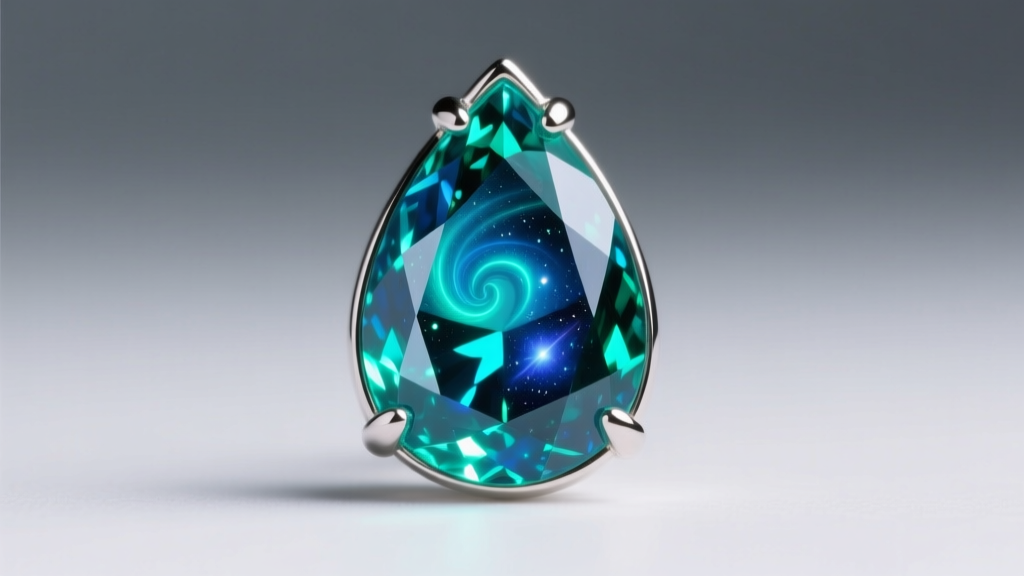
For earring design, this origin difference dictates the final silhouette. Brazilian stones are almost exclusively cut into small, precision-calibrated rounds or ovals for high-end stud earrings or halo arrangements. African stones, yielding larger rough, are frequently fashioned into pear shapes, emerald cuts, and substantial drops, allowing for dramatic dangle earring designs that would be financially unfeasible with Brazilian rough.
Durability Metrics and Earring Setting Engineering
Designing settings for paraiba tourmaline earrings requires balancing aesthetic light return with structural protection. Because tourmaline lacks true cleavage (it does not split along flat planes like diamond), it is less prone to catastrophic splitting from a single sharp blow. However, it is inherently brittle and can chip or abrade along facet junctions if subjected to repetitive friction or hard impacts.
Lobe vs. Cartilage Considerations
- Standard Lobe Studs: The safest application for Paraiba. Four-prong or six-prong platinum settings allow maximum light entry while elevating the stone above the skin to prevent the pyroelectric attraction of skin oils and cosmetics.
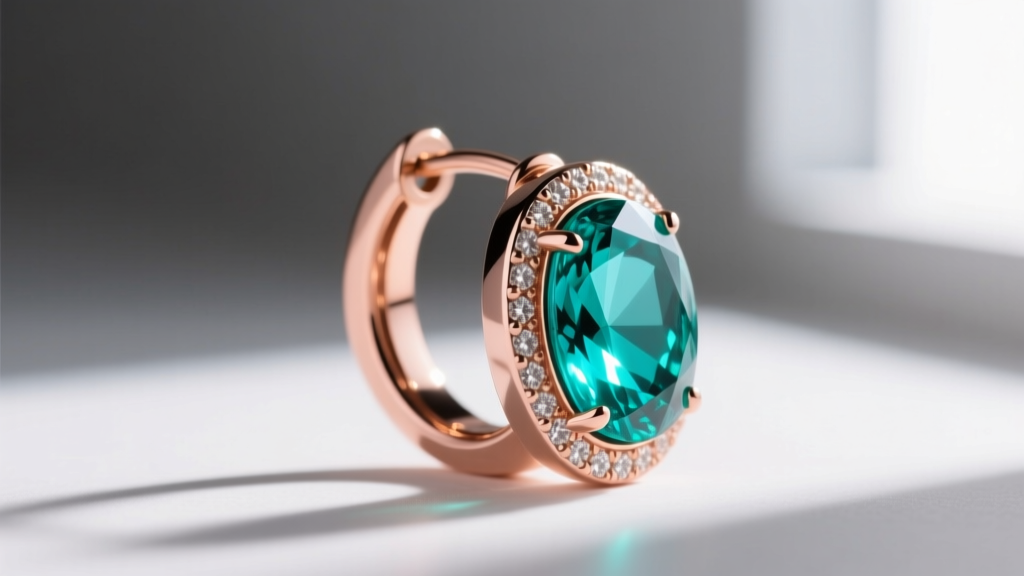
- Huggies and Hoops: When setting Paraiba into huggie earrings, a full bezel or half-bezel setting is mandatory. The constant motion of a hoop against the neck and hair poses a high risk of facet abrasion if the gem's girdle is exposed.
- Cartilage (Tragus/Conch): Cartilage piercings are highly susceptible to snagging on clothing and hair. Low-profile, bezel-set cabochons or flat-cut Paraiba slices are recommended. Avoid high-dome cuts or protruding prongs, which can easily catch and chip the stone or tear the tissue.
- Dangles and Drops: Reserve African Paraiba drops for occasional evening wear. The pendulum effect of a dangle earring increases the likelihood of the stone striking a hard surface, such as a marble countertop or a smartphone screen.
Treatments, Enhancements, and Lab Disclosures
The material reality of tourmaline is that flawless, untreated stones are virtually non-existent. Understanding accepted treatments versus value-destroying enhancements is a non-negotiable aspect of purchasing these earrings.
Heat Treatment: Low-temperature heating (typically around 400°C to 500°C) is a standard, widely accepted practice used to reduce the manganese-induced purple or violet undertones, leaving a purer, more desirable neon blue or green. This treatment is stable and permanent.
Fracture Filling: Because Brazilian rough is notoriously fractured, lapidaries frequently use clear epoxy resins or polymers to fill surface-reaching fissures, improving apparent clarity and structural stability during the cutting process. While common, this must be explicitly disclosed by the seller. Fracture-filled stones require specialized care; ultrasonic cleaners and steamers will melt or cloud the resin, ruining the stone's optical properties. Always rely on reports from top-tier laboratories like American Gemological Laboratories (AGL) to verify the extent of clarity enhancement before wiring funds for high-ticket items.
Pricing Tiers and Metal Pairings for 2026
The pricing of paraiba tourmaline earrings is driven by color saturation, origin, and the presence (or absence) of clarity enhancements. In 2026, the scarcity of unheated, high-copper Brazilian material has pushed top-tier stud earrings (1.50 carats total weight) well past the $40,000 mark at luxury heritage houses. Conversely, beautifully saturated, lightly included African Paraiba set in designer drops can be acquired in the $4,000 to $8,000 range, offering exceptional visual impact for the price.
Metal selection plays a vital role in enhancing the material's optical properties:
- Platinum & 18k White Gold: The premier choice for neon blue stones. The cool, reflective rhodium plating (on white gold) or natural white luster (platinum) acts as a mirror, bouncing light back through the pavilion and amplifying the electric blue hue.
- 18k Yellow Gold: Creates a striking, high-contrast complementary color scheme, particularly effective with the minty-green or teal hues typical of Mozambican stones.
- 18k Rose Gold: An increasingly popular avant-garde pairing. The warm copper undertones of the rose gold visually resonate with the copper trace elements inside the gem, creating a cohesive, warm-yet-electric aesthetic.
When investing in paraiba tourmaline earrings, prioritize color saturation and origin transparency over sheer carat weight. A 0.80-carat pair of intensely saturated, well-cut Brazilian stones will outperform a 3.00-carat pair of washed-out, heavily filled African stones in both visual brilliance and long-term investment retention.
Ultimately, the allure of paraiba tourmaline lies in its unreplicable neon fire. By respecting the material's physical limitations, choosing protective settings, and demanding rigorous gemological documentation, collectors can safely enjoy these electric marvels for generations.


