Expert Guide to 18k Hoop Earrings Gold Alloys & Clasps
Discover the metallurgy, clasp mechanics, and gauge standards of 18k hoop earrings gold. An expert technical guide for fine jewelry buyers.

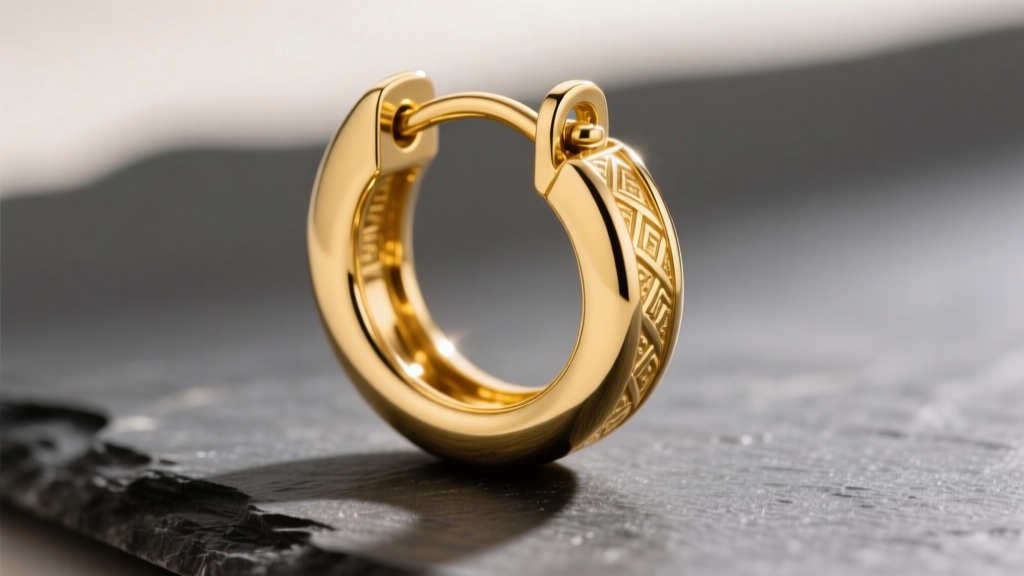
The allure of gold jewelry is timeless, but when navigating the luxury market, understanding the material science behind your pieces is paramount. Evaluating the true value and longevity of 18k hoop earrings gold requires looking beyond the surface shine. Unlike solid 14k gold or gold-plated alternatives, 18-karat gold occupies a unique space in fine jewelry: it offers the rich, saturated color of high-purity gold while maintaining just enough alloyed hardness to function as wearable art. However, the hoop silhouette introduces specific mechanical stresses—rotational torque, clasp friction, and structural bending—that demand a rigorous technical approach to design and fabrication.
The Metallurgical Reality of 18-Karat Alloys
Pure 24k gold is remarkably soft, scoring a mere 25 on the Vickers hardness scale (HV). To create durable 18k hoop earrings gold, metallurgists alloy 75% pure gold with 25% secondary metals. This 25% matrix dictates not only the color but the tensile strength and scratch resistance of the final piece. According to the Gemological Institute of America (GIA), the specific alloy ratios are carefully calibrated based on the desired hue and mechanical requirements.
- 18k Yellow Gold: Typically 75% Au, 12.5% Cu, 12.5% Ag. The balanced copper-silver ratio preserves the warm yellow hue while raising the Vickers hardness to approximately 120-130 HV, making it ideal for everyday wear.
- 18k Rose Gold: Formulated with up to 22.25% copper and 2.75% silver. The high copper content increases hardness slightly but makes the metal more susceptible to oxidation and patina over time.
- 18k White Gold: Alloyed with palladium or nickel (where legally permitted) and zinc. It requires rhodium plating to achieve a bright white finish, which will eventually wear off on high-friction areas like clasp joints.
Manufacturing Techniques: Solid Wire vs. Electroformed
When shopping for large-diameter hoops, the manufacturing method drastically impacts both the price and the structural lifespan of the jewelry. There are two primary methods used to create 18k gold hoops:
Drawn Solid Wire
Solid wire hoops are created by pulling a thick ingot of 18k gold through a series of progressively smaller draw plates. The resulting wire is dense, heavy, and highly resistant to crushing. While they command a premium price due to the high gold weight, solid wire hoops are the gold standard for longevity and can easily be resized or repaired by a bench jeweler.
Electroformed Hollow Tubing
To create massive, statement-sized hoops without the exorbitant cost of solid gold, manufacturers use electroforming. A wax or resin mold is coated in a conductive layer and submerged in an electrolyte bath, where 18k gold particles are deposited onto the surface. The core is then melted or dissolved, leaving a hollow shell. While visually impressive, hollow hoops are highly susceptible to denting and cannot be easily repaired if crushed.
Gauge Thickness and Structural Integrity
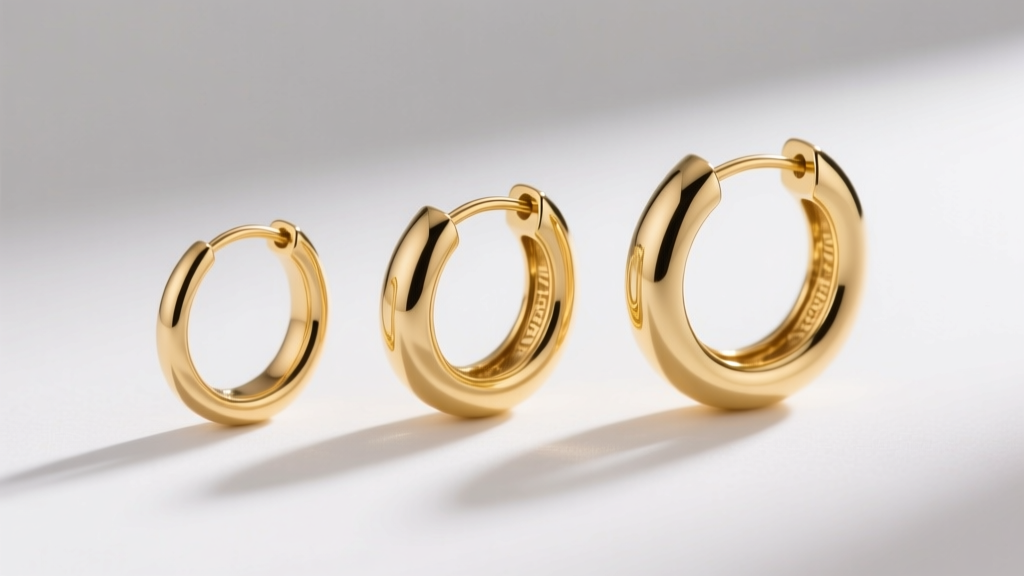
The most common failure point in fine jewelry hoops is warping due to inadequate wire thickness. Because 18k gold is inherently softer than 14k or 10k alternatives, gauge selection is a critical engineering decision. The World Gold Council emphasizes that structural integrity in continuous wear jewelry relies heavily on appropriate mass-to-volume ratios. Below is the technical breakdown of standard wire gauges used in hoop fabrication.
| Gauge (AWG) | Millimeters | Structural Application & Durability |
|---|---|---|
| 20 Gauge | 0.81 mm | Too thin for solid 18k hoops. Highly prone to bending and warping under minimal torque. |
| 18 Gauge | 1.02 mm | Standard for lightweight, delicate huggies and small-diameter hoops (under 15mm). |
| 16 Gauge | 1.29 mm | The optimal baseline for standard hoops (20mm-40mm). Provides excellent resistance to daily warping. |
| 14 Gauge | 1.63 mm | Heavy-duty statement hoops. Virtually warp-proof in 18k gold, but adds significant weight to the earlobe. |
Clasp Mechanics and Failure Modes
The clasp is the mechanical heart of a hoop earring. In 18k gold, the relative softness of the alloy means that friction-based clasps will experience wear over a 5-to-10-year period. Understanding the mechanics of each clasp type helps buyers choose the right style for their lifestyle.
- Hinged Saddle (Click-Top): Features a spring-loaded mechanism that 'clicks' into a grooved post. While secure, the internal spring is often made of stainless steel or a harder alloy to prevent failure, as an 18k gold spring would quickly lose its tension.
- Latch-Back (Saddle Back): A hinged wire post that snaps into a catch on the opposite side of the hoop. Over time, the 18k gold wire post can thin out due to friction against the catch, requiring a jeweler to re-tip or thicken the wire.
- Continuous (Endless): A seamless hoop where a thin wire post feeds directly into the hollow tubing of the opposite end. These offer the cleanest aesthetic but are notorious for losing tension, causing the hoop to slowly rotate and open during sleep.
Market Pricing Framework: Calculating True Value
Pricing for 18k hoop earrings gold should be transparent and rooted in the daily spot price of gold, plus a fabrication premium. To determine if you are paying a fair market price, use the following framework:
- Calculate the Gold Weight: Multiply the total weight of the earrings (in grams) by 0.75 to find the pure gold content.
- Apply the Spot Price: Multiply the pure gold weight by the current daily spot price of 24k gold per gram.
- Add the Fabrication Premium: A reputable jeweler will add a markup of 20% to 60% over the melt value to cover labor, design, and overhead. Designer brands may charge a 200% to 500% premium for the brand name.
Expert Tip: Always ask the jeweler for the exact gram weight of the 18k hoops before purchasing. If a retailer refuses to disclose the weight, they are likely pricing based on perceived value rather than intrinsic material cost.
Verification and Hallmarking Standards
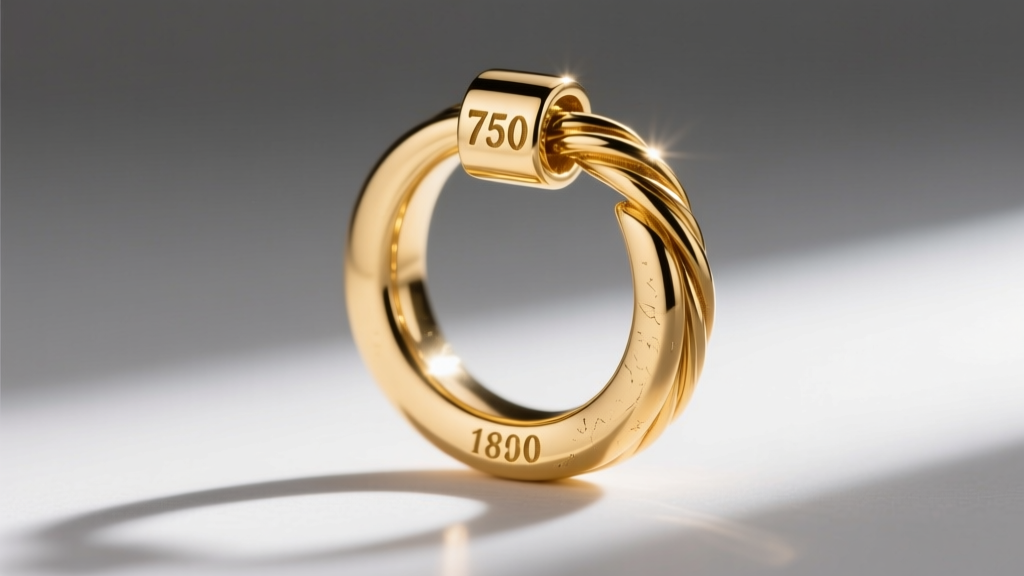
Verifying the authenticity of 18k gold requires more than a visual inspection. In the United States, the National Stamping Act requires that any item marked with a karat quality stamp must also bear the registered trademark of the manufacturer. In Europe and most international markets, the numerical hallmark 750 is the standard designation for 18k gold, representing 750 parts per thousand of pure gold.
For high-value purchases, rely on non-destructive testing methods. X-Ray Fluorescence (XRF) spectrometry is the industry standard for verifying the exact elemental composition of the alloy without damaging the piece. If XRF is unavailable, a specific gravity test using a precision scale and water displacement can accurately determine the density of the metal, confirming whether the core is solid gold or a base metal disguised by heavy plating.
Ultimately, investing in 18k hoop earrings gold is an exercise in balancing metallurgical science with aesthetic preference. By prioritizing correct gauge thickness, understanding the limitations of specific clasp mechanisms, and verifying the alloy composition, buyers can secure pieces that will maintain their structural integrity and visual brilliance for generations.


