How to Clean Rhinestone Bow Earrings Without Ruining the Glue
Learn expert methods to clean rhinestone bow earrings safely. Discover which solutions protect foil backings and adhesives while restoring maximum sparkle.

The Unique Anatomy of Rhinestone Bow Earrings
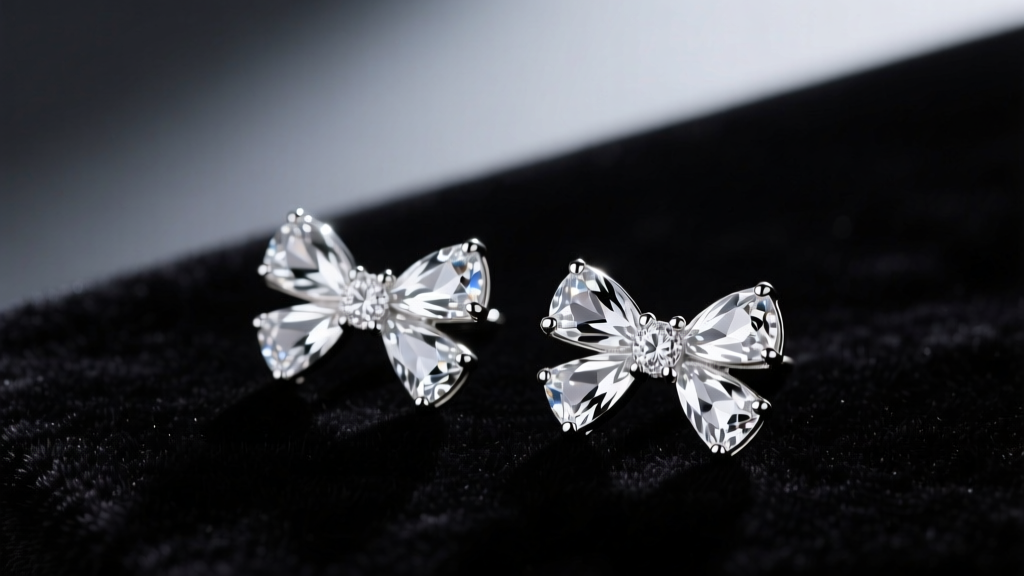
Rhinestone bow earrings have become a staple of coquette, vintage-inspired, and formal aesthetics. However, their intricate loops, clustered 'knots,' and delicate pavé-style tails make them notoriously difficult to clean. Unlike solid gold or platinum pieces, rhinestone jewelry relies on a fragile ecosystem of adhesives, foil backings, and base metals. According to the Gemological Institute of America (GIA), improper cleaning is the leading cause of irreversible damage to simulated gemstones and costume jewelry.
To care for these earrings, you must first understand their construction. High-quality rhinestones are typically made of leaded glass (like vintage Swarovski or Preciosa) or optical acrylic. To achieve their signature diamond-like sparkle, the back of each stone is coated with a microscopic layer of metallic foil or a mirrored vacuum-sealed backing. These stones are then set into base metal or sterling silver bow settings using specialized adhesives, ranging from factory-grade UV-cured resins to cyanoacrylate. The 'knot' of the bow usually features tightly clustered melee-sized stones, while the 'tails' showcase larger marquise or pear cuts. The ribbon folds and crevices easily trap sebum, makeup, and hairspray, requiring a highly specific cleaning approach.
Critical Mistakes That Destroy Foil and Adhesives
Before reaching for your jewelry cleaner, you must understand what will permanently ruin your rhinestone bow earrings. The Jewelers Mutual care guidelines emphasize that simulated stones require vastly different care than natural diamonds.
- Never Use Ultrasonic Cleaners: The high-frequency vibrations in ultrasonic baths will shatter glass rhinestones, crack acrylics, and instantly strip the delicate foil backing off the rear of the stone, leaving it looking 'dead' or cloudy.
- Avoid Ammonia and Windex: While ammonia is excellent for natural diamonds, it is highly corrosive to the metallic foil backing of rhinestones and will cause acrylic stones to cloud and craze over time.
- Never Soak the Earrings: Submerging bow earrings in water allows moisture to seep beneath the bezel or prongs. Once water reaches the foil backing, it causes rapid oxidation, turning the once-brilliant silver or gold foil black.
- Skip the Rubbing Alcohol: Isopropyl alcohol can degrade the cyanoacrylate adhesives used to secure the stones in the bow's ribbon folds, leading to sudden stone loss.
The Expert Step-by-Step Cleaning Protocol
To safely restore the brilliance of your rhinestone bow earrings without compromising the glue or foil, follow this meticulous, low-moisture protocol.
- Dry Dusting the Crevices: Before introducing any liquid, use a clean, dry makeup blending brush or a soft-bristled artist's paintbrush to sweep away loose dust and dried makeup from the deep crevices of the bow's ribbon folds.
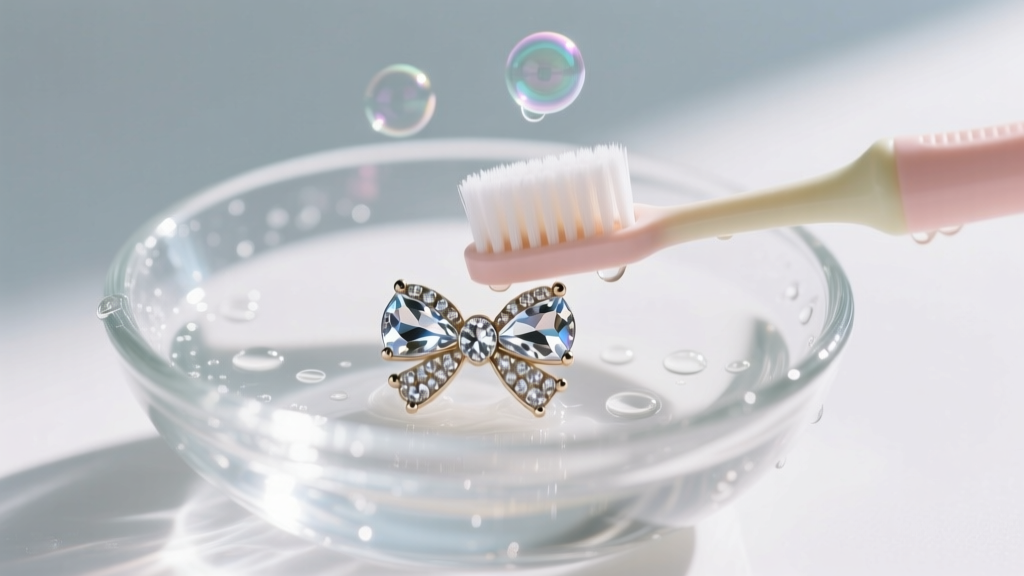
- The Damp Swab Method: Mix one cup of distilled water with a single drop of mild, lotion-free dish soap (like Dawn). Dip a cotton swab into the solution and dab it on a paper towel to remove excess moisture. Gently roll the damp swab over the surface of each rhinestone, paying special attention to the tight cluster of stones at the bow's center knot.
- Dislodging Compacted Debris: If lotion or sebum is compacted in the metal folds of the bow, do not use a metal needle or pin, which will scratch the rhodium plating. Instead, use a wooden orangewood stick (cuticle stick) to gently scrape the debris away from the stone's girdle.
- The Gentle Brush: For the metal backing and earring posts, use an extra-soft baby toothbrush dipped in the soapy distilled water. Scrub the metal parts quickly, avoiding excessive water runoff onto the rhinestone settings.
- Immediate Drying: Never let the earrings air dry. Immediately pat them with a lint-free microfiber cloth, then use a hair dryer on the 'cool' and 'low' setting to blow out any trapped moisture from beneath the stone settings.
Troubleshooting Common Rhinestone Bow Failures
Even with meticulous care, rhinestone jewelry can develop issues. Use this troubleshooting guide to diagnose and fix common problems.
| Problem | Root Cause | Expert Solution |
|---|---|---|
| Cloudy or 'Dead' Stones | Moisture breached the setting, oxidizing the foil backing. | Unfortunately, this is irreversible at home. A professional jeweler must remove the stone, replace the foil, and reset it. |
| Stones Falling Out | Adhesive degradation from age, heat, or alcohol exposure. | Re-glue using GS Hypo Cement or E6000. Avoid Super Glue, as cyanoacrylate 'frosts' the glass with white residue. |
| Tarnished Metal Bows | Sulfur exposure or rhodium plating wearing off the base metal. | Polish the bare metal gently with a dry silver polishing cloth. Do not use liquid silver dips, which will destroy the rhinestones. |
| Green Skin Reaction | Copper or brass base metal reacting to skin acidity and sweat. | Paint the earring posts and the back of the bow with a thin layer of clear nail polish or a specialized jewelry barrier coating. |
Long-Term Storage and Adhesive Repair
Proper storage is just as critical as cleaning when it comes to preserving the structural integrity of rhinestone bow earrings. The adhesives used in costume and semi-fine jewelry are sensitive to extreme temperature fluctuations and humidity.
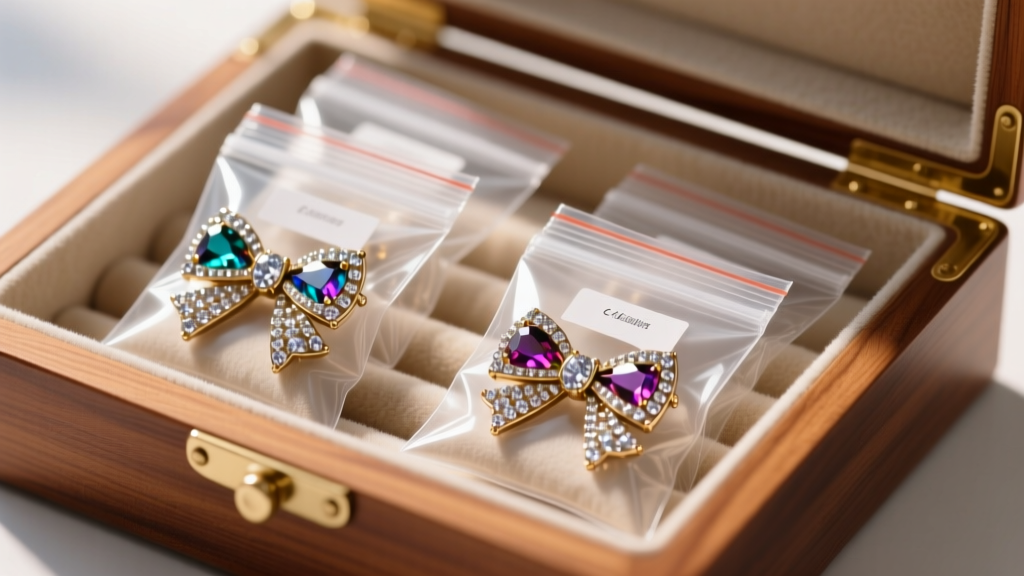
Always store your bow earrings in individual, airtight polyethylene ziplock bags. Toss a small silica gel packet and a 3M anti-tarnish strip into each bag to absorb ambient moisture and neutralize sulfur gases that cause the metal settings to blacken. Never store rhinestone jewelry in cotton-lined boxes or wrap them in cotton balls; cotton holds moisture and contains trace amounts of sulfur, which accelerates both metal tarnish and foil oxidation.
If you need to perform a minor repair on a loose stone within the bow's tail, avoid standard hardware store super glues. Hardware super glues emit fumes as they cure that cause a permanent, cloudy 'frosting' effect on glass and acrylic. Instead, invest in a tube of GS Hypo Cement. It features a precision needle applicator perfect for the tiny melee stones in the bow's knot, dries clear, and remains slightly flexible, allowing the metal setting to expand and contract with temperature changes without popping the stone.
When to Seek Professional Jewelry Repair
While home maintenance can keep your rhinestone bow earrings sparkling, certain issues require a professional touch. If the metal prongs holding the larger marquise stones on the bow tails are bent or lifted, do not attempt to push them down with pliers yourself. Rhinestone glass is highly sensitive to uneven pressure and will shatter if the prong applies force to the wrong facet. A professional bench jeweler has the specialized bezel rollers and magnification required to tighten the settings safely. By combining gentle, low-moisture cleaning with climate-controlled storage, your rhinestone bow earrings will maintain their brilliant, diamond-like fire for years to come.


