How to Clean Popular Earrings 2025 Trends in 2026
Master the care of popular earrings 2025 trends with our 2026 guide. Learn material-specific cleaning for PVD titanium, raw gems, and enamel.

The Material Shift: Why 2025 Trends Require New Cleaning Rules
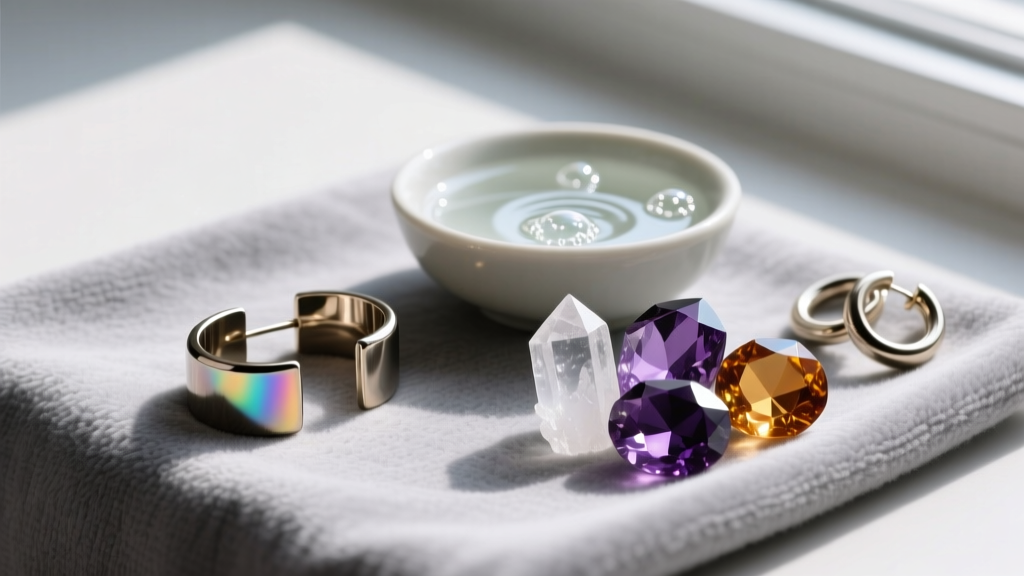
When evaluating the most popular earrings 2025 brought into the mainstream, one thing becomes immediately clear to jewelry experts: the era of one-size-fits-all cleaning is over. Throughout 2025, the market saw a massive pivot away from traditional high-polish 14k gold and sterling silver toward highly textured, mixed-material, and alternative-finish pieces. As we navigate 2026, collectors and everyday wearers are finding that their favorite statement pieces require highly specialized maintenance protocols.
The rise of PVD-coated titanium ear cuffs, raw uncut gemstone huggies, and vitreous enamel drop earrings has introduced new vulnerabilities. Using standard commercial jewelry dips or ultrasonic cleaners on these trending pieces is a fast track to irreversible damage. According to the Gemological Institute of America (GIA), the porosity and structural integrity of modern alternative gems and coatings demand a nuanced approach to sebum removal, oxidation control, and sanitization.
Material-Specific Protocols for 2025's Biggest Hits
To maintain the structural integrity and visual brilliance of your collection, you must match your cleaning agent to the specific metallurgical and gemological properties of the earring.
PVD-Coated Titanium & Ear Cuffs
Physical Vapor Deposition (PVD) coating has dominated the ear cuff and cartilage hoop market. PVD bonds a microscopic layer of color (often gold, rose gold, or black) to a Grade 5 Titanium (Ti-6Al-4V) base. While PVD is significantly harder than traditional electroplating, it is not impervious to abrasion.
- The Wrong Way: Using diamond-dust polishing cloths or baking soda pastes. These mild abrasives will strip the PVD coating at the microscopic level, exposing the dull gray titanium beneath.
- The Right Way: Use a solution of warm distilled water and a few drops of pH-neutral dish soap (like Dawn). Gently agitate with a lint-free microfiber cloth. Dry immediately to prevent water spotting on the high-gloss finish.
Raw, Uncut Gemstone Huggies
Raw turquoise, uncut rose-cut diamonds, and unpolished opals set in 18-gauge huggies were a staple of 2025 bohemian-minimalism. Unlike faceted stones, raw gems possess open pores, natural inclusions, and micro-fractures.
Expert Insight: Never submerge raw turquoise or opals in water. Turquoise is highly porous and will absorb liquids, leading to permanent color shifts or structural weakening. Instead, use a slightly damp, soft-bristled baby toothbrush to gently sweep debris from the prong settings, avoiding direct contact with the stone's surface. The Jewelers of America strictly advises against chemical cleaners for any organic or porous gem material.
Vitreous Enamel & Mixed-Metal Drops
Vitreous enamel involves fusing powdered glass to a metal substrate at temperatures exceeding 1,400°F. The resulting glass-like finish on drop earrings is stunning but highly susceptible to thermal shock and impact.
- Thermal Shock Risk: Cleaning enamel earrings under hot running water and then rinsing them with cold water can cause 'crazing'—a network of microscopic spiderweb cracks in the glass that dulls the color permanently.
- Safe Protocol: Clean vitreous enamel strictly at room temperature using a specialized, alcohol-free glass cleaner applied to a cotton swab, carefully avoiding the metal prongs to prevent chemical degradation of the setting adhesive.
The Ultrasonic Trap: Understanding Cavitation Damage
Ultrasonic jewelry cleaners operate by emitting high-frequency sound waves (typically around 40kHz) into a liquid bath, creating millions of microscopic vacuum bubbles. When these bubbles collapse against the jewelry—a process known as cavitation—they blast away dirt and oils.
Warning: While ultrasonic cavitation is excellent for removing polishing compound from a solid diamond solitaire, it is deeply destructive to the popular earrings 2025 trends introduced.
If you place raw gemstones, emeralds (which are heavily fracture-filled with oils), or enamel pieces into an ultrasonic bath, the localized shockwaves will expand existing micro-fractures, causing the stone to shatter or the enamel to chip away from the metal backing. Furthermore, the vibrations can loosen the delicate micro-prongs commonly used in modern huggie and cluster earring designs, leading to silent stone loss.
High-Gauge Cartilage Sanitization (14G to 16G)
The normalization of high-gauge cartilage piercings (14-gauge at 1.6mm and 16-gauge at 1.2mm) means heavier, thicker jewelry is sitting in the ear for extended periods. Thicker posts collect significantly more dead skin cells, sebum, and environmental debris in the fistula (the piercing channel).
For sanitizing these pieces before reinsertion, the Association of Professional Piercers (APP) recommends specific alcohol concentrations:
- Use 70% Isopropyl Alcohol, Not 91%: While 91% evaporates too quickly to effectively break down bacterial cell walls, 70% contains enough water to keep the cell membrane permeable, allowing the alcohol to penetrate and kill pathogens.
- Soak Time: Submerge implant-grade titanium (ASTM F-136) or 316L stainless steel pieces for exactly 10 minutes. Prolonged soaking in alcohol can degrade silicone O-rings or acrylic inlays sometimes found in decorative gauge jewelry.
- Drying: Allow the jewelry to air dry completely on a sterile paper towel before insertion to avoid introducing harsh alcohol into the sensitive cartilage tissue.
Troubleshooting Common Earring Failures
Even with meticulous care, structural and chemical failures can occur. Below is a diagnostic framework for addressing the most common issues seen with contemporary earring styles.
| Failure Mode | Primary Cause | Actionable Solution |
|---|---|---|
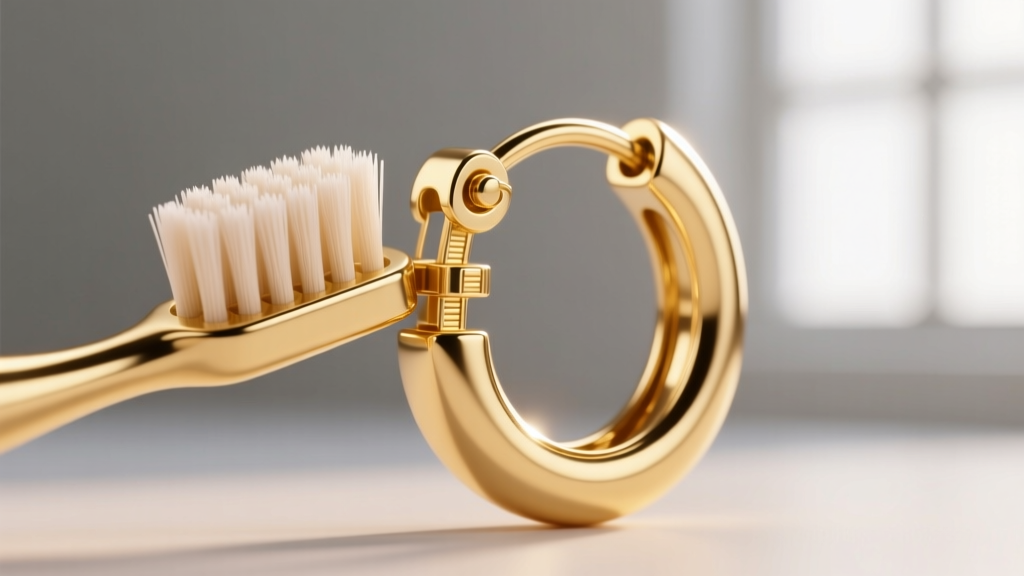
| Stiff Huggie Hinges | Accumulation of sebum and microscopic skin cells inside the 1mm hinge barrel. | Use a 0.5mm interdental brush dipped in warm soapy water to physically extract the debris. Never force the hinge open. |
| Green Skin Discoloration | Copper content in brass or low-karat gold alloys reacting with sweat acidity (galvanic reaction). | Coat the earring post with a micro-layer of clear nail polish or upgrade to 14k gold vermeil over a sterling silver base. |
| Dull PVD Coating | Exposure to chlorine in pools or sulfur in hot springs, causing chemical etching. | Polish gently with a specialized PVD-safe microfiber cloth. If etched, the piece must be professionally re-coated. |
| Ear Cuff Slippage | Metal fatigue from repeatedly bending the cuff to fit the cartilage ridge. | Have a jeweler gently squeeze the cuff using nylon-jaw pliers to restore tension without marring the metal surface. |
Storage Frameworks to Prevent Galvanic Corrosion
How you store your earrings when they are not in your ear is just as critical as how you clean them. A major mistake collectors make is tossing mixed-material pieces into a single communal jewelry box. When dissimilar metals—such as sterling silver (which contains copper) and raw brass—touch in a humid environment, they form a galvanic cell. This electrochemical reaction drastically accelerates tarnishing and can cause permanent pitting on the softer metal.
The 2026 Storage Standard:
- Isolate by Material: Store PVD titanium, gold vermeil, and sterling silver in separate, individual compartments.
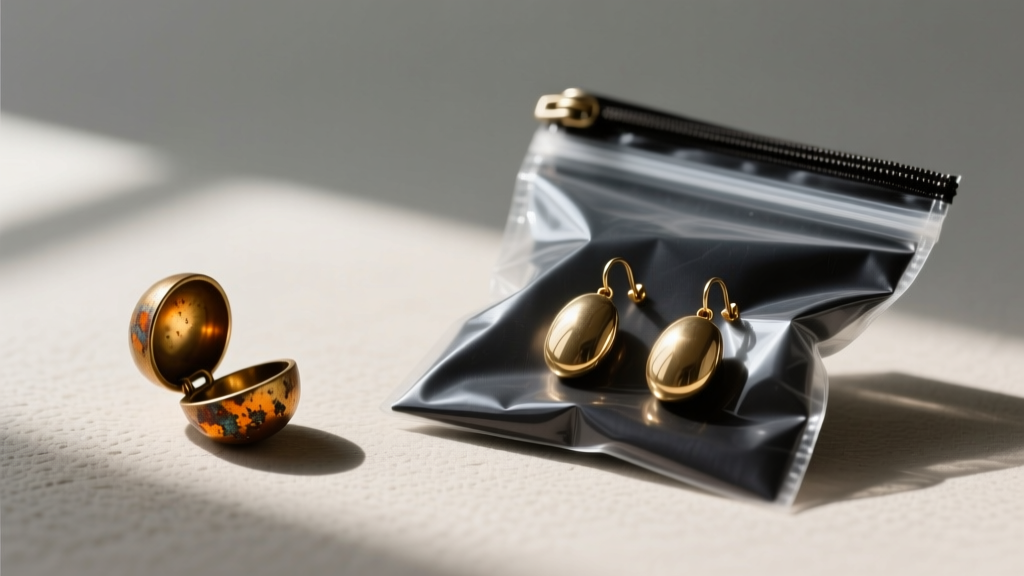
- Anti-Tarnish Technology: Utilize zip-lock bags infused with anti-tarnish vapor-corrosion inhibitors (VCI). These bags emit a harmless gas that neutralizes sulfur and oxygen molecules in the air, preventing the chemical bonds that cause silver sulfide (black tarnish) to form.
- Climate Control: Never store jewelry in the bathroom. The daily fluctuations in heat and humidity from showers create the perfect incubator for oxidation and degrade the adhesives used in cluster stud earrings.
By abandoning outdated, aggressive cleaning methods and adopting these material-specific, scientifically backed protocols, you ensure that your investment in contemporary ear styling remains vibrant, hygienic, and structurally sound for years to come.


