Turtle Earring Value Guide: Materials, Pricing & Worth
Discover the true value of a turtle earring in our 2026 pricing guide. Compare materials, enamel types, and cost tiers to find the best budget fit.

The Rise of the Turtle Earring: Novelty or Timeless Staple?
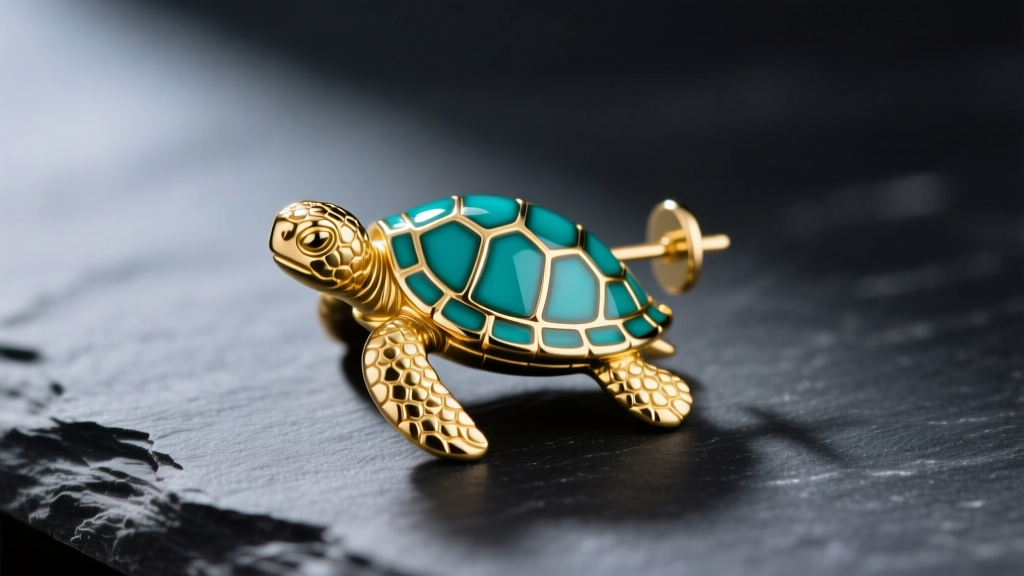
The turtle earring has successfully transcended its origins as a mere summer souvenir or fast-fashion novelty. As we navigate the jewelry landscape in 2026, the sea turtle motif represents a sophisticated blend of ecological appreciation, longevity, and enduring style. However, the market is heavily saturated with wildly varying price points. You can find a turtle-shaped stud for $12 at a mall kiosk, or a meticulously crafted artisan piece for $450. For the discerning buyer, this raises a critical question: how do you separate genuine craftsmanship from overpriced costume jewelry?
Assessing the budget and true value of a turtle earring requires looking past the aesthetic and diving deep into the metallurgy, the enameling techniques, and the structural hardware. This comprehensive guide will break down exactly what you should be paying, the materials that justify premium pricing, and the hidden flaws that ruin budget pieces within months.
Decoding the Price Tiers: What Should You Actually Pay?
When shopping for animal motif jewelry, price is generally dictated by three factors: base metal purity, plating thickness (if applicable), and the type of coloration used on the shell. Below is a structured breakdown of the current market tiers to help you benchmark value.
| Tier | Price Range | Base Metal | Shell Material | Expected Lifespan | Value Rating |
|---|---|---|---|---|---|
| Budget / Fast Fashion | $12 - $35 | Brass or Zinc Alloy | Cold Enamel (Epoxy Resin) | 6 - 12 Months | Poor |
| Mid-Tier Artisan | $45 - $120 | 925 Sterling Silver | Vitreous (Fired) Enamel | 5 - 15 Years | Excellent |
| Fine Jewelry | $250 - $800+ | Solid 14k / 18k Gold | Guilloché Enamel / Gems | Generational | Investment |
If you are looking for a daily-wear turtle earring that won't irritate your skin or lose its color, the mid-tier artisan category offers the highest return on investment. Budget pieces almost universally rely on brass bases and epoxy resins, which degrade rapidly when exposed to the natural oils and acidity of human skin.
Material Breakdown: Where the Real Value Lies
To accurately assess value, you must understand the manufacturing processes that drive up the cost of premium earrings. The two most critical components to scrutinize are the enamel and the base metal.
The Enamel Factor: Cold Resin vs. Vitreous Glass
The shell of a turtle earring is where the artistry happens, but not all color is created equal. Budget manufacturers use cold enamel, which is essentially a two-part epoxy resin. It is poured into the metal recesses and left to air-dry. While cheap to produce, cold enamel is highly susceptible to UV degradation (it will turn yellow or cloudy when exposed to sunlight) and will soften or melt if exposed to high heat, such as being left on a car dashboard in the summer.
In contrast, mid-tier and fine jewelers use vitreous enamel. This involves applying finely crushed glass powder to the metal and firing it in a kiln at approximately 1400°F (760°C). The glass melts and fuses permanently to the metal base. Vitreous enamel is completely UV-stable, highly scratch-resistant, and possesses a luminous depth that resin simply cannot replicate. If a product description does not explicitly state 'fired' or 'vitreous' enamel, assume it is resin.
Base Metals and Plating Thickness
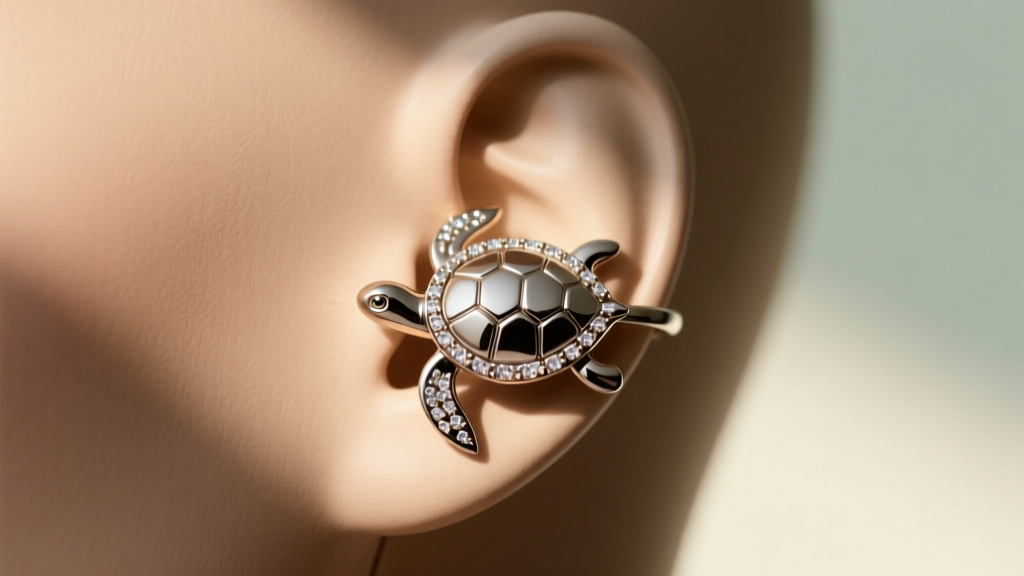
For gold-toned turtle earrings, vermeil is the industry standard for quality. However, not all vermeil is equal. According to the Federal Trade Commission (FTC), gold vermeil must have a 925 sterling silver base and a gold plating of at least 2.0 microns.
While 2.0 microns meets the legal definition, a high-value earring intended for daily wear should feature 2.5 to 3.0 microns of 14k or 18k gold. Anything less will wear through to the silver base within a year of friction against hair and clothing. If you have severe metal sensitivities, bypass gold plating entirely and look for turtle ear cuffs or studs machined from ASTM F136 implant-grade titanium, which guarantees zero nickel leaching and eliminates the risk of contact dermatitis.
Anatomy of a Quality Turtle Earring: Hardware and Gauges
A beautiful turtle motif is worthless if the hardware fails. The structural integrity of the post and backing system is a massive indicator of overall manufacturing quality.
- Post Gauge (Thickness): Standard lobe studs are typically 20-gauge (0.81mm). However, if you are purchasing a heavier dangle turtle earring or a piece with a large surface area, an 18-gauge (1.02mm) post is vastly superior. The thicker wire prevents the post from bending under the weight of the motif, which can otherwise cause the earring to droop or, worse, tear the earlobe.
- Backing Systems: Cheap studs use standard 'butterfly' friction backs made of stamped brass, which lose their tension over time and frequently fall off in the shower. High-value pieces utilize threaded screw-backs, silicone O-rings, or secure latch-backs for dangles.
- Solder Joints: Examine where the post meets the turtle's body. In budget pieces, the post is glued or poorly soldered, leaving a blob of excess metal that can scratch the back of your ear. Premium pieces feature laser-welded or flush-soldered joints that are completely smooth.
Troubleshooting Common Turtle Earring Issues
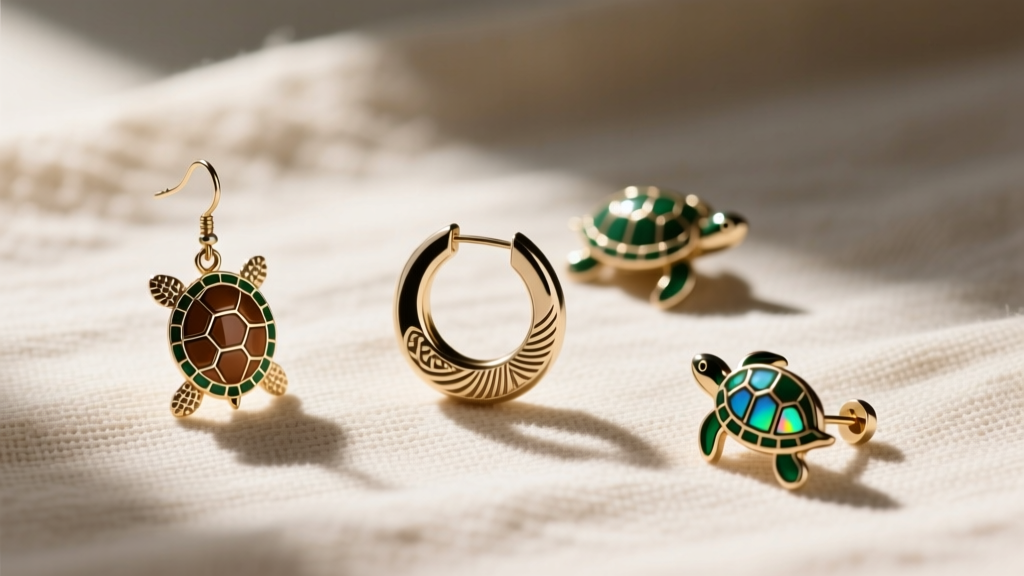
Even well-loved pieces can encounter problems. Here is how to diagnose and fix the most common issues associated with animal motif jewelry:
1. Cloudy or Yellowing Shell
The Cause: If your turtle's vibrant green or blue shell has turned cloudy or yellow, it is likely made of cold enamel (resin) that has reacted to UV light, chlorine, or sulfates in your shampoo.
The Fix: Unfortunately, UV damage to resin is permanent. However, if the cloudiness is just a buildup of lotions and sebum, a gentle soak in warm water with a drop of mild dish soap, followed by a polish with a microfiber cloth, can restore clarity. The Gemological Institute of America (GIA) strongly advises against using ultrasonic cleaners on any enameled jewelry, as the high-frequency vibrations can shatter both glass and resin inlays.
2. Green Discoloration on the Skin
The Cause: A green tint behind your earlobe means the base metal contains copper or brass, which is oxidizing and reacting to the natural acidity of your sweat.
The Fix: Stop wearing the piece immediately to avoid contact dermatitis. You can coat the post and back of the earring in a thin layer of clear nail polish as a temporary barrier, but the ultimate solution is to upgrade to a 925 sterling silver, titanium, or solid gold base.
3. Loose Accent Stones
The Cause: Many turtle earrings feature tiny cubic zirconia or diamond accents for the 'eyes' or shell patterns. Budget pieces use adhesive (glue) to set these stones, which dissolves upon contact with water or hand sanitizer.
The Fix: Inspect the setting before purchasing. High-value pieces use micro-prong settings or bezel settings where the metal is physically pushed over the girdle of the stone. If a glued stone falls out, a local jeweler can often reset it using a tiny amount of jeweler's epoxy, but it is a sign of poor initial manufacturing.
Final Verdict: Assessing the True Value
So, is a turtle earring worth the investment? The answer depends entirely on your expectations and your chosen material tier. If you are buying a $15 brass-and-resin piece from a fast-fashion retailer, you are paying for a temporary accessory that will likely tarnish, turn your skin green, and degrade within a single season. The value proposition here is incredibly poor.
However, if you allocate a budget of $60 to $120 for a mid-tier artisan piece featuring a 925 sterling silver base, 2.5-micron gold vermeil, and kiln-fired vitreous enamel, the value is exceptional. At this price point, you are acquiring a durable, hypoallergenic, and UV-stable piece of wearable art that will maintain its structural integrity and vibrant color for decades. When evaluating your next purchase, demand transparency regarding metal purity and enameling techniques—because true value in jewelry is always found in the details you cannot immediately see.


