A Beginner's Guide to Buying and Styling Shell Hoop Earrings
Discover how to choose, style, and care for shell hoop earrings. Learn about materials, gauge sizes, and face-shape pairings in our beginner guide.

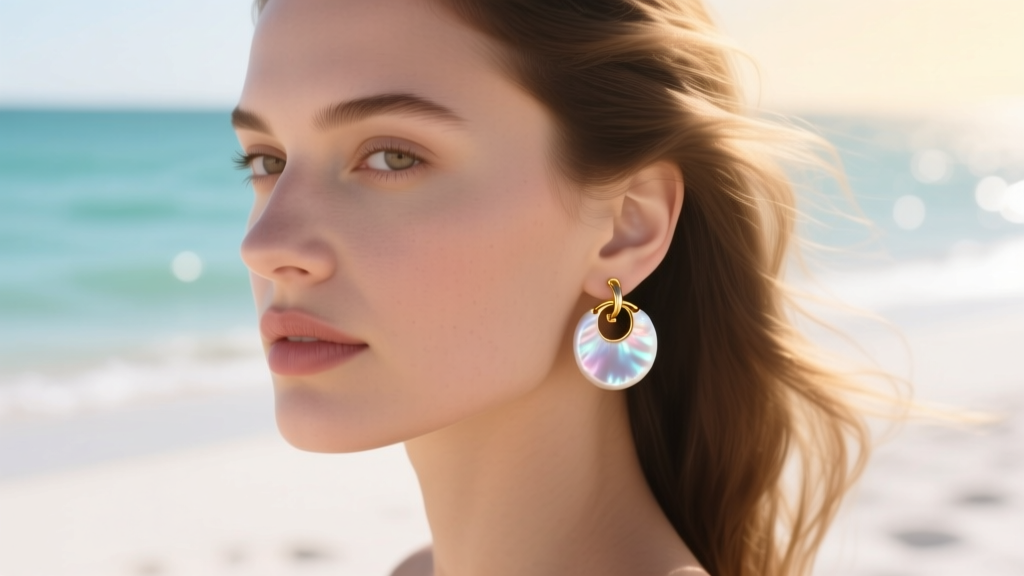
The Renaissance of Shell Hoop Earrings
Shell hoop earrings have successfully transitioned from casual beachwear souvenirs to sophisticated, everyday jewelry pieces. In recent years, the 'coastal grandmother' and elevated bohemian aesthetics have pushed organic materials into the mainstream luxury market. Whether you are drawn to the iridescent flash of abalone or the minimalist elegance of carved mother of pearl, understanding the nuances of organic jewelry is critical for making a lasting investment. This beginner-friendly explainer breaks down the material science, hardware specifications, styling frameworks, and pricing tiers you need to confidently choose your next pair of shell hoops.
Understanding Organic Materials: The Calcium Carbonate Factor
Unlike mined gemstones (such as diamonds or sapphires), shells are organic gems. According to the Gemological Institute of America (GIA), organic gems like shells and pearls are primarily composed of calcium carbonate and conchiolin. This means they are inherently more porous and softer than crystalline stones, typically ranking between 2.5 and 3.0 on the Mohs hardness scale. Because of this chemical makeup, shell earrings require specific handling to prevent etching from acidic substances like perfume, sweat, or citrus.
Comparing Popular Shell Varieties
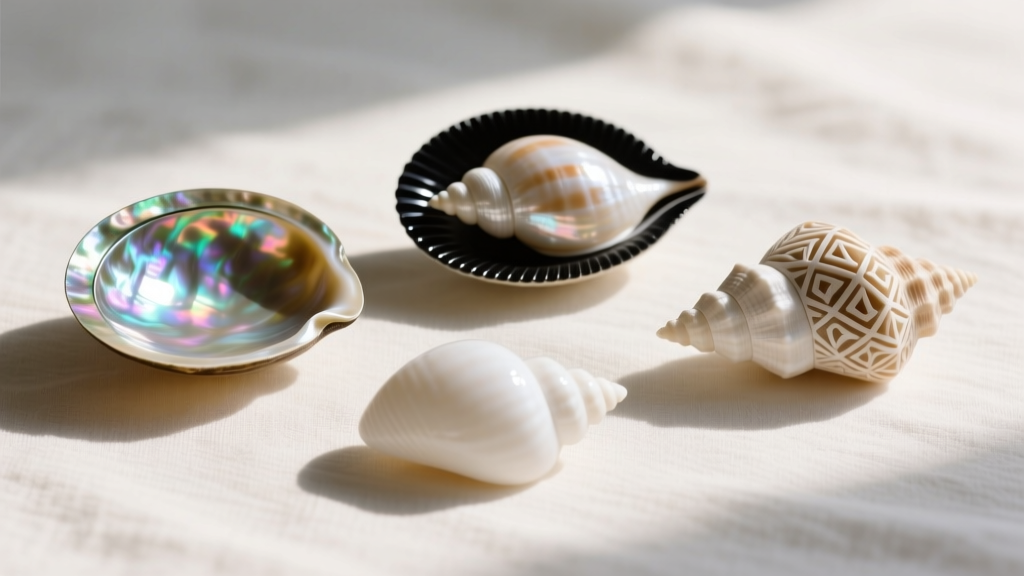
Not all shells are created equal. The density, weight, and visual properties vary wildly depending on the marine species. Below is a breakdown of the most common shells used in hoop earring designs:
| Shell Type | Visual Characteristics | Durability & Weight | Best Earring Style |
|---|---|---|---|
| Mother of Pearl | Smooth, milky white with subtle iridescence | Moderate; easily carved into thin, lightweight shapes | Geometric hoops, inlay huggies |
| Abalone | Vibrant blue, green, and purple iridescence | Slightly more brittle; requires protective bezels | Statement drop hoops, cabochon charms |
| Puka | Natural cone shape, matte off-white finish | Highly durable; naturally thick and resilient | Beaded hoop wraps, stacked huggies |
| Cowrie | Glossy, domed, often speckled or solid cream | Heavier; requires sturdy hardware to support weight | Oversized statement hoops, single dangles |
Hardware, Gauge, and Closures: The Mechanics of the Hoop
The shell is only half the equation; the metal hardware dictates the comfort, safety, and longevity of the earring. Standard earlobe piercings are typically 20-gauge (0.81mm) or 18-gauge (1.02mm). When shopping for shell hoop earrings, ensure the wire thickness matches your piercing gauge to avoid stretching the fistula or causing irritation. For cartilage piercings, you will generally need a thicker 16-gauge (1.29mm) wire to prevent the 'cheese-cutter effect' where thin wires migrate through the tissue.
Choosing the Right Metal Alloy
Because shells are often worn in warm, humid environments, sweat-resistant metals are non-negotiable. Avoid cheap, mystery base metals. As noted by DermNet NZ, nickel is the leading cause of allergic contact dermatitis in jewelry. Instead, opt for these safe alternatives:
- 14k or 18k Gold-Filled: Features a thick outer layer of solid gold mechanically bonded to a brass core. Ideal for everyday wear and highly tarnish-resistant.
- Implant-Grade Titanium (ASTM F-136): The absolute best choice for sensitive ears or fresh piercings. It is entirely nickel-free and impervious to saltwater corrosion.
- Sterling Silver (925): Beautiful but prone to oxidation when exposed to saltwater and humidity. Requires regular polishing with a microfiber cloth to maintain its shine.
Closure Types for Shell Hoops
Clicker/Hinge Closures: Best for huggie-style shell hoops (10mm-14mm). They provide a secure, seamless look that prevents heavy shell charms from slipping off.
French Wire (Fishhook): Common for larger, dangling shell hoops. Ensure the wire has a silicone stopper or a secure latch-back to prevent loss.
Saddle Closures: Often used in chunky, bohemian-style hoop earrings, providing a vintage aesthetic but requiring careful insertion to avoid bending the wire.
Cartilage vs. Lobe: Placement Matters
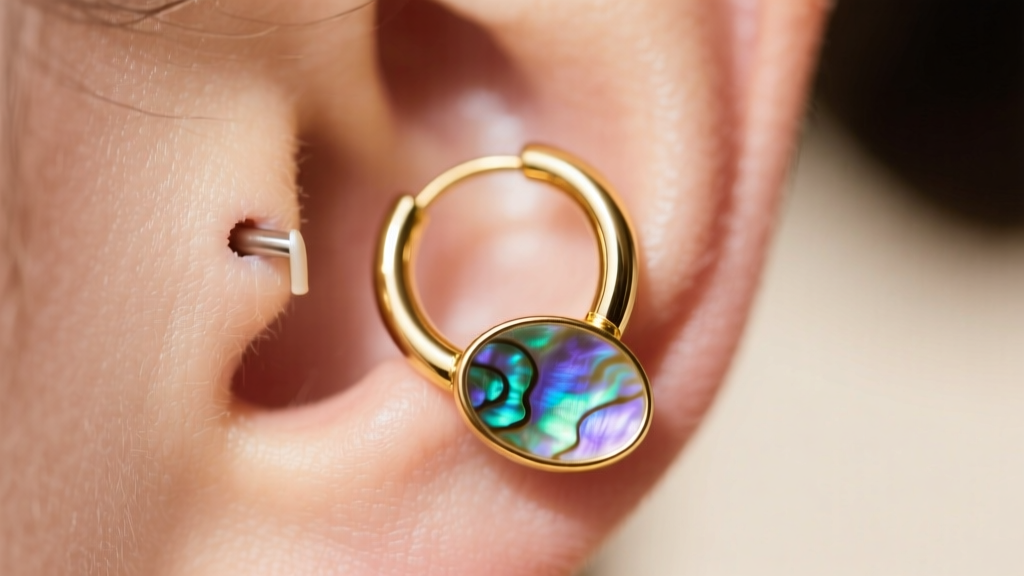
While standard lobes can support the weight of heavy cowrie shell hoops, upper ear cartilage requires a more strategic approach. The helix and tragus are made of dense cartilage that can become inflamed if subjected to excessive swinging weight.
If you want shell jewelry in your cartilage, opt for shell huggies (10mm to 12mm inner diameter) with a clicker closure. Alternatively, many professional piercers recommend using a flat-back labret stud with a bezel-set mother-of-pearl top instead of a true hoop for upper ear placements, as the flat-back eliminates the rotational movement that irritates healing or sensitive cartilage.
Sizing and Face Shape Pairings
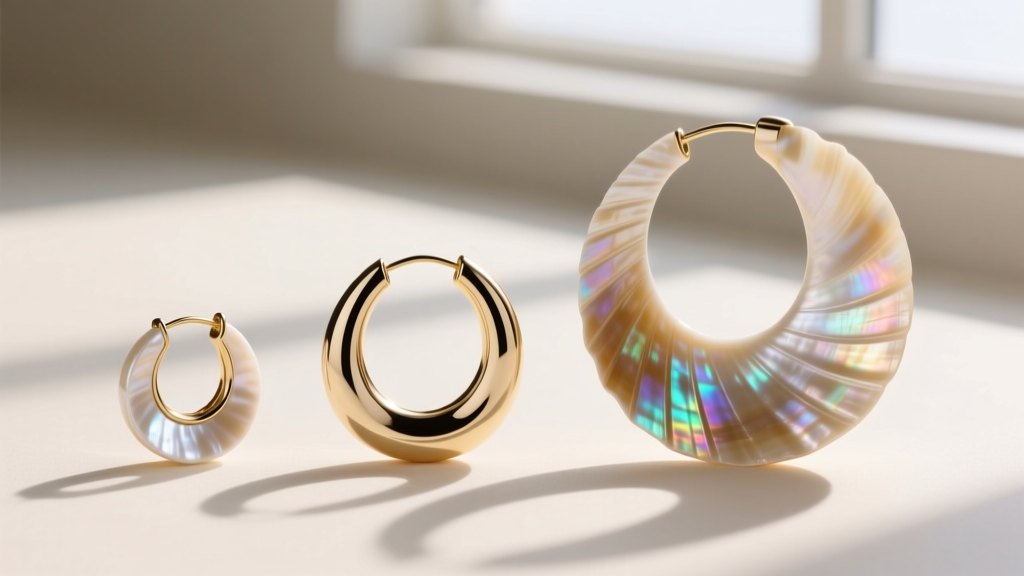
Choosing the right diameter for your shell hoops can dramatically alter your facial proportions. Here is a practical framework for matching hoop size to face shape:
- Round Faces: Avoid perfectly circular, wide hoops that mimic your face shape. Instead, choose elongated teardrop hoops or standard 20mm hoops with vertically dangling shell charms to create the illusion of length and draw the eye downward.
- Square Faces: Soften a strong, angular jawline with curved, medium-sized hoops (25mm-30mm) featuring rounded mother-of-pearl inlays or smooth, organic cowrie shell accents.
- Heart-Shaped Faces: Balance a narrower chin with bottom-heavy hoops, such as 35mm statement hoops adorned with clustered puka shells or abalone slices at the base.
- Oval Faces: The universal shape. You can effortlessly pull off 12mm shell-encrusted huggies for a subtle daily look or 50mm oversized shell statement hoops for evening wear.
Pricing Tiers: What Should You Spend?
The price of shell hoop earrings varies wildly based on the metal hardware and the artisanal quality of the shell cutting. Here is what you can expect to pay in the current market:
- Budget ($15 - $35): Typically features sterling silver or gold-plated brass with mass-produced puka or dyed howlite (a common shell imitation). Great for seasonal vacation wear, but the plating may tarnish quickly.
- Mid-Tier ($40 - $95): The sweet spot for quality. Expect 14k gold-filled hardware paired with genuine, hand-carved mother of pearl or ethically sourced abalone. Brands in this tier often use secure hinge closures and thicker gauge wires.
- Luxury ($120 - $350+): Designer pieces featuring solid 14k or 18k gold, often incorporating diamond accents alongside high-grade, sustainably harvested shells. These are heirloom-quality pieces designed to last a lifetime.
Long-Term Care and Maintenance Protocol
Because calcium carbonate reacts poorly to acids and harsh chemicals, a proactive maintenance routine is essential to keep your shell hoop earrings luminous and structurally sound.
- The 'Last On, First Off' Rule: Always apply sunscreen, perfume, and hairspray before putting on your earrings. Chemical aerosols and alcohol-based fragrances can strip the natural luster of abalone and cause micro-fissures in mother of pearl.
- Post-Wear Wipe Down: After wearing your hoops, gently wipe the shell components with a damp, lint-free microfiber cloth to remove microscopic sweat, skin oils, and environmental pollutants.
- Strategic Storage: Store shell jewelry in a soft velvet pouch separate from harder gemstones or diamonds. A diamond (Mohs 10) will effortlessly scratch the 2.5 Mohs surface of a shell if they rub together in a jewelry box.
- Deep Cleaning & Restoration: Never use ultrasonic cleaners or chemical jewelry dips on organic shells; the vibrations can shatter them, and the chemicals will eat the calcium carbonate. If your shells become dull over time, a tiny drop of mineral oil rubbed gently into the surface with a cotton swab can temporarily restore their wet-look shine and deepen their iridescence.
By understanding the material constraints, hardware requirements, and proper care protocols of organic jewelry, you can curate a collection of shell hoop earrings that remains vibrant, comfortable, and effortlessly stylish for years to come.


