Bridge Diamond Earrings: 2026 Value & Pricing Guide
Assess the true value of bridge diamond earrings in 2026. We break down pricing tiers, metal durability, and diamond grading secrets for this setting.

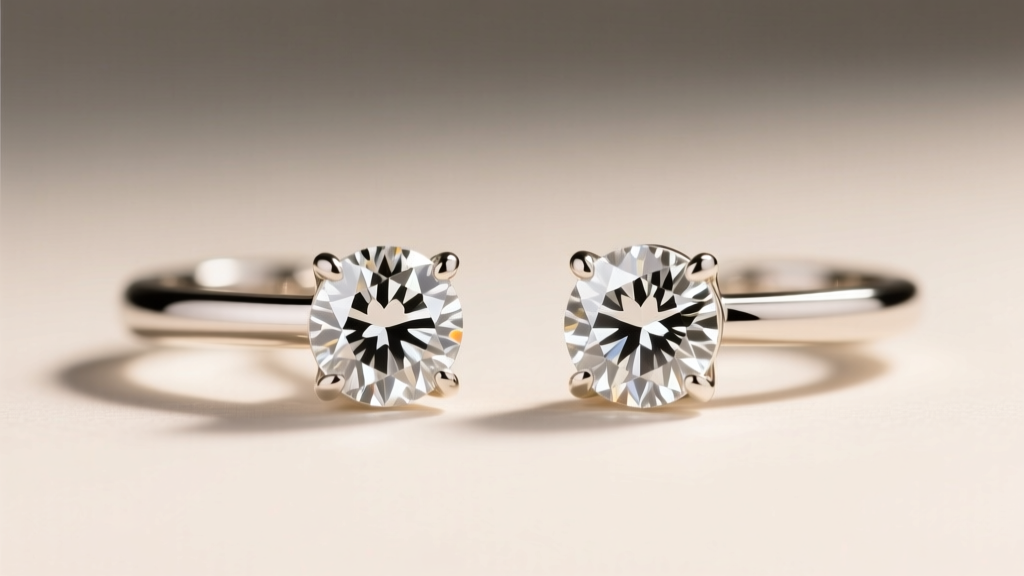
The Architectural Appeal of Bridge Diamond Earrings
In the evolving landscape of fine jewelry, bridge diamond earrings have emerged as a hallmark of modern, architectural design. Unlike traditional prong or bezel settings, a bridge setting (often referred to as a bar or suspension bridge setting) secures the diamond between two parallel horizontal metal walls or a single structural bridge bar that grips the stone's girdle. This minimalist approach maximizes light exposure from the top and bottom while creating a sleek, floating illusion.
However, as we navigate the 2026 luxury market, consumers are increasingly asking: Are you paying for the diamond, or are you paying for the complex engineering of the setting? Evaluating the true value of bridge diamond earrings requires looking past the sparkle and understanding the metallurgy, the optical physics, and the hidden costs of custom CAD design. This comprehensive guide will break down exactly what you should expect to pay, where you can safely compromise on diamond grades, and how to avoid catastrophic structural failures.
Anatomy of the Bridge Setting: Where the Costs Hide
To assess value, you must first understand the labor involved. A standard four-prong setting requires minimal metal and basic casting. A bridge setting, conversely, demands precision milling. The metal bridges must be perfectly parallel, and the interior channels must be cut to the exact millimeter of the diamond's girdle thickness.
The Engineering Premium
According to insights from the Gemological Institute of America (GIA), alternative settings that rely on tension or friction rather than full encapsulation require higher-grade alloys and superior finishing. When you buy bridge diamond earrings, a significant portion of your budget is allocated to the jeweler's bench time. If a retailer is selling a bridge setting for the same price as a standard prong setting with identical diamond specs, they are likely cutting corners on the metal weight or using cast-in-place techniques that result in porous, brittle bridges.
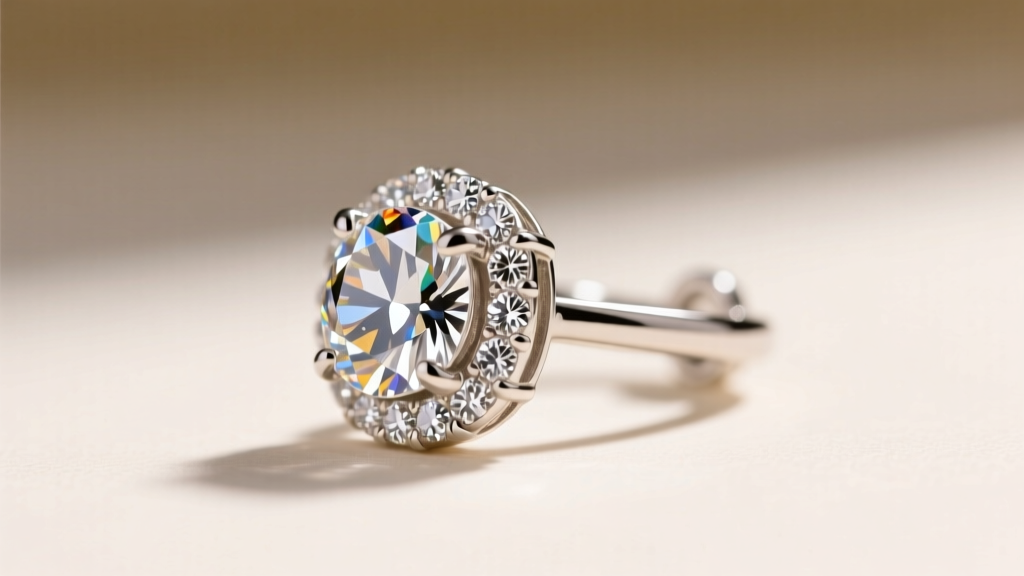
2026 Pricing Tiers: What Should You Actually Pay?
Pricing for bridge diamond earrings fluctuates based on the total carat weight (TCW), the metal choice, and the brand markup. Below is a realistic 2026 value assessment for a standard pair of 1.00 CTW (0.50ct each) bridge set studs.
| Value Tier | Metal Choice | Diamond Grade (Color/Clarity) | Estimated 2026 Price Range | Value Verdict |
|---|---|---|---|---|
| Entry-Level | 14k White Gold | J-K / SI2 | $1,200 - $1,800 | Poor. 14k gold is often too malleable for long-term bridge tension. |
| Mid-Tier (Sweet Spot) | 18k White Gold or Platinum | G-H / SI1 | $2,400 - $3,800 | Excellent. Balances structural integrity with smart clarity choices. |
| High-End / Luxury | Platinum 950 | D-F / VVS1-VVS2 | $5,500 - $9,000+ | Diminishing Returns. The bridge setting hides the premium clarity you pay for. |
As highlighted by recent JCK industry market reports, the gap between entry-level and mid-tier pricing is largely driven by the shift from 14k to 18k gold and platinum. For bridge settings, this shift is not just aesthetic; it is a structural necessity.
Diamond Grading Hacks: Exploiting the Bridge Design
The most critical aspect of assessing value in bridge diamond earrings is understanding how the setting interacts with the stone's anatomy. The horizontal metal bridges typically cover the 3 o'clock and 9 o'clock positions of the diamond's girdle and upper pavilion. This creates a unique opportunity for savvy buyers to save money without sacrificing visual perfection.
The SI1 Edge-Inclusion Strategy
Because the bridge bars physically obscure the lateral edges of the diamond, this is the ultimate hiding spot for inclusions. You can confidently purchase an SI1 or even a well-selected SI2 diamond, provided the inclusion plot on the GIA or IGI certificate shows the flaws strictly on the outer edges. The metal bridge will completely mask these imperfections, allowing you to reallocate your budget toward a better cut grade or a higher color grade.
Color Reflection and Metal Pairing
The metal bridge acts as a mirror, reflecting its color directly into the pavilion of the diamond.
- Platinum & 18k White Gold: The bright white reflection will make lower color grades (J or K) appear visibly yellow by contrast. Stick to G or H colors for white metals.
- 18k Yellow Gold: The warm reflection of the yellow gold bridge blends seamlessly with faint yellow diamonds. You can safely drop to an I or J color grade, saving up to 20% on the stone cost while achieving a cohesive, warm aesthetic.
Metallurgy and Failure Modes: The Hidden Risks
When evaluating the long-term value of any jewelry piece, durability must be factored into the cost. Bridge diamond earrings are subject to unique lateral stress vectors that traditional settings do not face.
"A bridge setting relies entirely on lateral tension and friction. If the bridge bar is milled below 1.2mm in standard 14k gold, the natural flexibility of the alloy will cause the bridge to bow outward over time, eventually releasing the diamond's girdle." - Master Bench Jeweler Assessment
Why 14k Gold is a Liability
While 14k gold is harder than pure gold, its specific alloy mix (often containing high copper or silver) gives it a degree of malleability that is dangerous for tension-based bridge settings. If you catch a bridge earring on a sweater, the lateral pull can bend a thin 14k bridge. Once the bridge bends, the tension is lost, and the stone will fall out.
The Platinum Advantage
Platinum 950 (alloyed with ruthenium or iridium) possesses superior structural memory and density. A platinum bridge can be milled down to a sleek 1.0mm thickness while maintaining the rigidity required to grip the diamond securely. When assessing value, paying the 15-20% premium for platinum over white gold is a justifiable insurance policy against stone loss.
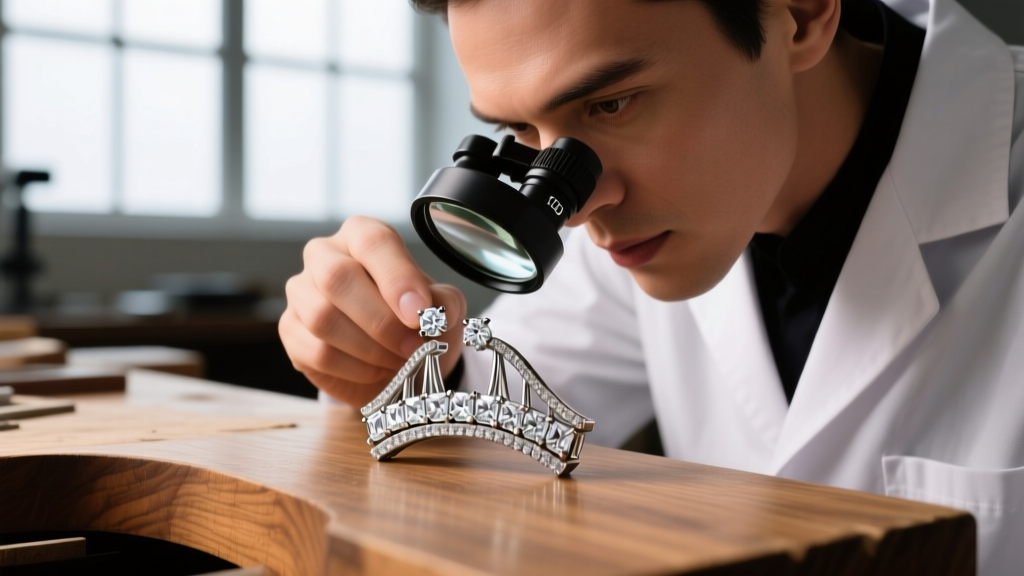
Retail Brand Markup vs. Custom CAD Jewelers
Where you purchase your bridge diamond earrings drastically alters the value proposition. Major luxury brands often apply a 300% to 500% markup on architectural settings, charging upwards of $8,000 for a pair of earrings that contain less than $2,000 worth of raw materials and labor.
The Custom CAD Alternative
In 2026, the smartest value lies in working with independent jewelers who utilize CAD (Computer-Aided Design) modeling. A custom jeweler can design a bridge setting tailored to the exact millimeter measurements of your chosen diamonds. This eliminates the "gap" issues seen in mass-produced bridge settings, where the metal doesn't perfectly flush against the stone, leading to snagging and dirt accumulation. Expect to pay a CAD design fee of $150-$300, but the overall cost will remain 40% lower than comparable retail brands.
Final Verdict: Maximizing Your Investment
Bridge diamond earrings are a triumph of modern jewelry design, offering a sleek, contemporary alternative to the traditional solitaire stud. However, their value is not inherent; it must be actively managed by the buyer. To get the best return on your investment in 2026, prioritize platinum or 18k gold for structural integrity, exploit the bridge's coverage to buy lower-clarity diamonds with edge inclusions, and bypass heavy brand markups in favor of precision CAD craftsmanship. By focusing on the engineering as much as the gemology, you secure a piece that is both visually stunning and structurally enduring.


