Paul Mescal Hamnet Earring: Style & Fit Troubleshooting
Troubleshoot the Paul Mescal Hamnet earring look. Learn how to style, fit, and source historical men's gold hoops and pearl drops without the costume effect.

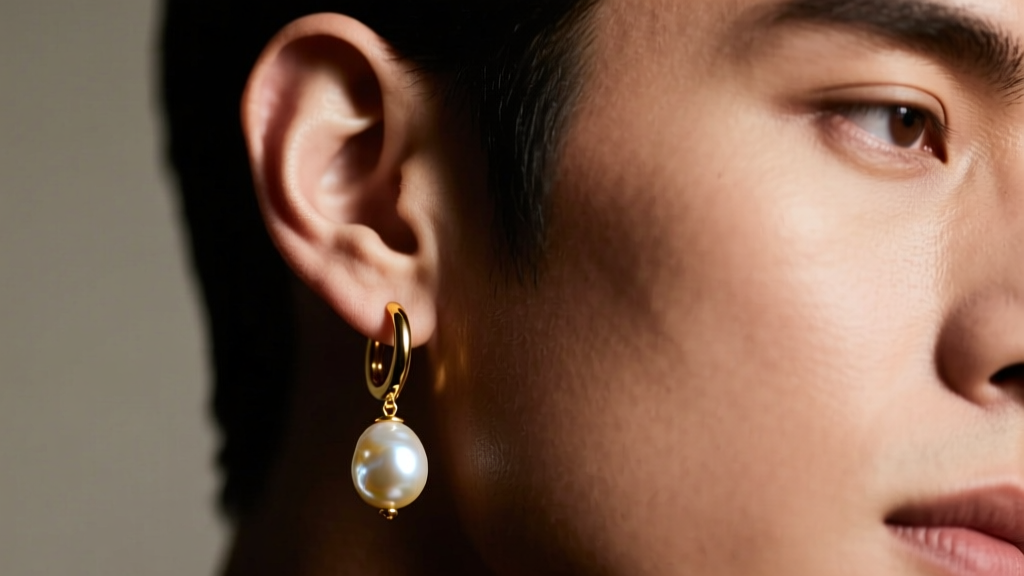
The cultural impact of Chloé Zhao’s Hamnet has sparked a massive resurgence in historical men’s jewelry, with the 'Paul Mescal Hamnet earring' becoming one of the most searched menswear accessories of 2026. Portraying William Shakespeare, Mescal’s costume design leans heavily into the legendary 'Chandos portrait' aesthetic: a simple, unadorned gold hoop in the left ear, occasionally accented by a single, understated pearl. However, translating a 16th-century theatrical look into modern daily wear presents a unique set of styling and biomechanical challenges. Too often, men attempting this trend end up looking like they are wearing a cheap Renaissance Faire costume rather than a refined, historically inspired piece.
As a jewelry specialist, I see the same issues repeatedly: incorrect gauge sizing causing lobe tearing, modern high-polish finishes clashing with everyday menswear, and perfectly round pearls that scream 'modern mall jewelry' rather than 'Elizabethan playwright.' This troubleshooting guide will deconstruct the Paul Mescal Hamnet earring look, providing exact specifications, material grades, and styling frameworks to help you pull off the Shakespearean hoop with contemporary authenticity.
The Anatomy of the Hamnet Aesthetic: Deconstructing the Look
To troubleshoot the look, we must first understand its historical and cinematic roots. According to the Victoria and Albert Museum (V&A), men’s earrings in the late 16th and early 17th centuries were predominantly worn by sailors, artists, and courtiers. The Shakespeare earring mythos is anchored in the Chandos portrait, which depicts the playwright with a small gold hoop and a teardrop pearl in his left ear.
In Hamnet, the costume department adapted this for modern cinematic sensibilities. The earring is not overly large; it sits flush or drops just slightly below the lobe. The diameter of the hoop is typically between 12mm and 15mm, and the metal is distinctly yellow gold with a muted, non-reflective finish. If your earring exceeds 18mm in diameter, you cross the line from 'historical homage' into 'modern streetwear hoop,' which defeats the purpose of the Hamnet aesthetic.
Troubleshooting the 'Costume' Effect: Proportions and Finishes
The most common failure mode when recreating the Paul Mescal Hamnet earring is the 'costume effect.' This happens when the jewelry looks too new, too shiny, or too perfectly manufactured. Here is how to troubleshoot the visual tells of modern jewelry.
Finish and Texture: Ditch the Mirror Polish
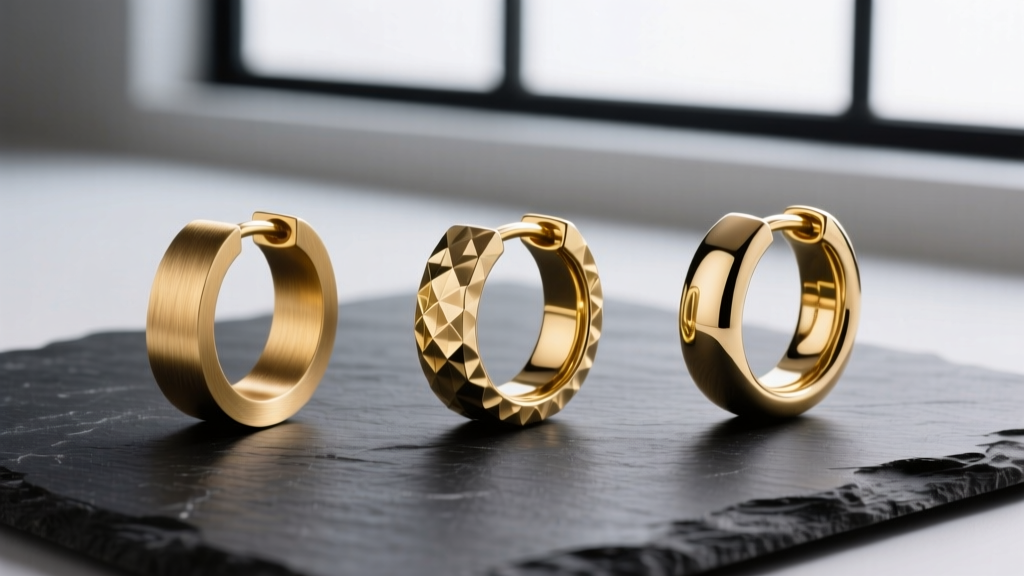
Modern men's gold hoops are typically finished with a high-polish mirror shine or a rhodium plating (in the case of white gold). In the 1500s, jewelry was finished by hand using abrasives like pumice or charcoal, resulting in a soft, satin, or lightly hammered texture. To avoid looking like you are wearing a modern accessory, you must source a hoop with a brushed, matte, or hand-hammered finish. This diffuses light and gives the metal a softer, antique warmth that pairs seamlessly with modern menswear like heavy knits, linen shirts, and tailored wool.
The Pearl Problem: Round vs. Baroque
If you opt for the pearl drop variation, the shape of the pearl is your biggest giveaway. The Gemological Institute of America (GIA) notes that perfectly spherical pearls (like modern Akoya or high-grade freshwater rounds) were incredibly rare and reserved exclusively for royalty in the Tudor and Stuart eras. A commoner or playwright like Shakespeare would have worn a baroque pearl—an asymmetrical, irregularly shaped pearl.
- Avoid: Perfectly round, high-luster Akoya pearls (6-7mm). They look distinctly modern and clash with the rugged historical vibe.
- Source: Baroque or coin-shaped freshwater pearls (7-9mm) with a slightly creamy or ivory overtone rather than stark, bleached white.
Gauge Sizing and Male Lobe Biomechanics
One of the most critical, yet overlooked, aspects of men's earring troubleshooting is gauge sizing and tissue mechanics. Male earlobes are generally denser, thicker, and less pliable than female earlobes. Furthermore, many men who get their ears pierced later in life or who have played contact sports have thicker, slightly scarred lobe tissue.
Standard women's fashion earrings are usually 20-gauge (0.8mm) or 18-gauge (1.0mm). If you wear an 18-gauge wire in a thick male lobe, especially with the added weight of a pearl drop, you risk the 'cheese-cutter effect'. This is a mechanical failure where the thin wire slowly slices downward through the tissue due to gravity and the weight of the earring, eventually tearing through the bottom of the lobe.
| Gauge Size | Wire Thickness | Best Use Case for Men | Troubleshooting Notes |
|---|---|---|---|
| 20G | 0.81mm | Standard female lobes | Avoid. Will cause severe cheese-cutting in thick male lobes. |
| 18G | 1.02mm | Lightweight male studs | Acceptable only for lightweight, tight-fitting huggies under 10mm. |
| 16G | 1.29mm | Standard male hoops | Recommended. Provides structural integrity for 12mm-15mm hoops. |
| 14G | 1.63mm | Heavy drops / Historical look | Ideal for Hamnet style. Visually substantial, prevents lobe tearing. |
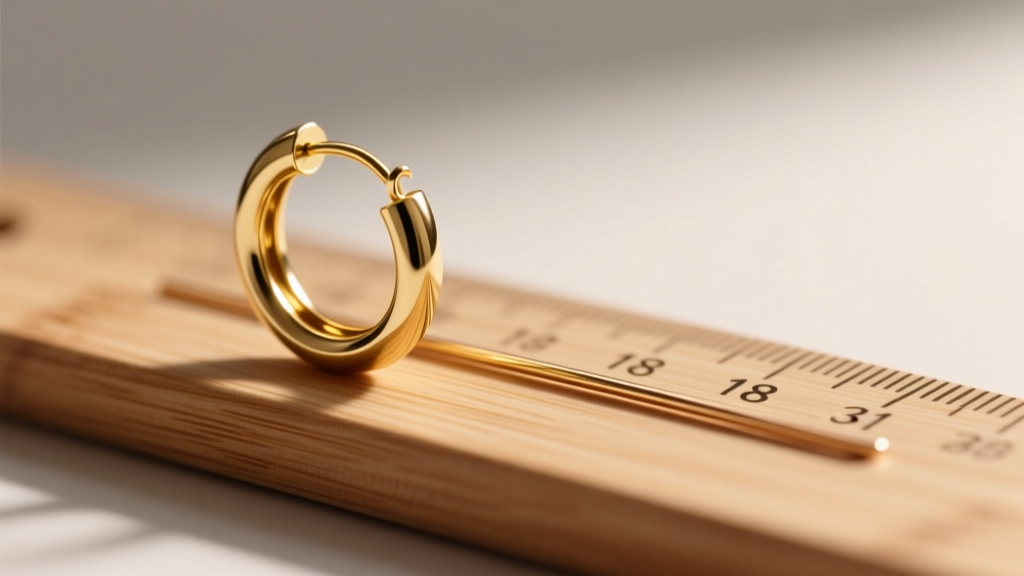
Pro-Tip: If your piercing was done at a standard mall kiosk with a 20G or 18G gun, you will need to gently stretch your lobe to accommodate a 16G or 14G historical hoop. Use a sterilized taper and jojoba oil to slowly move up a half-size at a time over a few weeks. The visual weight of a 14G (1.6mm) wire is essential for selling the masculine, historical aesthetic of the Paul Mescal Hamnet earring.
Material Sourcing: Avoiding Modern Tells and Allergies
When sourcing a historical replica, the metal composition dictates both the look and the longevity of the piece. Cheap 'Renaissance' costumes use brass or copper alloys plated with a micro-thin layer of gold. These materials oxidize quickly, turning the skin green and developing a brassy, artificial patina that ruins the illusion.
The Gold Standard: 14k vs. 18k
For an authentic Hamnet look, you need solid yellow gold. However, the karat weight changes the color profile:
22k or 24k Gold: Too soft and too intensely yellow. It looks distinctly Middle Eastern or South Asian in its color profile, which does not fit the English Elizabethan aesthetic.
18k Gold (75% pure): Rich, warm, and historically accurate to the alloy mixes used by European goldsmiths of the era. It holds a brushed finish beautifully.
14k Gold (58.5% pure): Slightly paler and much more durable. If you plan to wear the earring daily, sleep in it, or expose it to the elements, 14k is the superior choice for structural integrity.
Allergy Troubleshooting
If you have a nickel allergy (which affects roughly 10-15% of the male population), avoid vintage or antique store finds unless they are hallmarked, as historical solder often contained nickel or cadmium. If solid gold is outside your budget (expect to pay $150–$350 for a quality 14k solid gold 14G hoop), opt for niobium. Niobium is a hypoallergenic reactive metal that can be anodized to mimic the dark, antique warmth of aged gold, though it lacks the exact specific gravity and drape of real gold.
Maintenance: Cultivating the Antique Patina
A pristine, sparkling gold hoop will always look modern. To truly capture the Hamnet essence, you want the earring to look like it has survived a voyage on the Golden Hind. According to historical jewelry conservation guidelines from the British Museum, Renaissance gold often accumulated grime and oxidation in its textured crevices.
You can artificially age your modern 14k or 18k gold hoop using a mild Liver of Sulfur solution.
- Dip the earring in a weak, warm liver of sulfur bath for 10-15 seconds.
- The metal will turn a dark, gunmetal grey or brownish-black.
- Use a jeweler's polishing cloth to gently buff the high points (the outer edge of the hoop) back to a soft yellow gold shine, leaving the dark oxidation trapped in the hammered divots or the crevices where the pearl bail attaches.
Final Styling Verdict
The Paul Mescal Hamnet earring trend is a masterclass in subtle, historically grounded masculinity. By troubleshooting the common pitfalls—upgrading to a 16G or 14G wire to protect your lobe, swapping mirror-polished finishes for hand-hammered textures, and choosing irregular baroque pearls over perfect spheres—you can seamlessly integrate this 16th-century silhouette into a 2026 wardrobe. Remember, the goal is not to look like you are playing Shakespeare on stage, but rather to channel the quiet, artistic confidence of the man himself.