Pink Beaded Earrings: Material Science & Structural Guide
Explore the material science, wire gauge mechanics, and weight distribution of pink beaded earrings in this expert technical guide.

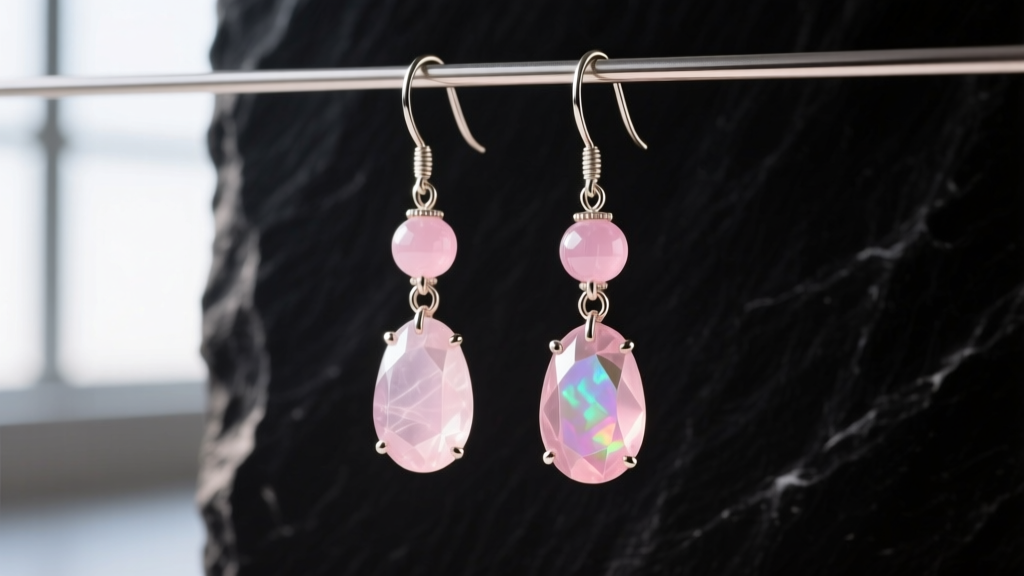
The Engineering Behind Pink Beaded Earrings
Pink beaded earrings are frequently categorized as simple bohemian or seasonal accessories, but from a metallurgical and gemological perspective, constructing a durable, high-end beaded dangle requires precise engineering. Whether you are working with natural pink tourmaline, delicate pink opals, or dense Murano glass, the structural integrity of the earring relies on the interplay between bead hardness, wire temper, and lobe biomechanics. This technical deep dive explores the material science and structural mechanics required to craft professional-grade pink beaded earrings that withstand daily wear without compromising the earlobe or the gemstones.
Material Grading: The Gemology of Pink Beads
The longevity of any beaded earring begins with the Mohs hardness scale and the specific gravity (density) of the bead material. Pink beads span a wide spectrum of physical properties, dictating how they must be drilled, wrapped, and worn.
Natural Gemstones vs. Glass vs. Polymer
- Pink Tourmaline (Mohs 7.0 - 7.5): Highly durable but prone to internal inclusions. According to the GIA Gem Encyclopedia, tourmaline is pleochroic, meaning the bead cutter must orient the stone to maximize the pink hue. Drill holes in tourmaline are generally clean, but the stone can fracture if subjected to lateral torque during wire wrapping.
- Rose Quartz (Mohs 7.0): A macrocrystalline quartz that is highly stable. However, rose quartz is often heavily included with dumortierite, which can create weak points near the drill channel.
- Pink Opal (Mohs 5.5 - 6.5): A hydrated silica gel. Pink opal is relatively soft and highly sensitive to rapid temperature changes and ultrasonic vibrations. Drill holes in opal are prone to 'spalling' (chipping at the exit point) and require specialized diamond-tipped reamers.
- Lampwork Glass (Mohs 5.5): While softer than quartz, glass has a much higher specific gravity. A 12mm pink lampwork bead can weigh up to 5 grams, fundamentally altering the weight distribution of the earring.
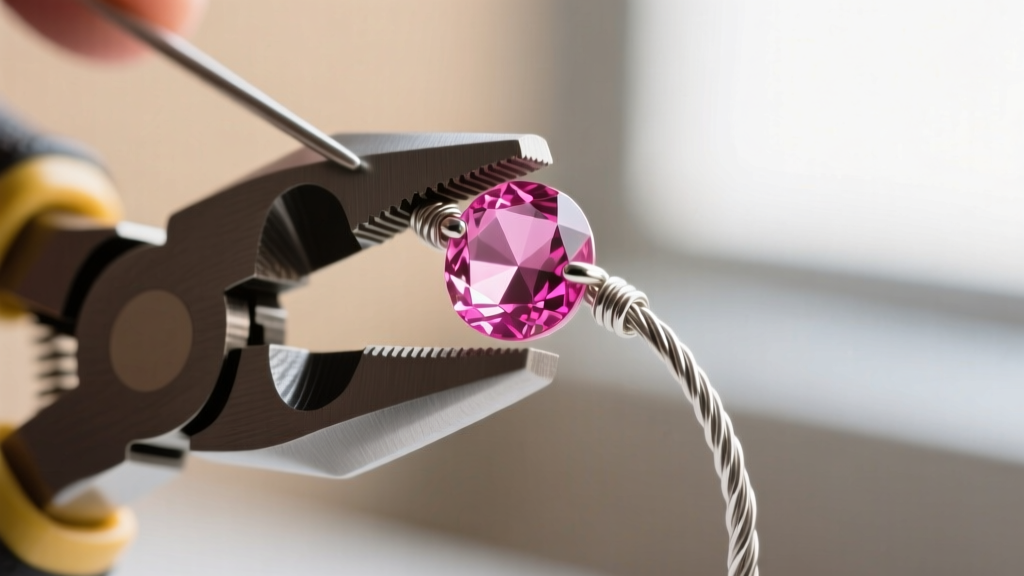
Structural Mechanics: Wire Gauge and Temper
The hidden framework of pink beaded earrings is the wire. Selecting the correct gauge (thickness) and temper (hardness) is critical to prevent the earring from unraveling or bending under the bead's weight. Jewelry supply authorities like Rio Grande standardize these metrics for professional bench jewelers.
Gauge Sizing for Beaded Dangles
Standard bead drill holes range from 0.8mm to 1.0mm. This physical constraint dictates your maximum wire thickness:
- 20-Gauge (0.81mm): The gold standard for structural loops, ear wires, and headpins. It provides enough tensile strength to support heavy glass or large quartz beads without bending.
- 22-Gauge (0.64mm): Ideal for internal bead passes and wrapped briolette loops. If a pink opal bead has a narrow 0.7mm drill hole, 22-gauge wire prevents the bead from cracking during assembly.
- 24-Gauge (0.51mm): Used exclusively for delicate wire-wrapping and weaving around the main structural frame. It lacks the tensile strength to serve as a primary load-bearing element.
Wire Temper and Work Hardening
Wire is sold in different tempers: dead soft, half-hard, and full-hard. For the ear wires and structural frames of beaded drop earrings, half-hard wire is mandatory. Dead soft wire will easily deform under the dynamic swinging weight of a beaded dangle. As you bend and wrap half-hard wire, it undergoes 'work hardening,' increasing its brittleness. Expert jewelers use nylon-jaw pliers to manipulate the wire without marring the surface or accelerating fatigue.
Biomechanics: Weight Distribution and Lobe Health
A critical, often overlooked aspect of designing pink beaded earrings is the biomechanical limit of the human earlobe. The average earlobe can comfortably sustain 7 to 10 grams of static weight before long-term tissue stretching (ptosis) becomes a clinical risk. Heavy beaded designs can easily exceed this threshold.
| Bead Material (10mm Round) | Mohs Hardness | Avg. Weight (per bead) | Total Earring Weight (Pair) | Recommended Finding |
|---|---|---|---|---|
| Pink Polymer Clay | 2.0 - 3.0 | 0.8g | 2.5g | Standard Post & Friction Back |
| Rose Quartz | 7.0 | 2.6g | 6.5g | French Wire w/ Silicone Stopper |
| Pink Lampwork Glass | 5.5 | 4.2g | 11.0g | Leverback w/ Ear Nut Support |
| Pink Opal | 6.0 | 2.1g | 5.8g | Omega Clip or French Wire |
"When designing heavy beaded dangles exceeding 8 grams per ear, always transition from standard friction backs to leverback findings or incorporate silicone support discs to distribute the shear force across a wider surface area of the posterior earlobe."
For heavy pink glass beads, utilizing a leverback ear wire with a locking mechanism prevents the earring from slipping forward, which would otherwise concentrate all the gravitational pull on the anterior piercing hole.
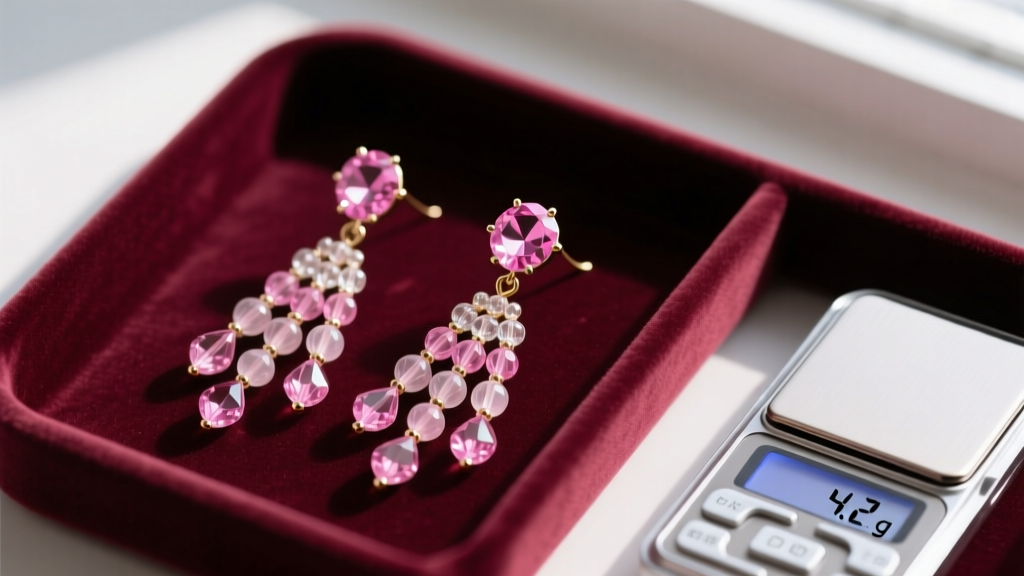
Common Failure Modes in Beaded Dangles
Even beautifully crafted pink beaded earrings will fail if the jeweler ignores the physical interaction between metal and stone. Understanding these failure modes is key to troubleshooting and quality control.
Drill Hole Spalling and Metal-on-Stone Friction
When a metal headpin rests directly against the edge of a bead's drill hole, the constant micro-movements of walking and talking cause the metal to act like a file against the stone. In softer materials like pink opal or polymer, this leads to spalling—where the edges of the drill hole chip away, eventually allowing the bead to slip off the wire. The Fix: Always use micro-metal beads, nylon washers, or rubber O-rings as buffer zones between the structural wire loop and the gemstone bead.
Wire Fatigue at the Loop Apex
The most common point of structural failure in a beaded dangle is the simple loop connecting the bead to the ear wire. If the loop is opened and closed laterally (pulling the ends apart like a door), the wire's crystalline structure is compromised. The Fix: Always open loops by twisting one end forward and one end backward (torsional movement). For high-value pink tourmaline briolettes, use a closed soldered ring or a double-wrapped briolette loop to eliminate the gap entirely.
Advanced Care and Maintenance Protocols
The maintenance of pink beaded earrings requires specific chemical and mechanical protocols based on the bead composition. Resources like Fire Mountain Gems emphasize that improper cleaning is the leading cause of bead degradation.
- Ultrasonic Cleaners: Safe for rose quartz and pink tourmaline (provided there are no surface-reaching fractures). Never use ultrasonic cleaners for pink opals or dyed quartz, as the high-frequency vibrations will shatter the opal's silica structure and strip the dye from treated stones.
- Chemical Dips: Silver dip solutions will clean sterling silver wire instantly but will leave a caustic residue inside the bead's drill channel, eventually degrading the stone from the inside out. Always use a mild, phosphate-free soap and a soft-bristled brush, ensuring the drill channel is flushed with distilled water and dried with compressed air.
- Storage: Store beaded dangles hanging or laid completely flat. Tossing them into a jewelry box allows the heavy beads to swing and strike one another, causing surface abrasions, particularly on polished glass and soft opals.
By respecting the material science of the beads and the structural mechanics of the wire, jewelers and collectors can ensure that pink beaded earrings remain not just visually striking, but structurally immortal.


