Polymer Clay Earrings DIY: Material Properties & Brand Comparison
Master polymer clay earrings DIY with our deep-dive material comparison. Learn curing temps, flexibility, and the best clay brands for lightweight studs.

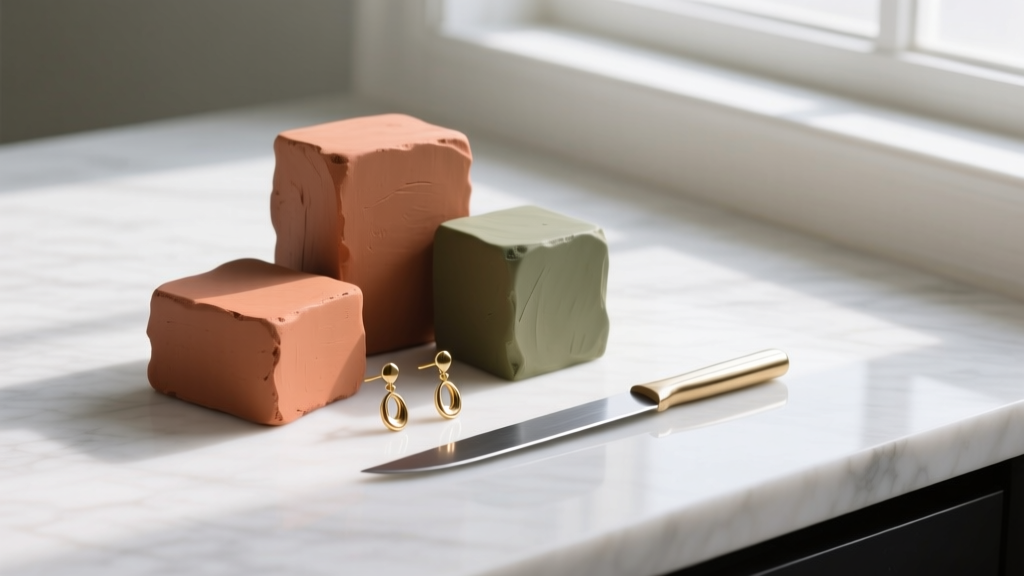
The Chemistry of Polymer Clay: Why Brand Matters
When diving into polymer clay earrings DIY projects, most beginners treat the medium like traditional modeling clay or air-dry dough. This fundamental misunderstanding leads to the most common failure mode in handmade jewelry: catastrophic post-cure breakage. Polymer clay is not air-dry clay; it is a polyvinyl chloride (PVC) resin mixed with plasticizers, pigments, and fillers. The material doesn't 'dry'—it cures through a heat-activated fusion process where the PVC particles swell and interlock to form a solid plastic matrix.
The ratio of plasticizer to PVC resin dictates the clay's flexibility, brittleness threshold, and ultimate tensile strength. According to Ginger Davis Allman of The Blue Bottle Tree, a leading authority on polymer clay chemistry, varying these chemical ratios across different brands means that a design that survives perfectly in one brand will snap under its own weight in another. Understanding these material properties is the difference between crafting heirloom-quality earrings and disposable trinkets.
Material Comparison: Sculpey vs. Fimo vs. Cernit
Choosing the right clay requires matching the material's post-cure mechanical properties to your specific earring architecture. Below is a technical breakdown of the three industry-standard brands used by professional jewelry makers.
| Brand / Line | Flexibility (Post-Cure) | Brittle Threshold | Curing Temp | Ideal Earring Style |
|---|---|---|---|---|
| Sculpey Premo | High | < 1.5mm | 275°F (135°C) | Dangles, Hoops, Arches |
| Fimo Professional | Medium-Low | < 2.0mm | 230°F (110°C) | Structured Studs, Geometric |
| Cernit Number One | Very High | < 1.0mm | 265°F (130°C) | Thin Petals, Translucent Drops |
Polyform Sculpey (Premo & Soufflé)
Premo is widely considered the workhorse for polymer clay earrings DIY creators. Its high plasticizer content grants it exceptional flexibility once cured, allowing thin arches and dangles to bend slightly upon impact rather than snapping. However, this same flexibility means it lacks the rigid structural integrity required for sharp, geometric studs that must hold crisp, 90-degree corners without warping during the curing process.
Staedtler Fimo (Professional)
Fimo Professional contains less plasticizer and a higher concentration of PVC resin and fillers. This results in a stiffer, more brittle material post-cure. While it is notorious for snapping if dropped on a hard surface when cut thinner than 2mm, its rigidity makes it the superior choice for structured, architectural stud earrings and intricate mosaic caning techniques where zero distortion during baking is paramount.
Cernit (Number One & Opaline)
Cernit is the secret weapon for advanced earring makers focusing on organic, ultra-thin designs. It possesses the highest flexibility and translucency of the major brands. You can roll Cernit down to 1mm or even less on a pasta machine, and it will remain pliable like leather after baking. This makes it the undisputed champion for botanical petal earrings and delicate, lightweight drop designs.
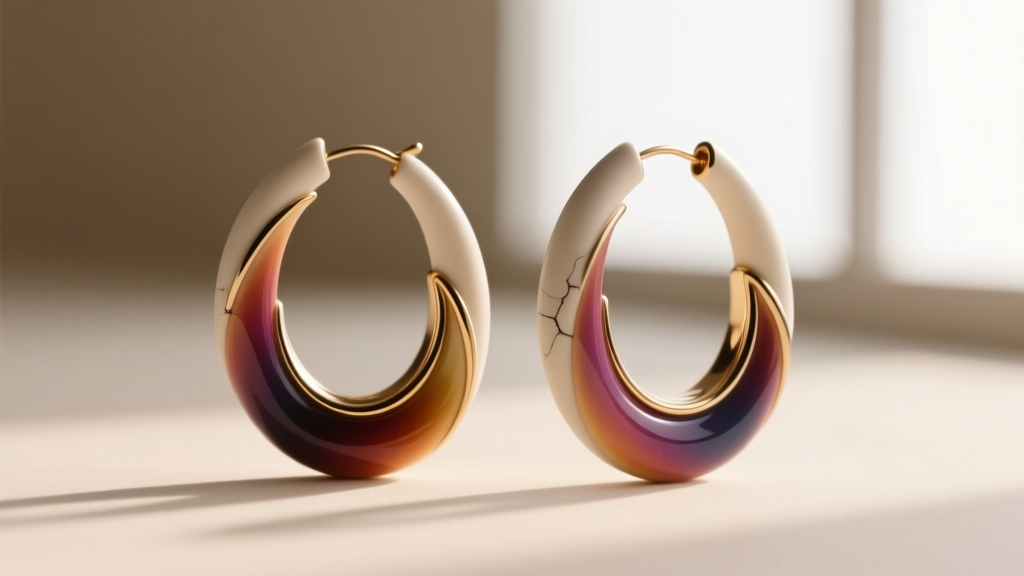
Structural Integrity: Solving the Breakage Problem
Even with the correct clay brand, structural failure occurs if you ignore the physics of the material. The most common point of failure in polymer clay earrings is the junction where the metal hardware meets the clay body, or along thin, unsupported curves.
- Minimum Thickness: Never cut dangle earrings thinner than 2mm unless using Cernit or embedding an armature. For Fimo Professional, maintain a minimum 2.5mm thickness for any component bearing weight.
- Armature Integration: For large hoops or elongated drops, embed a 24-gauge or 26-gauge stainless steel or nickel-silver armature wire inside the clay before baking. The wire acts as a skeletal structure, absorbing tensile stress that would otherwise fracture the PVC matrix.
- Plasticizer Leaching: If your clay feels crumbly straight from the package, do not immediately add liquid clay softeners. Instead, condition it thoroughly. If it is too soft and sticky (which causes warping during baking), 'leach' it by pressing the clay between sheets of uncoated paper for 2-4 hours to draw out excess plasticizer.
Hardware Integration: Gauges, Adhesives, and Post Types
The mechanical bond between metal and polymer clay is inherently weak because the clay shrinks microscopically (about 1-2%) during the curing process, pulling away from smooth metal surfaces.
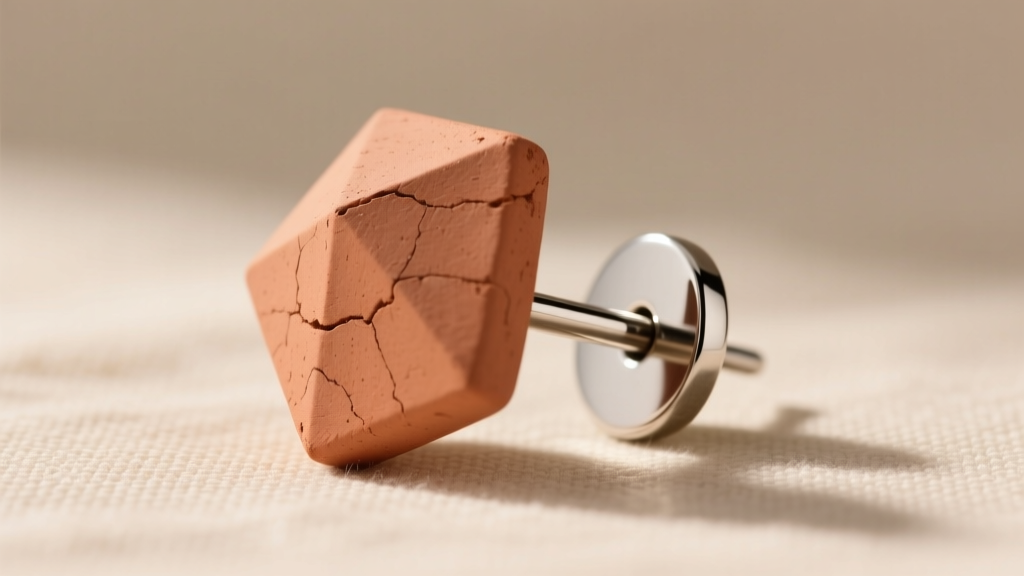
Choosing the Right Earring Post
Avoid standard 22-gauge cup posts with smooth pads. Instead, source 20-gauge flat pad posts with a scored or sandblasted surface. The thicker 20-gauge wire provides necessary rigidity for heavier clay studs, while the scored surface increases the microscopic surface area for adhesive bonding. Always bend the pad slightly or drill a 1mm hole through the pad and clay to create a physical mechanical lock, rather than relying solely on chemical adhesion.
Adhesive Chemistry
Do not use super glue (cyanoacrylate) for polymer clay jewelry. Cyanoacrylate cures brittle and will eventually crystallize and fail when exposed to the natural flexing of the clay and the oils from human skin. According to Polyform Products Company, the optimal adhesive for bonding baked polymer clay to metal is a flexible, two-part epoxy or a high-quality industrial adhesive like E6000. E6000 remains slightly flexible after curing, accommodating the differing thermal expansion rates of metal and PVC.
Surface Finishing: Sanding, Buffing, and the Sealer Myth
A major pitfall in polymer clay jewelry is the misuse of aerosol spray sealants. Many beginners spray their finished earrings with clear acrylic or polyurethane sprays, only to find the coating turning tacky and peeling off weeks later. This happens because the plasticizers in the baked clay slowly migrate to the surface and chemically break down the propellants and solvents in aerosol sprays.
Instead of spraying, achieve a professional finish through mechanical polishing. Wet-sand your baked earrings using automotive-grade sandpaper, progressing through 400, 600, 800, 1000, 1500, and finally 2000 grit. Follow this by buffing with a denim wheel or a high-speed rotary tool to achieve a glass-like shine without any topical sealants. If a topical sealant is absolutely necessary for metallic leaf protection, use a water-based polyurethane (like Varathane) or dome the surface with a jewelry-grade UV resin.
Curing Protocols for Maximum Durability
Underbaking is the silent killer of polymer clay earrings. An underbaked earring will pass a visual inspection but will shatter when dropped. The PVC particles require both a specific temperature and a specific duration to fully fuse.
Expert Rule of Thumb: Always use a standalone oven thermometer. Built-in oven dials are notoriously inaccurate and can fluctuate by up to 50°F. If the oven spikes above 300°F, the clay will scorch, releasing hydrogen chloride gas and turning the material permanently brittle.
For optimal strength, bake your earrings 10°F below the manufacturer's maximum recommended temperature, but extend the baking time by 50%. For example, if baking Sculpey Premo (recommended 275°F for 30 minutes), bake at 265°F for 45 to 60 minutes. This slower, longer cure allows the heat to penetrate thick sections evenly without risking surface scorching, resulting in a fully fused, highly durable earring component ready for assembly.


