Polymer Clay Gingerbread Earrings: 2026 Material Guide
Discover the material science behind polymer clay gingerbread earrings. Compare clay brands, hardware gauges, and sealing methods for lasting wear.

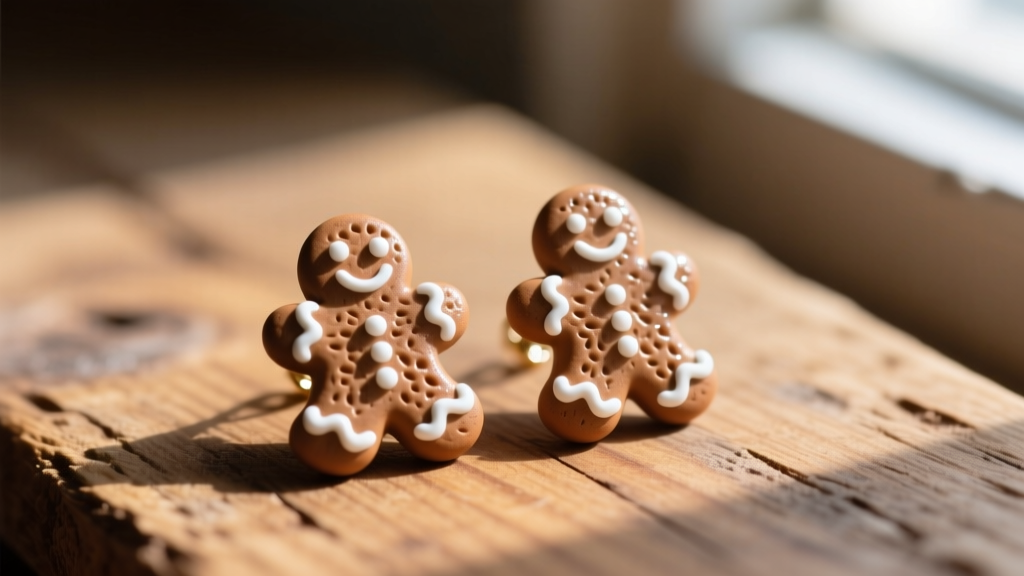
The Material Science of Holiday Jewelry
When the holiday season approaches, polymer clay gingerbread earrings become a ubiquitous staple in artisan markets and online boutiques. However, beneath the festive charm and intricate white 'icing' details lies a complex intersection of material science, structural engineering, and chemistry. As we move through 2026, the gap between mass-produced dropshipped jewelry and artisan-crafted pieces has widened significantly, largely due to the specific formulations of polyvinyl chloride (PVC) clays and the metallurgy of the hardware used.
Unlike traditional fine jewelry that relies on the tensile strength of precious metals, polymer clay is a plastisol—a suspension of PVC particles in a plasticizer. When heated, this mixture fuses into a solid, yet distinctly flexible, plastic. Understanding the thermal properties, shear stress points, and chemical migrations of these materials is critical for both creators and collectors who want their seasonal earrings to survive beyond a single holiday party.
Polymer Clay Formulations: Sculpey vs. Fimo vs. Cernit
Not all polymer clays are created equal. The base plasticizer ratio and the particle size of the PVC resin dictate how the clay handles intricate gingerbread textures and how it withstands the inevitable drops onto hard floors. According to extensive testing by The Blue Bottle Tree, a leading authority on polymer clay chemistry, the brand you choose fundamentally alters the earring's durability.
| Clay Brand | Base Properties | Baking Temp | Flexibility | Best Gingerbread Application |
|---|---|---|---|---|
| Sculpey III | Soft, high plasticizer | 275°F (135°C) | Low (Brittle when thin) | Thick, chunky 3D gingerbread men |
| Premo Sculpey | Balanced, durable | 275°F (135°C) | High (Bends before breaking) | Thin cut-outs, delicate icing details |
| Fimo Professional | Firm, low plasticizer | 230°F (110°C) | Medium (Holds rigid shape) | Intricate cane slices, tiny sprinkles |
| Cernit | Translucent, waxy | 265°F (130°C) | Very High (Almost rubbery) | Flexible gingerbread houses, arches |
The most common failure mode in holiday earrings is snapping at the post hole. This usually occurs when artisans use Sculpey III for thin, flat gingerbread shapes. Because Sculpey III lacks the structural integrity of Premo or Fimo when baked under 1/4 inch (6mm) thick, it becomes highly brittle. For durable, lightweight dangles, Premo Sculpey remains the industry gold standard in 2026 due to its superior flexural strength.
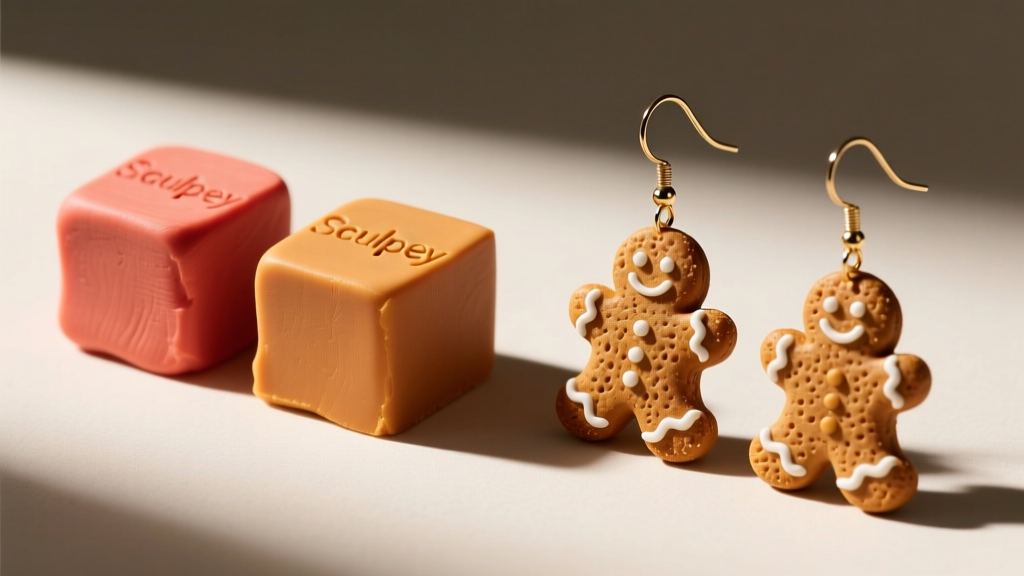
Polymer Clay vs. Alternative Gingerbread Materials
While polymer clay dominates the handmade market, manufacturers also produce gingerbread earrings using alternative materials. Here is how polymer clay stacks up against its competitors in terms of weight, thermal comfort, and longevity.
1. Enamel on Brass or Copper
Enamel gingerbread earrings offer a glossy, scratch-resistant finish that polymer clay cannot achieve without extensive sanding and buffing. However, enamel on metal is significantly heavier. A 2-inch enamel gingerbread man can weigh up to 12 grams, which risks stretching the earlobe over time. Polymer clay versions of the same size typically weigh between 2 and 4 grams, making them vastly superior for sensitive or newly pierced lobes.
2. UV Resin and Epoxy
Resin allows for perfectly smooth, glass-like gingerbread shapes with embedded glitter. The primary drawback of resin is its rigidity and temperature sensitivity. In cold winter weather, resin becomes brittle and can shatter if dropped. Furthermore, clear UV resins are notorious for yellowing over time, which ruins the aesthetic of white 'icing' details. Polymer clay, being pigmented throughout its mass, does not suffer from UV yellowing.
3. Laser-Cut Wood
Wood is lightweight and eco-friendly, but it is highly susceptible to moisture. Winter weather, snow, and humidity changes can cause thin wood veneers to warp or splinter. Polymer clay is entirely waterproof and dimensionally stable once properly cured.
Hardware Integration: Gauges, Metals, and Shear Stress
The intersection of the metal earring post and the polymer clay body is the most critical structural vulnerability. Artisans generally use two methods to attach hardware: embedding the post into the raw clay before baking, or gluing a flat-pad post onto the baked clay using cyanoacrylate or two-part epoxy.
According to metallurgical guidelines from Ganoksin, the choice of metal is paramount. Because polymer clay contains sulfur compounds and plasticizers that can react with certain metals over time, using the wrong alloy can result in black oxidation halos around the earring post.
- Titanium (Grade 2 or 4): The absolute best choice for embedding. Titanium is completely inert, hypoallergenic, and will not react with the clay's plasticizers. Standard gauge for clay embedding is 20G (0.81mm) or 22G (0.64mm).
- 316L Surgical Steel: Highly resistant to corrosion and safe for embedding, though slightly heavier than titanium.
- Brass and Copper: Should never be embedded directly into raw polymer clay. The plasticizers will accelerate oxidation, turning the clay green or black within a single season. If using brass, it must be sealed with a metal primer first or glued on post-bake.
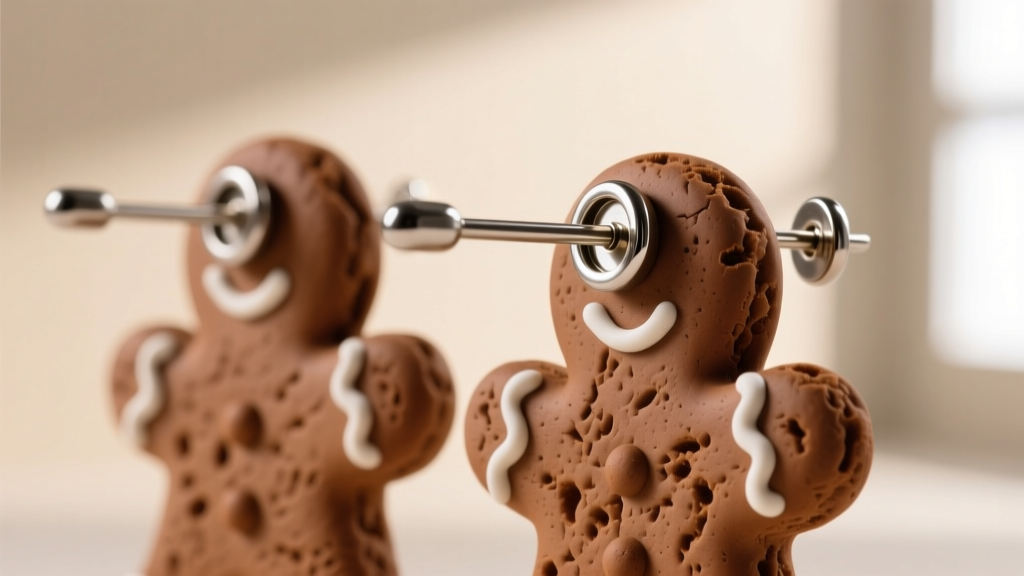
The Mechanics of Embedding vs. Drilling
Drilling a hole into baked polymer clay introduces micro-fractures, especially near the edges of a gingerbread shape. The shear stress of pulling the earring through the lobe can cause these micro-fractures to propagate, resulting in the earring tearing away from the hook. Embedding a 20G titanium eye-pin or flat pad directly into the raw clay, then surrounding it with a small 'collar' of extra clay before baking, creates a mechanical lock that distributes the shear stress across a much wider surface area.
The Plasticizer Migration Problem: Sealing and Finishing
One of the most widely misunderstood aspects of polymer clay jewelry is sealing. Many beginners use aerosol spray varnishes (like Rust-Oleum clear coats) to give their gingerbread earrings a glossy finish. Within a few months, these coatings become permanently sticky and tacky.
'The stickiness is caused by plasticizer migration. The plasticizers in the PVC clay slowly leach to the surface and interact with the solvents in aerosol sprays, preventing the varnish from ever fully curing.' — Sculpey Official Care Guide
To properly seal polymer clay gingerbread earrings in 2026, artisans must use water-based polyurethanes (such as Varathane Water-Based Ultimate Polyurethane) or specialized polymer clay sealants like DuraClear Gloss. For the white 'icing' details, many creators now use a thick layer of clear UV resin. While UV resin carries a slight yellowing risk over several years, its immediate high-gloss, dimensional effect perfectly mimics royal icing and provides a thick, protective barrier against makeup and skin oils.
2026 Market Pricing and Quality Indicators
When shopping for polymer clay gingerbread earrings, price is often a direct reflection of the material science and labor involved. Here is a quick framework for evaluating quality and pricing in the current market:
- The Dropship Tier ($4 - $9): Usually mass-produced in overseas factories using cheap, high-plasticizer clays that remain slightly flexible but tear easily. Hardware is often unmarked mystery metals that cause contact dermatitis. The 'icing' is usually painted acrylic, which chips upon impact.
- The Artisan Tier ($18 - $35): Handcrafted by independent jewelers using Premo or Fimo clays. Hardware is explicitly listed as titanium or 316L steel. The icing is created using liquid polymer clay (TLS) or UV resin for a 3D, tactile effect. Edges are sanded smooth to prevent scratching the neck.
- The Fine-Craft Tier ($40 - $65+): Incorporates mixed media. Think polymer clay gingerbread men with 14k gold-filled halo settings, genuine Swarovski crystal 'sprinkles', and hand-forged niobium ear wires for extreme hypoallergenic safety.
Ultimately, the best polymer clay gingerbread earrings are those that respect the chemical and physical limitations of the medium. By prioritizing flexible clay formulations, inert titanium hardware, and chemically compatible sealants, you can ensure your holiday jewelry remains a durable, joyful staple for years to come.


