Polymer Earrings Technical Guide: Resin, Clay, and Biocompatibility
An expert technical guide to polymer earrings, analyzing PVC clay, UV resins, and PTFE bioplasts for biocompatibility, tensile strength, and wear.

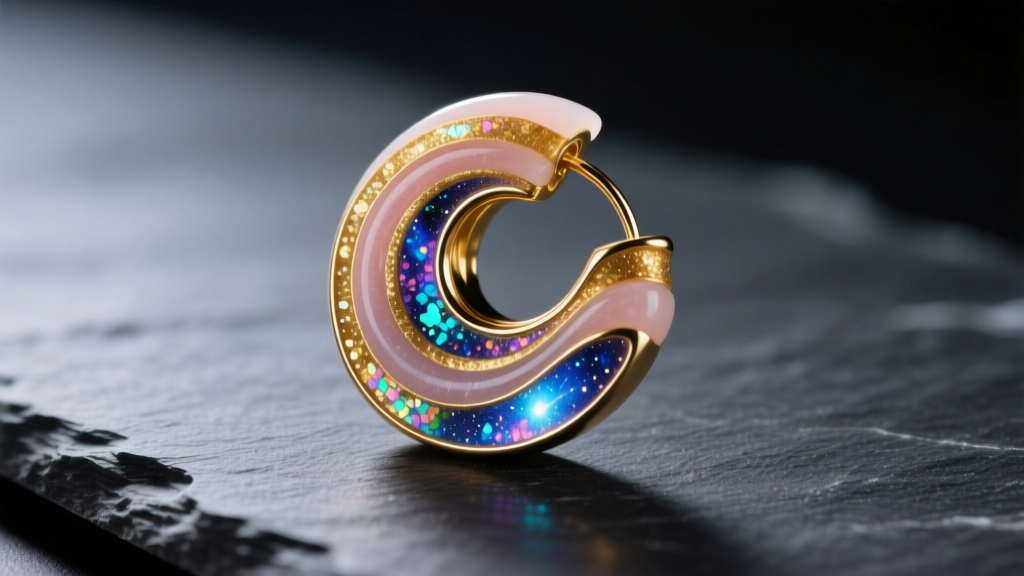
When discussing polymer earrings, the term 'polymer' encompasses a vast spectrum of synthetic and semi-synthetic macromolecules. In the context of contemporary body jewelry and fashion accessories, this primarily narrows down to three distinct material classes: PVC-based polymer clays, UV-cured acrylate resins, and thermoplastic fluoropolymers like PTFE (commonly branded as Bioplast). Understanding the chemical architecture, biocompatibility, and mechanical limitations of these materials is critical for both jewelry fabricators and consumers with sensitive tissue or heavy-gauge piercings.
The Chemical Architecture of Polymer Jewelry
Polymer clay is fundamentally a plastisol—a suspension of polyvinyl chloride (PVC) particles in a liquid plasticizer. Unlike ceramic clays that rely on water evaporation and silica vitrification, polymer clays cure through the fusion of PVC resin particles when heated to specific thermal thresholds, typically between 110°C and 130°C (230°F to 265°F). The choice of plasticizer dictates the flexibility and safety profile of the final earring. Modern, high-grade jewelry clays utilize non-phthalate plasticizers such as DOTP (Dioctyl terephthalate) to comply with stringent international safety standards.
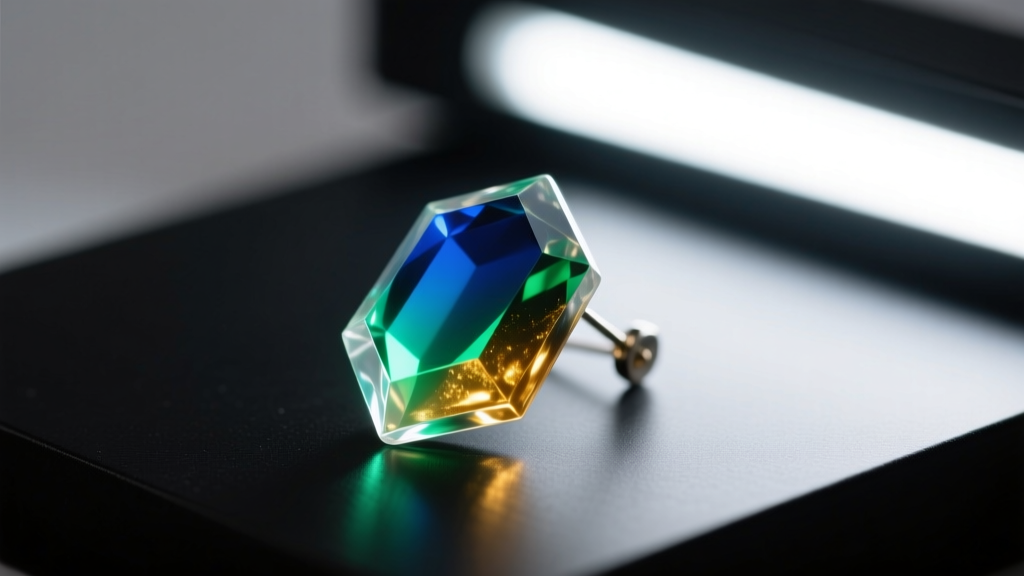
Conversely, UV-cured resin earrings rely on photopolymerization. These formulations consist of acrylate oligomers, reactive diluents, and photoinitiators. When exposed to ultraviolet light (typically in the 365nm to 405nm spectrum), the photoinitiators generate free radicals, triggering a rapid exothermic cross-linking reaction that transforms the liquid into a rigid, glass-like acrylic polymer.
Biocompatibility and Contact Dermatitis Risks
The intersection of synthetic polymers and human epidermis requires rigorous safety evaluation. For freshly pierced lobes or cartilage, standard polymer clays and UV resins are generally contraindicated due to the risk of micro-porosity harboring bacteria and the potential for chemical leaching.
According to research published in the National Institutes of Health (NIH) regarding allergic contact dermatitis, uncured or partially cured acrylate resins are potent sensitizers. If a UV resin earring is under-cured—often due to opaque pigment blocking UV penetration or insufficient wattage in the curing lamp—residual monomers can leach into the piercing fistula, triggering severe localized immune responses.
The Myth of Hypoallergenic Polymers
Furthermore, the ASTM D-4236 standard requires that art materials, including polymer clays, be evaluated by a toxicologist for chronic health hazards. While certified clays are safe for external skin contact, they are not classified as implant-grade. For stretching earlobes or initial piercings, PTFE (Polytetrafluoroethylene) is the only polymer recommended. PTFE is chemically inert, autoclavable, and possesses a remarkably low coefficient of friction, preventing the 'cheese-cutter effect' in heavy-gauge earlobes.
Structural Integrity and Common Failure Modes
The mechanical failure of polymer earrings usually stems from improper thermal curing or poor geometric design. PVC polymer clays do not 'burn' in the traditional sense; rather, they scorch. If an oven exceeds 175°C (350°F), the PVC matrix begins to degrade, releasing hydrogen chloride (HCl) gas and leaving the earring brittle and discolored. Under-baking, conversely, results in incomplete particle fusion, leading to micro-fractures that snap under the sheer weight of a heavy drop earring.
Tensile strength is a major limiting factor for polymer clay hoops and long dangles. A standard 2mm thick sheet of cured polymer clay has a flexural strength of roughly 40-50 MPa. To mitigate snapping, expert fabricators employ internal armatures—embedding 24-gauge nickel-free copper or titanium wire within the clay before baking.
UV resins, while possessing higher compressive strength, are highly susceptible to impact shattering. A 3mm thick UV resin hoop dropped on a tile floor will likely fracture along its stress points due to the material's inherent brittleness and lack of plastic deformation capacity.
Hardware Integration: Bonding Metal to Polymer
Attaching titanium or surgical steel posts to polymer bases is a frequent point of structural failure. Relying solely on cyanoacrylate (super glue) is a critical error; cyanoacrylate cures into a rigid, brittle plastic that shears off the slightly flexible polymer clay base under torsional stress.
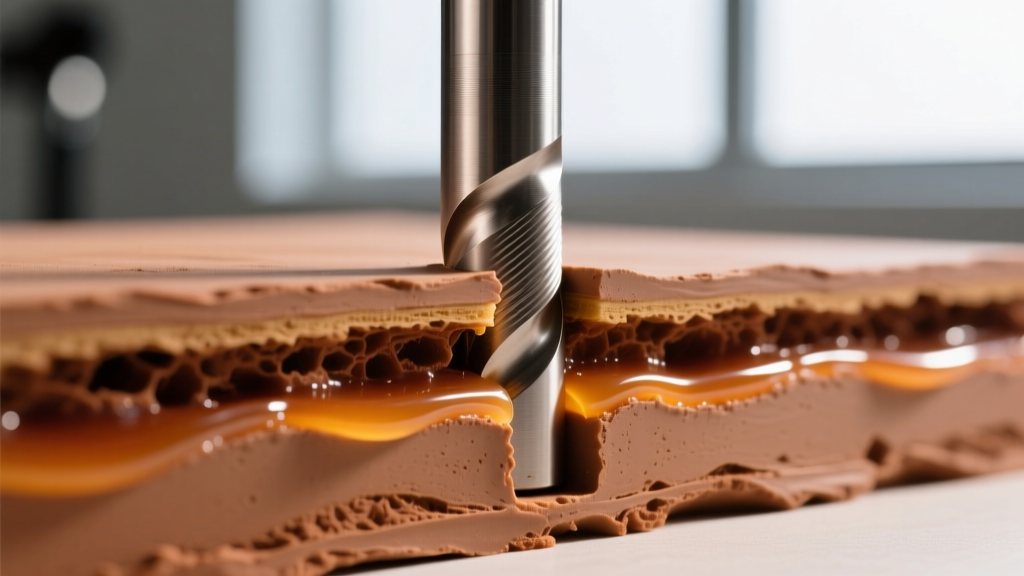
Expert fabrication requires a dual approach:
- Mechanical Embedding: The metal post should feature a flat pad with a central hole. The polymer clay is pressed through this hole before baking, creating a physical rivet that locks the hardware in place.
- Chemical Bonding: Post-baking, a flexible adhesive like E6000 or a specialized UV-resin glue is applied to the pad. The flexibility of these adhesives absorbs the kinetic energy of daily wear, preventing bond degradation.
For heavy-gauge polymer plugs (ranging from 2g to 1/2 inch), the hardware integration involves threading a stainless steel or titanium O-ring through a precisely drilled tunnel in the cured polymer, relying on mechanical retention rather than chemical adhesives, which degrade when exposed to sebum and skin oils.
Material Comparison Matrix
| Material Class | Curing Method | Tensile/Flexural Strength | Autoclavable | Best Use Case |
|---|---|---|---|---|
| PVC Polymer Clay | Thermal (110°C-130°C) | ~45 MPa (Flexible) | No | Intricate fashion studs, lightweight dangles |
| UV Acrylate Resin | Photopolymerization (365nm) | ~60 MPa (Brittle) | No | Translucent hoops, encapsulated botanicals |
| PTFE (Bioplast) | Extrusion/Molding | ~25 MPa (Highly Flexible) | Yes | Fresh piercings, heavy-gauge stretching |
Environmental Degradation and Maintenance Protocols
Polymers are subject to environmental degradation, primarily through UV radiation and plasticizer migration. Prolonged exposure to direct sunlight causes the photoinitiators in UV resin earrings to reactivate or degrade, leading to a phenomenon known as photo-oxidation, which manifests as severe yellowing in translucent pieces.
PVC polymer clays can experience plasticizer leaching over years of wear, especially when in constant contact with the natural oils and acidic pH of human skin. This causes the earrings to harden, shrink slightly, and become brittle. To maintain the structural integrity of polymer earrings, they should be cleaned using only mild, non-abrasive surfactants and a soft microfiber cloth. Alcohol-based solvents, acetone, and harsh ultrasonic cleaners will strip the plasticizers from the surface matrix, accelerating the aging process and ruining the surface finish. Furthermore, storing these pieces in a climate-controlled environment away from direct UV exposure will significantly extend their aesthetic and functional lifespan, preventing the premature onset of photo-oxidation and polymer chain scission.


