2026 Earring Shape Trends: Architectural & Asymmetric Style Analysis
Explore 2026 earring shape trends, focusing on architectural geometries, asymmetric styling rules, and precise face-shape pairing frameworks.

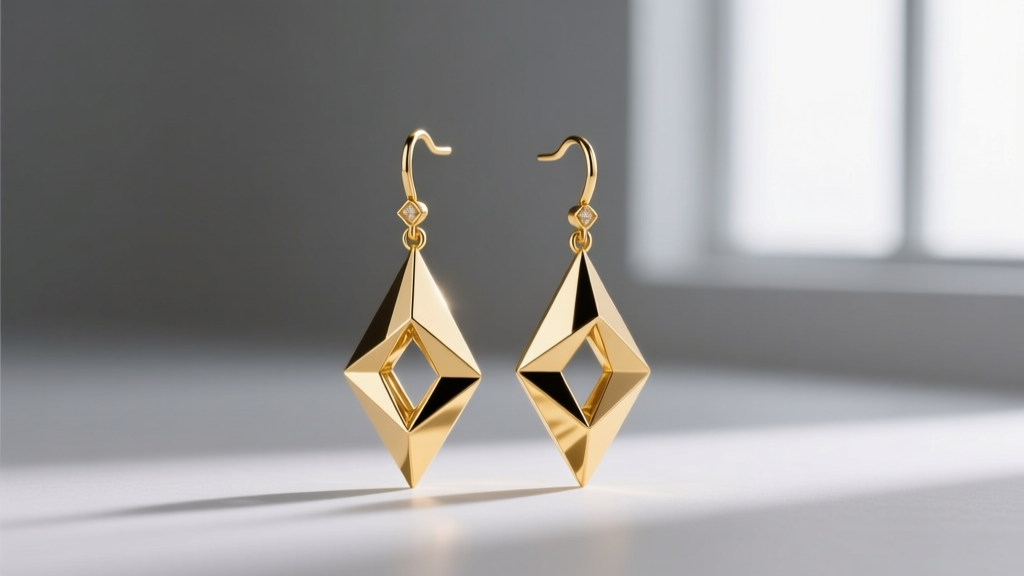
The landscape of fine and fashion jewelry is undergoing a seismic shift as we move through 2026. For the past three years, the dominant earring shape trends leaned heavily into organic, fluid, and 'liquid metal' aesthetics. However, the current style radar indicates a sharp pivot. Today's collectors and style enthusiasts are gravitating toward architectural geometries, brutalist structures, and calculated asymmetry. This comprehensive style and trend analysis breaks down the new rules of the earring shape movement, offering actionable frameworks for face-shape pairing, material selection, and structural gauge requirements.
The Shift from Organic to Architectural Earring Shapes
In previous seasons, the prevailing earring shape was defined by soft curves, molten textures, and amorphous silhouettes. As we analyze the runway outputs and boutique acquisitions for 2026, a distinct counter-movement has emerged: the 'New Brutalism' in jewelry design. This trend champions sharp angles, geometric precision, and structural rigidity. According to market analysts tracking luxury accessories via Forbes Jewelry, consumers are increasingly viewing their jewelry as wearable architecture rather than mere ornamentation.
The modern architectural earring shape relies on negative space and stark linear contrasts. Think inverted trapezoids, sharp chevron huggies, and hexagonal tension-set drops. These shapes demand precision manufacturing, often utilizing CNC milling to achieve the razor-sharp edges that define the 2026 aesthetic. This shift is not merely visual; it fundamentally changes how the earring interacts with the wearer's anatomy, requiring a more deliberate approach to styling and placement.
Decoding the 2026 Asymmetric Earring Shape Movement
Asymmetry is no longer about simply wearing two completely unrelated earrings. The 2026 approach to mismatched earring shapes is highly calculated, relying on a framework known as 'Visual Weight Balancing.' When curating an asymmetric ear, the goal is to achieve equilibrium through contrasting geometries rather than matching volumes.
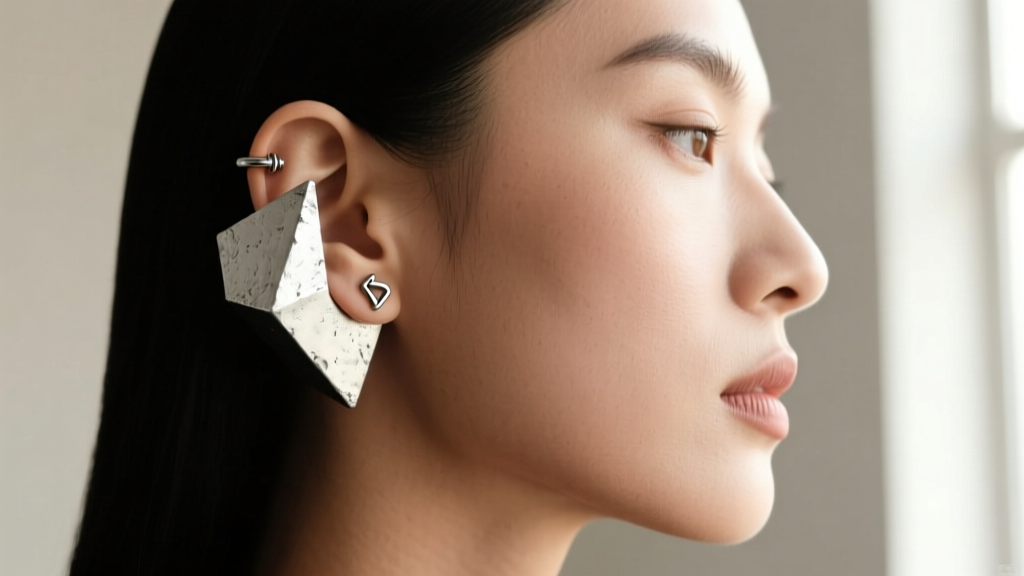
The Weight-to-Volume Ratio in Mismatched Pairs
To successfully execute the asymmetric earring shape trend, stylists recommend pairing a high-density, low-volume shape on one ear with a low-density, high-volume shape on the other. For example, a solid, heavy 18k gold cubic stud (high density, low volume) on the left lobe perfectly balances a long, hollow, geometric wire-frame drop (low density, high volume) on the right. This prevents the wearer from experiencing physical discomfort due to uneven weight distribution while maintaining a striking visual dialogue between the two ears.
- The Anchor & The Kite: Use a wide, geometric huggie as the 'anchor' on one ear, paired with a long, sharp chevron drop (the 'kite') on the opposite ear.
- Textural Contrast: Pair a matte-brushed architectural ear cuff with a high-polish, faceted geometric stud to create depth without relying on identical shapes.
- The Cartilage Bridge: Asymmetric shapes in 2026 heavily utilize the flat and helix piercings. A sharp, linear barbell in the upper cartilage can visually balance a heavy, angular lobe drop on the opposite side.
Face Shape Pairing: The New Geometric Rules
Matching an earring shape to a face shape is a foundational styling principle, but the architectural trend requires a more nuanced approach. The objective in 2026 is not necessarily to 'soften' angular faces or 'add angles' to round faces, but to create a deliberate, high-fashion contrast or a harmonious structural echo.
| Face Shape | Recommended 2026 Earring Shape | Shapes to Avoid | Styling Rationale |
|---|---|---|---|
| Square / Angular | Inverted Trapezoid, Elongated Hexagon | Perfect Circles, Wide Squares | Elongated geometric shapes draw the eye vertically, softening a strong jawline without relying on outdated, overly delicate curves. |
| Round | Sharp Chevron Drops, Linear Barbed Wire | Small Round Studs, Hoop Earrings | Sharp, aggressive angles provide a striking, editorial contrast to soft facial features, aligning with the modern brutalist aesthetic. |
| Oval | Asymmetric Geometric Clusters, Wide Cuffs | Excessively Long Linear Drops | Oval faces can carry heavy, wide architectural shapes that would overwhelm other face structures, allowing for bold, statement-making volumes. |
| Heart / Inverted Triangle | Bottom-Heavy Pyramids, Teardrop Geometries | Top-Heavy Triangles, Wide Huggies | Shapes that add visual weight at the bottom of the earlobe balance a narrower chin and wider forehead. |
Material and Gauge Specifications for Structural Integrity
The shift toward sharp, architectural earring shapes introduces significant structural challenges. Heavy geometric drops and wide, angular ear cuffs exert uneven torque on the piercing fistula. Standard jewelry specifications often fail under the demands of the 2026 brutalist aesthetic.
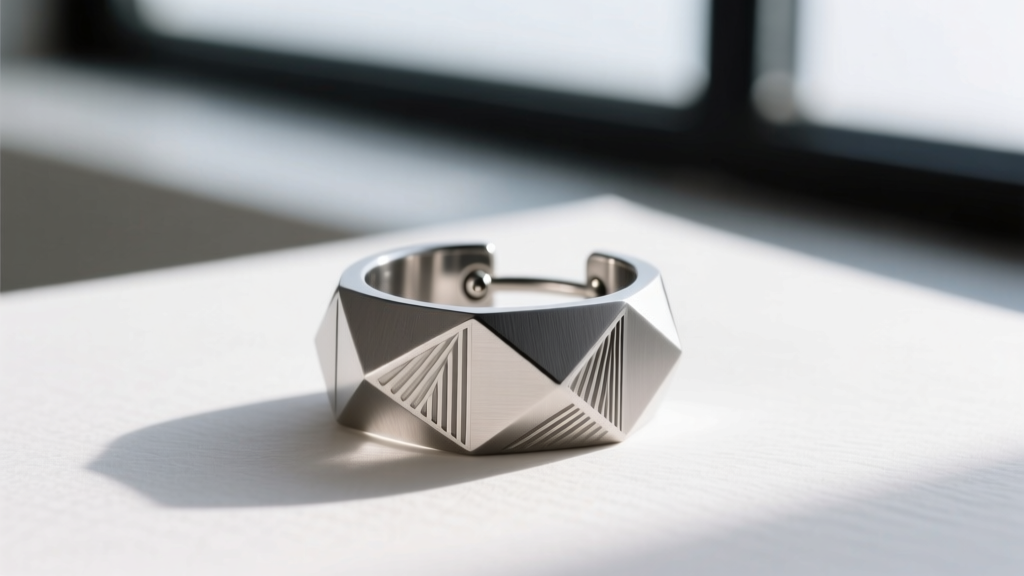
Wire Gauge and Tensile Strength
A standard lobe piercing is typically done at 20-gauge (0.81mm) or 18-gauge (1.02mm). However, suspending a 12-gram solid brass or gold architectural drop from a 20-gauge wire will inevitably lead to metal fatigue, bending, and eventual snapping. For heavy geometric shapes, jewelers are now engineering pieces with 16-gauge (1.29mm) or even 14-gauge (1.63mm) posts and ear wires. According to metallurgical data from the Gemological Institute of America (GIA), upgrading the wire thickness by just two gauges increases the tensile strength and bend-resistance of the post by over 60%, which is critical for maintaining the sharp, unwarped lines of architectural earrings.
Alloy Selection for Sharp Edges
To maintain the razor-sharp edges characteristic of the 2026 earring shape trends, material hardness is paramount. Pure 24k gold is too soft and will quickly lose its geometric precision through daily wear. Instead, designers are utilizing 14k and 18k gold alloys mixed with higher percentages of copper and zinc to increase the Vickers hardness (HV). For those with metal sensitivities, Grade 23 Titanium (Ti-6Al-4V ELI) has become the gold standard for architectural ear cuffs and cartilage pieces, offering exceptional strength-to-weight ratios and the ability to hold a crisp, CNC-milled edge without deformation.
Market Pricing and Investment Value
As the demand for precision-milled, architectural earring shapes grows, the market has segmented into distinct pricing tiers based on manufacturing complexity and material integrity.
- Fast Fashion & Bridge ($25 - $120): Typically cast from brass or sterling silver. While these capture the visual aesthetic of the 2026 geometric trends, they often utilize thinner gauges (18g-20g) and softer alloys, meaning the sharp edges may dull or bend within a year of regular wear.
- Contemporary Fine ($250 - $800): Features solid 14k gold or high-grade titanium. These pieces utilize proper structural engineering, including reinforced 16g ear wires and secure tension settings for geometric gemstone inlays. They offer the best balance of trend-forward styling and long-term durability.
- High Jewelry & Bespoke ($1,500 - $10,000+): Reserved for complex, asymmetric architectural pieces featuring precision-cut diamonds or sapphires set into 18k gold or 950 platinum. These are considered wearable art and investment pieces, often requiring custom-fabricated ear wires to support the extreme weight of the geometric design.
Final Styling Verdict
The 2026 earring shape landscape is a triumph of structure over fluidity. By embracing architectural geometries, mastering the visual weight of asymmetric pairings, and demanding higher structural standards in gauge and alloy hardness, collectors can build an ear curation that is both fiercely modern and mechanically sound. Whether you are opting for a sharp chevron drop to contrast a round face or investing in a heavy, brutalist titanium ear cuff, the key to mastering this trend lies in the precision of the geometry and the integrity of the engineering.


