18k Gold Earrings Hoops: Budget & Value Assessment
Discover if 18k gold earrings hoops are worth the premium. We break down 2026 gold prices, alloy durability, clasp mechanics, and true cost-per-wear value.

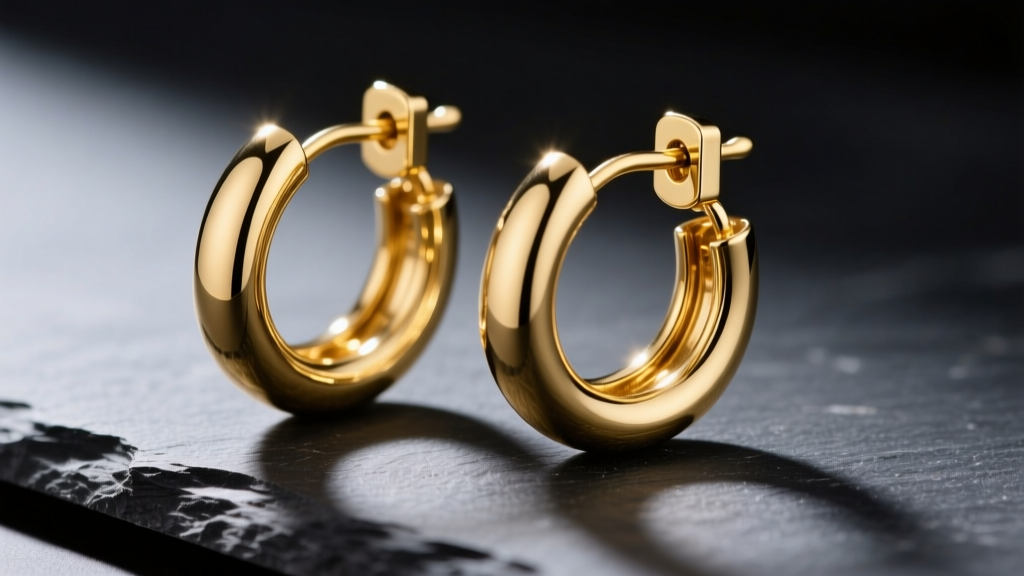
The True Cost of 18k Gold Earrings Hoops in Today's Market
As precious metal markets continue their upward trajectory into 2026, jewelry buyers are scrutinizing their purchases more closely than ever. When assessing the true value of gold earrings hoops 18k karat options, it is essential to look beyond the initial retail price tag. The 18-karat standard (75% pure gold) has long been the global benchmark for luxury fine jewelry, offering a rich, saturated color that lower karats simply cannot replicate. However, this premium purity comes with specific metallurgical trade-offs that directly impact long-term durability, repair costs, and overall value retention.
For budget-conscious buyers, the question is not just whether 18k gold is beautiful, but whether the financial premium over 14k gold is mathematically and practically justified. To answer this, we must deconstruct the pricing models used by jewelers, analyze the structural integrity of hoop designs, and calculate the actual cost-per-wear over a decade of daily use.
Metallurgy and Durability: The 18k Alloy Breakdown
Pure 24k gold is exceptionally soft, possessing a Vickers Hardness (HV) of roughly 25 to 90. This makes it entirely unsuitable for hoop earrings, which require structural rigidity to maintain their circular shape and withstand the tension of clasps. To create 18k gold, jewelers alloy 75% pure gold with 25% secondary metals. According to the Gemological Institute of America (GIA), the specific alloy mix dictates not only the color but the tensile strength of the final piece.
- 18k Yellow Gold: Typically alloyed with copper and silver. It retains the highest malleability among 18k variants, making it prone to scratching but easy for jewelers to polish and reshape.
- 18k Rose Gold: Contains a higher copper content (up to 20% of the total alloy). Copper increases the Vickers Hardness to approximately 140-150 HV, making rose gold hoops slightly more resistant to bending and denting than yellow gold.
- 18k White Gold: Alloyed with palladium or nickel (though nickel is increasingly avoided due to EU REACH contact dermatitis regulations) and plated with rhodium. It is the hardest and most scratch-resistant 18k option, but requires periodic rhodium replating, adding to long-term maintenance costs.
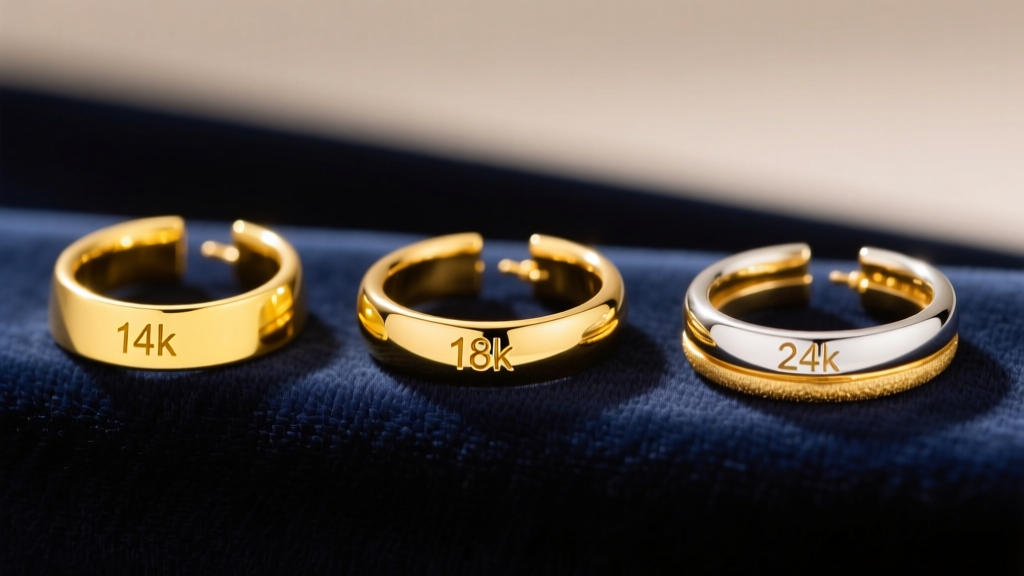
Karat Comparison: Hardness vs. Value
| Karat | Gold Purity | Vickers Hardness (HV) | Color Depth | Relative Price Premium |
|---|---|---|---|---|
| 24k | 99.9% | 25 - 90 | Deep, intense yellow | Baseline (Melt Value) |
| 18k | 75.0% | 120 - 150 | Rich, warm yellow | +35% to +50% over 14k |
| 14k | 58.3% | 180 - 220 | Pale, muted yellow | Baseline Retail Standard |
Data synthesized from metallurgical standards and 2026 retail pricing averages.
Structural Integrity: Solid Tubing vs. Hollow Electroformed
The single greatest trap in the hoop earring market is the "hollow" or electroformed hoop. To make large, thick-looking 18k gold hoops affordable, manufacturers use an electroforming process that creates a microscopic shell of gold over a wax or resin core, which is later melted or dissolved away. The result is a hoop that looks substantial but weighs a fraction of its solid counterpart.
From a value assessment perspective, hollow 18k hoops are a depreciating liability. If a hollow hoop is dropped, squeezed, or even slept on, the thin gold shell will dent or collapse. Because there is no internal structure, jewelers cannot solder or hammer out the dents; the piece is effectively destroyed. Conversely, solid tubular hoops—extruded from a solid rod or drawn through a die—weigh significantly more but offer lifelong durability. A solid 20mm 18k hoop with a 3mm tube diameter will weigh approximately 5.5 to 6.5 grams, whereas a hollow version of the exact same dimensions will weigh barely 1.8 grams. Always verify the gram weight before purchasing; weight is the ultimate indicator of structural honesty.
Calculating Melt Value vs. Retail Premium
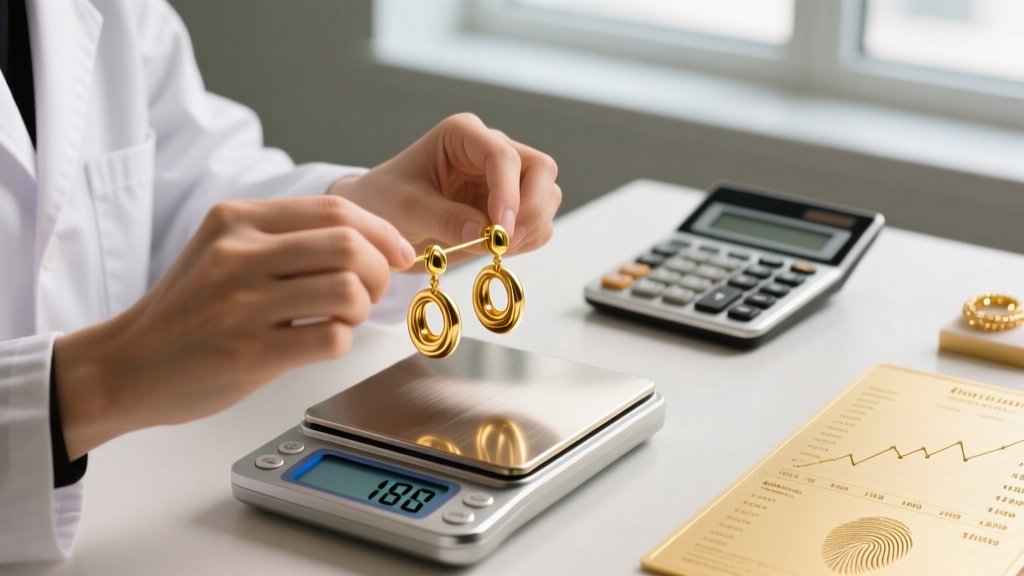
To determine if you are paying a fair price, you must understand the spread between melt value and retail markup. The World Gold Council tracks the daily spot price of gold, which serves as the baseline for intrinsic value. Let us break down the math for a standard pair of solid 18k gold hoops weighing 6 grams total.
The Value Breakdown Formula
- Total Weight: 6.0 grams
- Pure Gold Content: 6.0g × 0.75 = 4.5 grams of 24k pure gold.
- Estimated Melt Value: At a hypothetical 2026 spot price of $65 per gram, the raw material value is $292.50.
- Fair Retail Premium: High-quality fine jewelry typically carries a multiplier of 2.5x to 4x the melt value to cover casting, hand-polishing, clasp engineering, and brand overhead.
- Target Retail Price: $730 to $1,170.
If you are quoted $2,500 for a basic, unbranded 6-gram pair of 18k hoops, you are paying an exorbitant brand tax that you will never recoup upon resale. Conversely, if you find a pair for $350, they are almost certainly hollow, heavily alloyed, or gold-plated over base metal. Scrap dealers will typically pay 70% to 85% of the melt value for 18k gold, meaning your absolute floor for recouping investment on a 6-gram pair is roughly $200 to $245.
Mechanical Failure Points in Hoop Clasps
The clasp is the most vulnerable point of any hoop earring, and the softness of 18k gold exacerbates mechanical wear. When evaluating budget and value, consider the engineering of the closure mechanism, as a broken clasp requires professional repair, adding to the total cost of ownership.
Hinged Saddleback (Snap) Clasps
This is the most common closure for medium-to-large hoops. It features a hinged post that snaps into a catch on the opposite side. The primary failure mode is the hinge pin itself. Over years of opening and closing, the 18k gold hinge hole can elongate due to friction, causing the earring to feel loose or eventually snap off the ear. To mitigate this, ensure the hinge pin is made of a harder alloy or steel, encased in the 18k gold tubing.
Clicker Mechanisms
Often found in huggies and smaller hoops, clickers feature a tension-based arm that "clicks" into a receiving groove. While highly secure, the tension arm relies on the spring-like properties of the metal. Because 18k gold lacks the high tensile memory of 14k gold or titanium, the clicker arm can experience metal fatigue and lose its tension over time, resulting in a weak closure that opens accidentally.
Continuous (Endless) Wire
A continuous wire hoop relies on the tension of the bent wire snapping back into a tiny receiving tube. These offer a seamless aesthetic but are notorious for bending out of shape. If the wire is too thin (under 20-gauge), the 18k gold will warp simply from the pressure of inserting it through the earlobe.
Expert Verdict: Is the 18k Premium Justified?
When conducting a strict budget and value assessment, 18k gold hoop earrings occupy a unique middle ground between everyday utility and heirloom investment. They are not the most durable option on the market, nor are they the most affordable. However, their value proposition lies in their unmatched aesthetic depth, hypoallergenic properties, and intrinsic precious metal retention.
Who Should Buy 18k Gold Hoops:
- The Daily Wearer: If you plan to wear your hoops 300+ days a year, the cost-per-wear of a $900 pair drops to pennies per day over a decade. The rich color of 18k gold elevates everyday styling in a way 14k cannot.
- Sensitive Skin Sufferers: High-purity 18k gold, particularly when alloyed with palladium or silver rather than nickel, is vastly superior for preventing contact dermatitis compared to lower-karat alternatives.
- Value Retainers: Buyers who view jewelry as a store of wealth will appreciate that 18k gold holds its melt value far better than fashion jewelry or gold vermeil, which drops to zero intrinsic value once worn.
Who Should Reconsider (and Opt for 14k or Platinum):
- Active Lifestyles: If you frequently sleep in your hoops, swim, or engage in high-impact sports, the softer nature of 18k gold will result in scratches, warping, and clasp fatigue. A 14k gold or platinum hoop is a much smarter budget allocation for high-impact wear.
- Strict Budget Maximizers: If your primary goal is simply to have a gold-colored hoop without the need for intrinsic scrap value, high-quality gold-filled (14k/20) hoops offer 90% of the visual appeal at 10% of the cost, representing a superior short-term budget choice.
Ultimately, the true value of 18k gold hoops is realized when you purchase solid, well-constructed pieces with robust clasp engineering, ensuring that the luxury material survives the rigors of daily wear while retaining its underlying precious metal worth.


