How to Craft and Style Authentic Elk Tooth Earrings
Learn how to safely prep, drill, and wire-wrap elk tooth earrings. Expert tips on sealing ivory, choosing hypoallergenic posts, and long-term care.

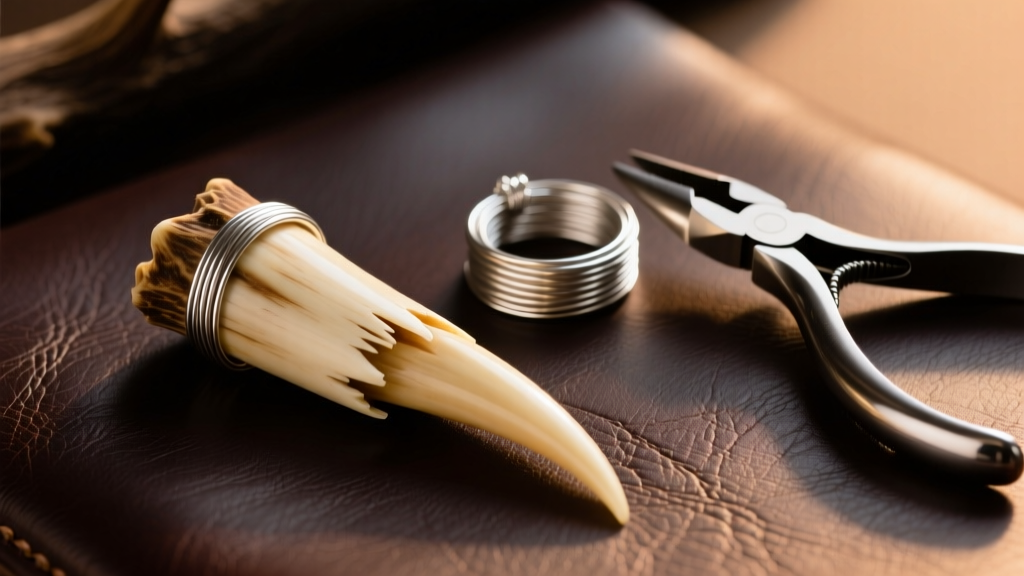
The Allure and Anatomy of Elk Ivory
Elk tooth earrings are more than just a nod to Western heritage or hunting culture; they are a celebration of natural, organic jewelry. What most people refer to as an 'elk tooth' is actually a vestigial canine tusk, commonly called an ivory or bugler. Unlike the flat molars used for grinding vegetation, these upper canines are composed of dense dentin covered by a thin layer of enamel, making them structurally similar to elephant ivory but on a micro-scale. Crafting them into wearable ear accessories requires a deep understanding of organic material handling, precise jewelry fabrication, and ear-lobe ergonomics.
In this comprehensive guide, we will walk through the exact step-by-step process of transforming raw elk ivories into high-end, hypoallergenic dangle earrings, while also exploring how to style them for different face shapes in 2026.
Phase 1: Sourcing, Sanitization, and Sealing
Before any metal meets the tooth, the organic material must be stabilized. Elk ivories are naturally porous and can harbor bacteria or degrade if exposed to the oils and sweat of the human body. According to conservation guidelines from the Rocky Mountain Elk Foundation, ethical sourcing is paramount; always ensure your ivories are sourced from legally harvested game or reputable, documented estate sales.
Step 1: The Whitening and Sanitization Protocol
Never use household bleach (sodium hypochlorite) on elk teeth. Bleach destroys the collagen matrix within the dentin, leading to chalky, brittle teeth that will eventually crumble. Instead, use a 3% to 6% hydrogen peroxide solution.
- Soak Time: Submerge the teeth in a glass container filled with 3% hydrogen peroxide for 24 to 48 hours.
- UV Activation: Place the container in direct sunlight. The UV rays catalyze the peroxide, gently lifting organic stains without compromising the structural integrity of the enamel.
- Rinsing: Rinse thoroughly with distilled water and allow to air dry on a microfiber cloth for 12 hours.
Step 2: Archival Sealing
To prevent the tooth from absorbing skin oils and yellowing over time, it must be sealed. While many hobbyists use cyanoacrylate (CA) glue, professional organic jewelry makers prefer Paraloid B-72, an acrylic resin used by museum conservators. Dissolve Paraloid B-72 pellets in acetone to create a 5% solution, brush a thin coat over the tooth, and let it cure for 24 hours. This creates a reversible, non-yellowing, UV-stable barrier.
Phase 2: Fabrication Techniques
When turning the sealed ivory into an earring, you have two primary fabrication routes: the non-invasive wire wrap, or the traditional drilled dangle. The Gemological Institute of America (GIA) notes that organic gems like ivory require specialized tooling to prevent thermal shock and micro-fractures.
Method A: The 20-Gauge Wire Wrap (No-Drill)
Drilling organic material carries a risk of cracking. The wire-wrap method preserves the tooth's natural structure while providing a secure, decorative bail.
- Cut 12 inches of 20-gauge dead-soft 925 sterling silver wire.
- Anchor the wire at the base of the tooth's root, leaving a 2-inch tail.
- Wrap the wire tightly upward in a spiral, maintaining 1mm tension to grip the natural ridges of the root.
- Once you reach the crown, create a wrapped loop bail using round-nose pliers.
- Tuck the tail ends flush with flush-cutters and burnish them against the wire to prevent snagging on hair or clothing.
Method B: Precision Drilling for Dangle Hooks
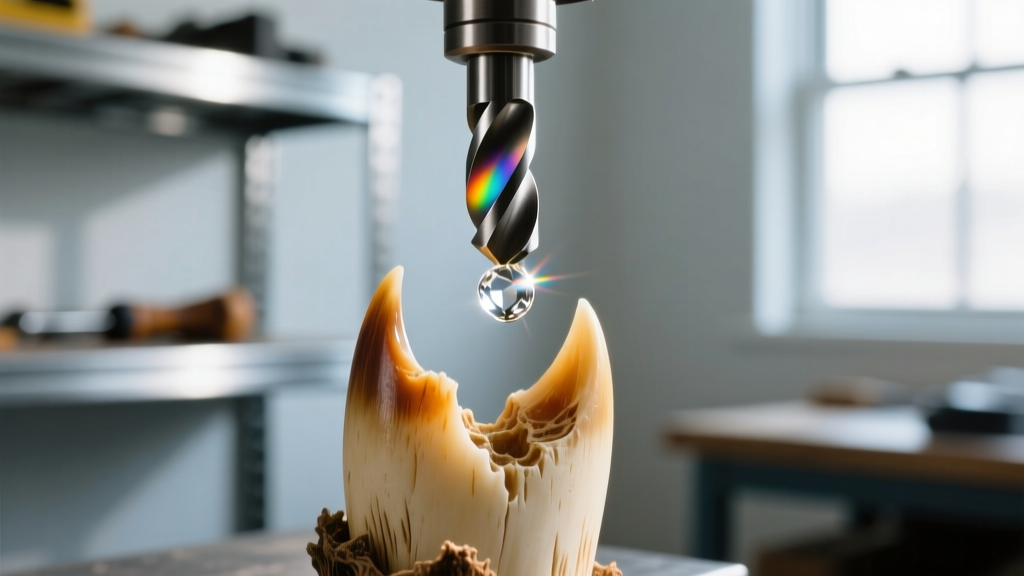
If you prefer a minimalist look where the tooth hangs directly from a French hook or a hidden jump ring, drilling is required. You must use specialized bits and cooling techniques to prevent the dentin from burning or splitting.
| Bit Type | Recommended RPM | Cooling Method | Success Rate / Notes |
|---|---|---|---|
| Diamond Core Burr (1.2mm) | 3,000 - 5,000 RPM | Continuous water drip | 98% - Best for clean, burn-free holes |
| Carbide Micro Bit (1.0mm) | 1,500 - 2,500 RPM | Dip in water every 5 sec | 85% - High risk of thermal cracking |
| HSS Twist Drill (Standard) | N/A | N/A | 0% - Do NOT use; will shatter the enamel |
Pro-Tip: Always drill from the top (crown) down into the root. The enamel on top is harder and will guide the bit, whereas drilling upward from the root can cause the enamel to 'blow out' or chip on the exit wound.
Phase 3: Assembling Hypoallergenic Findings
Elk teeth are surprisingly dense; a single large bull canine can weigh between 3 to 5 grams. When combined with sterling silver wire and hooks, the total earring weight can approach 8 to 10 grams. This weight requires careful consideration of ear-lobe health and finding selection.
- French Hooks: Use 20-gauge or 18-gauge niobium or Grade 23 Titanium (Ti-6Al-4V ELI) French hooks. Titanium is significantly lighter than silver and hypoallergenic, reducing the drag on the earlobe.
- Ear Nuts/Backs: If converting the wire wrap into a stud post, avoid standard butterfly backs which can pinch and cause the heavy earring to droop. Use silicone friction backs or La Poussiere clutch backs which provide a wider surface area against the ear, distributing the weight of the ivory evenly.

Styling Elk Tooth Earrings for Your Face Shape
Because elk ivories have a distinct, asymmetrical, and somewhat chunky profile, styling them requires balancing their visual weight with your natural facial geometry.
Round and Square Faces
For round or square face shapes, the goal is to create vertical elongation. Opt for the drilled dangle method using a longer, 2-inch titanium French hook. This allows the tooth to hang freely and swing, drawing the eye downward and softening strong jawlines or wide cheekbones. Avoid wire-wrapping the tooth tightly against a stud post, as the added horizontal bulk will widen the appearance of the face.
Oval and Heart Faces
Oval and heart-shaped faces can easily carry the visual weight of a heavily wire-wrapped elk tooth stud. A 20-gauge sterling silver wire wrap that hugs the base of the tooth adds an artisan, rustic texture that complements the narrower chin of a heart-shaped face. The metallic sheen of the silver contrasts beautifully with the matte, cream-colored ivory, creating a focal point right at the earlobe.
Long-Term Care and Troubleshooting
Organic jewelry requires a different maintenance routine than metallic or gemstone pieces. Follow these rules to ensure your elk tooth earrings last for generations:
'Ivory is highly sensitive to rapid changes in humidity and temperature. Never wear elk tooth earrings in a sauna, hot tub, or while swimming in chlorinated pools. The rapid expansion and contraction of the dentin will cause microscopic stress fractures that eventually split the tooth.' — Master Jeweler & Organic Materials Conservator
Troubleshooting Common Issues
- Yellowing: If the tooth begins to yellow, it means the sealant has worn off and the dentin is absorbing skin oils. Gently wipe the tooth with a cloth dampened with mineral spirits to remove surface oils, let it dry, and reapply a fresh coat of Paraloid B-72.
- Wire Tarnish: Sterling silver will naturally oxidize, especially against organic materials. Use a treated silver polishing cloth to buff the wire wrap. Do not use liquid silver dips, as the chemicals can seep into the micro-pores of the ivory and cause permanent dark staining.
- Loose Wraps: If the wire wrap becomes loose due to temperature fluctuations, use a nylon-jaw plier to gently squeeze the wire loops back into tension. Never use metal pliers directly on the silver, as they will mar the finish.
Crafting elk tooth earrings is a meticulous process that bridges the gap between wilderness harvesting and fine jewelry fabrication. By respecting the organic nature of the ivory, utilizing precision tooling, and selecting ergonomic, hypoallergenic findings, you can create a deeply personal, wearable piece of art that honors both the animal and the craft.


