The Ultimate Material Guide to Prince Earrings & Royal Motifs
Discover the metallurgy and gemology behind prince earrings. Compare 18k gold, platinum, and sapphire grades for royal feather and pearl drop styles.

Defining the Aristocratic Aesthetic
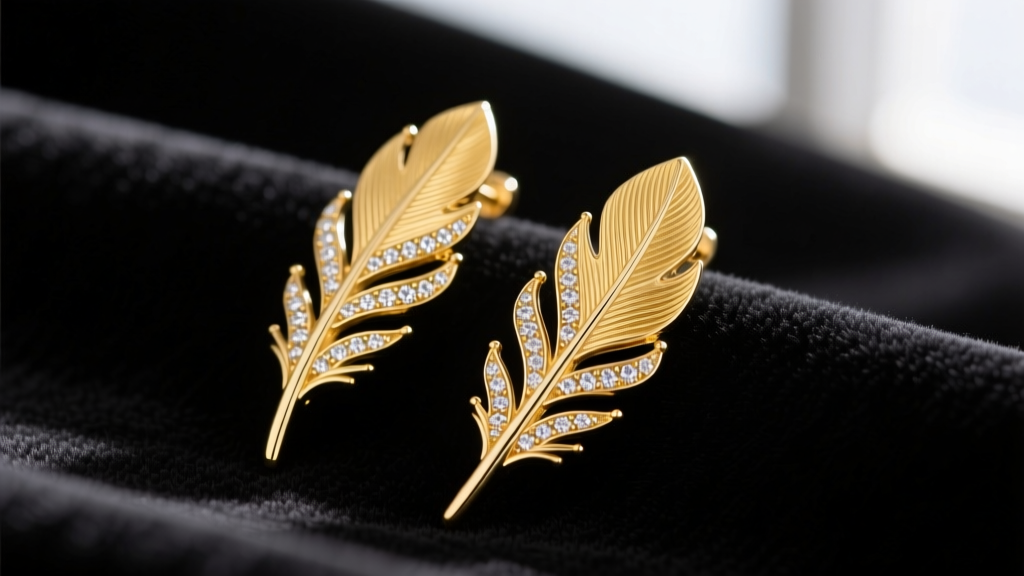
When collectors, historians, and fine jewelry enthusiasts search for prince earrings, they are typically referencing three distinct aristocratic styles: the Prince of Wales feather motif, royal sapphire-and-diamond cluster drops, and heirloom pearl pendants. These designs are not merely decorative; they are structural marvels that demand exceptional material integrity to survive generations of wear. Unlike mass-produced fashion jewelry, authentic royal-inspired pieces rely on precise metallurgical formulas and stringent gemological grading. As of 2026, the market for heritage-style earrings has seen a surge in demand for historically accurate material compositions, pushing jewelers to prioritize longevity over lightweight manufacturing shortcuts.
In this comprehensive guide, we dissect the exact alloys, gemstone treatments, and structural hardware that define high-end prince earrings, providing you with the technical knowledge required to evaluate heirloom-quality pieces.
The Metallurgy of Aristocratic Designs
The foundation of any royal motif earring lies in its base metal. The intricate scrollwork of a Prince of Wales feather or the delicate milgrain edging on a sapphire cluster requires an alloy that balances malleability during fabrication with extreme durability during daily wear.
18k Yellow Gold vs. Platinum 950
The traditional choice for royal jewelry is 18k yellow gold, an alloy consisting of 75% pure gold, 12.5% silver, and 12.5% copper. According to the World Gold Council, this specific ratio yields a Vickers hardness of approximately 125 HV, providing a warm, historically accurate hue that resists severe tarnishing. However, 18k gold has a critical failure mode in micro-pavé settings: gold prongs lose microscopic mass through abrasion over time. A gold prong that secures a 1mm melee diamond in a feather motif will eventually wear thin, risking stone loss after a decade of friction.
Conversely, Platinum 950 (95% platinum, 5% ruthenium or iridium) exhibits unique work-hardening properties. With a Vickers hardness of roughly 135 HV, platinum is denser and more ductile. When a platinum prong is struck or scratched, the metal displaces rather than wearing away. For intricate prince earrings featuring dozens of micro-set diamonds, platinum retains 100% of its setting mass over a lifetime, making it the superior, albeit more expensive, choice for heirloom longevity.
The Rhodium Factor in White Gold
Many royal cluster earrings are crafted in 18k white gold to mimic the cool, silvery aesthetic of platinum while reducing material costs. However, white gold is alloyed with palladium or nickel and requires rhodium plating to achieve a bright white finish. Over 12 to 18 months of wear, the rhodium layer wears thin, revealing the slightly yellowish undertone of the base alloy. Buyers of white gold prince earrings must factor in the recurring maintenance cost of re-plating, a vulnerability that platinum entirely avoids.
Gemological Standards for Royal Clusters
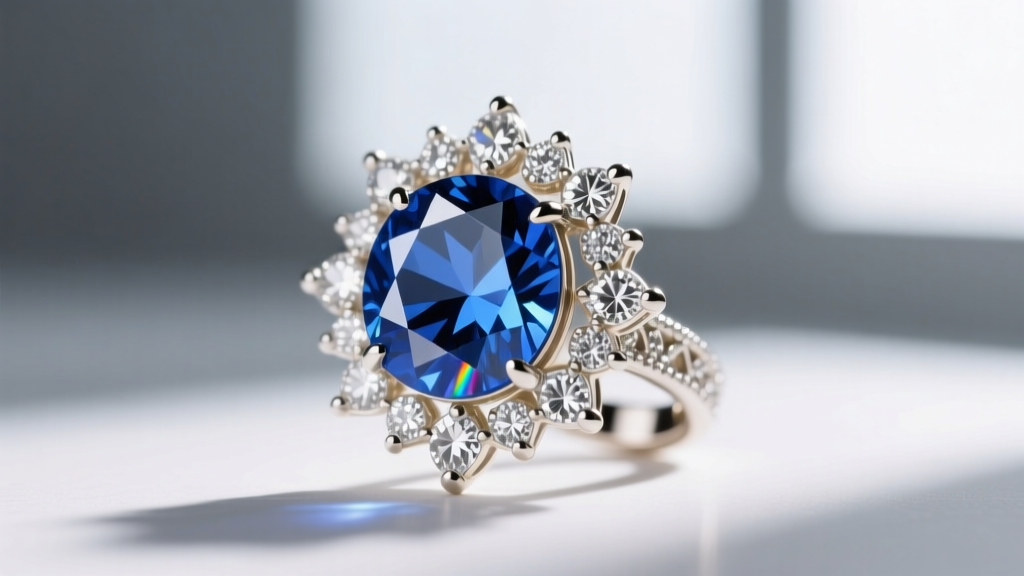
The iconic royal cluster earring—often inspired by the sapphire engagement rings and brooches of the British royal family—relies heavily on the optical properties of its center stone and the precise calibration of its surrounding diamond halo.
Sapphire Origins, Treatments, and Lab-Grown Alternatives
The most prized sapphires for royal motifs possess the legendary 'cornflower blue' hue, historically sourced from Ceylon (Sri Lanka) or Kashmir. The Gemological Institute of America (GIA) notes that the highest value is placed on stones with medium-dark tone and high saturation. Naturally mined Ceylon sapphires are routinely heat-treated at temperatures between 1000°C and 1800°C to dissolve rutile silk and improve clarity—a universally accepted practice in the fine jewelry trade.
However, the gemological landscape has shifted dramatically. In 2026, hydrothermal lab-grown sapphires offer identical chemical compositions (Al2O3 with trace iron and titanium) and crystal structures, but cost 60% to 80% less than their mined counterparts. While lab-grown stones are optically flawless and perfect for everyday wear, collectors seeking true investment-grade prince earrings still mandate natural, heat-treated stones accompanied by origin reports from SSEF or Gübelin.
Nacre Thickness in Pearl Drops
For the pearl drop variations of prince earrings, nacre thickness is the ultimate metric of quality and failure. Commercial-grade pearl earrings often feature a thin nacre layer of 0.1mm to 0.2mm over a mother-of-pearl bead nucleus; these are prone to peeling and chipping within three years. Genuine aristocratic drops utilize Hanadama-certified Akoya pearls or AAA-grade South Sea pearls, boasting nacre thicknesses of 0.8mm to 2.0mm. This deep nacre layer not only ensures structural durability but also creates the 'orient'—the deep, prismatic luster that defines royal-grade pearls.
Hardware, Gauge Sizes, and Failure Modes
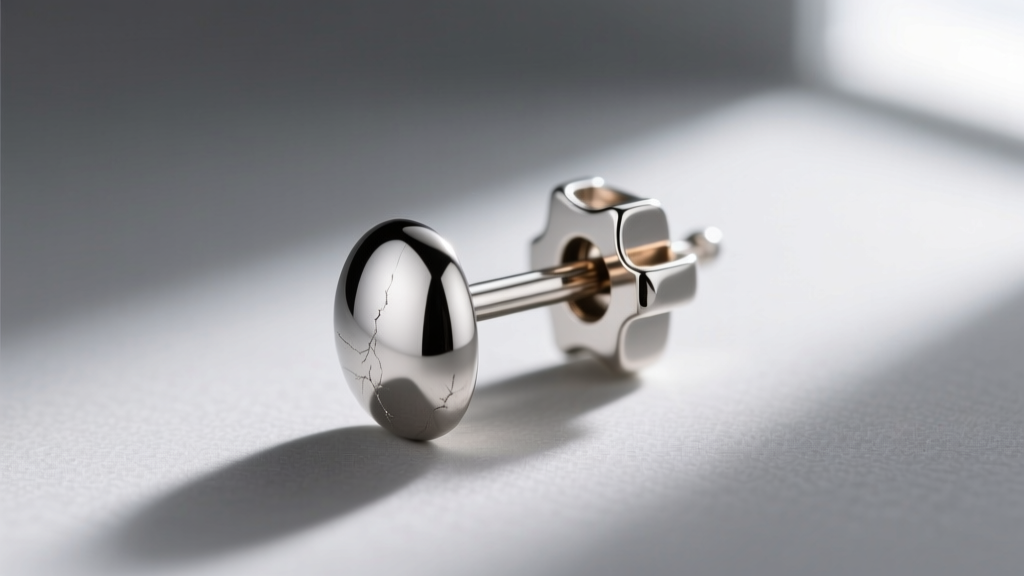
The most overlooked aspect of heavy, royal-inspired earrings is the structural hardware. A sapphire cluster or a South Sea pearl drop can easily weigh between 4 and 8 grams per ear. Standard commercial earrings utilize 20-gauge (0.81mm) or 22-gauge (0.64mm) posts, which will physically bend under this weight, causing the earring to droop forward and place undue stress on the earlobe piercing.
Engineering the Post and Clutch
Authentic prince earrings are engineered with 18-gauge (1.02mm) or 19-gauge (0.91mm) solid posts. This increased thickness provides the necessary rigidity to keep the earring oriented correctly on the ear. Furthermore, standard butterfly friction backs are entirely inadequate for heavy drops; they easily slip off and fail to distribute weight. The industry standard for heirloom prince earrings is the La Pousette locking clutch or an Omega-clip backing. The La Pousette mechanism uses a spring-loaded internal grip that locks securely onto the post groove, while the Omega-clip hugs the back of the earlobe, distributing the 8-gram load across a wider surface area of the cartilage ridge and preventing lobe stretching over time.
Material Comparison Matrix
To synthesize the data, the following table compares the material tiers typically found in the prince earring market, ranging from accessible luxury to true museum-grade heirlooms.
| Material Tier | Base Metal / Alloy | Gemstone Grade | Hardware Type | Price Range (USD) | Heirloom Potential |
|---|---|---|---|---|---|
| Accessible Luxury | 14k Gold Vermeil over Sterling Silver | Lab-Created (Flame Fusion) Sapphire, 0.3mm Nacre Akoya | 20g Post, Butterfly Back | $150 - $400 | Low (5-10 years before plating wears) |
| Fine Jewelry Standard | Solid 18k Yellow or White Gold | Natural Heat-Treated Ceylon Sapphire, 0.6mm Nacre Akoya | 19g Post, Friction or Screw Back | $1,200 - $3,500 | High (Requires rhodium maintenance for white gold) |
| Heirloom / Royal Grade | Platinum 950 or 18k Unplated High-Palladium White Gold | Untreated Kashmir/Ceylon Sapphire, >1.0mm Nacre South Sea | 18g Post, La Pousette or Omega Clip | $8,000 - $25,000+ | Generational (Zero structural degradation) |
Care and Maintenance of Royal Alloys
Owning high-caliber prince earrings requires specific maintenance protocols. Ultrasonic cleaners, while effective for removing sebum and cosmetic buildup from diamond halos, can be catastrophic for emerald-cut sapphires with liquid inclusions or fracture-filled stones. The high-frequency vibrations can cause internal fissures to expand. For royal cluster earrings, the safest cleaning method involves a soft-bristled baby toothbrush, lukewarm water, and a mild, phosphate-free dish detergent.
For pearl drop variations, chemical exposure is the primary enemy. Pearls are composed of calcium carbonate and conchiolin, making them highly susceptible to etching from acidic substances, including perfume, hairspray, and human perspiration. Pearl earrings must always be the last item put on when dressing and the first item removed, wiped gently with a damp microfiber cloth to remove skin oils before being stored in a breathable silk pouch—never in an airtight plastic bag, which can cause the conchiolin to dehydrate and crack.
Final Verdict on Heirloom Longevity
Investing in prince earrings is an exercise in applied metallurgy and gemology. While 18k yellow gold offers undeniable historical warmth and aesthetic appeal for Prince of Wales feather motifs, Platinum 950 remains the undisputed champion for structural integrity in micro-pavé and heavy cluster designs. By prioritizing 18-gauge hardware, La Pousette locking mechanisms, and verified nacre thickness or sapphire origin reports, buyers can ensure their royal-inspired earrings transcend fleeting trends to become genuine, multi-generational heirlooms.


