Earrings That Wrap Around Ear: Budget & Value Guide
Discover the true value of earrings that wrap around ear. Compare materials, pricing tiers, and tension mechanics to find the best budget ear cuffs.

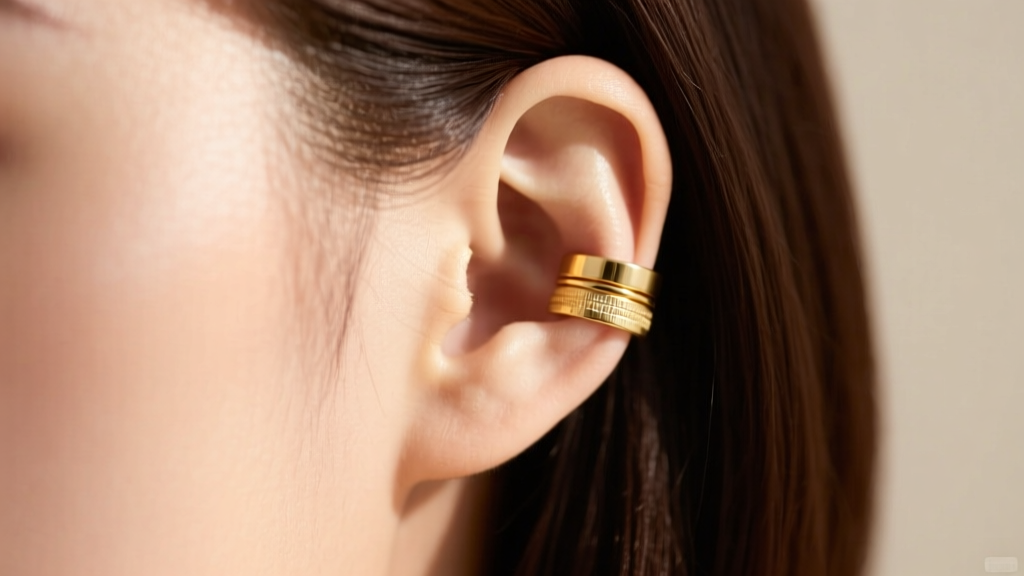
The Anatomy and Appeal of Wrap Earrings
The market for earrings that wrap around ear cartilage has evolved dramatically over the last decade. Once relegated to bohemian festival wear or punk-rock aesthetics, ear cuffs and wrap earrings have secured a permanent spot in fine jewelry collections. Unlike traditional stud or hoop earrings that rely on a post and butterfly backing, wrap earrings utilize mechanical tension to grip the helix, conch, or lobe edge. This non-pierced (or pseudo-pierced) design makes them incredibly versatile, but it also introduces unique structural challenges that directly impact their long-term value.
As we navigate the 2026 jewelry market, consumers are becoming increasingly savvy about material longevity. The initial price tag of an ear cuff rarely tells the whole story. A $25 brass cuff might seem like a budget-friendly win, but if it loses tension and falls off within a month, its true cost-per-wear is abysmal. Conversely, a $140 solid gold wrap earring that maintains its grip for a decade represents exceptional value. To make informed purchasing decisions, we must look past the aesthetic and examine the metallurgy, gauge thickness, and tension mechanics that dictate an ear cuff's real-world performance.
Material Breakdown: Where Your Money Actually Goes
When assessing the budget and value of earrings that wrap around ear structures, the base metal is the single most critical factor. The metal must possess a specific balance of malleability (to allow the wearer to adjust the fit) and yield strength (to maintain tension against the cartilage without permanently deforming). According to the Federal Trade Commission Jewelry Guides, understanding the distinction between gold-plated, gold-filled, and solid gold is essential for accurate value assessment.
| Material | Average Price Range | Tension Retention | Skin Safety (Hypoallergenic) | Adjustment Limit |
|---|---|---|---|---|
| Brass / Copper (Base) | $12 - $35 | Poor (Prone to creep) | Low (High allergy risk) | 2-3 bends before snapping |
| 316L Surgical Steel | $15 - $40 | Excellent (Too stiff) | High (Contains nickel traces) | Very difficult to adjust |
| 14k Gold-Filled | $45 - $85 | Good (Brass core limits) | High (Thick gold layer) | 4-5 bends before fatigue |
| Sterling Silver (925) | $30 - $70 | Moderate (Softens over time) | Moderate (Copper alloy) | Highly adjustable, but loosens |
| Solid 14k / 18k Gold | $120 - $350+ | Excellent (Memory alloy) | Very High | Infinite (with proper care) |
For budget-conscious buyers, 14k gold-filled offers the highest value proposition. The FTC mandates that gold-filled items must contain at least 5% gold by weight, bonded to a core metal (usually brass). This provides a durable, tarnish-resistant exterior that mimics solid gold. However, because the core is brass, the cuff will still eventually suffer from metal fatigue if constantly bent.
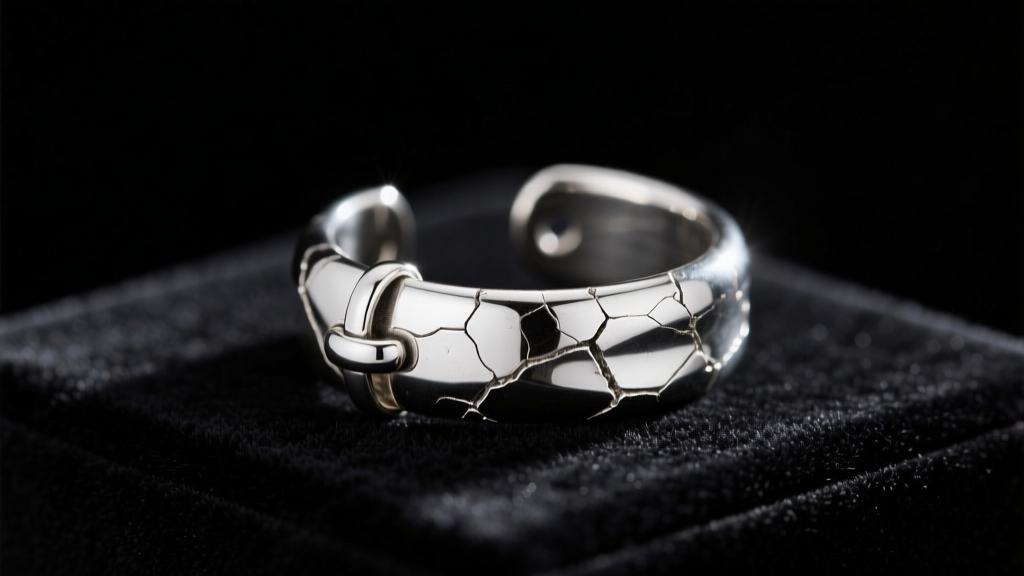
The Tension Problem: Why Cheap Ear Cuffs Fail
The most common failure mode for earrings that wrap around ear cartilage is not tarnishing or stone loss; it is tension loss. When you squeeze an ear cuff to secure it to your helix, you are stressing the metal at a molecular level. Repeated bending causes a phenomenon known as work hardening. As the metal's crystal lattice structure becomes distorted from mechanical stress, it becomes harder but significantly more brittle.
Understanding Gauge Sizes and Structural Integrity
The thickness of the wire, measured in gauges, heavily influences how a wrap earring distributes tension. Most fast-fashion ear cuffs are manufactured using 20-gauge (0.81mm) or 22-gauge (0.64mm) wire to save on material costs. While these thin wires are easy to bend, they lack the structural mass to exert consistent pressure on the ear. They easily warp when caught on a sweater or hairbrush, leading to a loose fit and eventual loss.
High-value wrap earrings typically utilize 18-gauge (1.02mm) or even 16-gauge (1.29mm) wire. The thicker cross-section provides superior 'memory'—the ability of the metal to return to its original shape after slight deformation. According to metallurgical data referenced by the Gemological Institute of America (GIA), alloying gold with specific ratios of copper and silver not only dictates the color (yellow, rose, or white) but also drastically alters the metal's tensile strength and springback properties.
Expert Insight: Never repeatedly open and close a sterling silver or brass ear cuff to 'test' the fit. Every adjustment accelerates work hardening. Instead, gently squeeze it to the approximate size of your cartilage, slide it on, and apply a single, firm pinch to lock it into place.
Pricing Tiers: Assessing True Market Value in 2026
To accurately assess the value of earrings that wrap around ear anatomy, we must segment the market into three distinct pricing tiers. The 2026 landscape has seen a surge in direct-to-consumer fine jewelry brands, which has compressed mid-tier pricing and made high-quality materials more accessible than ever.
1. The Fast-Fashion Tier ($10 - $35)
Materials: Brass, copper, zinc alloys, flash-plated gold or silver.
Value Assessment: Extremely low. These cuffs are essentially disposable. The flash plating (often less than 0.5 microns thick) will wear off within weeks of daily use, exposing the reactive base metals to skin oils and sweat. This leads to the dreaded 'green ear' effect and contact dermatitis. Buy these only for single-use events or costume purposes.
2. The Accessible Mid-Tier ($40 - $95)
Materials: 14k gold-filled, recycled sterling silver, PVD-coated stainless steel.
Value Assessment: High. This is the sweet spot for everyday wear. Brands leveraging recycled 925 sterling silver or heavy gold-filled wire offer excellent craftsmanship. PVD (Physical Vapor Deposition) coated stainless steel is also emerging in this tier; it offers incredible scratch resistance and will never tarnish, though it cannot be easily adjusted due to the steel's high stiffness.
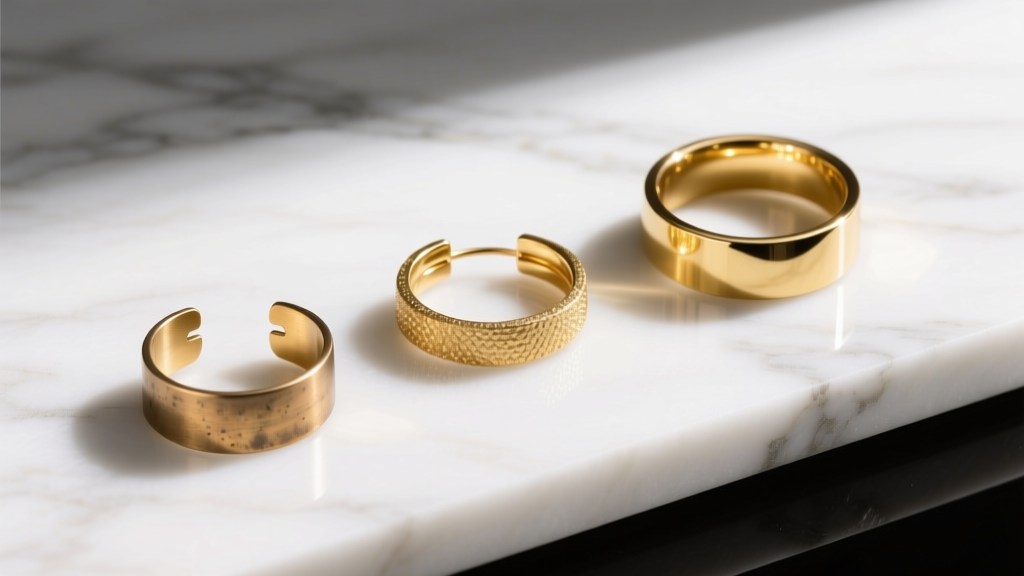
3. The Fine Jewelry Tier ($120 - $400+)
Materials: Solid 14k or 18k gold, platinum, lab-grown diamond accents.
Value Assessment: Excellent long-term investment. Solid gold alloys possess the ideal balance of malleability and memory. A well-engineered 14k gold ear cuff will retain its tension for years. Furthermore, if a solid gold cuff does eventually snap from metal fatigue, it can be easily laser-welded and polished by a bench jeweler for a fraction of the replacement cost—a service impossible to perform on gold-filled or plated metals.
The Buyer's Checklist: How to Spot Value In-Store
When evaluating earrings that wrap around ear structures in a physical boutique or assessing high-resolution images online, use this rapid checklist to determine if the piece is worth your money:
- Check the Wire Profile: Is the wire round, or is it flat and ribbon-like? Flat wire cuffs distribute pressure more evenly across the cartilage, reducing the 'pinch' factor and increasing comfort for all-day wear.
- Inspect the Edges: Run your thumb over the ends of the cuff. Cheaply manufactured cuffs have sharp, machine-cut edges that will scratch the delicate skin behind the ear. High-value cuffs feature hand-filed, rounded terminals.
- Look for Hinge Mechanisms: Some premium wrap earrings feature a microscopic spring-loaded hinge or a sliding tension band rather than relying entirely on the bending of the metal. These mechanical solutions completely eliminate work-hardening fatigue.
- Verify the Stamp: Ensure the piece is stamped with '14/20 GF' (for gold-filled), '925' (for sterling silver), or '14k'/'585' (for solid gold). Unstamped pieces in the mid-tier price range are an immediate red flag.
Verdict: Are Wrap Earrings Worth the Investment?
Earrings that wrap around ear cartilage offer an unparalleled way to curate a complex, layered ear aesthetic without the commitment or healing time of additional piercings. However, their reliance on mechanical tension means that material science dictates their true value. While the $20 brass cuffs dominating social media feeds might seem appealing, their inevitable failure modes make them a poor financial choice. By shifting your budget slightly into the $50 to $90 range for high-quality gold-filled or recycled sterling silver options, or investing in solid 14k gold for lifelong wearability, you secure a piece of jewelry that remains as functional as it is beautiful. Ultimately, true value in wrap earrings is found not in the lowest price tag, but in the enduring grip of a masterfully engineered alloy.


