The Princess of Wales Diamond Earrings: Expert Gemology Guide
An expert gemological breakdown of the Princess of Wales diamond earrings, detailing carat weights, cut grades, and bespoke replication techniques.

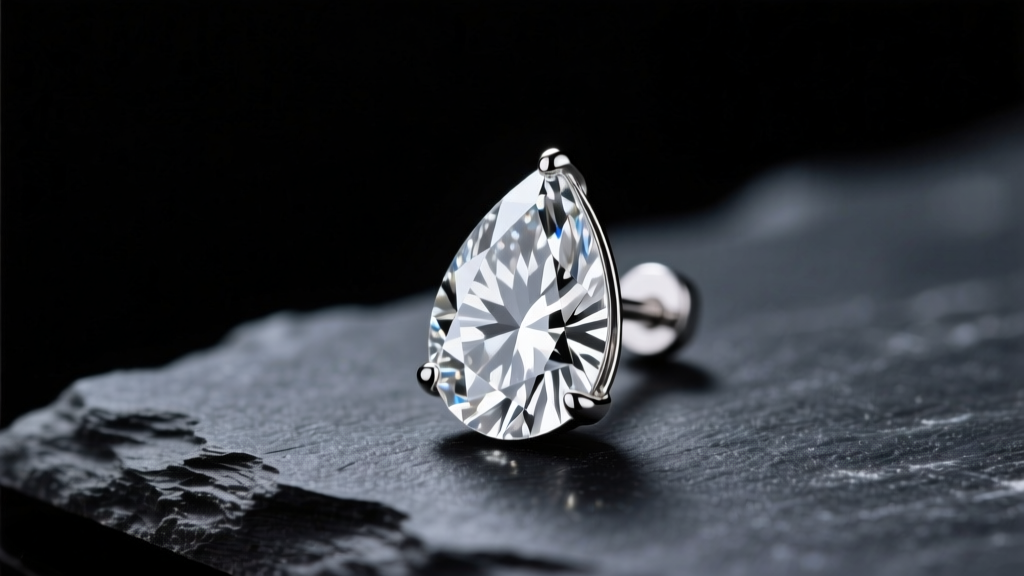
The Anatomy of Royal Diamond Drops
When jewelry historians and enthusiasts search for the iconic Princess of Wales diamond earrings, they are typically referencing the breathtaking pear-shaped diamond drop silhouettes frequently worn by Catherine, Princess of Wales, to state banquets and white-tie diplomatic events. Whether borrowed from the historic royal vault or sourced from private royal warrant jewelers, these pieces represent the absolute pinnacle of lapidary art and structural engineering. As an expert gemologist, I look past the glamour to analyze the precise technical specifications that give these earrings their signature regal fire and flawless drape.
Replicating or sourcing earrings of this caliber requires a deep understanding of diamond optics, precious metal metallurgy, and the biomechanics of the human earlobe. In this 2026 deep dive, we deconstruct the exact blueprint of royal-tier diamond drops, providing you with the actionable data needed to commission bespoke replicas or evaluate high-end estate pieces.
Gemological Specifications: The Pear Brilliant Cut
The foundation of the Princess of Wales diamond earrings is the Pear Brilliant Cut (often referred to as a teardrop). This modified brilliant cut combines the rounded belly of an oval with the tapered point of a marquise. However, achieving the "royal" silhouette is notoriously difficult due to the bow-tie effect—a dark shadow that stretches across the width of the stone when light is obstructed by poorly angled pavilion facets.
According to the Gemological Institute of America (GIA), mitigating the bow-tie effect in pear shapes requires strict adherence to specific proportion ranges. Royal jewelers will only select stones that meet the following criteria:
- Length-to-Width Ratio: 1.45 to 1.55. This creates the elegant, elongated teardrop seen on the Princess of Wales, avoiding the "stubby" look of a 1.30 ratio or the fragile, needle-like appearance of a 1.70 ratio.
- Depth Percentage: 58% to 62%. A depth exceeding 65% traps light, causing the stone to look glassy and dark in dim banquet lighting.
- Table Percentage: 58% to 62%. This ensures optimal light return through the crown facets.
- Shoulder Symmetry: The curved sides must be perfectly symmetrical, forming a seamless arc without flat spots or bulging.
| Specification | Standard Commercial Grade | Royal-Tier / Bespoke Standard |
|---|---|---|
| Color Grade | G - H (Near Colorless) | D - F (Strictly Colorless) |
| Clarity Grade | VS2 - SI1 | VVS1 - IF (Internally Flawless) |
| Fluorescence | Medium to Strong Blue | None to Faint (Prevents milky appearance) |
| Setting Prongs | Standard Round Prongs | V-Prong at Tip, Claw Prongs at Belly |
Metallurgy and Setting Mechanics
The structural integrity of heavy diamond drops relies entirely on the metal alloy and the setting architecture. While many commercial jewelers use 18k white gold, the Princess of Wales diamond earrings and similar royal vault pieces are almost exclusively crafted in 950 Platinum.
White gold requires rhodium plating to achieve its bright white finish. Over time, the friction of hair and clothing wears this plating away, revealing the slightly yellowish underlying alloy. Platinum 950, typically alloyed with Ruthenium for added hardness and scratch resistance, is naturally white and possesses a higher density. This density is crucial for counterbalancing the weight of a 3-to-5-carat pear diamond, ensuring the earring hangs perfectly plumb rather than tilting forward.
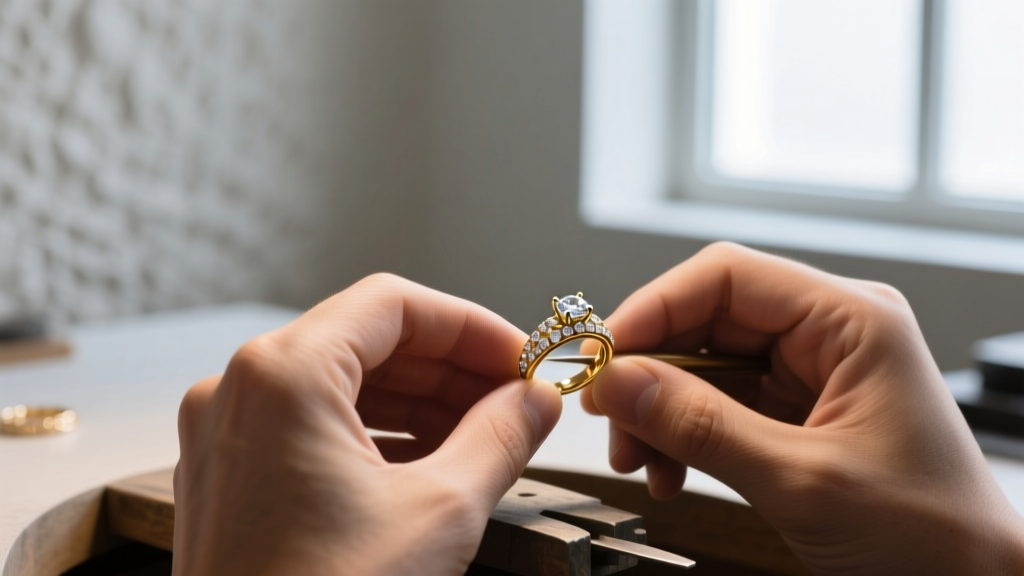
The V-Prong Imperative
The most vulnerable point of any pear-shaped diamond is the tapered tip. Diamonds possess a crystalline structure with distinct cleavage planes; a sharp impact to the tip of a pear cut can easily cause a catastrophic fracture. Master jewelers mitigate this risk by employing a V-prong at the apex of the stone. This custom-shaped prong wraps entirely around the vulnerable point, acting as a metallic bumper. The remaining two prongs securing the rounded belly are typically filed into delicate "claw" shapes to minimize metal visibility and maximize light entry, a technique heavily favored by the Natural Diamond Council for high-carat heritage pieces.
Biomechanics: Engineering the Fitting
A pair of 4-carat total weight (CTW) diamond drop earrings can easily weigh between 5 and 8 grams. While the human earlobe can support this static weight, the dynamic shear force generated by walking, turning the head, or greeting dignitaries creates immense stress on the piercing fistula. Standard friction backs (butterfly clasps) are entirely inadequate for royal-tier drops; they will sag, causing the diamond to point toward the floor, or worse, slip off entirely.
To solve this, bespoke royal earrings utilize specialized backing mechanisms:
- The Omega Clip with Paddle Back: This features a hinged, wide-paddle lever that snaps securely against the post. The wide surface area distributes the earring's weight across the back of the earlobe, preventing the "sagging" effect and reducing piercing fatigue.
- The Screw-Back with Silicone O-Ring: For pieces worn on the earlobe (rather than clip-ons for unpierced ears), a threaded platinum post is used. A custom-fitted silicone o-ring is placed between the metal nut and the earlobe to provide high-friction grip and cushioning.
- Articulated Hinges: The connection between the top stud and the pear drop is rarely a rigid jump ring. Instead, a micro-articulated hinge or a single platinum link chain is used, allowing the drop to swing independently of the stud, which reduces torque on the main piercing.
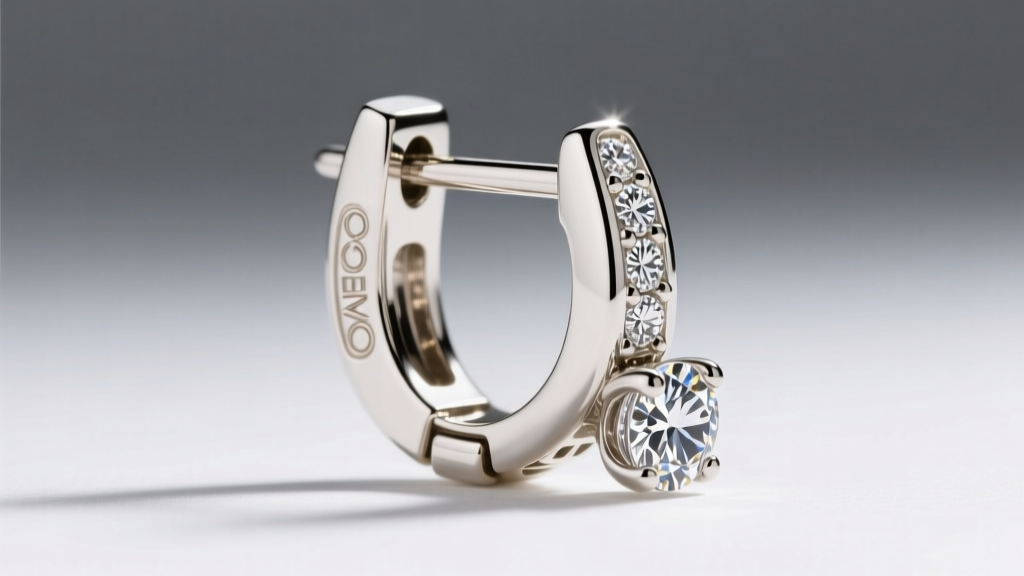
Sourcing and Bespoke Replication in 2026
For collectors and brides looking to commission a piece inspired by the Princess of Wales diamond earrings, the 2026 jewelry market offers unprecedented flexibility, particularly with the maturation of the lab-grown diamond sector. However, achieving the "royal" look requires strict adherence to the gemological parameters outlined above.
"When replicating historical royal silhouettes, the length-to-width ratio of the pear briolette is the most critical factor. A ratio below 1.40 looks stubby and modern, while a ratio above 1.60 risks structural fragility. The magic number for that specific regal drape is exactly 1.50."
Pricing and Market Tiers
Commissioning a bespoke pair of 3.00 CTW (1.50ct per ear) pear-shaped diamond drops in 950 Platinum with V-prongs and Omega backs currently falls into the following market tiers:
- Ultra-Premium Natural (D/IF, GIA Excellent): $45,000 - $65,000+. Sourcing two perfectly matched, internally flawless pear shapes with zero bow-tie effect requires extensive global network access.
- Premium Natural (F/VS1, GIA Excellent): $22,000 - $32,000. The sweet spot for high-net-worth bespoke commissions, offering identical visual performance to D/IF stones to the naked eye.
- Bespoke Lab-Grown (D/VVS1, IGI/GIA Certified): $3,500 - $6,000. In 2026, lab-grown pears with ideal proportions are abundant. The primary cost driver here is the custom platinum casting and the master-setter's labor for the V-prong and Omega hinge fabrication.
Care and Maintenance of High-Value Drops
Owning earrings of this magnitude requires a rigorous maintenance protocol. The intricate hinges and micro-pavé accents (if present on the stud portion) are magnets for skin oils and cosmetic residues, which rapidly dull diamond brilliance.
Expert Warning: Never place articulated diamond drop earrings in an ultrasonic cleaner. The high-frequency vibrations can loosen the delicate tension settings and, more dangerously, cause the pear diamond to strike against the metal basket or the other earring, leading to edge chipping. Instead, utilize a low-pressure steam cleaner or a soft goat-hair brush with a mild, ammonia-free degreasing solution. Have the V-prong and Omega clip hinge inspected by a certified bench jeweler every six months to check for metal fatigue and hinge-pin wear.
By understanding the precise intersection of gemology, metallurgy, and biomechanics, you can look beyond the royal pedigree and appreciate the true engineering marvel that defines the Princess of Wales diamond earrings.


