Beyond Lyrics: Radar Love, Golden Earring Value & Gold Hoops
Assess the true value of vintage and modern gold hoop earrings. We break down 14k vs 18k pricing, gauge sizes, and craftsmanship premiums.

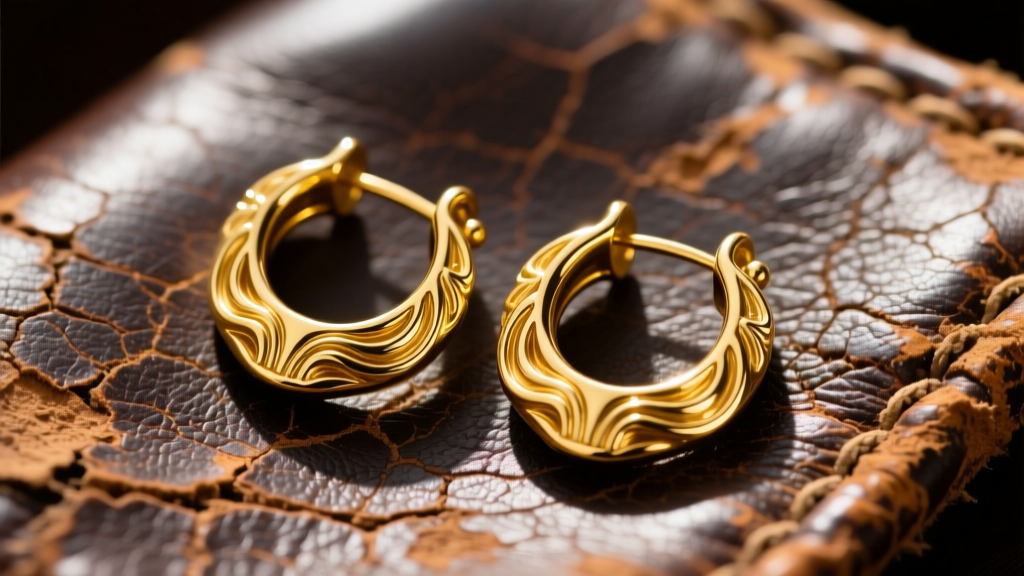
The 1973 classic rock anthem "Radar Love" by the Dutch band Golden Earring didn't just define a generation of road-trip rock and roll; it inadvertently cemented a rugged, unapologetic jewelry aesthetic. When collectors and fans search for lyrics radar love golden earring memorabilia, they are often chasing the gritty, vintage biker vibe that defined the 1970s. In the world of fine jewelry, this translates directly to heavy, distressed, and substantial gold hoop earrings. But as gold prices fluctuate and vintage markets become increasingly saturated with modern reproductions, how do you accurately assess the budget and true value of these statement pieces?
This guide provides a rigorous, data-driven value assessment of vintage-inspired and authentic 1970s gold hoops. We will break down gold purity metrics, gauge thicknesses, clasp mechanics, and the exact mathematical formula you need to calculate the craftsmanship premium before you buy.
The Rock & Roll Aesthetic: Sourcing the Perfect Gold Hoop
The "Radar Love" aesthetic demands weight, presence, and a slightly weathered finish. Thin, delicate wire hoops do not fit this profile. You are looking for solid gold tubes, hammered finishes, or saddleback hoops that sit flush against the earlobe. From a budget perspective, sourcing these requires navigating two distinct markets: authentic 1970s vintage pieces and modern heritage reproductions.
Authentic vintage hoops from the 1970s often feature a warmer, deeper yellow hue due to the specific alloy mixes used by Italian and American goldsmiths of the era. Modern reproductions, while structurally sound, often rely on CNC machining, resulting in a perfectly uniform, high-polish finish that lacks the soul of a hand-hammered vintage piece. When budgeting, expect to pay a 20% to 35% collector's premium for verified 1970s vintage hoops in excellent condition, compared to their modern mass-produced counterparts.
Material Value Breakdown: 10k vs. 14k vs. 18k Gold
The foundation of any gold earring's value is its melt weight, dictated by its karat purity. According to the Gemological Institute of America (GIA), gold purity fundamentally alters both the durability and the intrinsic financial value of the piece. For heavy hoops meant to be worn daily in a rugged aesthetic, 14k is generally the sweet spot, offering superior tensile strength compared to 18k, while retaining a rich color that 10k lacks.
| Karat | Gold Purity | Approx. Melt Value / Gram (2026) | Durability & Best Use |
|---|---|---|---|
| 10k | 41.7% | $26.00 - $28.00 | Highest durability; prone to dullness; budget-friendly heavy hoops. |
| 14k | 58.3% | $36.00 - $39.00 | Optimal balance of rich color and structural integrity for thick gauges. |
| 18k | 75.0% | $46.00 - $50.00 | Softer metal; deep yellow hue; best for huggies or lower-gauge wire hoops. |
Note: Melt values are estimates based on early 2026 spot gold prices hovering around $62-$65 per gram. Always check Kitco for real-time spot pricing before making high-value purchases.
Gauge, Weight, and Clasp Mechanics
A common mistake buyers make when budgeting for statement hoops is ignoring the wire gauge and clasp mechanism. The gauge (thickness) of the wire directly impacts both the comfort of the piercing and the structural longevity of the earring.
Understanding Gauge Thickness
- 12 Gauge (2.05mm): The standard for heavy, vintage biker hoops. Requires a stretched lobe or a naturally accommodating piercing. Offers maximum structural integrity but limits the wearer to saddleback or specialized thick-post clasps.
- 14 Gauge (1.63mm): A versatile middle-ground. Fits most standard lobe piercings without stretching, providing a substantial visual weight without excessive drag on the earlobe.
- 16 Gauge (1.29mm): Standard for modern cartilage piercings and lighter huggie hoops. Too thin for the heavy "Radar Love" aesthetic, as thin wire hoops are prone to bending and warping under their own weight.
The Clasp: Where Value is Won or Lost
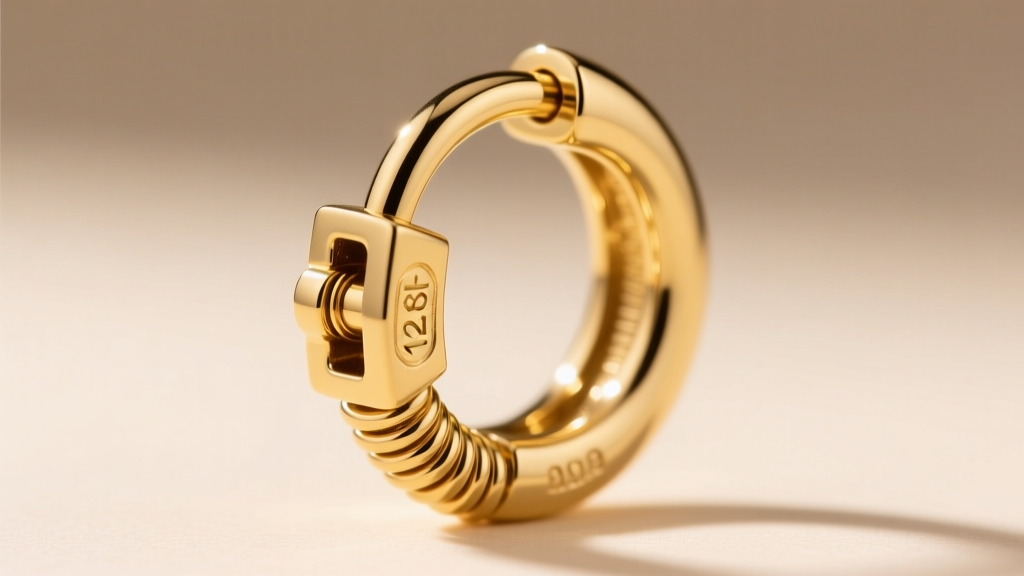
For heavy gold hoops, the clasp is the most frequent point of mechanical failure. French wire (fishhook) clasps are entirely unsuitable for heavy hoops, as the weight of the gold will pull the earring forward, causing the wire to slip out. When assessing value, prioritize saddleback clasps or locking clickers. A well-machined saddleback clasp on a 14k hoop should snap shut with an audible, crisp click. If the hinge feels loose or the latch requires excessive force to close, the craftsmanship premium is unjustified, and the piece is a poor long-term investment.
Calculating the Craftsmanship Premium
To truly assess the budget and value of a golden earring, you must separate the intrinsic metal value from the retail markup. Jewelers apply a "craftsmanship premium" to cover labor, design, and overhead. Here is the exact formula to determine if you are getting a fair deal:
Craftsmanship Premium = Retail Price - (Gram Weight × Spot Price × Purity %)
Real-World Example:
You are evaluating a pair of 14k gold vintage hoops weighing 8 grams total (4g each). The current spot price of gold is $64/gram.
- Intrinsic Melt Value: 8g × $64 × 0.583 = $298.49
- Retail Asking Price: $550.00
- Craftsmanship Premium: $550 - $298.49 = $251.51
In this scenario, the markup is roughly 84% over the melt value. For plain, machine-made modern hoops, an 84% markup is slightly high (aim for 40-60%). However, for authentic 1970s vintage hoops with hand-hammered textures and original saddleback hardware, an 80-100% premium is entirely justified and represents strong market value.
Vintage vs. Modern Reproductions: A Buyer's Framework
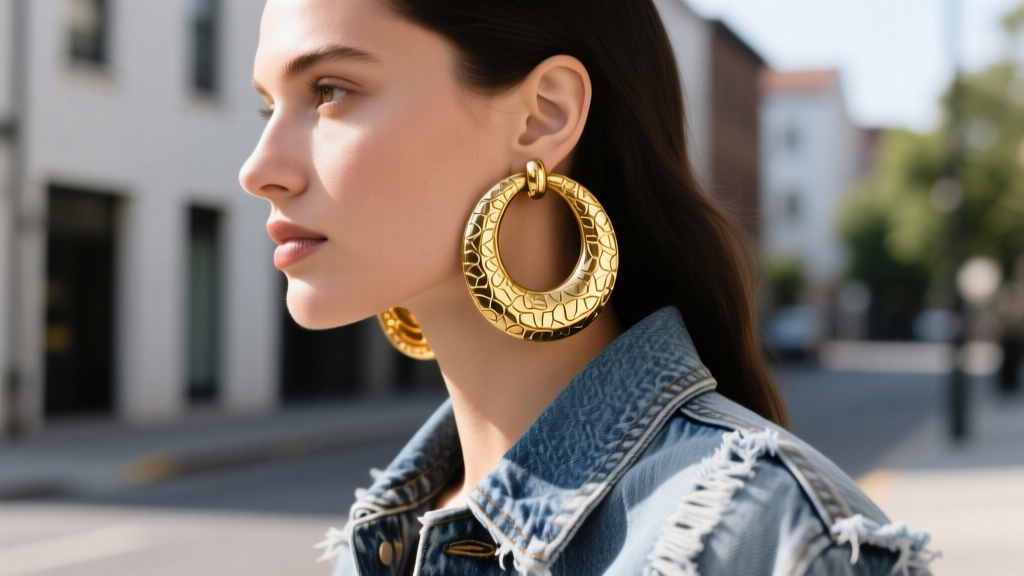
When hunting for that perfect road-tested aesthetic, you will encounter modern brands artificially aging their gold. Here is how to differentiate true vintage value from modern faux-distressing:
- Hallmarks and Stamps: 1970s European pieces will often be stamped "750" (18k) or "585" (14k) alongside a maker's mark or assay office symbol. Modern reproductions usually just say "14K" or "ITALY" in laser-etched, perfectly uniform fonts.
- Wear Patterns: Authentic vintage hoops will show microscopic wear on the post and the inside of the clasp hinge. The high points of a hammered texture will be slightly smoothed from decades of friction against hair and skin. Artificial aging often looks uniform or relies on chemical patinas that pool unnaturally in the crevices.
- Solder Joints: Examine where the clasp meets the hoop. Vintage pieces often feature slightly visible, hand-filed solder joints. Modern CNC-machined pieces are often milled from a single continuous tube or feature laser-welded joints that are completely invisible to the naked eye.
Final Verdict: Maximizing Your Budget
Capturing the iconic, rebellious spirit of the 1970s rock era through your jewelry choices requires a discerning eye for both aesthetics and metallurgy. To maximize your budget, target 14k gold hoops in the 12 to 14-gauge range, weighing between 5 and 10 grams per pair. Prioritize saddleback clasps for mechanical longevity, and use the craftsmanship premium formula to ensure you aren't overpaying for basic manufacturing. Whether you are investing in authentic vintage pieces or high-quality modern heritage reproductions, understanding the raw data behind the gold ensures your style remains timeless, durable, and financially sound.


