Orange Sapphire Earrings: The Complete Buying Guide
Discover how to choose the perfect orange sapphire earrings. Learn about color grading, padparadscha varieties, treatments, and pricing in our expert guide.

The Allure of Orange Corundum
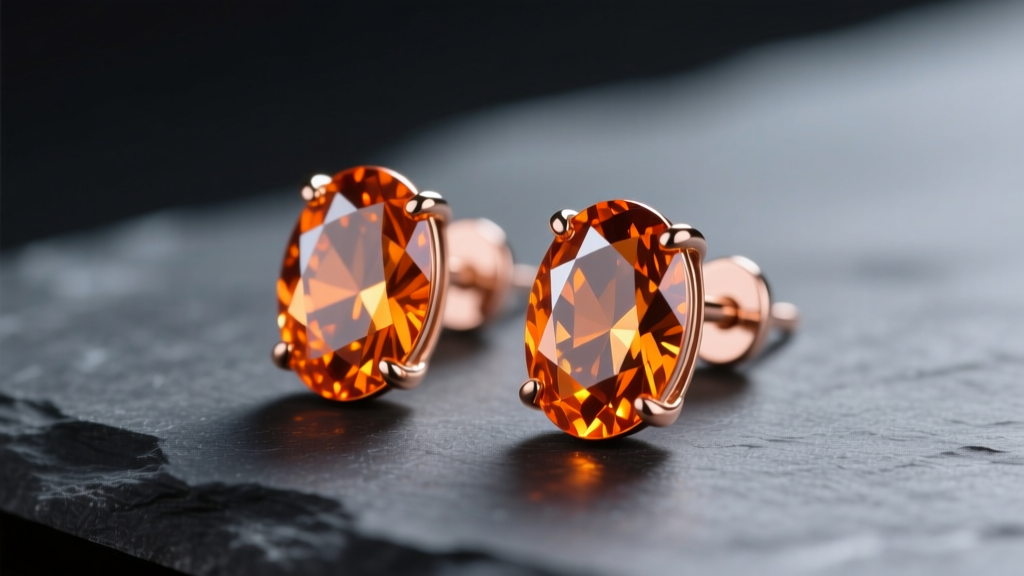
When most collectors think of sapphire, they immediately picture deep blue Kashmir stones or vivid Ceylon blues. However, the corundum family boasts a spectacular array of fancy colors, and orange sapphire earrings represent some of the most vibrant, sunset-inspired jewelry available on the 2026 market. Unlike blue sapphires, which derive their color from iron and titanium, orange sapphires owe their warm hues to a delicate, precise balance of iron (Fe) and chromium (Cr). Finding a natural, untreated orange sapphire with high saturation is exceptionally rare, making these earrings a prized possession for serious gemstone enthusiasts.
Whether you are hunting for a pair of everyday huggies, statement drop earrings, or classic studs, navigating the orange sapphire market requires a deep understanding of gemology. This guide will break down color grading, the dangers of lattice diffusion, ideal metal pairings, and exact pricing matrices so you can buy with absolute confidence.
Decoding Color: Padparadscha vs. Standard Orange
The value of orange sapphire earrings is dictated almost entirely by color saturation, tone, and hue. The gemological community generally divides orange sapphires into three distinct categories:
- Pure Orange: A vibrant, unmodified orange hue. These are incredibly rare in nature, as most stones lean slightly toward yellow or pink. High-saturation pure orange sapphires command premium prices.
- Yellow-Orange: Often described as 'golden orange' or 'sunset' sapphires. The presence of higher iron content pushes the hue toward yellow. These are more common and generally more affordable, offering a bright, cheerful aesthetic.
- Padparadscha: The undisputed king of fancy sapphires. According to the Gemological Institute of America (GIA), a true padparadscha must exhibit a light to medium tone pinkish-orange to orange-pink hue, reminiscent of a lotus blossom. These stones fetch astronomical prices per carat.
The Beryllium Diffusion Trap
If you are shopping for orange sapphire earrings, you must understand beryllium diffusion (also known as lattice diffusion). In the early 2000s, gemologists discovered that introducing beryllium atoms into the crystal lattice during high-temperature heating could turn pale, nearly worthless yellow or pink sapphires into vivid, highly saturated orange stones.
"While beryllium-diffused sapphires are still 'real' corundum, their value is a fraction of naturally colored stones. Always demand a lab report that explicitly states 'no evidence of beryllium diffusion' if you are paying natural market prices."
Diffused stones are not inherently bad for fashion jewelry, but they should be priced accordingly—often 80% to 95% less than their untreated counterparts. Unscrupulous sellers frequently market Be-diffused stones as 'natural heated,' which is a massive red flag.
Cut, Clarity, and Carat Weight
Sapphires are classified as Type II gemstones, meaning they typically form with some visible inclusions. When evaluating orange sapphire earrings, do not expect the flawless clarity of a high-grade diamond. Instead, look for 'eye-clean' stones where inclusions are not visible to the naked eye from a distance of 12 inches.
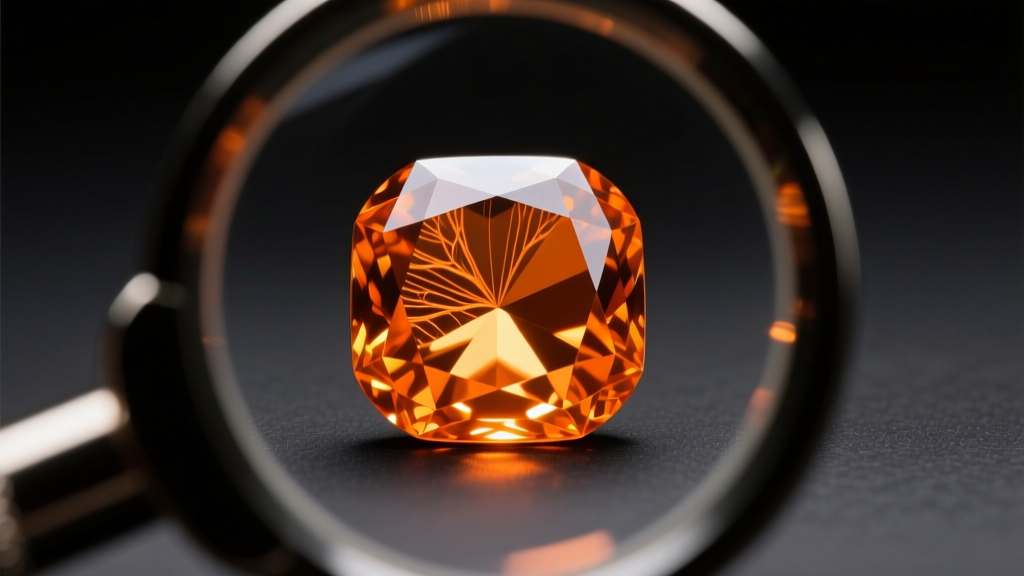
One common and highly desirable inclusion in orange sapphires is rutile silk. Microscopic rutile needles can actually enhance the stone's appearance by scattering light, giving the gem a velvety, glowing texture. However, if the silk is too dense, it will make the stone look cloudy and lifeless.
Optimal Cuts for Orange Sapphires
To maximize color saturation and retain carat weight, lapidaries typically cut orange sapphires into oval or cushion shapes. These cuts deepen the pavilion, allowing light to bounce through the stone and enrich the orange hue. Round brilliant cuts are rare in orange sapphires because they require cutting away too much of the rough crystal, resulting in significant carat weight loss and a lighter, less saturated color.
Metal Pairings and Earring Styles
The metal you choose for your orange sapphire earrings will dramatically alter their visual impact. Furthermore, the style of the earring must be matched to both your face shape and the structural weight of the gemstones.
Best Metal Choices
- 18k Rose Gold: The copper alloys in rose gold harmonize beautifully with the warm, peachy, and pinkish tones of padparadscha and light orange sapphires, creating a cohesive, romantic look.
- 18k Yellow Gold: Enhances the golden and yellow-orange undertones of the stone, giving the earrings a rich, vintage aesthetic.
- Platinum or White Gold: Provides a stark, high-contrast backdrop that makes the orange hue 'pop.' This is the preferred choice for deep, pure orange sapphires.
Matching Styles to Face Shapes
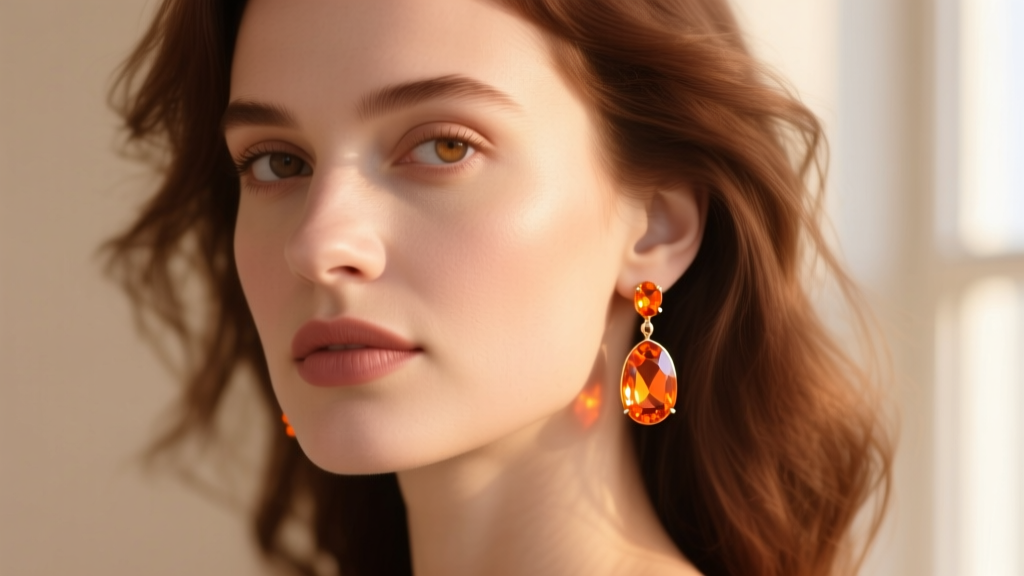
- Round Faces: Opt for angular dangle earrings or drop earrings featuring emerald-cut or pear-shaped orange sapphires. The vertical lines and sharp angles will elongate the face and balance soft curves.
- Square Faces: Choose oval or round orange sapphire studs, or curved huggie hoops. The rounded geometry of the jewelry will soften a strong, angular jawline.
- Heart-Shaped Faces: Teardrop or chandelier earrings with orange sapphire briolettes draw the eye downward, balancing a wider forehead and narrower chin.
Pricing Matrix: What You Should Pay
Pricing for orange sapphire earrings varies wildly based on treatment, origin, and color saturation. The table below outlines the approximate 2026 market value per carat for the center stones. Note that custom jewelry settings and melee diamond halos will add $500 to $2,500+ to the final retail price.
| Sapphire Category | Treatment Status | Estimated Price Per Carat |
|---|---|---|
| Pure Orange (High Saturation) | Unheated / Untreated | $4,500 - $9,000+ |
| Pure Orange | Standard Heat Only | $1,200 - $3,500 |
| Yellow-Orange / Golden | Standard Heat Only | $600 - $1,500 |
| Padparadscha (True Pink-Orange) | Unheated / Untreated | $12,000 - $35,000+ |
| Orange (Any Saturation) | Beryllium Diffused | $50 - $250 |
Note: Earrings require two matched stones. Finding two perfectly matched, untreated pure orange sapphires over 1.50 carats each is exceptionally difficult and will carry a matched-pair premium of 20% to 30%.
Certification and Lab Reports
Never purchase high-value orange sapphire earrings without a reputable, independent laboratory report. The Swiss Gemmological Institute (SSEF), the GIA, and the American Gemological Laboratories (AGL) are the gold standards for colored gemstone certification. These labs possess the advanced spectroscopy equipment required to detect trace amounts of beryllium and distinguish between standard thermal enhancement and lattice diffusion.
When reviewing the report, pay close attention to the 'Comments' section. You want to see phrases like 'No indications of heating' or 'Indications of heating' (which is acceptable for standard heat). If you see 'Indications of heating with presence of beryllium' or 'Lattice diffusion,' the stone is diffused and should be priced at the bottom tier of the market.
Durability, Gauge Sizes, and Care
Corundum ranks a 9 on the Mohs hardness scale, making orange sapphires exceptionally durable and perfect for everyday wear in earring formats. They are highly resistant to scratching and abrasion. However, structural integrity is just as important as gemological hardness.
For heavy orange sapphire drop earrings (stones exceeding 3.00 carats total weight), ensure the jeweler uses 18-gauge or 16-gauge posts or heavy-duty French wires. Standard 20-gauge posts will bend under the weight of the stone, causing the earring to droop and potentially stretching your earlobe piercing over time.
Cleaning Protocol: While untreated and standard-heated orange sapphires can safely be cleaned in an ultrasonic jewelry cleaner, you must avoid ultrasonics if the stone has significant surface-reaching fractures or if it has been fracture-filled with lead glass or resin. For routine maintenance, a simple soak in warm water with a few drops of mild dish soap and a gentle scrub with a soft-bristled baby toothbrush will keep your orange sapphire earrings sparkling brilliantly for a lifetime.


