Prevent Earring Tear: The Ultimate Lobe Buying Guide
Discover how to prevent earring tear with our expert buying guide. Learn about weight limits, gauge sizes, and the best earring backs for lobe health.

The Biomechanics of an Earring Tear: Why Lobes Split
An acquired cleft earlobe, commonly referred to in the jewelry and dermatology communities as an earring tear, is a frustrating and painful condition that occurs when the earlobe tissue splits downward from the piercing hole. According to the American Academy of Dermatology, this happens due to chronic tension, acute trauma, or the infamous 'cheese wire effect.' As of 2026, while jewelry manufacturing has advanced with lightweight alloys and ergonomic supports, the fundamental physics of gravity remain unchanged. When you wear heavy earrings, the localized pressure on the superior aspect of the piercing hole compromises the skin's elastin and collagen network, eventually leading to a catastrophic structural failure of the lobe.
Preventing an earring tear is not just about avoiding heavy pieces; it is about understanding weight distribution, wire geometry, and material density. Surgical repair for a split lobe typically costs between $500 and $1,500 per ear and requires months of healing before re-piercing. This buying guide will equip you with the exact specifications, gauge sizes, and structural red flags you need to evaluate before purchasing your next pair of earrings.
Critical Buying Factors to Prevent Earring Tears
When shopping for earrings, especially statement pieces or everyday hoops, you must look beyond the aesthetic design and evaluate the structural engineering of the jewelry. The Association of Professional Piercers emphasizes that jewelry anatomy plays a primary role in long-term tissue health. Here is what you must scrutinize.
1. Wire Gauge and Cross-Sectional Shape
The standard lobe piercing is done at 20-gauge (0.81mm) or 18-gauge (1.02mm). However, a thin, round 20-gauge wire bearing a 10-gram earring exerts immense localized shear stress on the top of the piercing hole. To prevent an earring tear, look for the following wire specifications:
- Thicker Gauges for Heavy Pieces: If an earring weighs more than 7 grams, the wire should be at least 16-gauge (1.29mm) to increase the surface area distributing the weight.
- Flat vs. Round Wires: Always opt for flat-backed hooks or leverbacks for heavy drops. A flat wire rests flush against the back of the earlobe, dispersing downward force across a wider horizontal plane rather than digging into the tissue like a round wire.
- Curved French Wires: Ensure the curve of a French hook is wide enough to rest on the lower back of the lobe, rather than pulling the entire weight onto the top edge of the fistula.
2. Earring Backings and Surface Area Distribution
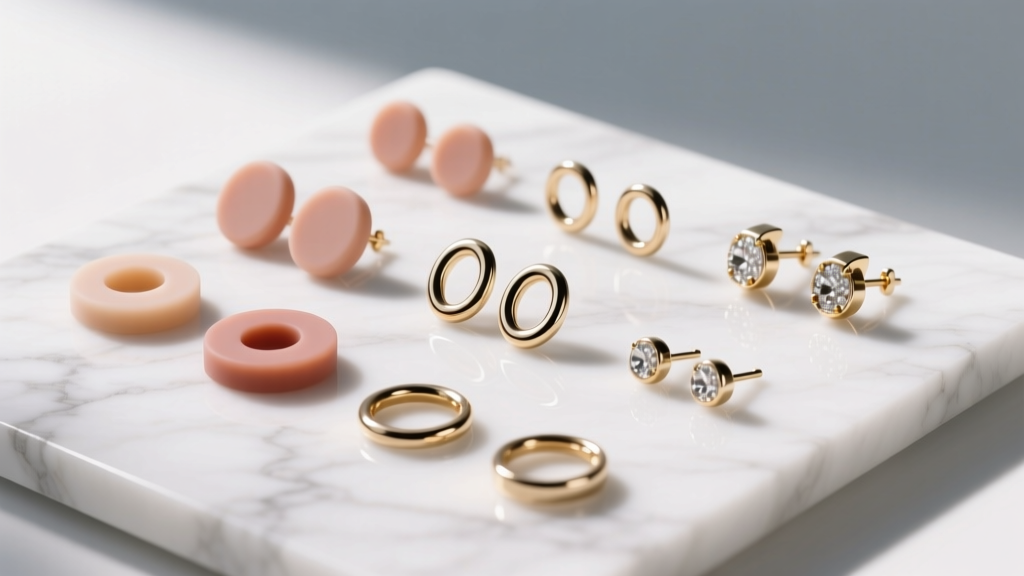
The backing of an earring is your primary defense against the cheese wire effect. Standard butterfly push-backs concentrate the counter-pressure onto a tiny 1mm point, which can cause the earring to tilt forward, dragging the wire against the top of the piercing hole. When buying earrings, prioritize these supportive backings:
- Omega Backs: These feature a hinged, curved paddle that snaps shut against the back of the earlobe. They provide excellent structural support and prevent the earring from drooping, keeping the weight centered.
- Concave Silicone Discs: Brands utilizing medical-grade silicone support patches (often 10mm to 14mm in diameter) distribute the earring's weight across a broad surface area. In 2026, many high-end jewelers include these ergonomic silicone discs in the box with heavier statement pieces.
- Locking Leverbacks: For dangles and hoops, a secure leverback that clicks into place prevents the earring from shifting and catching on clothing, which is the leading cause of acute, traumatic earring tears.
Material Density: Solid vs. Hollow Construction
Not all metals are created equal when it comes to weight. Material density directly impacts how heavy an earring feels and how much stress it places on your lobe. For example, 18-karat yellow gold has a density of approximately 15.6 g/cm³, making solid gold hoops incredibly heavy. Conversely, Grade 23 Titanium (Ti-6Al-4V ELI) has a density of just 4.43 g/cm³, offering exceptional tensile strength at a fraction of the weight.
When buying large hoops or sculptural drops, look for electroformed hollow gold or resin-core constructions. Electroforming allows jewelers to create massive, voluminous gold earrings that are up to 70% lighter than their solid cast counterparts. By choosing hollow or low-density materials, you can achieve the bold, oversized aesthetic of 2026 fashion trends without subjecting your lobes to the severe tension that causes an earring tear.
Weight Limits and Tear Risk Matrix
Understanding the safe weight thresholds for your earlobes is crucial. While individual tissue elasticity varies based on age, genetics, and piercing history, the following matrix serves as a clinical baseline for purchasing decisions.
| Earring Weight | Tear Risk Level | Recommended Backing | Ideal Wire Gauge & Shape |
|---|---|---|---|
| 1 - 4 grams | Minimal | Standard Push-Back or Friction Post | 20g - 18g (Round Wire) |
| 5 - 9 grams | Moderate | Silicone Disc or Small Omega Clip | 18g - 16g (Flat or Round) |
| 10 - 15 grams | High | Concave Silicone Patch (12mm+) | 16g (Flat Wire / Leverback) |
| 16+ grams | Severe | Avoid / Specialty Ear Harness | 14g+ (Requires Harness Support) |
Note: If you have previously experienced an earring tear or have naturally thin earlobes, reduce these weight thresholds by at least 30%.
Red Flags: Earrings to Avoid
To protect your lobe integrity, immediately disqualify any earring that exhibits the following design flaws:
- Wire-Wrapped Heavy Stones: Earrings where a heavy gemstone is suspended by a thin, 22-gauge or 24-gauge wrapping wire. The wire will slice through the lobe over time.
- Front-Heavy Asymmetry: Studs or drops where the decorative element extends more than an inch outward from the post without a counterbalance or a wide-backed clutch. This creates a lever effect that pulls the post upward, tearing the top of the hole.
- Unlatched Fishhooks: Wearing heavy dangles on standard fishhooks without a silicone stopper or O-ring. If the earring catches on a sweater or hairbrush, the lack of a locking mechanism will result in an immediate, traumatic earring tear.
Final Thoughts on Lobe Longevity
Preventing an earring tear requires a shift in how you evaluate jewelry. By prioritizing flat wire geometries, upgrading to supportive silicone or omega backings, and paying close attention to material density, you can safely enjoy heavy, statement-making earrings. Always listen to your body; if an earring causes a warm, throbbing sensation or visible blanching (whitening) of the skin at the top of the piercing hole, remove it immediately. Your earlobes are irreplaceable, and investing in structurally sound, ergonomically designed jewelry is the best way to ensure they remain healthy and intact for a lifetime of wear.


