How to Find a Truly Unique Earring: A Buyer's Guide
Discover how to source, evaluate, and wear a truly unique earring. Our buying guide covers avant-garde materials, gauge sizing, and pricing.

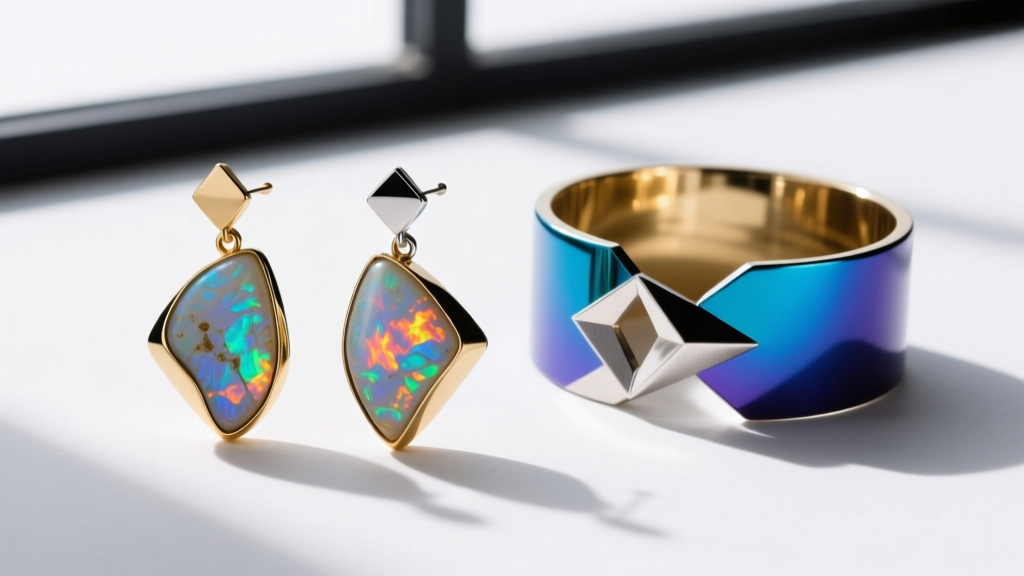
The search for a genuinely unique earring goes far beyond scrolling through mass-market algorithms or settling for minor variations of the same gold hoop. In 2026, individuality in fine jewelry is defined by modular components, asymmetrical styling, unconventional metallurgy, and a deliberate departure from traditional symmetry. However, buying avant-garde or independently designed jewelry requires a sharp eye for structural integrity, material safety, and biomechanical comfort. This comprehensive buying guide will teach you exactly what to look for when investing in a unique earring that is as durable as it is distinctive.
Decoding Materials for Avant-Garde Designs
When designers push the boundaries of what an earring can look like, they often abandon standard sterling silver and yellow gold in favor of reactive metals and high-tech polymers. Understanding these materials is critical to ensuring your piece won't degrade or cause contact dermatitis.
Niobium and Anodized Titanium
For highly colorful, lightweight, and hypoallergenic unique earrings, niobium and ASTM F136 implant-grade titanium are the gold standards. Unlike plated metals, which eventually wear off to reveal base metals that can trigger nickel allergies, niobium and titanium are anodized. This process uses electrical voltage to alter the oxide layer on the metal's surface, creating vibrant, permanent colors without using any dyes or plating. If you are buying a uniquely colored ear cuff or cartilage shield, verify that the artist uses pure niobium or titanium rather than anodized aluminum, which is too soft for long-term piercing wear.
PEEK Bioplastics and Carbon Fiber
Contemporary jewelers are increasingly integrating PEEK (Polyether ether ketone) into fine jewelry. PEEK is a medical-grade, ultra-lightweight polymer that can be CNC-milled into complex, architectural shapes that would be impossibly heavy if cast in solid gold. When combined with 18k gold accents or ethically sourced rough-cut gems, PEEK allows for massive, sculptural ear pieces that weigh mere grams.
Structural Integrity and Gauge Considerations
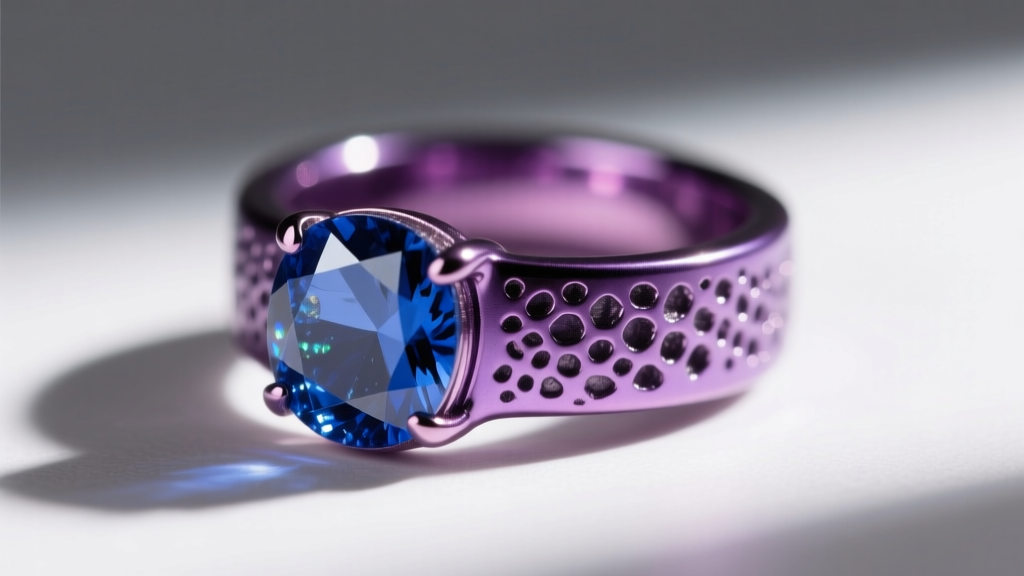
The most common failure point when purchasing a heavy, unique earring is ignoring the biomechanics of the earlobe. A stunning, multi-layered kinetic dangle might look incredible on a display bust, but if it hangs from a standard, thin ear wire, it will slowly slice through your piercing over time. Standard fashion earrings typically use 20-gauge (0.81mm) or even 22-gauge (0.64mm) wire. For bespoke or heavy independent pieces, you must look for thicker posts and specialized backing systems.
The Weight-to-Gauge Matrix
Use the following framework to evaluate whether a unique earring's hardware is appropriate for its physical weight:
| Earring Weight | Minimum Post Gauge | Required Backing / Support System | Best Piercing Placement |
|---|---|---|---|
| Under 8 grams | 20g (0.81mm) | Standard butterfly clutch or silicone O-ring | Standard Lobe |
| 8 to 15 grams | 18g (1.02mm) | Wide-base silicone O-ring or locking screw back | Lobe or Lower Cartilage |
| 15 to 25 grams | 16g (1.29mm) | Ear jacket, lobe support chain, or French wire with silicone sleeve | Thick Lobe (requires established piercing) |
| 25+ grams | 14g (1.63mm) or Chain | Over-ear cuff harness or multi-point cartilage distribution | Ear Harness / Conch to Lobe chain |
Pro Tip: If you find a unique earring you love but the post is too thin for its weight, a skilled bench jeweler can easily laser-weld a thicker, 18-gauge titanium post onto the back of the piece without damaging the original design.
Sourcing Channels: Where to Actually Find Them
Finding a truly unique earring requires looking where the algorithms aren't heavily curating for mass appeal. While platforms like Etsy are saturated, specific niches and archival platforms offer genuine rarity.
- 1stDibs and Archival Vintage: For one-of-a-kind historical pieces, search for 'Art Nouveau ear pendants' or '1970s brutalist gold earrings.' These platforms authenticate vintage pieces that feature hand-forged, asymmetrical designs no longer in production.
- Contemporary Jewelry Guilds: Organizations like the Jewelers of America often have directories of independent, award-winning bench jewelers who take custom commissions for avant-garde ear sculpts.
- Direct-to-Artisan Instagram: Search specific material-based hashtags like #anodizedniobium, #rawgemstonejewelry, or #kineticjewelry. Buying directly from the artist's studio ensures you are getting a genuinely unique earring rather than a dropshipped factory mold.
Quality Control: Inspecting Your Unique Earring
When you receive a bespoke or indie-designed piece, you must perform a rigorous physical inspection. Independent designers are artists first and engineers second; it is up to the buyer to verify the structural soundness of the piece before wearing it.
Solder Joints and Kinetic Stress
Examine the connection points where the earring post meets the main body, or where dangle links connect. If the piece is heavy, the joints should be laser-welded or use high-temperature silver/gold solder. If you see a dull, greyish blob at the joint, it may be cheap lead/tin solder, which suffers from 'shear failure' under the kinetic stress of walking and head movement. A unique earring with moving parts must have jump rings that are soldered completely shut, not just pushed together with pliers.
Prong Settings for Raw and Rough-Cut Stones
According to gemological standards outlined by the Gemological Institute of America (GIA), raw, uncut, and rough stones are highly prized for their unique, organic topography. However, because they lack the standardized symmetry of a brilliant-cut diamond, they are notoriously difficult to secure.
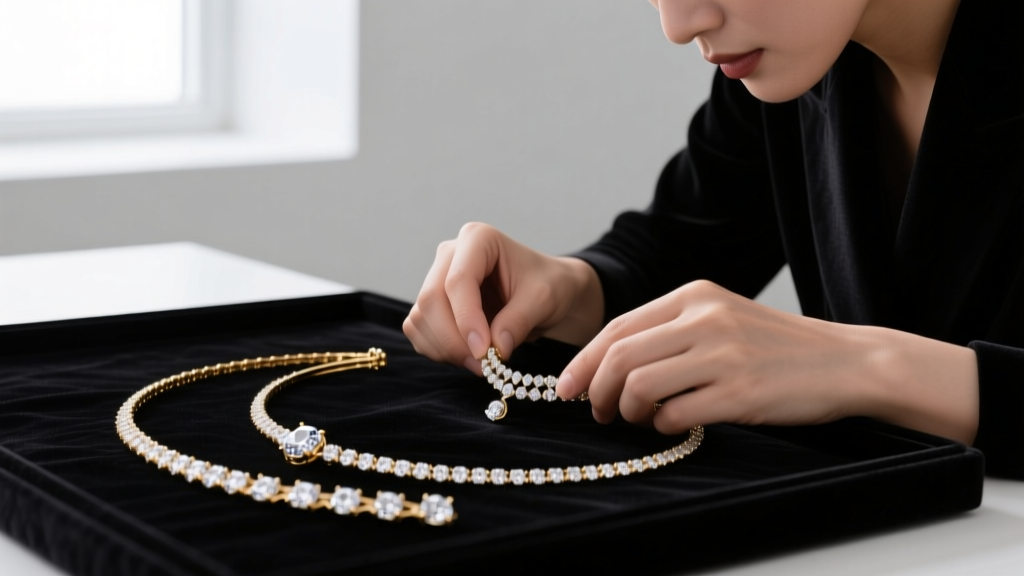
When inspecting a unique earring featuring a rough sapphire, uncut diamond, or raw tourmaline, perform the 'snag test.' Run a piece of silk or thin cotton over the prongs. If the fabric catches, the prongs are not properly filed and polished, meaning they will inevitably catch on your hair or sweaters and pull the stone loose. Furthermore, the prongs must be custom-shaped to the exact valleys and ridges of that specific stone. If the prongs look uniform and identical to one another, the stone is likely just glued into a generic casting, which will fail within months.
Final Buying Checklist
Before finalizing your purchase of a unique earring, ensure you can answer 'yes' to the following:
- Is the post gauge appropriate for the total weight of the piece?
- Are the metals clearly identified (e.g., ASTM F136 Titanium, 18k Gold, Pure Niobium) rather than vaguely listed as 'hypoallergenic alloy'?
- Are all jump rings and kinetic links fully soldered shut?
- If using raw stones, are the prongs custom-fitted to the stone's specific asymmetrical ridges?
By prioritizing structural engineering alongside aesthetic brilliance, you ensure that your unique earring remains a wearable masterpiece rather than a beautiful, broken artifact sitting in a jewelry box.


