Blue Gemstone Earrings: A Technical Guide to Durability & Settings
Discover the technical differences in blue gemstone earrings. Compare Mohs hardness, ideal settings, and metal pairings for sapphire, tanzanite, and more.

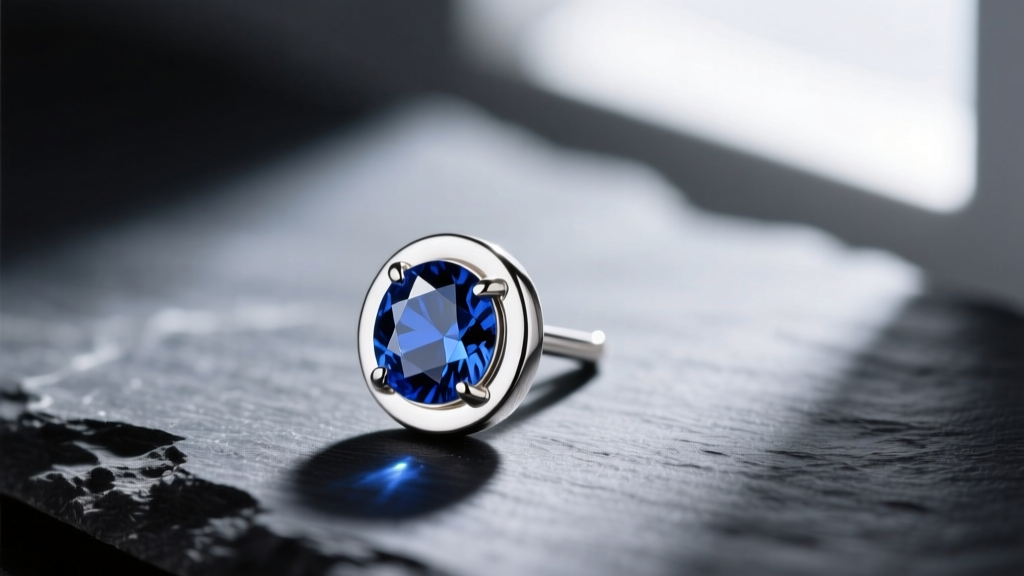
When evaluating blue gemstone earrings, most buyers focus exclusively on color saturation and carat weight. However, from a gemological and metallurgical perspective, the longevity of these pieces depends entirely on structural engineering, crystal cleavage planes, and the specific anatomical placement of the piercing. A stunning tanzanite drop earring might be perfectly safe for a standard lobe piercing but represents a catastrophic failure risk in a forward helix cartilage piercing due to snagging and cleavage vulnerabilities.
This expert deep dive bypasses basic style advice to examine the technical specifications of blue gemstone earrings. We will analyze Mohs hardness, tensile strength, setting tolerances, and the galvanic interactions between specific gold alloys and gemstone refractive indices.
Gemological Hardness and Cleavage: The Big Four Blue Stones
Not all blue stones are created equal. The Gemological Institute of America (GIA) emphasizes that hardness (scratch resistance) and toughness (resistance to chipping and breaking) are distinct properties. Furthermore, crystal cleavage—the tendency of a mineral to break along flat planar surfaces—dictates how a stone must be set and worn.
| Gemstone | Mineral Family | Mohs Hardness | Cleavage | Toughness | Price Range (per ct) |
|---|---|---|---|---|---|
| Blue Sapphire | Corundum | 9.0 | None | Excellent | $800 - $10,000+ |
| Tanzanite | Zoisite | 6.0 - 7.0 | Perfect (1 direction) | Poor | $300 - $1,200 |
| Aquamarine | Beryl | 7.5 - 8.0 | Indistinct | Fair | $150 - $600 |
| Lapis Lazuli | Rock (Lazurite) | 5.0 - 6.0 | N/A (Massive) | Fair | $10 - $100 |
Technical Breakdown by Stone
Blue Sapphire: As a corundum, sapphire lacks cleavage planes, making it highly resistant to impact fractures. It is the only blue gemstone recommended for high-impact cartilage piercings (like the tragus or industrial) where accidental bumps against doors or headphones are frequent.
Tanzanite: Despite its high refractive index and pleochroism, tanzanite possesses perfect cleavage in one direction. A sharp blow to a prong-set tanzanite earring can cause the stone to split cleanly along this plane. It requires protective bezel settings and should be restricted to lower-risk anatomical placements.
Aquamarine: While harder than tanzanite, beryl is inherently brittle. Aquamarine drop earrings are prone to chipping at the girdle if the prong bearing depth is cut too shallow (less than 0.15mm).
Lapis Lazuli: Lapis is a porous rock matrix, not a single crystal. It is highly susceptible to chemical degradation from acids and even prolonged exposure to slightly alkaline soaps, which can dissolve the calcite inclusions and dull the pyrite flecks.
Structural Engineering: Matching Settings to Ear Anatomy
The anatomy of the ear dictates the mechanical stresses an earring will endure. Cartilage piercings are subject to lateral shear forces, while lobe piercings primarily experience vertical gravitational pull.
The Snag Factor in Cartilage Piercings
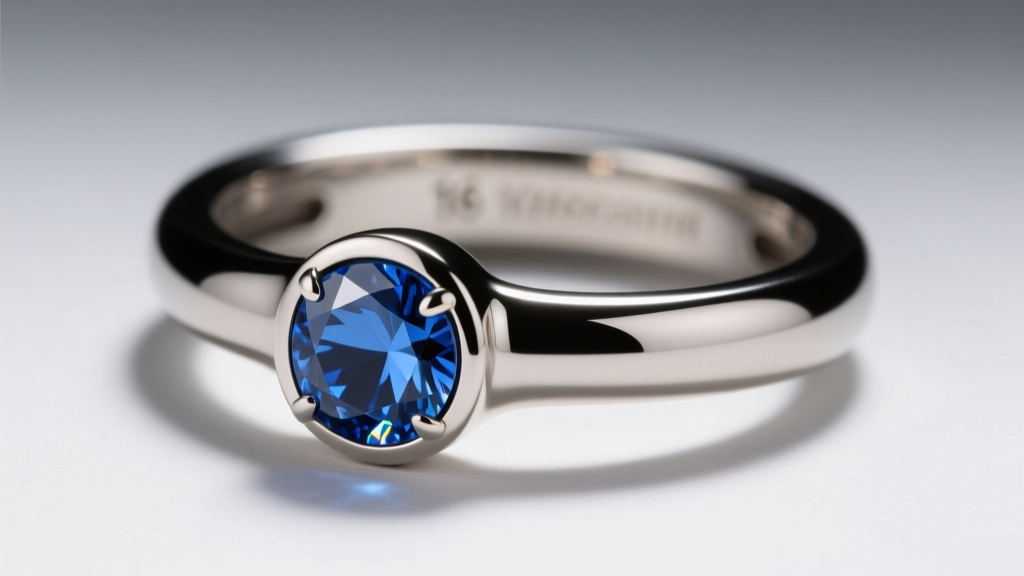
For helix, conch, and forward helix piercings, traditional 4-prong or 6-prong settings are engineering liabilities. The protruding prongs act as levers; if caught on a sweater or hairbrush, the kinetic energy transfers directly to the gemstone's girdle or the post's solder joint. For blue gemstone earrings worn in cartilage, a flush or bezel setting is mandatory. A well-engineered bezel will feature a 45-degree chamfered outer edge to deflect lateral impacts rather than absorbing them.
The 'Cheese Cutter' Effect and Wire Gauges
Heavier blue gemstone drops—such as a 4-carat pear-cut London blue topaz—exert significant downward torque. If suspended from a standard 20-gauge (0.81mm) wire, the localized pressure on the inferior edge of the lobe piercing can cause tissue migration, colloquially known in body modification circles as the 'cheese cutter' effect.
- 20-Gauge (0.81mm): Suitable only for lightweight studs under 1.5 grams total weight.
- 18-Gauge (1.02mm): The standard for most drop earrings. Can support up to 4 grams before causing lobe fatigue.
- 16-Gauge (1.29mm): Required for heavy statement pieces or oversized blue gemstone hoops to distribute gravitational load across a wider tissue surface area.
Metallurgical Pairings: Alloys That Enhance Blue Tones
The metal alloy chosen for the setting does more than hold the stone; it actively influences the gemstone's optical performance through light return and color contrast.
18k White Gold (Palladium Alloy): Standard white gold is alloyed with nickel or palladium and plated with rhodium. For blue gemstone earrings, a palladium-alloyed white gold is superior because it possesses a naturally cooler, grayer undertone that enhances the icy tones of aquamarine and the deep violet-blues of tanzanite. Nickel alloys tend to have a warmer, yellowish base that can muddy the blue spectrum if the rhodium plating wears thin.
950 Platinum: Platinum's high density and tensile strength allow for incredibly thin, secure prongs (down to 0.25mm wire thickness) without sacrificing structural integrity. Its naturally white luster provides maximum light return for lighter blue stones. However, its high cost makes it prohibitive for large, multi-stone blue gemstone hoop designs.
ASTM F136 Implant-Grade Titanium: For fresh piercings or highly sensitive cartilage, titanium is the gold standard. While it cannot be cast with the same micro-detail as gold, CNC-machined titanium bezels offer unparalleled durability and hypoallergenic safety. Anodized titanium can even be treated to create a dark blue oxide layer that creates a striking monochromatic pairing with lapis lazuli.
Ultrasonic and Steam Cleaning: A Technical Warning
Proper maintenance of blue gemstone earrings requires an understanding of gemological inclusions and fracture mechanics. The default jewelry store cleaning method—ultrasonic cavitation combined with high-pressure steam—is highly destructive to several blue stones.
Tanzanite and Ultrasonics: The high-frequency acoustic waves generated by ultrasonic cleaners create microscopic cavitation bubbles that collapse against the stone's surface. For tanzanite, with its perfect cleavage and frequent internal tension fractures, this shockwave propagation will almost certainly cause catastrophic shattering.
Lapis Lazuli and Chemical Baths: Lapis is often stabilized with wax or resin to improve polish and durability. Ultrasonic heat and harsh alkaline cleaning solutions will strip this stabilization, leaving the stone porous, dull, and vulnerable to discoloration from skin oils and cosmetics.
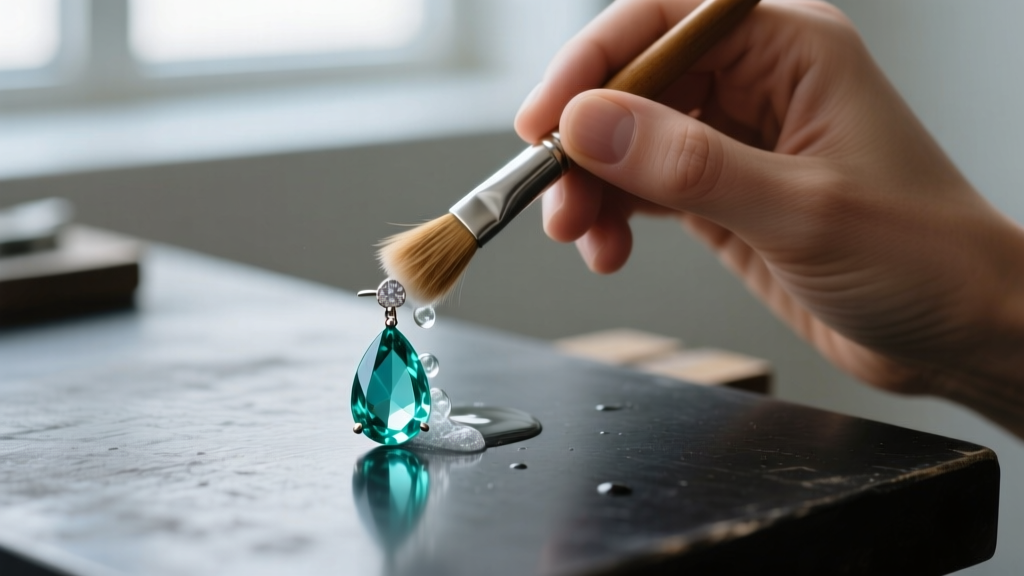
Expert Protocol: For all blue gemstone earrings, abandon automated cleaners. Use a lukewarm solution of distilled water and a pH-neutral, phosphate-free surfactant. Agitate gently with a soft-bristled goat hair brush, focusing on the pavilion (the back of the stone) where sebum and dead skin cells accumulate, blocking the critical light return required to make blue stones sparkle.
Final Thoughts on Procurement and Appraisals
When investing in high-tier blue gemstone earrings, particularly untreated sapphires or AAA-grade tanzanite, always demand a laboratory report from a recognized authority like the GIA or AGL. The presence of heat treatment, beryllium diffusion, or fracture filling drastically alters both the market value and the structural integrity of the stone. By prioritizing gemological toughness, anatomical setting engineering, and proper metallurgical pairings, you ensure that your earrings remain structurally sound and optically brilliant for decades of daily wear.


