Dangle Silver Earrings: 2026 Trend Analysis & Style Guide
Explore 2026 trends for dangle silver earrings. Expert analysis on sterling grades, kinetic silhouettes, face-shape matching, and styling frameworks.

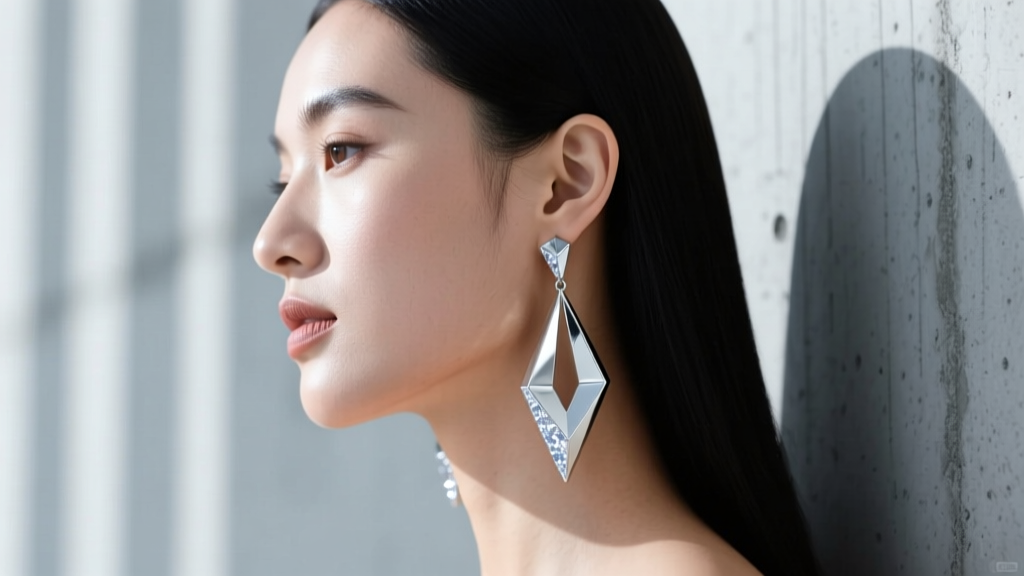
The 2026 Shift: Why Dangle Silver Earrings Are Dominating
The jewelry landscape in 2026 has decisively pivoted toward movement and fluidity. Static, close-to-the-ear studs have taken a backseat to the kinetic energy of dangle silver earrings. This macro-trend, often referred to by industry insiders as 'liquid metal motion,' reflects a broader cultural desire for dynamic self-expression. Unlike the rigid silhouettes of the early 2020s, contemporary dangles feature articulated hinges, asymmetrical drops, and light-catching geometries that move in tandem with the wearer. But beyond their visual appeal, the modern dangle requires a rigorous understanding of metallurgy, weight distribution, and facial architecture to execute correctly.
As a core staple in the ear-stack ecosystem, silver remains the undisputed metal of choice for these elongated silhouettes. Its high reflectivity amplifies the kinetic effect, while its relative malleability allows artisans to craft intricate, lightweight wireframes that would be prohibitively heavy or expensive in platinum or solid gold. However, not all silver is created equal, and the 2026 market demands a more educated approach to material selection.
Metallurgy & Material Grades: Beyond Basic Sterling
When investing in elongated silver jewelry, understanding the alloy composition is critical for both longevity and skin health. Standard sterling silver (.925) consists of 92.5% pure silver and 7.5% copper. While the copper provides necessary structural integrity, it is also the culprit behind oxidation and tarnishing, particularly when exposed to the sulfur compounds in human sweat and urban pollution.
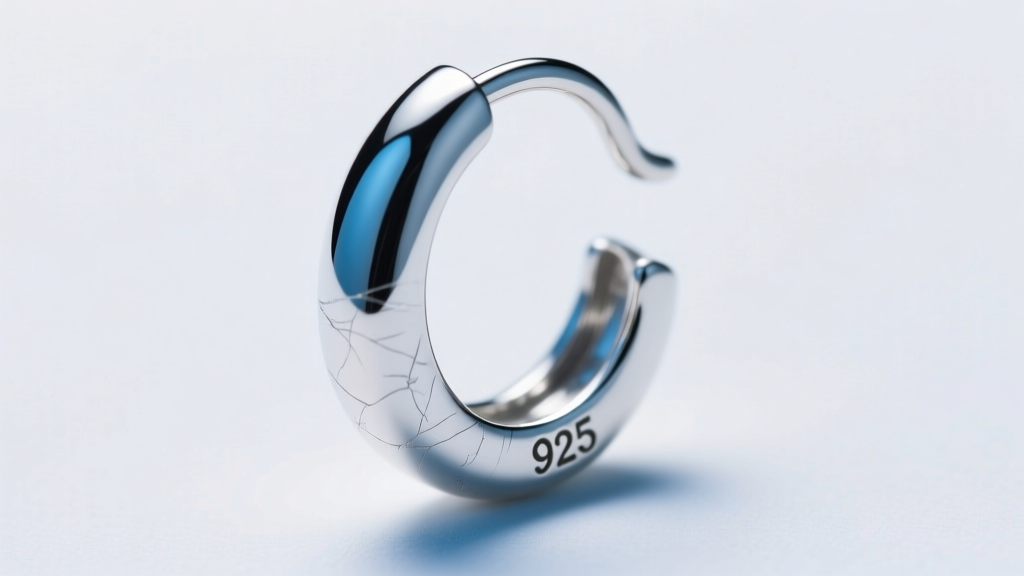
The Argentium Advantage
In 2026, the most significant material upgrade in the silver category is the widespread adoption of Argentium silver. By replacing a portion of the copper with the metalloid germanium, Argentium creates a transparent, self-healing germanium dioxide layer on the surface. According to the Gemological Institute of America (GIA), this layer drastically slows tarnish formation and increases the Vickers hardness of the metal. For dangle earrings, which are prone to micro-scratches from hair friction and clothing snags, Argentium's enhanced scratch resistance makes it a superior choice for everyday wear. When shopping, look for the .935 or .960 fineness stamps, which denote high-grade Argentium alloys.
Kinetic Silhouettes: Analyzing the 2026 Drop Profiles
The anatomy of a dangle earring has evolved. We are no longer looking at simple beads on a chain. The 2026 design language focuses on articulated joints and modular drops. Designers are utilizing micro-hinges that allow the lower half of the earring to swing independently of the earlobe post. This 'pendulum effect' maximizes light refraction. Furthermore, we are seeing a rise in 'ear-threaders' that mimic dangles but utilize a flexible silver chain that pulls through the piercing, allowing the wearer to adjust the exact drop length and asymmetry on the fly.
Face-Shape Matrix: Pairing Length and Geometry
A critical failure mode in styling dangle silver earrings is ignoring facial architecture. The elongated nature of these pieces acts as a visual arrow, drawing the eye along its axis. Use the following framework to match your drop profile to your face shape:
| Face Shape | Ideal Dangle Geometry | What to Avoid | Optimal Length |
|---|---|---|---|
| Round | Angular, linear, and geometric drops (rectangles, sharp diamonds) | Large circular hoops or wide chandeliers that add lateral width | 2.0 - 3.0 inches |
| Square | Curved silhouettes, teardrops, and organic fluid shapes | Boxy or sharp-edged geometric dangles that mirror a strong jawline | 1.5 - 2.5 inches |
| Heart | Bottom-heavy teardrops or A-line chandeliers to balance a narrow chin | Inverted triangles or top-heavy clusters | 1.5 - 2.0 inches |
| Oval | Versatile; almost any geometry works, particularly bold statements | Extreme lengths that over-elongate the face beyond the jawline | 1.0 - 3.0 inches |
Technical Fit & Hardware: Avoiding the 'Lobe Tear' Effect
The most overlooked aspect of purchasing dangle silver earrings is the hardware mechanics. The earlobe is a delicate matrix of skin and adipose tissue; it is not designed to bear heavy, swinging loads. The 'cheese-cutter effect' occurs when a heavy dangle is suspended from a wire that is too thin, causing the post to slowly slice through the piercing channel over time.
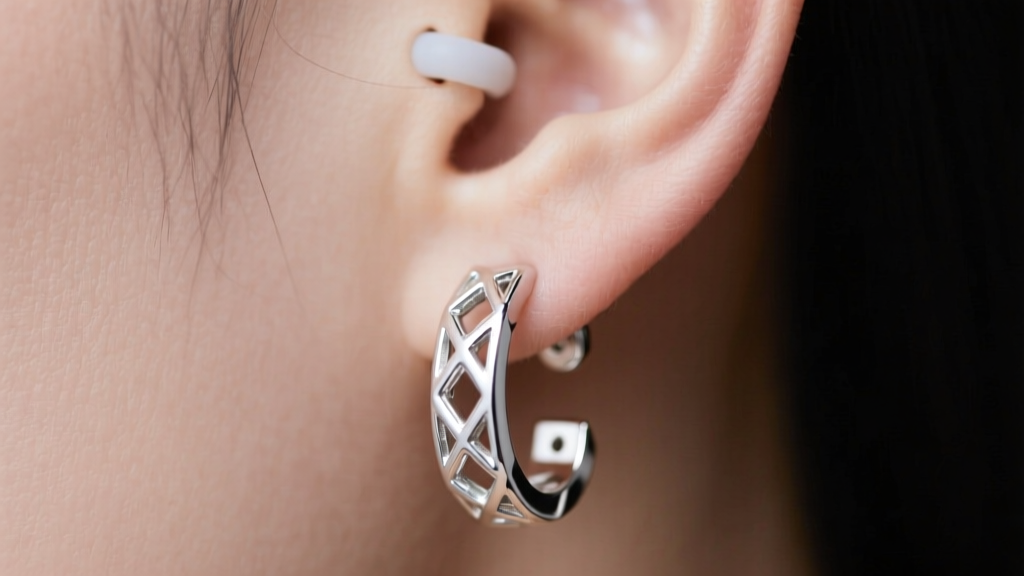
To prevent lobe stretching and permanent sagging, you must pay attention to wire gauge and backing systems:
- Wire Gauge (Thickness): Standard ear piercings are usually done at 20-gauge (0.81mm) or 18-gauge (1.02mm). If your dangle earring weighs more than 8 grams, the post must be at least 18-gauge to resist bending and warping. Avoid 22-gauge (0.64mm) wires for any articulated or heavy silver drops.
- Weight Thresholds: The average human earlobe can comfortably support up to 12-14 grams of static weight. For kinetic dangles that swing and generate momentum, keep the weight under 10 grams per ear for all-day comfort.
- Backing Systems: Traditional metal butterfly backs offer poor surface area distribution. For dangles, upgrade to silicone O-ring friction backs or use a specialized 'earring stabilizer disc' (a wide, flat silicone pad that sits behind the lobe) to distribute the downward torque across a broader area of tissue.
Proper care is also essential to maintain the structural integrity of the hooks and posts. As recommended by Jewelers of America, regularly inspecting the tension of your earring clasps and cleaning your silver with a non-abrasive microfiber cloth will prevent micro-fractures at the stress points where the dangle connects to the ear wire.
Price-to-Value Matrix: Where to Invest in 2026
Navigating the pricing tiers of silver jewelry requires an understanding of what you are actually paying for. The market is currently segmented into three distinct categories:
1. Fast Fashion & Mass Market ($25 - $60): Typically features thin .925 silver plating over brass or copper cores, or very lightweight, hollow-cast solid silver. These are suitable for seasonal trends but will likely tarnish quickly and suffer from bent posts within months. Avoid these for heavy, kinetic dangles.
2. Artisan & Boutique ($85 - $220): The sweet spot for 2026. This tier offers solid .925 or Argentium silver, hand-forged wirework, and secure, soldered jump rings. You are paying for the designer's unique silhouette and superior structural engineering. Look for independent jewelers who specify the exact gram weight and gauge of their pieces.
3. Fine & Designer ($300+): At this level, you are paying for brand prestige, mixed-media integration (such as pavé diamonds or ethically sourced semi-precious stones set into the silver drops), and meticulous finishing. While beautiful, ensure the designer has accounted for the weight of the added gemstones so the earrings do not exceed the 14-gram comfort threshold.
Final Styling Framework: The Rule of Asymmetry
As we move through 2026, the 'curated ear' has matured from a cluttered collage into a study of intentional asymmetry. When wearing statement dangle silver earrings, the most sophisticated approach is to let the dangles command attention on their own. Pair a long, kinetic silver drop in the primary lobe piercing with a simple, flush-set 2mm silver stud in the upper lobe or helix. This creates a vertical line of sight that complements the dangle without competing with it. Avoid wearing heavy silver chokers or large statement rings simultaneously; let the movement of the silver dangles be the focal point of your styling architecture.


