Rainbow Moonstone Earrings: 2026 Budget & Value Guide
Discover the true value of rainbow moonstone earrings in 2026. Learn pricing tiers, grading adularescence, and how to avoid overpaying for fakes.

The True Cost of Rainbow Moonstone Earrings in 2026
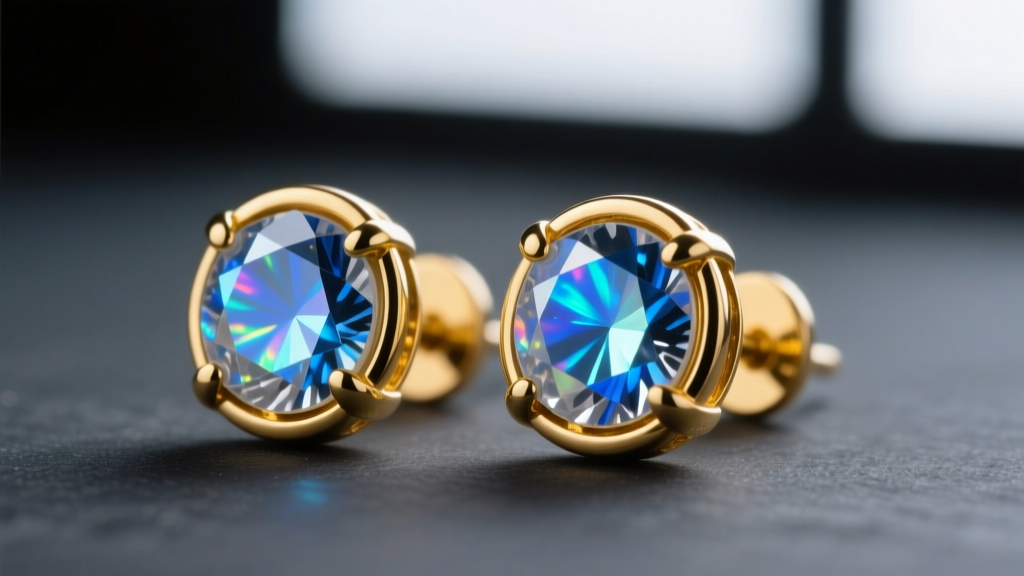
Navigating the market for rainbow moonstone earrings requires a sharp eye for gemological quality and jewelry manufacturing standards. In 2026, the surge in popularity of ethereal, light-catching gemstones has flooded the market with everything from high-end custom pieces to mass-produced imitations. As a buyer, understanding the intersection of adularescence quality, metal purity, and structural integrity is the only way to accurately assess value.
Rainbow moonstone is technically a variety of labradorite (a plagioclase feldspar), prized for its schiller effect—a glowing play of color caused by light scattering between microscopic layers of orthoclase and albite. According to the Gemological Institute of America (GIA), this optical phenomenon, known as adularescence, is the primary driver of the stone's value. However, the setting and hardware dictate the earring's lifespan.
Below, we break down the exact pricing tiers you should expect to pay in the current market, helping you distinguish between a genuine bargain and an overpriced liability.
Grading Adularescence: What You Are Actually Paying For
Not all rainbow moonstone is created equal. The value of the cabochon rests entirely on the strength, color, and coverage of its flash. When assessing budget versus premium options, use this gemological framework:
- Top-Tier (Strong Blue Flash): The stone appears semi-transparent with a vivid, electric blue sheen that covers 80% or more of the surface when moved under direct light. Expected premium: $40–$90 per carat.
- Mid-Tier (Multi-Color/Rainbow Flash): Exhibits a broader spectrum of colors (pink, peach, green, yellow) but with less intensity and a more opaque, milky white body color. Expected premium: $15–$35 per carat.
- Low-Tier (Weak White Flash): Highly opaque with a dull, chalky white sheen that lacks directional movement. Often heavily included with visible black tourmaline specks. Expected premium: $2–$8 per carat.
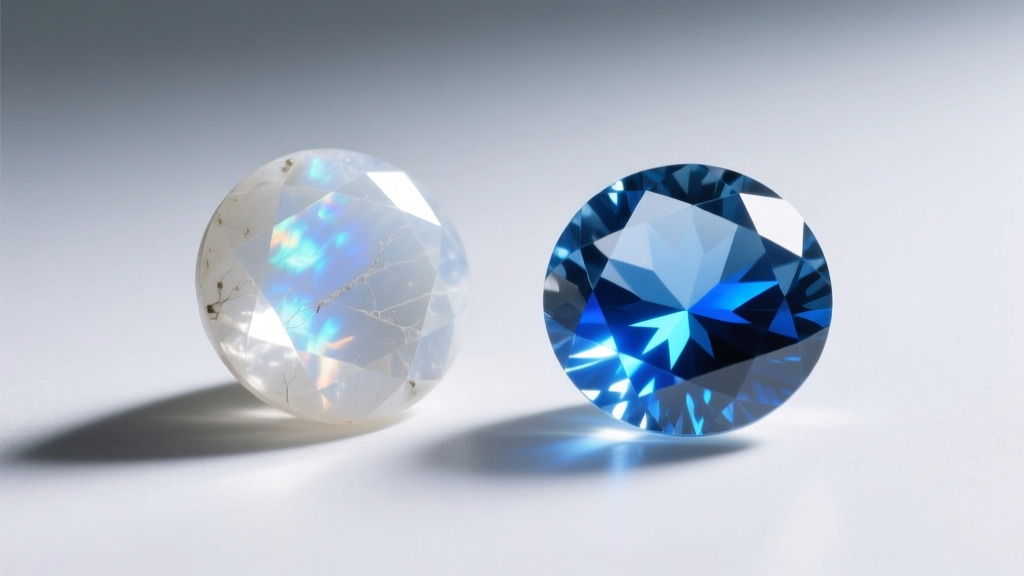
Many budget retailers sell low-tier opaque stones with poor cutting symmetry (flat domes that fail to catch light) and market them as premium. Always demand a video of the earrings in motion under natural or LED lighting before purchasing. Static photos are easily manipulated to enhance the schiller effect.
Setting Metals & Hardware: Where Budgets Succeed or Fail
The most critical failure point in moonstone jewelry is the setting. According to mineralogical data from Mindat.org, moonstone ranks between 6 and 6.5 on the Mohs hardness scale and possesses two directions of perfect cleavage. This means the stone can split cleanly along internal planes if subjected to localized pressure.
The Prong vs. Bezel Dilemma
Mass-produced budget earrings frequently use four-prong or six-prong settings to save on metal weight and manufacturing time. Prongs apply intense, focused pressure to the girdle of the stone. A single drop onto a hard surface can cause the prongs to act like wedges, splitting the moonstone perfectly in half. For long-term value, bezel or semi-bezel settings are mandatory. A bezel distributes pressure evenly around the perimeter, protecting the cleavage planes and securing the stone against impacts.
Ear Wire Gauge and Metal Purity
Budget brands often cut corners on ear wires, using 22-gauge (0.64mm) or 24-gauge wire to save on silver costs. These thin wires easily bend under the weight of a 10mm cabochon, causing the earring to hang crookedly and eventually snap. A high-value earring should feature 20-gauge (0.81mm) or 19-gauge wire, which provides structural rigidity while fitting comfortably through standard 18g or 20g lobe piercings.
| Material / Setting | Price Range (Pair) | Durability & Value Assessment |
|---|---|---|
| 925 Sterling Silver + Prong | $25 - $45 | Poor. High risk of stone splitting. Thin wires often bend. Avoid for daily wear. |
| 925 Sterling Silver + Bezel | $55 - $110 | Excellent. The sweet spot for budget buyers. Secure setting, easy to polish, durable. |
| Gold Vermeil + Bezel | $85 - $160 | Good. Ensure gold layer is at least 2.5 microns thick over 925 silver to prevent rapid wear. |
| Solid 14k Gold + Bezel | $250 - $600+ | Premium. Lifetime durability. Hypoallergenic. Best paired with top-tier blue flash stones. |
Natural vs. Lab-Created vs. Imitation: Spotting the Fakes
As the demand for rainbow moonstone earrings has grown, so has the proliferation of imitations. The most common culprit is Opalite, a man-made glass that mimics the milky glow of moonstone but lacks its internal crystalline structure.
How to Authenticate Your Stones
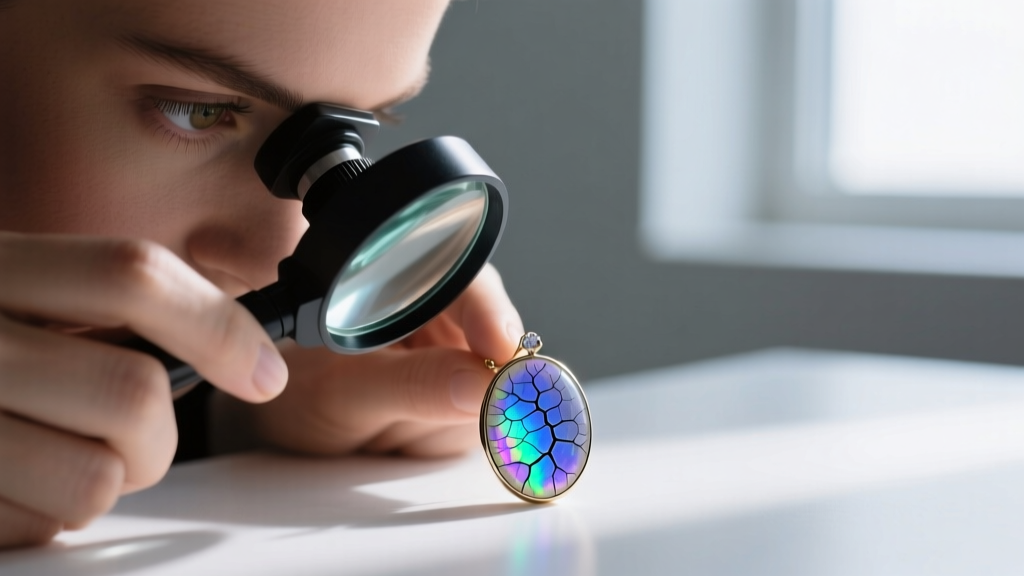
- Look for Centipedes: Natural rainbow moonstone frequently contains internal stress fractures known in the gem trade as 'centipedes.' These look like tiny, multi-legged fissures suspended inside the stone. Opalite glass is entirely flawless or contains perfectly spherical gas bubbles.
- Test the Flash Direction: True adularescence is directional. The flash should appear to float just beneath the surface and move as you rotate the earring. Opalite exhibits a static, uniform glow that does not shift with the angle of light.
- Check the Temperature: Glass (Opalite) warms up quickly in your hand. Natural feldspar remains noticeably cooler to the touch for a longer period due to its higher thermal inertia.
Expert Warning: Beware of listings using the term 'Opalite Moonstone.' This is an intentional oxymoron used by drop-shippers to disguise synthetic glass as a natural gemstone. If the price for a large, flawless, glowing pair of earrings is under $20, you are almost certainly buying glass.
Smart Buying Framework: Maximizing Value Under $150
If your budget caps at $150, you can absolutely secure a beautiful, durable pair of rainbow moonstone earrings by prioritizing the right variables. Follow this strict purchasing checklist:
- Prioritize the Cut: Look for high-dome cabochons. A steep dome acts like a lens, concentrating the adularescence into a sharp, bright band of color across the center of the stone. Flat stones scatter the light, resulting in a washed-out appearance.
- Demand a Bezel: Refuse to buy prong-set moonstone for everyday wear. The replacement cost of a shattered stone negates any initial savings.
- Verify the Silver Stamp: Ensure the ear wires and setting are stamped '925'. Unstamped 'Tibetan Silver' or 'Alpaca' are nickel-heavy alloys that will cause contact dermatitis and tarnish rapidly.
- Opt for Huggies or Studs over Dangles: If buying on a budget, dangle earrings require more metal for the chains and links, meaning the manufacturer will use lower-grade moonstones to keep the total price down. Studs or small huggies concentrate the budget into the quality of the gemstone itself.
Care & Longevity: Protecting Your Investment
Even with a secure bezel setting, rainbow moonstone requires specific care to maintain its optical brilliance and structural integrity. The feldspar family is highly sensitive to sudden temperature changes and harsh chemicals.
Never use an ultrasonic cleaner. The high-frequency vibrations will exploit the stone's natural cleavage planes, causing internal fracturing that destroys the adularescence. Similarly, avoid steam cleaners. To clean your earrings, use a soft microfiber cloth and a mild, phosphate-free dish soap diluted in lukewarm water. Gently brush the back of the cabochon (where skin oils accumulate and block light transmission) with a baby-soft toothbrush, rinse, and pat dry.
Store your rainbow moonstone earrings in a separate, fabric-lined compartment. Because moonstone is a 6 on the Mohs scale, it will be easily scratched if tossed into a jewelry box alongside diamonds, sapphires, or even quartz-based gems like amethyst. By understanding the gemological realities and manufacturing standards of 2026, you can confidently invest in rainbow moonstone earrings that offer both breathtaking beauty and enduring value.


