Red Gold Earrings: Metallurgy, Karat Grades & Piercing Guide
Explore the metallurgy of red gold earrings. Compare 14k vs 18k copper alloys, gauge sizing for cartilage, and expert care tips for sensitive ears.

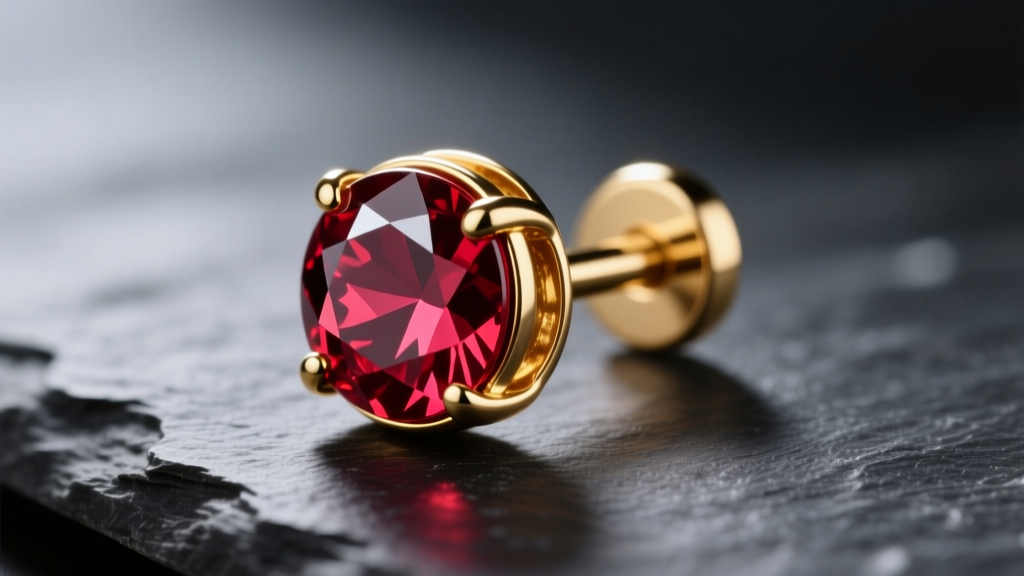
As we evaluate fine body jewelry trends in 2026, red gold earrings have transitioned from a niche aesthetic choice to a staple in high-end piercing studios and luxury collections. However, the term 'red gold' is frequently misused by mass-market retailers to describe anything with a pinkish hue. For piercing professionals, metallurgists, and informed collectors, true red gold represents a highly specific binary alloy with unique mechanical properties, biocompatibility profiles, and structural limitations. This expert deep dive explores the exact metallurgy, gauge tolerances, and structural applications of red gold in modern ear piercings.
The Metallurgy of Red Gold: A Binary Alloy
Unlike rose gold or pink gold, which are ternary or quaternary alloys containing silver, zinc, and copper, true red gold is a strict binary alloy composed exclusively of pure gold and copper. The absence of silver is what shifts the color spectrum from a soft blush to a deep, fiery crimson. According to the Gemological Institute of America (GIA), the intensity of the red hue is directly proportional to the copper content. Copper not only dictates the color but fundamentally alters the crystalline lattice structure of the gold, resulting in an alloy that is significantly harder and more tensile than its yellow or white counterparts.
This binary composition presents unique challenges for jewelers. Copper oxidizes rapidly when exposed to high heat, meaning red gold must be carefully annealed in oxygen-reduced environments during the fabrication of seamless hoops or intricate filigree drops. If improperly cast, the copper can separate, leading to microscopic porosity that harbors bacteria—a critical failure mode for fresh cartilage piercings.
14k vs. 18k Red Gold: Hardness and Biocompatibility
Choosing between 14k and 18k red gold is not merely a matter of budget; it is a decision rooted in material science and tissue reactivity. The Association of Professional Piercers (APP) emphasizes that copper, while generally well-tolerated, can cause localized irritation in highly sensitive individuals, making the gold-to-copper ratio paramount.
| Alloy Grade | Gold Content | Copper Content | Silver/Zinc | Vickers Hardness (HV) | Best Piercing Application |
|---|---|---|---|---|---|
| 18k Red Gold | 75.0% | 25.0% | 0% | ~125 HV | Fresh lobes, healed conch, threadless ends |
| 14k Red Gold | 58.3% | 41.7% | 0% | ~170 HV | Healed daith, rook, industrial bars, huggies |
| 14k Rose Gold | 58.3% | ~30.0% | ~11.7% | ~145 HV | Standard hoops, dangles, fashion earrings |
The higher copper content in 14k red gold yields a Vickers Hardness (HV) of approximately 170, making it highly resistant to scratching and deformation. This makes 14k ideal for high-friction areas like the daith or rook, where jewelry is subject to mechanical stress. Conversely, 18k red gold, with its higher pure gold content, offers superior biocompatibility for fresh piercings or sensitive healed lobes, as the reduced copper minimizes the risk of contact dermatitis.
Technical Sizing: Gauge and Post Lengths
Red gold's density and tensile strength require precise machining, particularly for threadless and internally threaded body jewelry. When selecting red gold earrings for specific ear anatomy, adhering to standardized gauge and post measurements is critical for tissue health and jewelry longevity.
- 16-Gauge (1.2mm): The gold standard for helix, flat, and conch piercings. A 16G red gold labret post provides enough structural rigidity to prevent the 'cheese-cutter effect' in thin cartilage shelves.
- 14-Gauge (1.6mm): Essential for daith and rook piercings. The high copper content in 14k red gold allows a 14G barbell to withstand the torque of a daith clicker ring without warping.
- 18-Gauge (1.0mm): Reserved primarily for standard earlobe piercings and delicate auricle placements. Using 18G red gold in cartilage is discouraged due to the alloy's stiffness, which can cause pressure necrosis if the angle is imperfect.
For post lengths, a healed helix requires a 6mm (1/4") post to sit flush, while a fresh piercing necessitates an 8mm (5/16") or 9.5mm (3/8") post to accommodate the inflammatory phase. Red gold threadless pins must be bent precisely at a 15-degree angle to ensure the tensile grip holds the 1.2mm shaft securely within the backing.
Best Earring Styles for Red Gold Alloys
Threadless Labrets and Press-Fit Ends
Because red gold work-hardens rapidly, it is exceptionally well-suited for threadless (press-fit) jewelry systems. The pin, typically made of implant-grade titanium or 14k red gold, relies on spring tension to stay locked inside the backing. The high tensile strength of the copper alloy ensures the pin retains its bent angle indefinitely, preventing the end from dislodging during sleep or hair brushing.
Seamless Huggies and Clickers
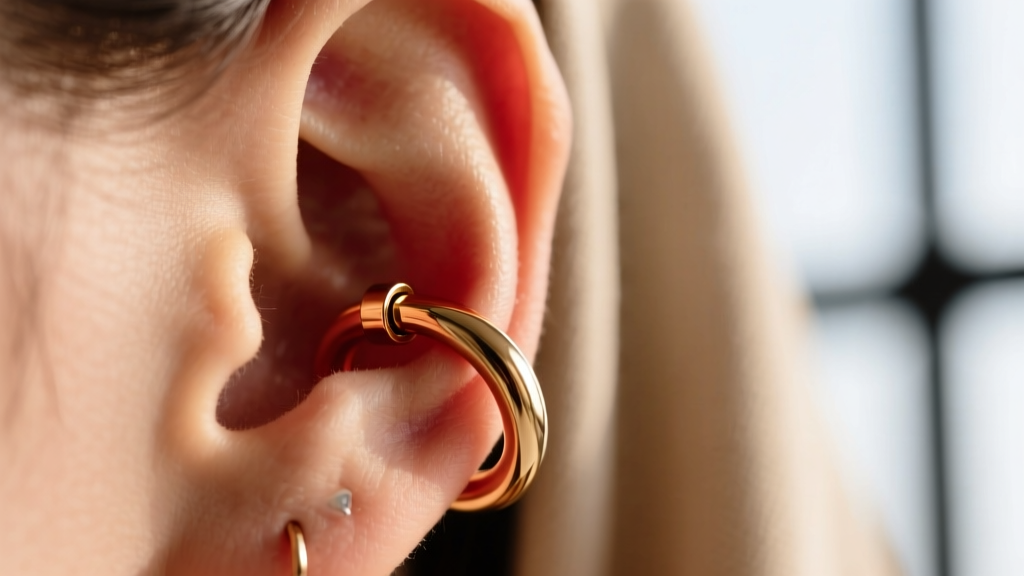
For healed cartilage, red gold huggies with hidden snap hinges are highly recommended. The alloy's rigidity ensures the hinge mechanism remains perfectly aligned, preventing the micro-gaps that often plague softer 22k or 24k yellow gold clickers. A 16G red gold clicker in a 10mm inner diameter provides a snug, secure fit for a standard helix without pinching the tissue.
Maintenance: Preventing Copper Oxidation
The primary vulnerability of red gold earrings is copper oxidation. When exposed to the sulfur compounds in human sweat, cosmetics, and environmental pollutants, the copper in the alloy can develop a dark, tarnished patina. While some collectors appreciate this antique look, it is undesirable for fine body jewelry.
To maintain the brilliant crimson luster of red gold, avoid ultrasonic cleaners with harsh ammonia-based solutions. The high-frequency vibrations combined with alkaline chemicals can cause 'dezincification' or copper leaching at the microscopic level, leading to surface pitting.
Instead, clean red gold earrings weekly using a mild, phosphate-free dish soap and warm water. Use a soft-bristled baby toothbrush to gently clear sebum and dead skin cells from the internal threading or the bezel settings of gemstone ends. For deep polishing, a professional jeweler should use a rouge cloth specifically formulated for high-copper alloys.
Pricing Framework and Authenticity Verification
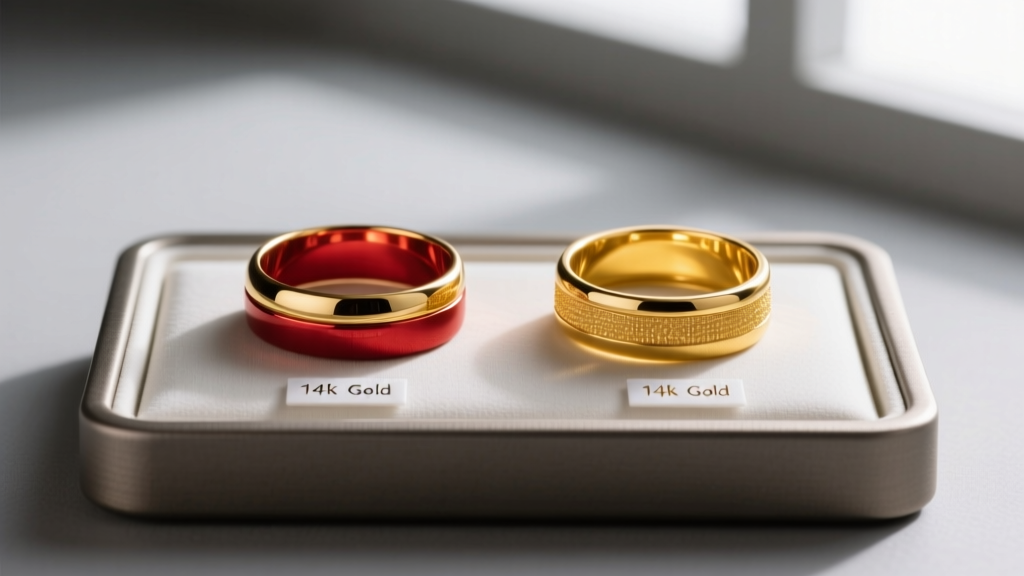
In the 2026 precious metals market, the pricing of red gold earrings requires an understanding of alloy economics. Because copper is a fraction of the cost of pure gold, the raw material cost of 14k red gold is marginally lower than 14k yellow gold (which requires expensive silver and zinc). However, the retail price of red gold body jewelry is often higher due to the specialized casting equipment, increased tool wear during machining, and the high rejection rate of flawed casts.
When purchasing high-end red gold earrings, always verify the hallmark. Genuine 18k red gold will be stamped with 750, while 14k will bear 585. Be highly skeptical of 'red gold plated' or 'vermeil' body jewelry for fresh piercings; once the microscopic plating wears away, the underlying base metal will cause severe allergic reactions and tissue rejection. True, solid binary red gold remains an investment-grade material that bridges the gap between avant-garde aesthetics and uncompromising metallurgical performance.


