Troubleshooting Heavy Earring 80s Styles: Fixes & Hacks
Learn how to troubleshoot heavy earring 80s styles. Fix sagging lobes, painful clip-ons, and nickel allergies with expert jewelry hacks.


The Allure and Agony of 80s Earwear
The 1980s were an era of unapologetic maximalism, and nowhere was this more evident than in jewelry. From Madonna’s mismatched geometric drops to Cyndi Lauper’s chaotic layered hoops, the classic earring 80s silhouette was defined by volume, asymmetry, and bold materials. Today, as vintage fashion continues to cycle back into mainstream trends, collectors and style enthusiasts are eagerly pulling authentic 80s pieces out of storage or buying modern reproductions. However, wearing these statement pieces often introduces a host of physical and structural problems.
Authentic vintage fashion jewelry was rarely designed with long-term ergonomic comfort or hypoallergenic standards in mind. If you have ever experienced a tension headache from a lopsided acrylic dangle, or endured the ischemic pinch of a vintage clip-on, you know that styling these pieces requires more than just a good outfit. This guide provides expert-level troubleshooting for the most common issues associated with heavy earring 80s styles, offering actionable solutions rooted in jewelry repair and anatomical comfort.
Problem 1: Lobe Sagging from Oversized Geometric Dangles
The auricular lobule (earlobe) lacks cartilage and is composed primarily of areolar connective tissue and adipose (fat) tissue. While highly flexible, it has a strict weight threshold. Most standard earlobes can comfortably support 7 to 10 grams of weight before the fistula (the piercing hole) begins to stretch or tear. Many authentic 80s geometric acrylic and resin dangles easily weigh between 15 and 25 grams.
The Physics of Earlobe Stress
When a heavy earring is suspended from a standard 20-gauge (0.81mm) ear wire, the weight creates a severe downward fulcrum. The thin wire acts like a cheese cutter against the delicate tissue of the piercing hole, leading to micro-tears, elongation, and eventual sagging. Furthermore, the heavy drop pulls the earring forward, causing the decorative face to point toward the floor rather than sitting flush against the cheek.
Troubleshooting: Support Patches and Wire Upgrades
- Silicone Support Patches: Products like LobeWonder or generic silicone earring support patches are essential. These adhesive patches feature a reinforced center hole that distributes the earring's weight across a 15mm surface area on the back of the lobe, effectively neutralizing the cheese-cutter effect.
- Upgrade the Ear Wire: If the piece allows for modification, remove the flimsy base-metal hook and replace it with a custom-bent 16-gauge (1.29mm) or 14-gauge (1.63mm) sterling silver or niobium ear wire. The thicker gauge provides structural rigidity, preventing the wire from bending under the acrylic's weight.
- The O-Ring Trick: Slip a small, 4mm silicone jewelry o-ring onto the post behind the earlobe before securing the backing. This creates a wider anchor point, stabilizing the heavy front-facing element and keeping the geometric design upright.
Problem 2: Mastering the Asymmetrical Mismatch
One of the most iconic earring 80s trends was deliberate asymmetry—wearing a massive, shoulder-dusting geometric drop in one ear and a tiny pearl or metallic stud in the other. While visually striking, this trend creates a physical imbalance that can lead to neck strain and uneven lobe stretching over time.
Balancing the Visual and Physical Weight
The human brain naturally compensates for asymmetrical weight distribution by subtly altering neck and shoulder muscle tension. Wearing a 25-gram drop on the left and a 1-gram stud on the right for an eight-hour workday can trigger localized tension headaches. To troubleshoot this without sacrificing the 80s aesthetic, practice visual asymmetry with physical symmetry. Choose a massive, hollow acrylic or filigree metal drop for one ear (which weighs very little despite its size) and pair it with a dense, solid brass or stone stud in the other ear. This maintains the chaotic visual contrast of the 80s while keeping the physical weight distribution within a 3-gram variance, sparing your cervical spine and earlobes from uneven stress.
Problem 3: Rescuing Painful Vintage Clip-Ons
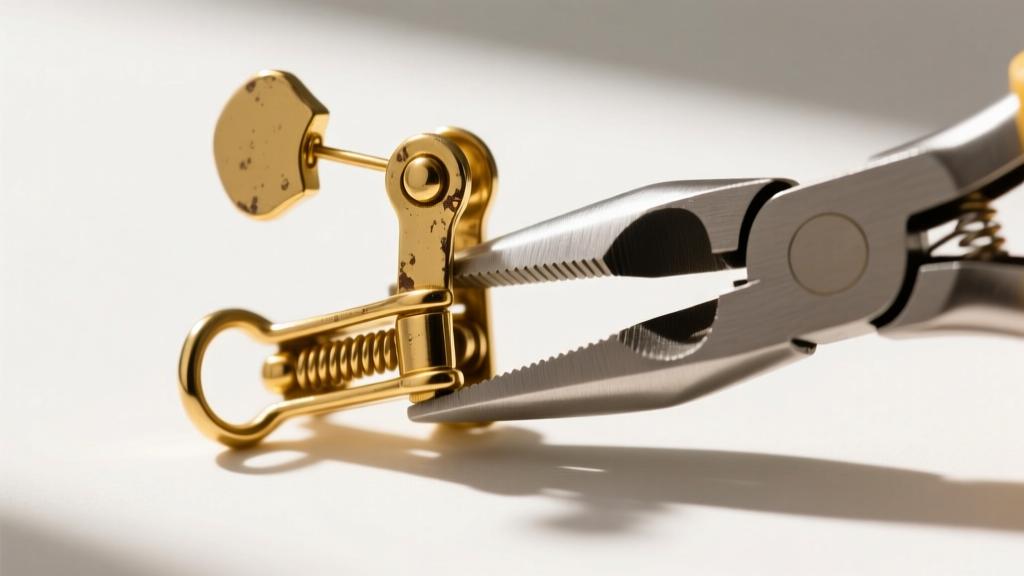
Before the universal adoption of ear piercing in the late 80s and 90s, clip-on earrings were the standard. Vintage 80s clip-ons typically utilized either a spring-hinge paddle back or a screw-back mechanism. Over decades, the spring tension either rusts stiff or blows out entirely, resulting in a painful pinching sensation that cuts off blood circulation to the lobe within minutes.
Adjusting Tension on Paddle Clips
Never use standard steel jewelry pliers on vintage 80s gold-wash or silver-plated clip-ons; the teeth will permanently mar the soft base metal. Instead, use nylon-jaw pliers to gently squeeze the sides of the paddle back to increase tension, or carefully pry the hinge outward with a flathead jeweler's screwdriver to decrease the bite. The goal is to achieve a resting gap of exactly 3mm between the paddle and the front pad.
Converting Clip-Ons to Pierced
If the clip-on mechanism is beyond repair, or simply too painful to endure, conversion is a straightforward bench jeweler task. Using a jeweler's saw with a 2/0 blade, carefully sever the clip mechanism at the solder joint. File the remaining nub smooth with a needle file. Next, solder or use a two-part epoxy (like J-B Weld Clear) to attach a 20-gauge sterling silver flat-pad ear post. Allow the epoxy to cure for a full 24 hours before wearing to ensure the structural integrity of the bond.
Problem 4: Combating Base Metal Allergies and Verdigris
Authentic 80s mall jewelry was notoriously manufactured from 'pot metal' (often Zamak, an alloy of zinc, aluminum, magnesium, and copper) or cheap brass, finished with a microscopic flash of gold or silver plating. Once that plating wears away, the underlying metals react with the skin's moisture and acids.
Identifying and Treating Verdigris
That crusty, pale green buildup on vintage earring posts is verdigris (copper carbonate), a byproduct of copper alloys reacting with oxygen and moisture. Not only is it unsightly, but the nickel often present in these base alloys is a primary trigger for contact dermatitis. According to the American Academy of Dermatology, nickel allergy affects a significant portion of the population, causing severe itching, redness, and blistering.
Warning: Never place 80s rhinestone, faux pearl, or glued enamel earrings into an ultrasonic cleaner. The high-frequency acoustic cavitation will instantly shatter the fragile, decades-old adhesive bonds holding the stones in place.
Safe Cleaning and Barrier Methods
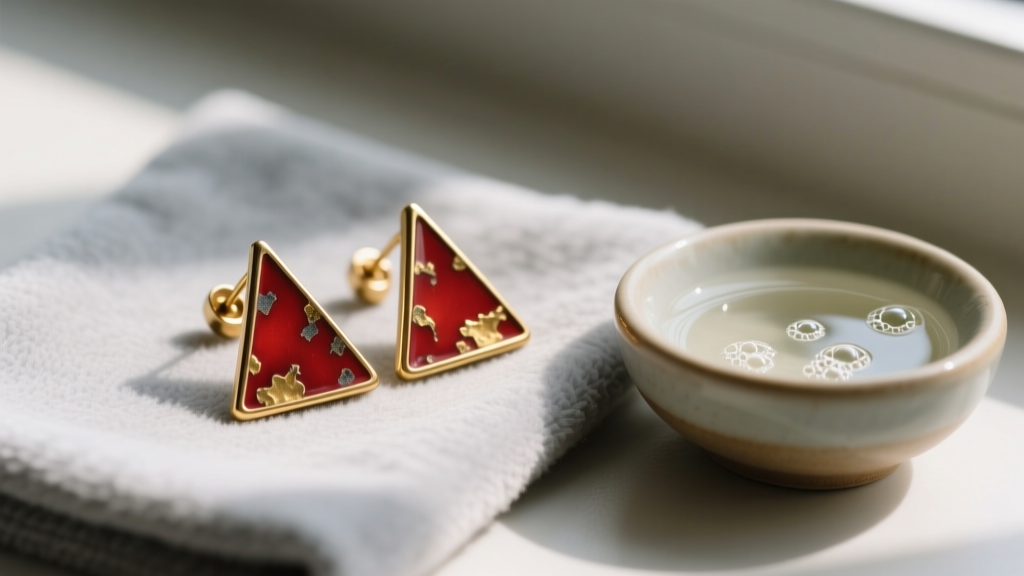
To remove verdigris safely, create a mild paste using baking soda and a few drops of lemon juice. Apply it to the metal post with a soft baby toothbrush, gently scrubbing for 30 seconds before rinsing and drying completely. To prevent future allergic reactions without re-plating the piece, coat the earring post and the back of the decorative element with a polyurethane-based jewelry shield or a thin layer of clear, hypoallergenic nail polish. Reapply this barrier every 4 to 6 weeks, as friction from insertion will eventually wear it away.
Quick Reference: 80s Earring Troubleshooting Matrix
| Problem | Root Cause | Expert Solution |
|---|---|---|
| Lobe Stretching / Sagging | Earring exceeds 10g; thin 20g wire cuts tissue. | Apply silicone support patches; upgrade to 16g ear wires. |
| Clip-On Pinching | Rusted or blown-out spring hinge tension. | Adjust with nylon-jaw pliers to a 3mm resting gap. |
| Green Skin / Verdigris | Copper/nickel base metals reacting to sweat. | Clean with baking soda/lemon; seal with polyurethane barrier. |
| Asymmetry Headaches | Uneven weight distribution causing neck strain. | Use hollow acrylics for large drops to balance physical weight. |
| Stones Falling Out | Degraded 1980s adhesive; ultrasonic vibration. | Hand-clean only; re-set stones using jeweler's two-part epoxy. |
Final Thoughts on Preserving Vintage Earwear
Troubleshooting heavy earring 80s styles is an exercise in balancing historical preservation with modern anatomical comfort. By understanding the material limitations of vintage base metals, the physics of earlobe stress, and the mechanics of outdated clip-on hinges, you can safely integrate these bold, maximalist pieces into your daily rotation. Treat your vintage finds with the same bench-jeweler respect you would afford fine karat gold, and they will continue to make a statement for decades to come.


