Solar System Earrings: A Material & Durability Guide
Compare base metals and gemstones for solar system earrings. Discover the best materials for durability, weight, and sensitive ears in our expert guide.

The Biomechanics of Celestial Jewelry
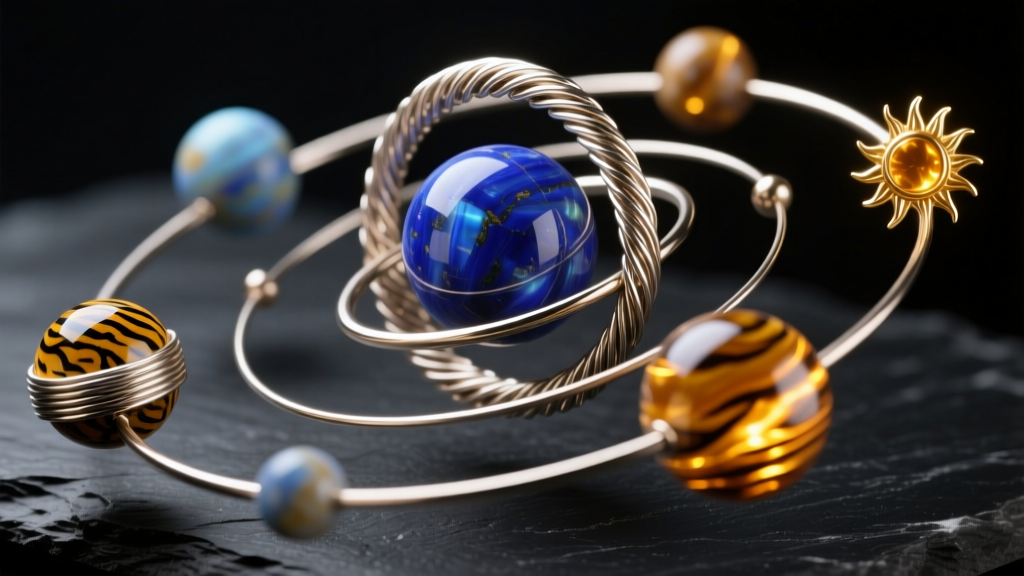
Solar system earrings represent a fascinating intersection of kinetic art and metallurgical engineering. Characterized by orbital hoops, dangling celestial bodies, and intricate wire-wrapping, these designs are inherently more complex than standard studs or huggies. The kinetic nature of multi-planet dangles introduces unique material stresses. Every time you turn your head, the planetary beads swing, creating a pendulum effect that places repetitive shear stress on the earring post, the jump rings, and the wire wraps.
As we navigate the jewelry landscape in 2026, the demand for hypoallergenic, lightweight, and structurally sound kinetic earrings has never been higher. Choosing the right materials for both the orbital framework and the planets themselves is critical to preventing earlobe fatigue, metal tarnish, and gemstone chipping. This guide breaks down the exact metallurgical and gemological properties you need to consider before investing in or designing solar system earrings.
Base Metal Selection: The Orbital Framework
The base metal forms the 'orbits' and the ear wire. Because solar system earrings carry more mass than minimalist designs, the tensile strength and biocompatibility of the metal are paramount.
ASTM F136 Implant-Grade Titanium
For sensitive ears and heavy kinetic designs, ASTM F136 implant-grade titanium (Ti-6Al-4V) is the undisputed champion. With a yield strength of approximately 830 MPa, titanium wires resist bending and warping far better than precious metals. It is entirely nickel-free, eliminating the risk of contact dermatitis. Furthermore, its lightweight nature reduces the overall mass of the earring, protecting the earlobe from stretching over time.
925 Sterling Silver
While 925 sterling silver offers a brilliant, classic luster, it is a relatively soft alloy (yield strength around 120 MPa when annealed). In solar system designs featuring heavy glass or stone planets, thin silver orbital rings can easily warp out of their circular shape. Additionally, silver is highly susceptible to sulfur-induced tarnish, requiring frequent polishing, which can eventually wear down delicate textured details on the 'sun' components.
14k Gold Vermeil vs. Solid Gold
Gold vermeil (a thick layer of 14k or 18k gold over a sterling silver core) is a popular mid-tier option. However, in kinetic earrings, the constant friction of planetary beads sliding against the orbital hoop can wear away the gold plating at the contact points within 12 to 18 months. For heirloom-quality solar system earrings, solid 14k gold is preferred due to its superior scratch resistance and structural memory compared to pure 24k gold.
The Celestial Bodies: Planet Material Properties
The 'planets' in these earrings are typically crafted from gemstones, lampwork glass, or epoxy resin. The material choice dictates not only the aesthetic but the durability and weight distribution.
Natural Gemstones and the Mohs Scale
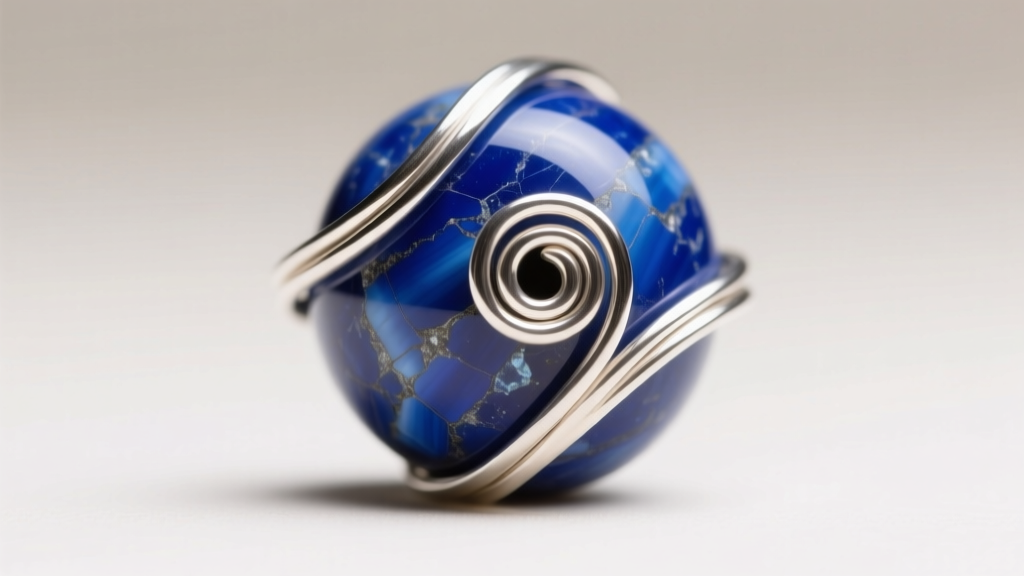
Using natural gemstones to represent planets is a hallmark of high-end celestial jewelry. However, you must consider the Mohs scale of mineral hardness. When planets dangle closely together, they will inevitably clink against one another.
- Earth (Lapis Lazuli): Mohs 5.5. Beautiful, but relatively soft. Prone to chipping if it repeatedly strikes harder stones.
- Mars (Carnelian) & Jupiter (Tiger's Eye): Mohs 7. Excellent durability. These quartz-based stones can withstand daily kinetic impacts without scratching.
- Neptune (Aquamarine): Mohs 7.5-8. Highly scratch-resistant, making it ideal for outer-orbit planets that swing with the most velocity.
Expert Warning: Avoid using Malachite (Mohs 3.5) or Opal (Mohs 5.5) for dangling multi-planet designs unless they are protected by bezel settings or spaced far apart on the orbital ring.
Lampwork Glass vs. Epoxy Resin
For gas giants like Jupiter and Saturn, artisans often use lampwork glass or epoxy resin to achieve swirling, atmospheric colors.
Lampwork Glass: Offers incredible depth and scratch resistance (Mohs ~6). However, glass is dense and heavy. A solar system earring featuring eight glass planets can easily exceed 15 grams per ear, leading to lobe fatigue.
Epoxy Resin: The modern solution for oversized planets. Resin is exceptionally lightweight, allowing for dramatic, oversized 'gas giants' without stretching the piercing. As of 2026, reputable jewelers use UV-stabilized resins containing HALS (Hindered Amine Light Stabilizers) to prevent the yellowing that plagued earlier resin jewelry.
Comparative Data: Metal Framework Performance
Use the following matrix to determine the best base metal for your specific wearing habits and skin sensitivities.
| Material | Yield Strength | Weight Profile | Hypoallergenic | Best Application |
|---|---|---|---|---|
| ASTM F136 Titanium | ~830 MPa | Ultra-Light | Yes (100%) | Heavy multi-planet dangles, sensitive lobes |
| 14k Solid Gold | ~200-400 MPa | Heavy | Yes (Usually) | Heirloom pieces, low-impact daily wear |
| 925 Sterling Silver | ~120 MPa | Medium | No (Contains Copper) | Lightweight, minimalist 3-planet orbits |
| Surgical Steel (316L) | ~215 MPa | Heavy | No (Contains Nickel) | Budget-friendly, short-term wear |
Structural Integrity and Failure Modes
The most common point of failure in solar system earrings is not the ear wire, but the jump rings connecting the planets to the orbital hoop.
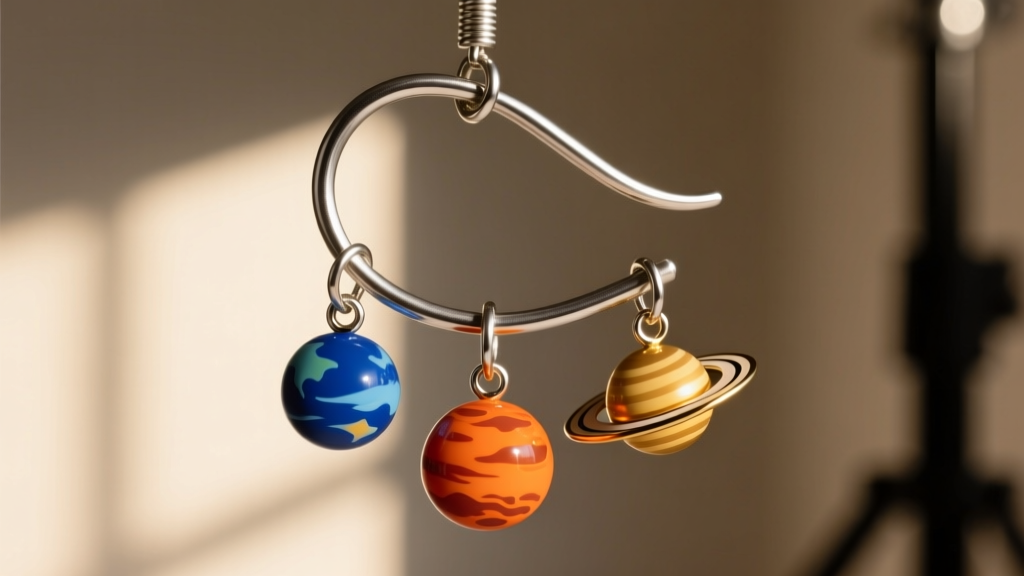
The Pendulum Effect: Every time a dangling planet swings, it exerts lateral force on its connecting jump ring. Over months of wear, this repetitive motion will slowly pry open standard split rings, resulting in a lost planet.
To prevent this, high-quality kinetic earrings must use closed, soldered jump rings for all planetary drops. If wire-wrapping is used instead of jump rings, the artisan should utilize 24-gauge dead-soft wire for the decorative wrapping, but anchor it to a 20-gauge half-hard structural loop. According to Rio Grande Jewelry Supply, half-hard wire has been work-hardened to resist bending under tension, making it mandatory for structural loops in kinetic jewelry.
Gauge Sizing and Lobe Biomechanics
Standard earlobe piercings are typically done at 20-gauge (0.81mm) or 18-gauge (1.0mm). However, the physics of solar system earrings demand a thicker post.
Avoiding the Cheese-Cutter Effect
If a heavy multi-planet earring is hung on a thin 20-gauge or 22-gauge wire, the downward force combined with the swinging motion can cause the wire to slowly migrate through the earlobe tissue—a phenomenon known in the piercing industry as the 'cheese-cutter effect.'
For any solar system design featuring more than three planets, or utilizing heavy glass beads, an 18-gauge (1.0mm) ear wire is the absolute minimum requirement. For oversized, dramatic designs, upgrading to a 16-gauge (1.2mm) post will distribute the weight across a wider surface area of the fistula, ensuring long-term comfort and preventing irreversible lobe stretching.
Long-Term Maintenance and Cleaning Protocols
Maintaining the brilliance of solar system earrings requires an understanding of the diverse materials involved.
- Ultrasonic Cleaners: Excellent for removing sebum and dust from titanium frameworks and hard quartz planets. Never use ultrasonic cleaners on resin planets (which can crack from high-frequency vibrations) or porous stones like Lapis Lazuli and Turquoise.
- Silver Tarnish: If your orbital rings are sterling silver, store the earrings in an airtight anti-tarnish bag with activated charcoal strips. The crevices where planets attach to the hoop are notorious for trapping sulfur-rich air and moisture.
- Resin UV Protection: While modern resins are UV-stabilized, prolonged exposure to direct, intense sunlight (such as leaving them on a windowsill) can still cause epoxy planets to yellow over a 3-to-5-year period. Store them in a closed jewelry box when not in use.
By carefully selecting the appropriate base metals, respecting the Mohs hardness of gemstone planets, and ensuring soldered structural connections, your solar system earrings will remain a flawless, orbiting masterpiece for years to come.


