What Gauge Are Regular Earrings? A Value & Pricing Guide
Discover what gauge regular earrings are and how wire thickness impacts pricing, metal durability, and long-term value for your jewelry budget.

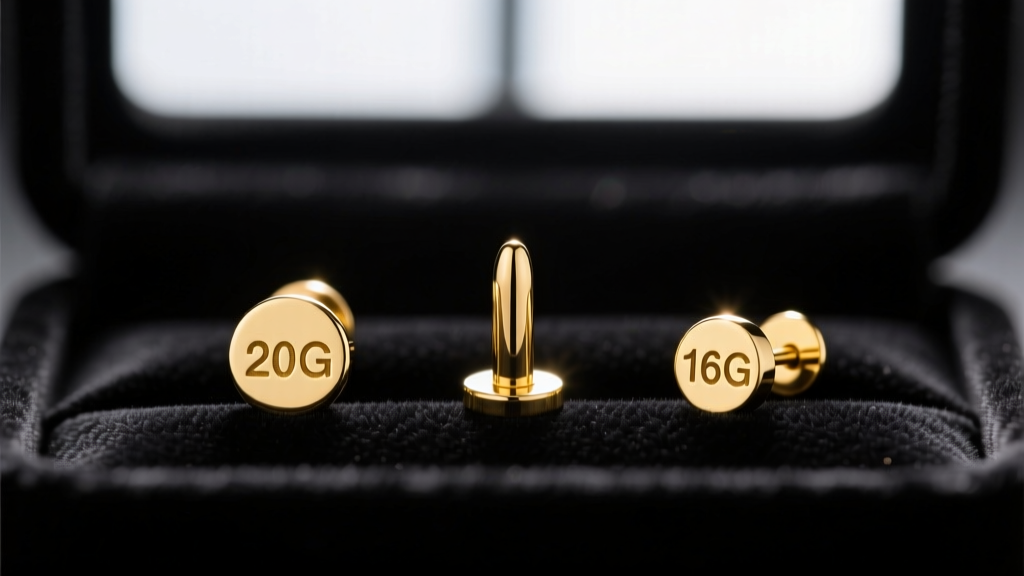
When allocating a fine jewelry budget, consumers often fixate on carat weight, gemstone clarity, or brand prestige. However, one of the most critical factors dictating both the upfront cost and the long-term value of your jewelry is frequently overlooked: the thickness of the metal post. If you have ever found yourself asking, what gauge are regular earrings, the answer is not just a matter of anatomical fit. It is a fundamental variable in material pricing, structural integrity, and overall cost-per-wear.
Understanding the intersection of wire gauge and precious metal pricing allows you to make highly strategic purchasing decisions. A millimeter difference in thickness can exponentially increase the volume of gold or platinum used, drastically altering the price tag. This guide breaks down standard earring gauges through the lens of budget assessment, helping you determine exactly where to spend and where to save.
The Short Answer: What Gauge Are Regular Earrings?
To assess value, we must first establish the baseline. The term "regular" generally refers to standard lobe piercings performed with a traditional piercing gun or a standard needle, as well as the mass-market earrings designed to fit them.
- 20 Gauge (0.81mm): The most common size for standard commercial lobe earrings. Most department store studs and lightweight dangles use 20G posts.
- 18 Gauge (1.02mm): The standard for professional needle piercings of the earlobe and higher-end fine jewelry studs. It offers a noticeable step up in durability.
- 16 Gauge (1.29mm): While less common for standard lobes, 16G is the baseline for cartilage piercings (helix, tragus, conch) and is increasingly favored for premium, heavy-duty lobe studs.
According to the Association of Professional Piercers (APP), professional studios typically use 18G or 16G for initial lobe piercings to promote better healing and tissue stability, whereas commercial mall kiosks default to 20G or even 22G. This discrepancy in baseline sizing is the first indicator of quality and value in the earring market.
How Gauge Size Directly Impacts Earring Pricing
From a manufacturing and budget perspective, gauge size is a game of geometry. The cost of a precious metal earring post is directly tied to its volume. Because wire is a cylinder, its cross-sectional area (and thus its metal volume per millimeter of length) increases with the square of its radius.
This means that moving from a 20G post to a 16G post does not just add a little bit of metal; it multiplies the material requirement. A 16G post has roughly 2.5 times the cross-sectional area of a 20G post. If you are buying solid 14k or 18k gold, that translates to a 250% increase in the raw material cost of the post alone, before factoring in the labor required to machine and polish a thicker, more rigid wire.
Gauge vs. Material Cost Multiplier
| Gauge Size | Millimeter (mm) | Cross-Section Area | Relative Gold Cost | Best Value Use Case |
|---|---|---|---|---|
| 22G | 0.64mm | 0.32 mm² | 1.0x (Baseline) | Ultra-lightweight, budget fashion jewelry |
| 20G | 0.81mm | 0.51 mm² | 1.6x | Standard commercial lobe studs, sleepers |
| 18G | 1.02mm | 0.81 mm² | 2.5x | Fine jewelry everyday lobes, premium hoops |
| 16G | 1.29mm | 1.30 mm² | 4.0x | Cartilage, heavy statement pieces, luxury |
When evaluating a $400 pair of 18G solid gold studs versus a $250 pair of 20G studs from a different brand, the higher price is often entirely justified by the sheer volume of gold used, assuming the gemstone quality is equal.
Material Grades and Gauge: Where to Spend vs. Save
The value of a specific gauge is heavily dependent on the metal alloy. The Gemological Institute of America (GIA) notes that the metallurgical properties of gold alloys change drastically based on their karat and mixture, which interacts directly with the structural demands of different gauges.
The 20G Sweet Spot for Solid Gold
If you are purchasing 18k or 24k gold on a strict budget, 20G is the most financially viable option. Because high-karat gold is inherently soft, a 16G 18k gold post would be exorbitantly expensive and still prone to warping under heavy lateral pressure. By opting for 20G, you minimize the volume of this expensive, soft metal while maintaining enough rigidity for standard lobe wear. Budget Tip: Save your money for a higher quality diamond or sapphire setting, and accept a 20G post for high-karat gold pieces.
Why 16G and 14G Demand Premium Alloys
For thicker gauges (16G and 14G), you are paying for structural permanence. Here, Implant Grade Titanium (ASTM F136) offers the absolute highest value. Titanium is significantly less expensive than gold by weight, highly biocompatible, and possesses a tensile strength that makes a 16G titanium post virtually unbendable under normal human force. If you are buying for cartilage or active lifestyles, investing in 16G titanium provides a lifetime of durability for a fraction of the cost of 16G gold.
Durability and Long-Term Value by Gauge
True value assessment requires looking at the "cost-per-wear" and the potential for mechanical failure. Thin-gauge earrings suffer from specific failure modes that can result in lost jewelry and wasted money.
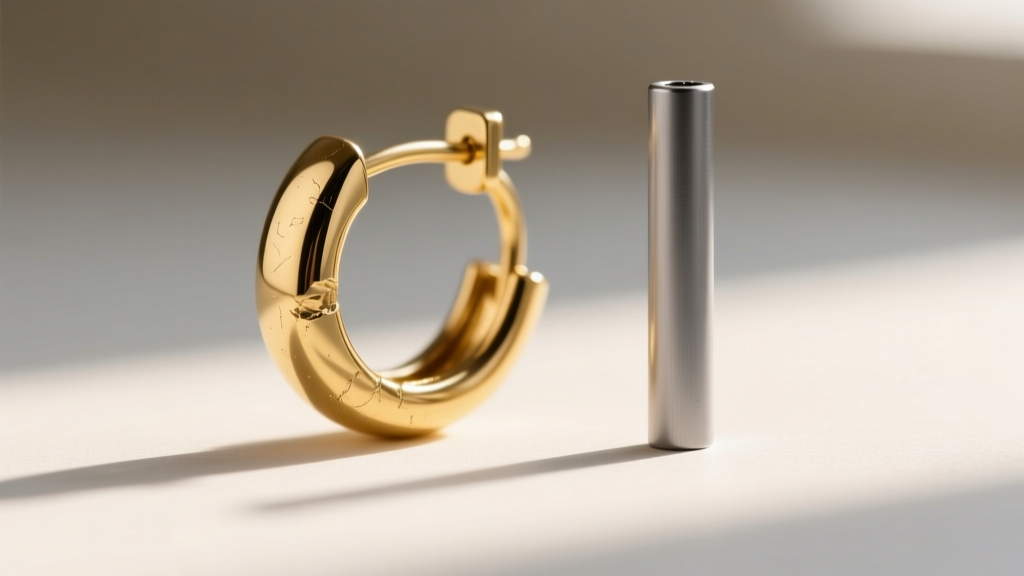
- Post Bending (20G and 22G): Sleeping in 20G gold or silver studs frequently results in bent posts. While a jeweler can straighten them, repeated bending causes metal fatigue, eventually snapping the post near the base of the setting.
- Thread Stripping (18G to 14G): For threaded earrings, thicker gauges allow for deeper, more robust threading. A 16G internally threaded post has significantly more surface area for the screw mechanism, preventing the backing from stripping and falling off—a common issue with cheap 20G externally threaded mass-market earrings.
- The "Cheese Cutter" Effect: Wearing heavy dangle earrings on thin 20G or 22G wires can cause the metal to slowly migrate through the earlobe tissue over time, permanently damaging the piercing and ruining the investment in the jewelry.
Expert Insight: If you are purchasing diamond studs meant for daily, 24/7 wear—including sleeping and showering—never settle for 20G. The long-term value of an 18G post lies in its resistance to bending, which protects the prongs and prevents the loss of the center stone.
Hidden Costs: Sizing Mistakes and Return Policies
A major budget drain in the earring market is purchasing the wrong gauge and facing restrictive return policies. Custom or high-end fine jewelers often do not accept returns on pierced earrings due to hygiene regulations. If you assume "regular" means 20G, but your professional piercer healed your lobes at 16G, forcing a 20G post through a 16G fistula can cause micro-tears, irritation bumps, and tissue damage. Conversely, attempting to force a 14G cartilage hoop into an 18G hole will result in immediate pain and rejected merchandise.
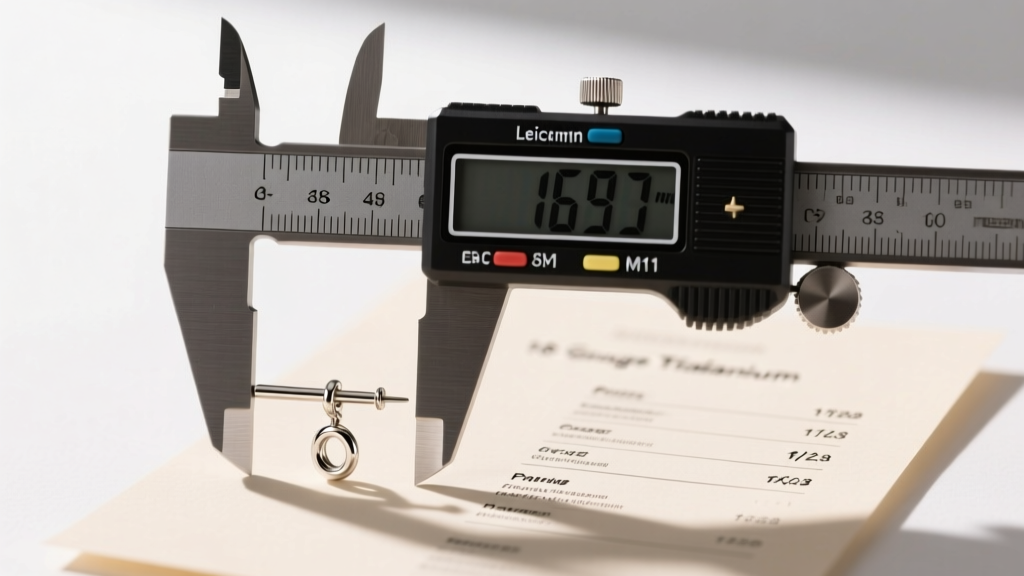
Always verify your exact gauge with a digital caliper or by consulting your piercer before buying premium pieces. The $15 cost of a digital caliper tool will easily save you from a non-refundable $500 sizing mistake.
Final Verdict: Maximizing Your Earring Budget
So, what gauge are regular earrings? For standard commercial lobes, it is 20G. For professional fine jewelry, it is 18G. But the smartest jewelry buyers do not just accept the default; they leverage gauge sizing to optimize their budgets.
To maximize value, prioritize 18G for everyday solid gold lobe studs to balance material costs with long-term bending resistance. For cartilage or active wear, pivot to 16G Implant Grade Titanium for indestructible, hypoallergenic performance at a lower price point. Avoid 22G entirely, as the minimal savings in gold weight are vastly outweighed by the high risk of mechanical failure and lost jewelry. By understanding the physical and financial weight of the metal post, you ensure every dollar spent translates directly into lasting quality.


