Regular Earring Size: Troubleshooting Fit and Gauge Issues
Discover what a regular earring size really means. Troubleshoot gauge mismatches, post lengths, and hoop diameters with our expert fitting guide.

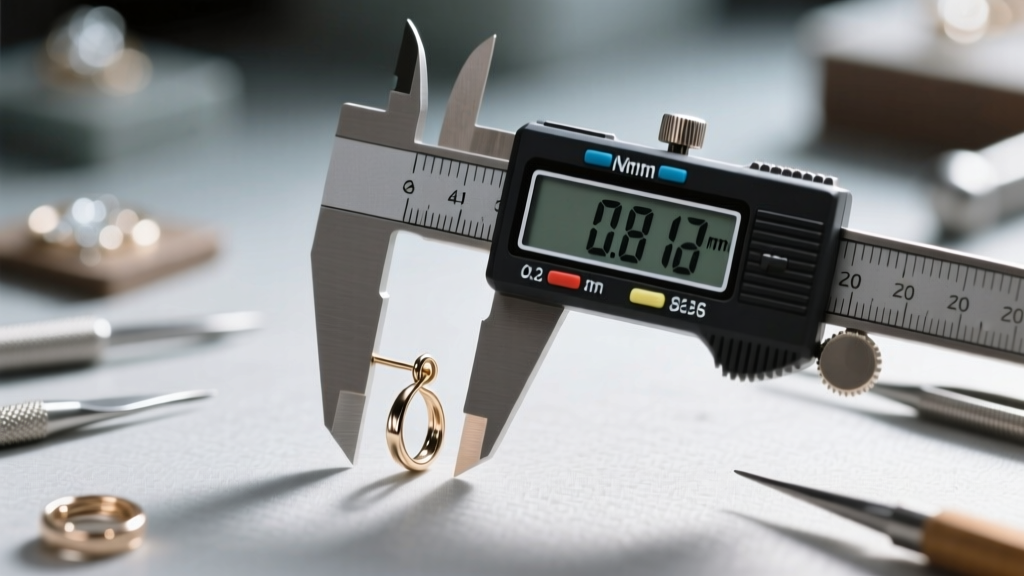
The Myth of the 'Regular Earring Size'
Walk into any commercial jewelry store and ask for a 'regular earring size,' and you will likely be handed a 20-gauge or 22-gauge stud with a standard butterfly back. However, in the professional body modification and high-end jewelry industry, the concept of a single 'regular' size is a pervasive myth that leads to countless fit issues, migration, and chronic irritation. When clients come to us complaining that their earrings constantly fall out, sink into their lobes, or cause localized swelling, the root cause is almost always a mismatch between their unique anatomy and the mass-produced baseline dimensions of commercial jewelry.
Troubleshooting earring fit requires abandoning the idea of a universal standard and instead looking at three critical metrics: wire thickness (gauge), post length or inner diameter (ID), and threading style. In 2026, with the widespread adoption of ASTM F-136 implant-grade titanium and precision-machined flat-back labrets, the baseline for what constitutes a 'properly fitting' earring has shifted dramatically away from the flimsy, one-size-fits-all designs of the past decade. Let us break down the exact failure modes of ill-fitting earrings and how to engineer the perfect fit for your specific piercings.
Troubleshooting Studs: Post Length and Gauge Mismatches
The most frequent complaint we see regarding standard lobe and cartilage studs is the 'sinking' effect, where the decorative end buries itself into the skin, or the backing aggressively indents the back of the ear. This happens because commercial manufacturers default to a 6mm (1/4 inch) post length to save on metal costs, completely ignoring the variable thickness of human earlobes and the natural swelling that occurs in cartilage piercings.
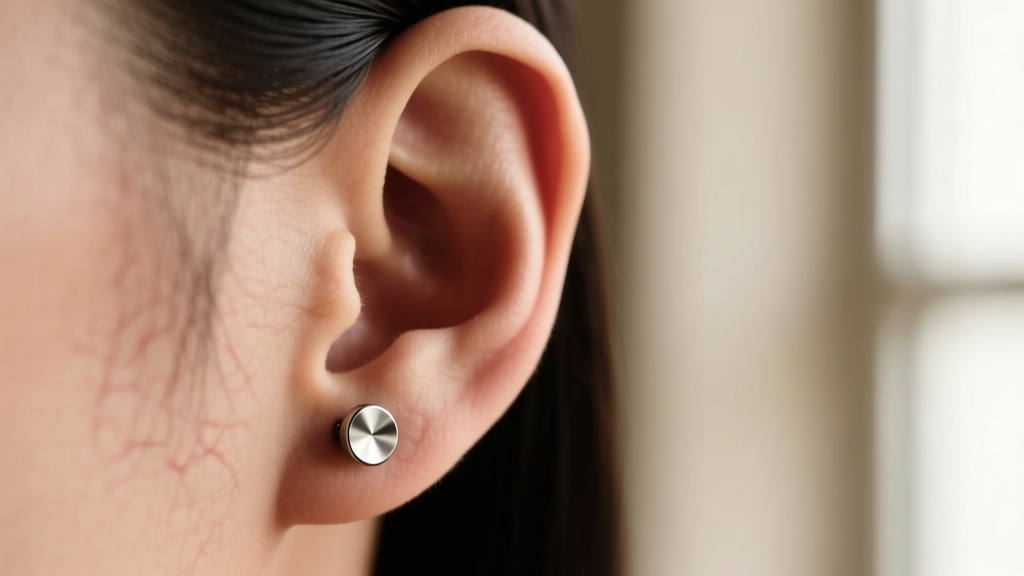
If your earring feels tight, leaves a deep red ring on the back of your lobe, or is difficult to clean around, your post is too short. According to the Association of Professional Piercers (APP), jewelry must accommodate not just the resting tissue thickness, but also allow room for lymphatic drainage and minor fluctuations in blood flow. For a standard lobe, an 8mm post is often the true 'regular' size required for comfort, while thick lobes or fresh helix piercings may require 10mm to 12mm posts.
The Gauge Thickness Matrix
Gauge refers to the thickness of the metal passing through the fistula (the piercing channel). Wearing a gauge that is too thin for the piercing can cause the 'cheese-cutter effect,' where the thin wire slowly migrates through the tissue. Conversely, forcing a thick gauge into a delicate, older piercing can cause micro-tears and scar tissue buildup.
| Gauge Size | Millimeter (mm) | Standard Use Case | Troubleshooting Note |
|---|---|---|---|
| 22g | 0.64mm | Vintage clips, ultra-fine fashion dangles | Too thin for daily wear; high migration risk. |
| 20g | 0.81mm | Standard commercial lobe studs | Can cause tearing if the earring is heavy. |
| 18g | 1.02mm | Professional lobe, upper lobe, some nostrils | The modern 'regular' for high-quality lobes. |
| 16g | 1.29mm | Cartilage, helix, tragus, conch | Essential for stability in thicker cartilage. |
Hoops and Huggies: Solving the Flip and Squeeze Problem
When troubleshooting hoop earrings, the metric that matters is not the outer diameter, but the Inner Diameter (ID). A common frustration is a hoop that constantly flips upward, resting horizontally against the cheek, or a huggie that squeezes the lobe so tightly it causes localized necrosis or pressure bumps.
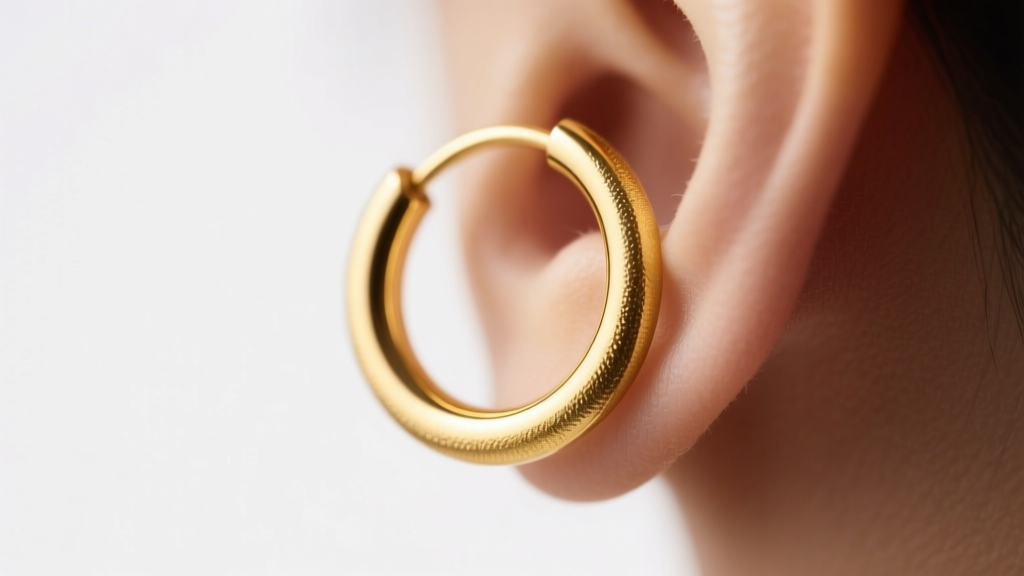
The failure mode here is a miscalculation of the ear's topography. To find your true 'regular' hoop size, you must calculate the distance from the piercing hole to the absolute edge of the lobe, and then add a minimum of 2mm to 3mm for clearance. If your piercing is placed 7mm from the edge of your lobe, an 8mm ID hoop will squeeze the tissue. You need a 10mm or 11mm ID hoop to allow the metal to hang naturally without putting lateral pressure on the fistula. As noted in the Maria Tash piercing guide, accounting for the angle of the piercing is equally vital; a pierced-at-an-angle lobe requires a larger ID to prevent the hoop from jutting outward awkwardly.
Pro-Tip for Cartilage Hoops: Never use a standard lobe hoop (usually 10mm-12mm ID) in a helix or tragus piercing. The swelling and curvature of the cartilage will force the hoop to flare out. Always size down to a 6mm or 8mm ID for a flush, anatomical fit in upper ear placements.
The 'Cheese-Cutter' Effect: When Regular Sizes Fail Under Weight
Have you ever worn a pair of heavy statement dangles or large gemstone drops, only to find your earlobes aching, stretched, and bleeding slightly by the end of the day? This is the cheese-cutter effect in action. Mass-market dangle earrings are frequently strung on 22-gauge or even 24-gauge wire to reduce material costs. When you hang 15 grams of brass or glass from a 0.64mm wire, the physics are unforgiving. The wire acts like a blade, concentrating all the downward force onto a microscopic surface area of your tissue.
The Solution: If you love heavy dangles, you must upgrade the structural integrity of your jewelry. Look for drop earrings that utilize 18-gauge (1.02mm) or 16-gauge (1.29mm) French wire hooks. Alternatively, if you are committed to a specific pair of thin-wired vintage earrings, use silicone earring support patches (like BlingDots) on the back of the lobe to distribute the weight across a wider surface area, or swap the hooks entirely using jump rings and heavier, custom-bent niobium wire.
Step-by-Step Diagnostic Guide for Ill-Fitting Earrings
Before throwing away a pair of uncomfortable earrings, run them through this professional diagnostic checklist to identify the exact point of failure.
- Step 1: Check the Threading. Examine the post of your stud. If the screw threads are carved directly into the metal post (externally threaded), it is acting like a file against your piercing channel every time you insert it. Switch to internally threaded or threadless (push-pin) jewelry immediately.
- Step 2: Measure the Wearable Length. Use a digital caliper to measure the post from the base of the decoration to the end of the pin. If it is 6mm or shorter and you have a standard or thick lobe, the post is too short. Upgrade to an 8mm flat-back labret.
- Step 3: Assess the Backing Style. Butterfly backs trap dead skin, sebum, and bacteria, and their sharp prongs dig into the neck. Discard them in favor of silicone O-rings or titanium flat-back discs, which provide a flush, hygienic surface against the skin.
- Step 4: Verify the Metal Grade. If the earring fits perfectly but still causes itching or weeping, the issue is not size, but metallurgy. Ensure your jewelry is stamped as ASTM F-136 implant-grade titanium or 14k/18k nickel-free gold. 'Surgical steel' is an unregulated term and often contains nickel, which triggers contact dermatitis.
When to See a Professional Piercer
While understanding the mechanics of a regular earring size empowers you to shop smarter, some issues require professional intervention. If you notice signs of migration (the piercing hole becoming elongated or moving closer to the edge of the skin), persistent hypertrophic scarring, or if you cannot comfortably fit an 8mm post into an older lobe piercing without pain, book a consultation with an APP-certified piercer. They can assess the angle of your original piercing, downsize or upsize the jewelry with precision, and recommend custom-fitted pieces that honor the unique topography of your ears. Remember, in the world of fine jewelry, 'regular' is simply a starting point; true comfort is always custom.


