Budget Ear Cuff Earrings for Men: A 2026 Value Assessment
Discover the true value of budget ear cuff earrings for men in 2026. We compare materials, tension mechanisms, and price tiers to find the best deals.

The Non-Pierced Dilemma: Why Most Budget Cuffs Fail
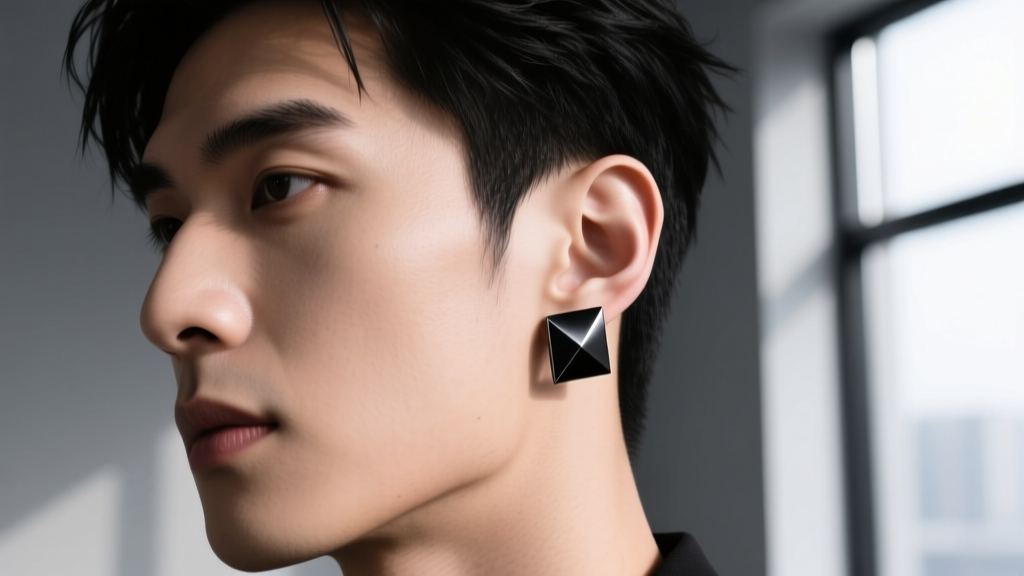
The market for ear cuff earrings for men has exploded, offering a commitment-free way to experiment with cartilage aesthetics. However, the budget tier is notoriously saturated with poorly engineered accessories that fail within weeks. Unlike traditional post earrings that rely on a backing, ear cuffs depend entirely on metal tension, structural memory, and precise anatomical sizing. When evaluating the budget sector in 2026, consumers must look past the initial price tag and assess the cost-per-wear, material biocompatibility, and mechanical longevity. A $12 brass cuff that turns your helix green and loses its grip after three wears is ultimately a worse investment than a $45 titanium cuff that lasts a decade.
Anatomy of the Grip: Tension vs. Hinge Mechanisms
Before assessing material value, you must understand how the cuff stays on the ear. Men's cartilage, particularly on the helix and snug, is generally thicker and denser than women's, requiring superior mechanical grip.
- Tension Fit (C-Clamp): The most common budget design. It relies on the 'memory' of the metal to spring back and clamp the cartilage. Cheap alloys suffer from metal fatigue, meaning the gap widens over time and the cuff falls off.
- Adjustable Screw-Back: Features a tiny set screw that tightens against the back of the ear. While secure, budget versions use soft, poorly threaded screws that strip easily when adjusted with a mini-screwdriver.
- Hinge and Snap: A premium mechanism rarely found in the deep budget tier. It features a hinged barrel that snaps shut over the cartilage, offering the most secure fit for active lifestyles without relying on continuous metal tension.
Metallurgy Matters: Decoding the Alloys
The single biggest differentiator in the value assessment of men's ear cuffs is the base metal. The 'green ear tax'—the oxidation and skin discoloration caused by cheap alloys—plagues the under-$20 market. Here is the metallurgical breakdown of what you are actually paying for.
316L Surgical Stainless Steel
Often marketed as 'hypoallergenic,' 316L steel is a workhorse material. It offers excellent polish retention and high tensile strength, making it ideal for tension-fit cuffs. However, it contains trace amounts of nickel. For men with nickel sensitivities, prolonged pressure from a tight ear cuff can trigger contact dermatitis. It represents a solid middle-ground value but requires caution for sensitive skin.
ASTM F136 Grade 5 Titanium
This is the undisputed king of value in non-pierced and pierced jewelry. According to the Association of Professional Piercers (APP), implant-grade titanium is highly biocompatible, completely nickel-free, and significantly lighter than steel. Because it is lighter, it exerts less gravitational drag on the cartilage, reducing the tension required to keep the cuff in place. A titanium cuff in the $35–$60 range offers the highest long-term ROI.
925 Sterling Silver
While prestigious, silver is a soft metal. The Gemological Institute of America (GIA) notes that sterling silver is an alloy of 92.5% silver and 7.5% copper. This copper content makes it prone to tarnishing, and the metal's softness means a tension-fit silver cuff will easily bend out of shape if dropped or squeezed. To maintain value, silver cuffs must be rhodium-plated and stored meticulously.
The 2026 Value Matrix: Price Tiers vs. Longevity
To cut through the marketing noise, we have categorized the current market for ear cuff earrings for men into three distinct value tiers based on material integrity and mechanical lifespan.
| Price Tier | Typical Materials | Mechanism | Expected Lifespan | Value Verdict |
|---|---|---|---|---|
| $8 - $25 | Brass, Zinc Alloy, Copper | Basic Tension | 1 - 3 Months | Poor (High risk of skin irritation and loss) |
| $35 - $85 | 316L Steel, Grade 23 Titanium | Reinforced Tension, Set Screw | 2 - 5+ Years | Excellent (The Sweet Spot for daily wear) |
| $120 - $300+ | 14k/18k Gold, Rhodium Silver | Hinge/Snap, Precision Tension | Lifetime | Good (Paying for precious metal premium) |
Tier 1: The Fast Fashion Trap ($8 - $25)
At this price point, you are primarily paying for the design mold, not the material. These cuffs are usually cast from brass or zinc alloys and flash-plated with a microscopic layer of silver or gold. The friction of putting the cuff on and taking it off wears through the plating within weeks, exposing the reactive base metals to your skin's natural acids. Avoid this tier if you plan to wear the cuff for more than a few hours at a time.
Tier 2: The Value Sweet Spot ($35 - $85)
This is where serious buyers should focus their budget. Brands in this tier utilize solid 316L stainless steel or PVD-coated titanium. PVD (Physical Vapor Deposition) coating is a vacuum process that bonds color to the metal at a molecular level, meaning a matte black or gold-toned cuff will not chip or flake like traditional electroplating. You get premium aesthetics and biocompatibility without the precious metal markup.
Tier 3: Artisan & Precious Metals ($120 - $300+)
Here, you transition from buying a functional accessory to buying an asset. Solid 14k gold ear cuffs offer unmatched prestige and will never tarnish. However, because gold is soft and heavy, artisans must engineer the cuff with a thicker wire diameter (often 1.6mm to 2.0mm) to maintain the necessary spring tension, driving up the cost significantly.
Biomechanics of the Helix: Sizing and Tension
A common failure point for men buying ear cuffs online is ignoring cartilage thickness. While gauge sizes apply to pierced jewelry, non-pierced cuffs rely on Inner Diameter (ID) and Gap Width.
Men's helix cartilage typically ranges from 1.5mm to 3.0mm in thickness. A standard 'one-size-fits-all' cuff usually features a 4mm gap and an 8mm ID. For a man with thicker cartilage, this creates excessive outward pressure, leading to pain, restricted blood flow, and eventual warping of the metal. When assessing value, look for brands that offer specific sizing options (e.g., Small, Medium, Large based on millimeter gaps) or adjustable tension screws. A $40 cuff available in three precise sizes offers vastly superior value to a $30 universal cuff that causes cartilage fatigue.
Maintenance and Metal Memory
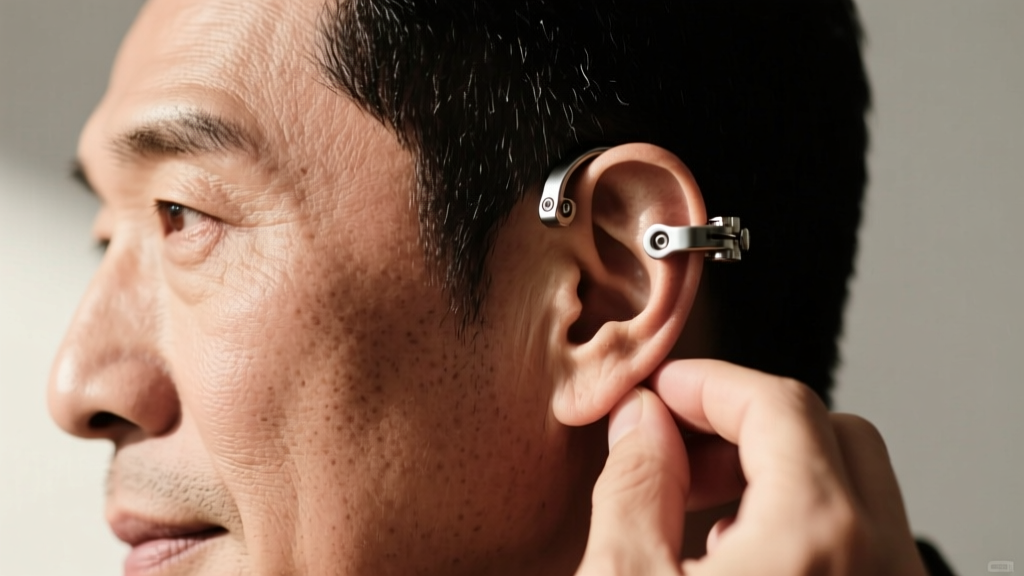
Even the highest quality titanium or steel ear cuff requires basic maintenance to preserve its tension. Over time, the repeated act of spreading the gap to slide the cuff over the ear causes 'work hardening,' making the metal brittle or causing it to permanently stretch.
'Never pull an ear cuff apart by the ends. To put it on, slide it over the thinnest part of the ear's edge and rotate it upward to the desired position. This preserves the structural memory of the metal and extends the life of the tension grip indefinitely.' — Master Jeweler & Metalsmith, 2026 Bench Notes
Final Verdict: Where to Spend and Where to Save
When hunting for the best budget ear cuff earrings for men, the ultimate value lies in the $35 to $65 range. By targeting solid ASTM F136 titanium or PVD-coated 316L stainless steel, you bypass the dermatological risks of cheap alloys and the mechanical failures of soft silver. Do not waste capital on ultra-cheap fast-fashion cuffs, and do not feel obligated to jump to solid gold unless you are seeking a permanent heirloom piece. Prioritize precise millimeter sizing over generic designs, and your ear cuff will remain a secure, stylish fixture in your rotation for years to come.


