Rhodolite Garnet Earrings: 2026 Trend & Style Analysis
Discover 2026 trends for rhodolite garnet earrings. Expert analysis on cuts, metal pairings, pricing, and styling raspberry-red gems for modern aesthetics.

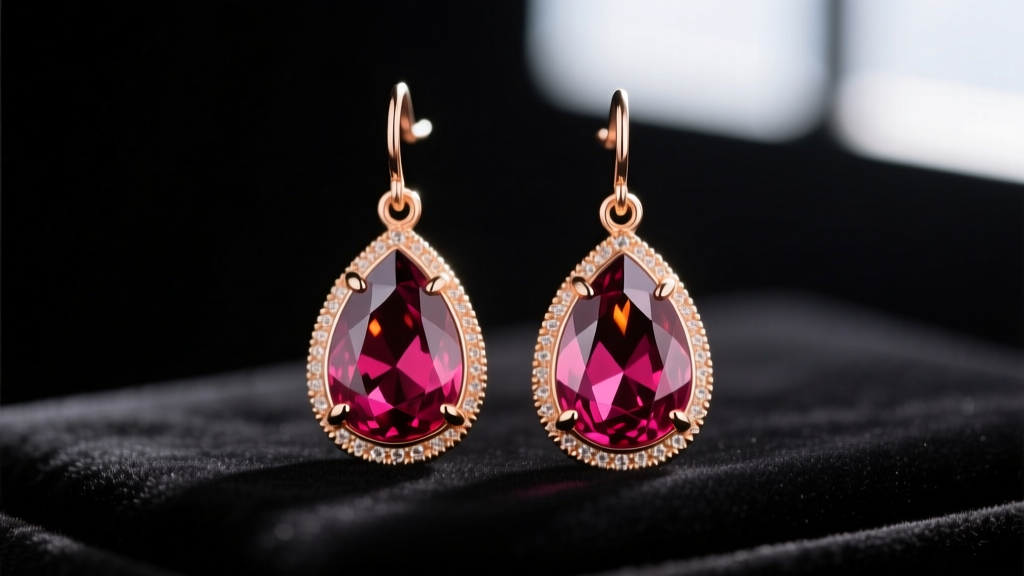
The 2026 Shift: Why Rhodolite is the New Colored Gemstone Standard
The fine jewelry landscape in 2026 has decisively pivoted toward stones that offer both organic rarity and versatile wearability. At the forefront of this movement are rhodolite garnet earrings, which have eclipsed traditional rubies and pink sapphires in contemporary designer collections. Unlike the deep, sometimes overly dark tones of traditional almandine garnets, rhodolite offers a vibrant, translucent raspberry-red to purplish-pink hue that perfectly aligns with the current "neo-romantic" and "quiet luxury" aesthetics.
Consumers and designers alike are gravitating toward rhodolite for a highly practical reason: it is almost never subjected to heat or chemical treatments. In an era where gemstone transparency and natural integrity are paramount, the untreated status of rhodolite garnets provides a massive advantage over heat-treated rubies or beryllium-diffused sapphires. This inherent purity, combined with a brilliant refractive index, makes rhodolite the undisputed star of 2026 ear styling.
Gemological DNA: Beyond the "Red Garnet" Misconception
To truly appreciate rhodolite garnet earrings, one must understand the gemological specifics that separate them from generic "red garnets." According to the Gemological Institute of America (GIA), rhodolite is not a distinct mineral species but rather a specific solid-solution mixture of two garnet species: pyrope (magnesium aluminum silicate) and almandine (iron aluminum silicate). Typically, rhodolite consists of roughly 70% pyrope and 30% almandine.
This precise chemical ratio is what yields its signature color and optical properties. The Mindat Mineral Database notes that rhodolite possesses a refractive index (RI) ranging from 1.760 to 1.790. Because garnets are singly refractive (isotropic), light passes through them without the doubling effect seen in peridot or zircon, resulting in a deep, velvety saturation that glows from within. With a Mohs hardness of 7 to 7.5, rhodolite is exceptionally durable for earring applications, safely withstanding the daily environmental impacts that jewelry faces without the risk of cleavage planes that plague stones like tanzanite.
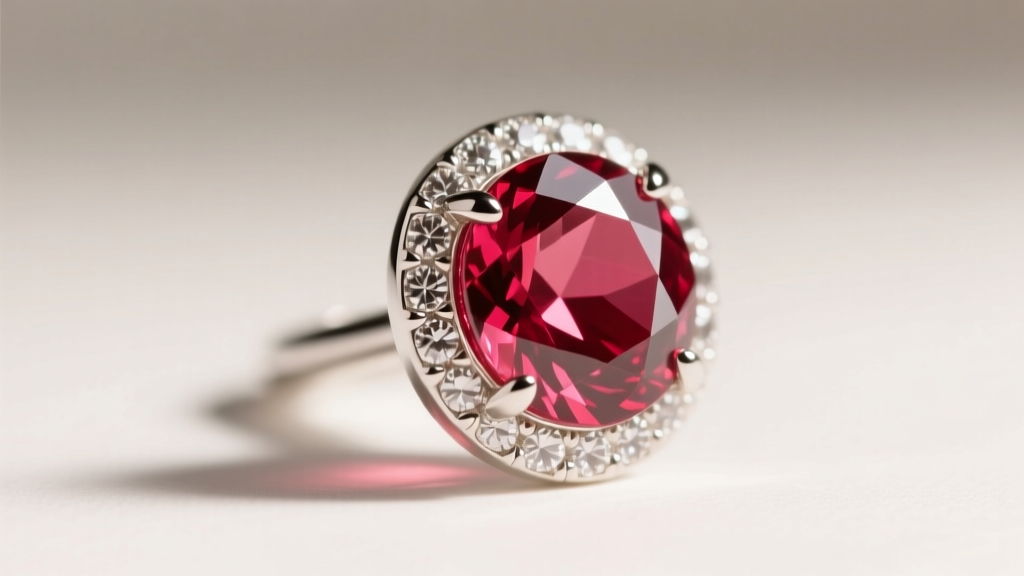
2026 Cut Preferences: Moving Away from Standard Brilliants
While the traditional 57-facet round brilliant cut remains a staple for diamond studs, 2026 trend reports indicate a massive surge in alternative lapidary styles for colored gemstones. Designers are prioritizing cuts that maximize the "mood" of the stone rather than just raw sparkle:
- The Rose Cut: Featuring a flat base and a domed, faceted crown, the rose cut emphasizes the translucent, wine-like body color of rhodolite. This cut is heavily featured in vintage-inspired bezel settings.
- Portrait and Tablet Cuts: Ultra-thin, step-cut slices of rhodolite are being used in minimalist, architectural ear cuffs and geometric drop earrings, allowing light to pass through and illuminate the skin beneath.
- Elongated Cushions and Ovals: These shapes preserve the maximum carat weight from the rough crystal while providing a flattering, elongating effect when worn as dangle earrings.
Metal Pairings and Setting Architectures
The metal chosen for rhodolite garnet earrings dramatically alters the gemstone's visual temperature. In 2026, the stark contrast of platinum has given way to warmer, more harmonious alloys, though specific design niches still rely on white metals.
| Metal Alloy | Visual Effect on Rhodolite | Best Earring Style | 2026 Trend Status |
|---|---|---|---|
| 14k Rose Gold | Amplifies the pink/purple undertones; creates a seamless, monochromatic warmth. | Everyday huggies, minimalist threaders. | Mainstream Dominant |
| 18k Yellow Gold | Provides high contrast; makes the raspberry red appear deeper and more "vintage." | Signet-style studs, ornate chandelier drops. | Heritage / Heirloom |
| Platinum / 18k White Gold | Cools the stone down, emphasizing the "red" over the "pink"; highly formal. | Art Deco geometric drops, pavé halo studs. | Evening / Bridal |
Regarding setting architectures, the traditional four-prong setting is being replaced by compass settings (where prongs are placed at the N, S, E, W points) for elongated stones, and half-bezel settings that protect the girdle while allowing maximum light entry from the sides.
Market Valuation: What to Pay for Rhodolite Garnet Earrings
Navigating the pricing matrix for rhodolite requires an understanding of origin, clarity, and color saturation. Unlike emeralds, where inclusions are expected, fine rhodolite should be "eye-clean." The most prized specimens hail from Mozambique and Tanzania, with Sri Lankan stones offering lighter, more pink-leaning hues.
As of 2026, here is the expected retail pricing framework for the gemstones alone (excluding the precious metal settings and craftsmanship premiums):
- Commercial Grade ($15 - $35 per carat): Noticeable inclusions, overly dark or overly pale tones, native cuts with poor symmetry. Often found in mass-market sterling silver jewelry.
- Fine Grade ($50 - $120 per carat): Eye-clean, vibrant raspberry color with good brilliance. Precision-cut ovals and cushions. This is the sweet spot for independent designer earrings.
- Extra-Fine / Gem Grade ($150 - $300+ per carat): Exceptional saturation (the coveted "grape juice" purple-red), flawless to the naked eye, and featuring master precision cuts that eliminate windowing or extinction. Typically reserved for high-end bespoke pieces.
Buyer Beware: If a vendor offers deeply saturated, perfectly clean 3-carat rhodolite earrings for under $100 total, request a gemological certificate. The market is currently seeing an influx of synthetic garnets and red spinel misidentified as rhodolite in unregulated online marketplaces.

The Styling Framework: Matching Cuts to Face Shapes
Earrings are the most effective tool for balancing facial proportions. Because rhodolite garnet is available in a vast array of custom cuts, it is uniquely suited for targeted aesthetic styling. Use this 2026 framework to select the perfect silhouette:
Round Face Shapes
The goal is to create vertical length and avoid adding width. Opt for elongated rhodolite drop earrings or linear threaders featuring emerald-cut or baguette rhodolites. Avoid large, circular hoops or wide cluster studs, which will emphasize the roundness of the jawline.
Square and Angular Face Shapes
Softening the jawline is the priority. Oval or pear-shaped rhodolite dangles set in curved, organic 18k yellow gold settings provide a beautiful counterbalance to sharp angles. Huggie earrings featuring rounded, cabochon-cut rhodolites are also an excellent, subtle choice for everyday wear.
Heart-Shaped Faces
With a wider forehead and a narrow chin, the aim is to add visual weight to the lower half of the face. Chandelier earrings or inverted triangle designs featuring a gradient of rhodolite garnets (moving from light pink to deep purple at the bottom) beautifully balance the facial structure.
Oval Face Shapes
Oval faces can pull off virtually any style. In 2026, the trend for this face shape leans toward bold, structural pieces. Try east-west set elongated cushion rhodolite studs or dramatic, asymmetrical ear cuffs that crawl up the cartilage, utilizing the stone's vibrant color to draw the eye upward.
Longevity and Care Protocols
While rhodolite garnet is a durable 7-7.5 on the Mohs scale, it is not impervious to damage. The most critical error consumers make is using ultrasonic cleaners. Garnets can contain microscopic internal stress fractures or liquid inclusions that may shatter under high-frequency ultrasonic vibrations. Furthermore, sudden thermal shock (moving from hot water to cold air) can cause fracturing.
Expert Care Directive: To maintain the optical brilliance of your rhodolite garnet earrings, clean them bi-weekly using a solution of lukewarm distilled water and a few drops of pH-neutral dish soap. Use a baby-soft toothbrush to gently agitate the pavilion (the back of the stone) where skin oils and lotions accumulate, which can reduce the stone's refractive light return by up to 40%. Always dry with a lint-free microfiber cloth.
By understanding the gemological nuances, current design trajectories, and proper valuation metrics, collectors and style enthusiasts can confidently invest in rhodolite garnet earrings that will remain both aesthetically relevant and financially sound well beyond 2026.


