Rope Chain Earrings: Metal Properties & Material Guide
Compare metals for rope chain earrings. Discover how gold, silver, and platinum affect durability, weight, and maintenance in twisted link designs.

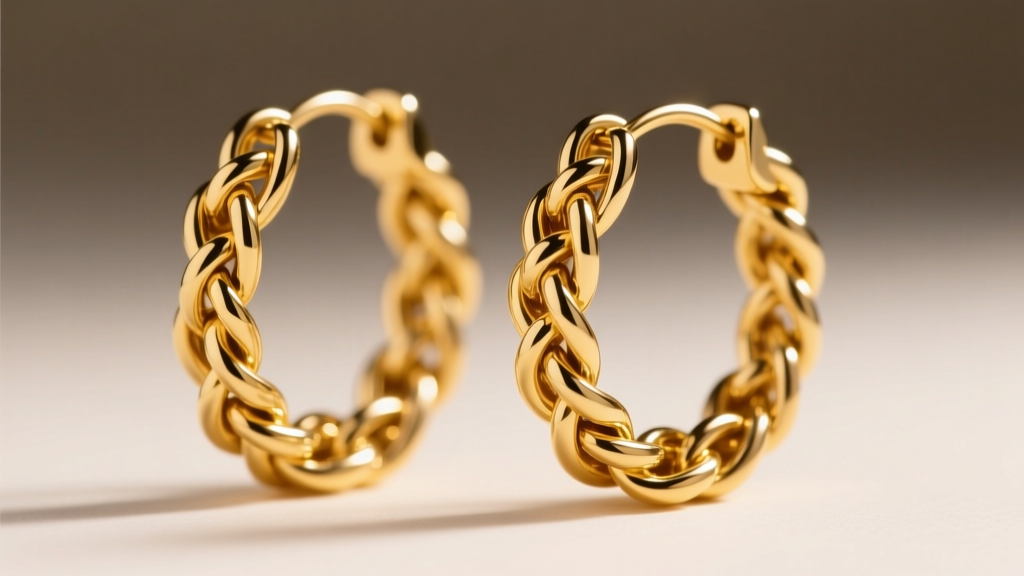
Rope chain earrings are celebrated for their intricate, twisted link design that mimics the look of a tightly woven rope. This complex geometry creates a brilliant, multi-faceted surface that catches the light beautifully, making them a staple in both minimalist ear stacks and bold statement looks. However, the very structure that gives rope chains their signature sparkle also introduces unique structural and maintenance challenges. When selecting rope chain earrings—whether as continuous hoops, ear threads, or dangles—the choice of metal is not merely an aesthetic decision; it dictates the jewelry's tensile strength, tarnish resistance, and long-term wearability.
In this comprehensive 2026 material guide, we dissect the metallurgical properties of the most common alloys used in rope chain earrings. By understanding the Vickers hardness, density, and soldering characteristics of these metals, you can make an informed decision that balances visual appeal with everyday durability.
The Anatomy of Rope Chain Earrings: Why Material Matters
Unlike standard cable or curb chains, a rope chain is constructed from multiple small metal links that are twisted and braided together. This creates a high surface area and numerous microscopic crevices. From a metallurgical standpoint, this design means two things: first, the chain requires dozens of precise solder points per inch; second, the crevices are highly susceptible to trapping sebum, cosmetics, and environmental sulfur.
The material used must possess adequate tensile strength to withstand the stress of the twisting process during manufacturing, and enough hardness to resist deformation when worn. Earrings, particularly hoops and ear threads, experience unique directional pulls compared to necklaces. A heavy rope chain hoop can exert continuous downward pressure on the earlobe piercing, making the metal's density and structural integrity paramount.
Metal Comparison Matrix: Weight, Tarnish, and Tensile Strength
The table below provides a metallurgical snapshot of the primary metals used in fine and fashion rope chain earrings. Data reflects standard alloys commonly available in the current jewelry market.
| Metal / Alloy | Vickers Hardness (HV) | Density (g/cm³) | Tarnish Resistance | Crevices Maintenance |
|---|---|---|---|---|
| 14k Yellow Gold | ~140 HV | 13.9 | Excellent | Moderate (Ultrasonic safe) |
| 18k Yellow Gold | ~125 HV | 15.6 | Excellent | Moderate (Ultrasonic safe) |
| .925 Sterling Silver | ~65 HV | 10.4 | Poor (Oxidizes) | High (Requires chemical dips) |
| 950 Platinum | ~135 HV | 21.4 | Excellent | Low (Patina hides dirt) |
| 316L Surgical Steel | ~160 HV | 8.0 | Excellent | Low (Soap and water) |
Deep Dive: Precious Metals in Twisted Link Designs
14k vs. 18k Gold: The Alloy Balance
Gold remains the premier choice for fine rope chain earrings, but the karat weight drastically alters the chain's behavior. Pure 24k gold is far too soft (approx. 25 HV) to hold the intricate solder points of a rope chain. Therefore, alloying is mandatory.
- 14k Gold (58.5% Gold): With a Vickers hardness of roughly 140 HV, 14k gold offers superior structural rigidity. For thin rope chain ear threads (1.2mm to 1.5mm) that must be pulled through the piercing canal, 14k is highly recommended. It resists stretching and snapping at the solder joints.
- 18k Gold (75% Gold): Softer and denser, 18k gold offers a richer, warmer hue that is highly prized in luxury jewelry. However, its lower hardness (~125 HV) means that large, heavy 18k rope chain hoops (30mm+) are prone to gradual elongation and link warping over years of daily wear.
According to the Gemological Institute of America (GIA), the specific alloy metals (copper, silver, zinc) used in gold not only dictate the color but also the brittleness. Rose gold, alloyed heavily with copper, is slightly harder and more durable for rope chains than white gold, which requires rhodium plating that can wear away in the chain's deep grooves.
Sterling Silver and the Rhodium Plating Factor
Sterling silver (.925) is the most accessible precious metal for rope chain earrings, but it presents significant maintenance hurdles. Silver reacts readily with hydrogen sulfide in the air, forming black silver sulfide. In a smooth cable chain, this tarnish is easily wiped away. In a rope chain, the tarnish embeds deep within the twisted spirals.
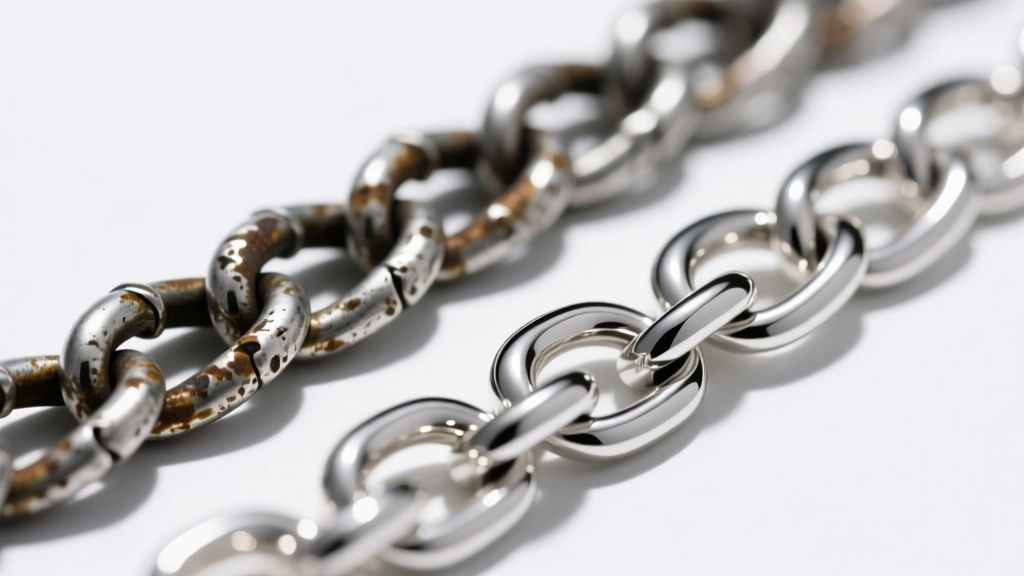
To combat this, many manufacturers apply a thick rhodium plating over sterling silver rope chains. While this provides a brilliant, tarnish-resistant white-metal finish, the high-friction areas of the earring posts and the clasp mechanisms will eventually wear through the plating. Once the underlying silver is exposed, localized tarnishing occurs, creating a patchy appearance that is nearly impossible to polish evenly without professional buffing wheels.
Platinum: The Heavyweight Contender
Platinum (typically 950 Platinum, alloyed with ruthenium or iridium) is incredibly dense and durable. Unlike gold, which loses microscopic particles when scratched, platinum merely displaces, developing a soft patina over time. For rope chain earrings, platinum offers unmatched longevity; the solder points are fused with laser welders, creating joints as strong as the links themselves.
However, platinum's density (21.45 g/cm³) is a double-edged sword. A pair of 4mm thick, 40mm diameter platinum rope chain hoops can be exceptionally heavy. This weight can cause 'earlobe droop' or gradually stretch the piercing fistula over time. Platinum is best reserved for smaller, tighter huggie-style rope chains or delicate ear threads where the total metal volume is minimized.
Structural Vulnerabilities: Solder Points and Crevice Maintenance
The most common failure mode for rope chain earrings is not the metal itself, but the solder joints. Traditional torch soldering can leave visible seams and weak points in intricate chains. Today, high-end jewelers utilize laser welding to fuse rope chain links. Laser soldering allows for pinpoint accuracy without heating the surrounding metal, preserving the chain's structural integrity and preventing the annealing (softening) of the links.
Crucial Maintenance Warning: The Jewelers of America advises extreme caution when using ultrasonic cleaners on rope chains. While ultrasonic waves are excellent for vibrating dirt out of the chain's deep crevices, the high-frequency vibrations can easily shake loose a compromised or poorly soldered link. If your rope chain earring has been snagged or pulled, always have a jeweler inspect the solder points under magnification before placing it in an ultrasonic bath.
Hypoallergenic Alternatives: Titanium and Surgical Steel
For those with severe contact dermatitis or nickel allergies, precious metals can sometimes pose a risk if the alloy composition is unknown or if white gold is alloyed with nickel.
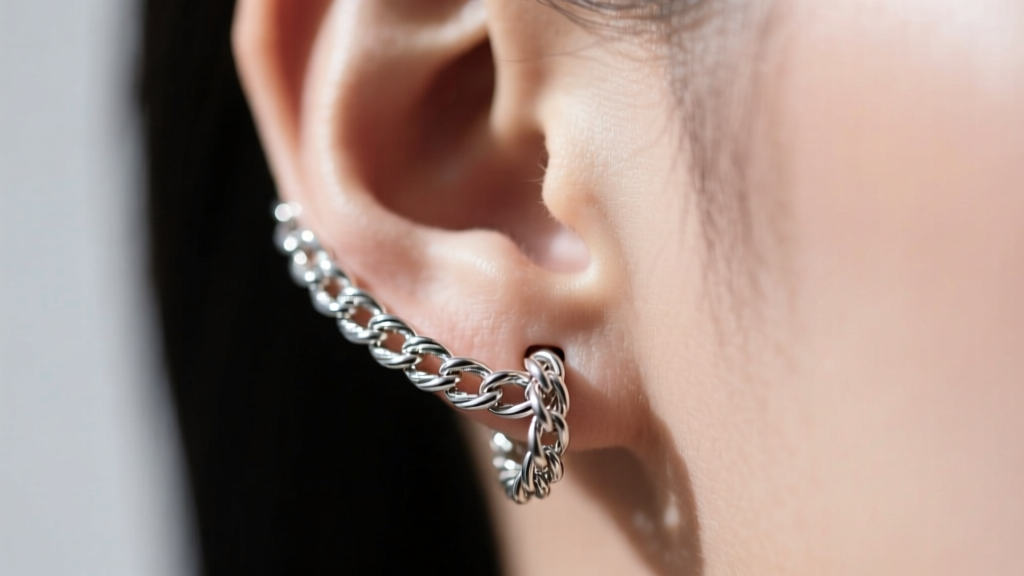
- Grade 5 Titanium (Ti-6Al-4V): Titanium is biocompatible, lightweight, and incredibly strong. However, true rope chains are rarely manufactured from solid titanium. Titanium's extremely high melting point and reactivity with oxygen at high temperatures make traditional link-soldering nearly impossible. If you find 'titanium' rope chains, they are often machined from a single piece of metal to mimic the rope look, or they are titanium-plated over a base metal core, which defeats the purpose for allergy sufferers.
- 316L Surgical Stainless Steel: This is the most viable hypoallergenic alternative for fashion rope chain earrings. 316L contains molybdenum, which provides excellent corrosion resistance. While it lacks the prestige and value retention of gold or platinum, 316L steel rope chains are highly resistant to tarnish, easily cleaned with basic soap and water, and possess a high tensile strength that prevents the links from pulling apart.
Pricing Tiers and Value Retention
When budgeting for rope chain earrings, expect to pay a premium for the labor-intensive manufacturing process compared to standard box or cable chains. As of 2026, market pricing for a standard pair of 20mm rope chain hoop earrings (approx. 2.0mm thickness) generally falls into these tiers:
- 316L Surgical Steel: $25 - $60
- .925 Sterling Silver (Rhodium Plated): $80 - $180
- 14k Solid Gold: $450 - $850
- 18k Solid Gold: $700 - $1,300+
- 950 Platinum: $1,500 - $2,800+
Gold and platinum rope chain earrings retain intrinsic melt value and are considered heirloom pieces, whereas silver and steel are considered consumable fashion or semi-fine accessories.
Final Verdict: Matching Metal to Your Lifestyle
Selecting the right metal for your rope chain earrings requires balancing your budget, skin sensitivity, and maintenance tolerance. For everyday, low-maintenance wearers who want a classic look, 14k yellow or rose gold provides the perfect intersection of hardness, tarnish resistance, and value. If you prefer a white metal but want to avoid the maintenance of rhodium-plated silver, invest in white gold or opt for small-scale platinum huggies to avoid earlobe fatigue. Ultimately, understanding the metallurgical realities of the twisted rope design ensures your earrings remain as structurally sound as they are visually striking.


