Rose Earrings: The Metallurgy, Karats, and Gauge Guide
Explore the technical side of rose earrings. We break down 14k vs 18k rose gold alloys, copper content, gauge sizes, and hypoallergenic realities.

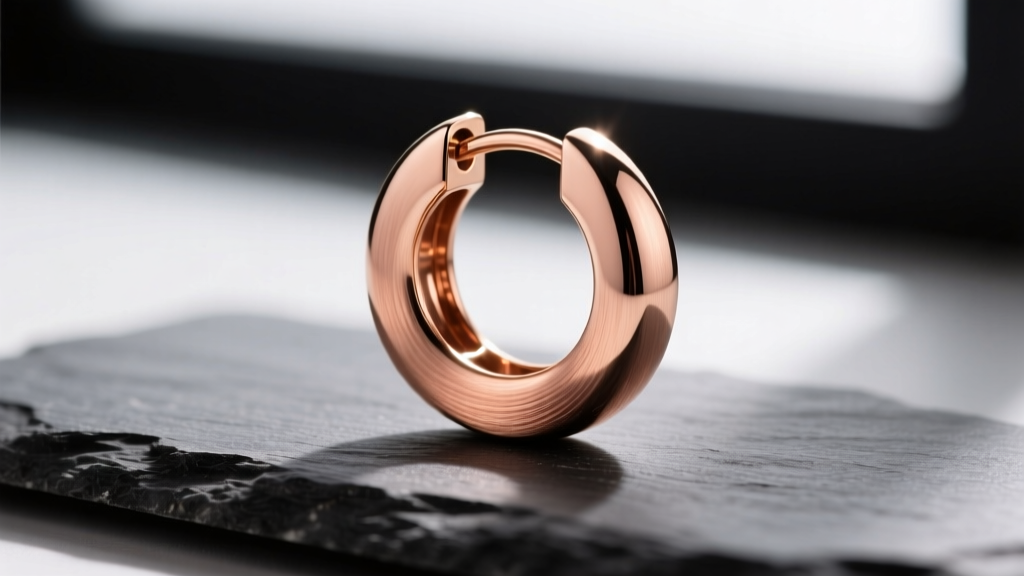
When consumers and collectors search for rose earrings, they are typically drawn to the warm, romantic hue that bridges the gap between traditional yellow gold and stark white metals. However, from a metallurgical and gemological perspective, rose gold is not a naturally occurring element. It is a precisely engineered alloy. Understanding the technical specifications of rose gold—including its copper-to-silver ratios, Vickers hardness, and optimal gauge thicknesses—is critical for both jewelry designers and informed buyers. In this expert deep dive, we deconstruct the science, structural integrity, and dermatological realities of rose gold earrings in the modern 2026 jewelry market.
The Metallurgy of Rose Gold: Why Copper Matters
Pure 24-karat gold is inherently yellow and far too soft for functional body jewelry, ranking at roughly 25 on the Vickers hardness scale (HV). To create rose gold, metallurgists must introduce specific alloying metals. The signature blush or 'rose' tint is achieved almost entirely through the addition of copper. According to the Gemological Institute of America (GIA), the precise ratio of copper to silver dictates the final color saturation of the alloy.
An 18-karat rose gold alloy typically consists of 75% pure gold, 22.25% copper, and 2.75% silver. The silver acts as a minor decolorizer to prevent the copper from turning the alloy too red or brown. In contrast, 14-karat rose gold contains 58.3% pure gold, but requires a much higher copper content—often upwards of 31%—along with roughly 10.7% silver or zinc to maintain structural integrity. This elevated copper content fundamentally changes the physical properties of the metal, increasing its tensile strength but also altering its chemical reactivity with human skin and environmental factors.
14K vs. 18K Rose Earrings: A Technical Comparison
Choosing between 14k and 18k rose earrings is not merely an aesthetic decision; it is a choice regarding durability, oxidation potential, and skin compatibility. Below is a technical breakdown of how these two primary karats perform in earring applications.
| Property | 18K Rose Gold | 14K Rose Gold | Rose PVD on Titanium |
|---|---|---|---|
| Pure Gold Content | 75.0% | 58.3% | 0% (Surface Coating) |
| Copper Content | ~22.25% | ~31.0% | 0% |
| Vickers Hardness (HV) | ~125 HV | ~135 HV | ~350 HV (Base Ti) |
| Oxidation Risk | Moderate | High | None |
| Best Earring Type | Studs, Low-Friction Hoops | Huggies, Threaded Ends | Cartilage Clickers, Fresh Piercings |
| 2026 Avg. Price (Per Gram) | $75 - $95 | $45 - $60 | $15 - $25 (Equivalent) |
Because 14k rose gold is harder and more resistant to scratching, it is the preferred choice for high-friction earring styles like huggies or continuous hoops that endure daily mechanical stress. However, the higher copper content makes it more susceptible to environmental oxidation.
Gauge Sizes and Piercing Compatibility
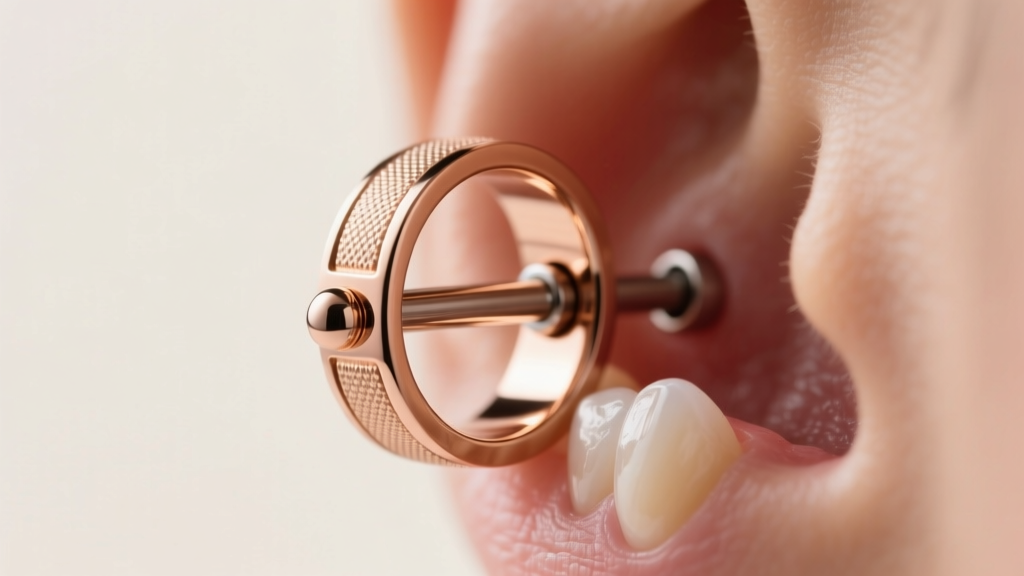
The structural success of rose earrings relies heavily on selecting the correct wire gauge for the specific piercing anatomy. The gauge system is inverse; a higher number indicates a thinner wire. Mass-market fashion earrings often default to 20-gauge (0.81mm) or 22-gauge (0.64mm) posts. While this saves on precious metal costs, it introduces severe mechanical risks.
The Cheese-Cutter Effect in Dangles
When a heavy rose gold dangle or drop earring is hung from a thin 22-gauge wire, the localized pressure on the earlobe tissue can cause the metal to slowly migrate downward through the skin—a phenomenon known in the body modification industry as the 'cheese-cutter effect.' For any rose gold drop earring weighing more than 4 grams, a minimum thickness of 18-gauge (1.02mm) is mandatory to distribute the load safely across the fistula.
Lobe vs. Cartilage Considerations
Cartilage piercings, such as the helix, tragus, or conch, require even greater structural rigidity. The Association of Professional Piercers (APP) strongly recommends a minimum of 16-gauge (1.29mm) or 14-gauge (1.63mm) for cartilage jewelry to prevent migration and rejection. Because solid 14k or 18k rose gold is expensive at these thicknesses, many modern jewelers are turning to Physical Vapor Deposition (PVD). PVD coating allows manufacturers to apply a microscopic, highly durable layer of rose gold over an implant-grade titanium (ASTM F-136) core, providing the aesthetic of rose earrings with the biocompatibility and strength required for cartilage healing.
Hypoallergenic Realities: The Copper and Nickel Factor
A pervasive myth in the jewelry industry is that all gold alloys are inherently hypoallergenic. While it is true that high-karat gold is highly biocompatible, the alloying metals introduce variables. Nickel is the most common contact allergen in jewelry, but reputable refiners do not use nickel in rose gold alloys; the color requires copper, not nickel. Therefore, genuine solid rose gold is generally nickel-free.
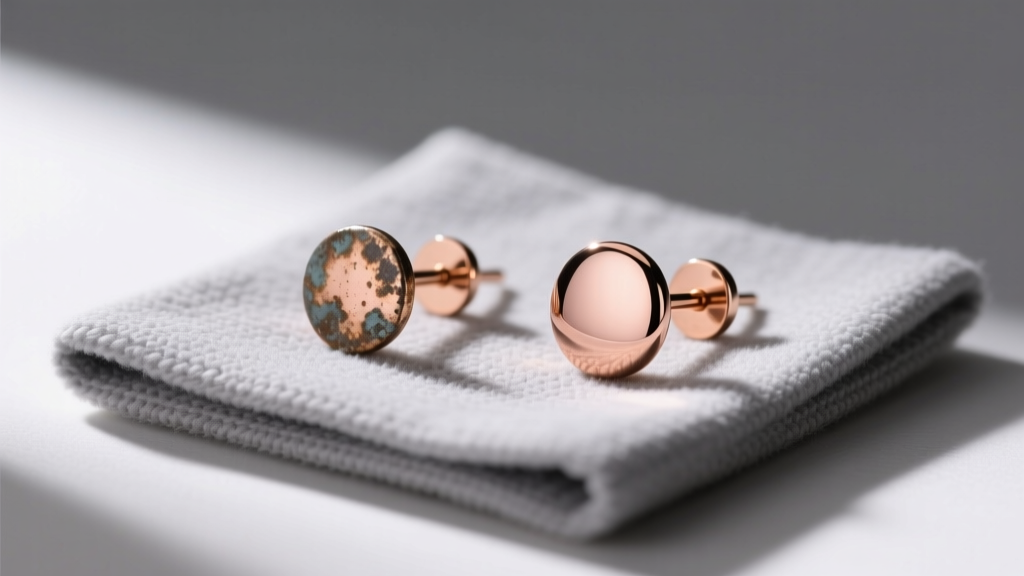
However, copper itself is a known irritant for a small subset of the population. More commonly, the issue is not an allergic reaction, but a chemical one. The acidity of human sweat (which typically ranges from a pH of 4.5 to 7.0) can react with the copper in 14k rose earrings, creating copper chloride. This manifests as a harmless but unsightly green or black tarnish on the skin directly behind the earlobe. Individuals with highly acidic sweat profiles or those who frequently swim in chlorinated pools should opt for 18k rose gold (which has less copper) or rose PVD titanium to avoid this galvanic reaction.
Maintenance and Oxidation Prevention
The high copper content that gives rose earrings their beautiful color also makes them vulnerable to specific environmental hazards. Chlorine is the ultimate enemy of copper-alloyed gold. Exposure to household bleach or heavily chlorinated hot tubs can cause a process called 'depletion gilding,' where the chlorine attacks the copper and silver at the surface, leaving behind a microscopic, porous layer of pure gold that appears pale and brittle.
To maintain the structural integrity and color of solid rose gold earrings, adhere to the following maintenance protocol:
- Routine Cleaning: Use a solution of warm distilled water and a few drops of mild, phosphate-free dish soap. Soak for 10 minutes, then gently agitate with a soft-bristled baby toothbrush.
- Polishing: Avoid aggressive abrasive polishing cloths on brushed or matte-finish rose gold, as they will alter the surface texture. Use a dedicated, non-impregnated microfiber cloth.
- Storage: Store rose earrings in an anti-tarnish bag with silica gel packets. Copper oxidizes rapidly in high-humidity environments, leading to a darkening of the metal's warm undertones.
- Ultrasonic Caution: While solid rose gold without gemstones can withstand ultrasonic cleaning, the high-frequency vibrations can loosen the settings of any tension-set or pave diamonds often found in modern rose gold huggies.
Conclusion
The allure of rose earrings extends far beyond their aesthetic warmth. As a metallurgical achievement, rose gold requires a delicate balance of copper and silver to achieve both its signature color and the necessary tensile strength for body jewelry. Whether you are selecting a robust 14-karat alloy for daily-wear huggies, an 18-karat stud to minimize copper-sweat reactions, or a modern PVD-coated titanium clicker for a fresh cartilage piercing, understanding the technical specifications ensures your jewelry remains both beautiful and structurally sound for decades. For further reading on precious metal standards and hallmarking, consult the educational resources provided by Jewelers of America.


